REVIEW · ATHENS
Private Luxury Tour: Mystic Pilgrimage – Kerameikos to Eleusis
Book on Viator →Operated by Pericles Century · Bookable on Viator
Kerameikos is where this unusual Athens outing gets its power. You begin among ancient graves, city walls, and the old Sacred Way, then follow the route outward to Eleusis, the sanctuary tied to Demeter, Persephone, and the secret Eleusinian Mysteries. It is part archaeology tour, part mythology lesson, and part road trip through the western edge of Athens.
I like the private door-to-door transport, especially if you are staying at a hotel or arriving by cruise ship. I also like the range of stops: Daphni Monastery adds Byzantine art to the day, while Eleusis supplies the mythic centerpiece. The main catch is important: your driver is not a licensed guide inside the sites, and entry fees and lunch cost extra.
In This Review
- Key points to know before booking
- Why the Sacred Way makes a fine half-day from Athens
- Kerameikos, where the procession began
- Following Iera Odos through modern Athens
- Daphni Monastery adds a Byzantine chapter
- The Sanctuary of Aphrodite and the limits of short stops
- Eleusis and the heart of the Mysteries
- The Eleusis Museum makes the stones easier to read
- Lunch in Eleusis, with the bill left to you
- Is $129 a good value?
- Who should book this private Sacred Way tour?
- My verdict on the Kerameikos to Eleusis journey
- FAQ
- How long does the tour last?
- Where can pickup and drop-off take place?
- What type of vehicle is used?
- Are entrance fees included?
- Does a licensed guide accompany the group inside the sites?
- Is lunch included?
- What happens if I need to cancel?
Key points to know before booking
- The Sacred Way links two major sites: Kerameikos in Athens and the Sanctuary of Demeter at Eleusis.
- Pericles and Dimitris are among the named driver-guides: expect historical commentary, stories, and printed information, but not an official site guide.
- The route is private: groups of one to four ride in a sedan, while groups of five to seven use a minivan.
- Eleusis is the payoff: the Great Propylaea, Kallichoron Well, Ploutonion, Telesterion, and museum bring the ancient rituals into focus.
- The $129 price does not cover everything: archaeological admission, museum tickets, lunch, tips, and optional airport pickup are separate.
- Plan for sun and walking: wear comfortable shoes and bring a hat and sunscreen.
Why the Sacred Way makes a fine half-day from Athens
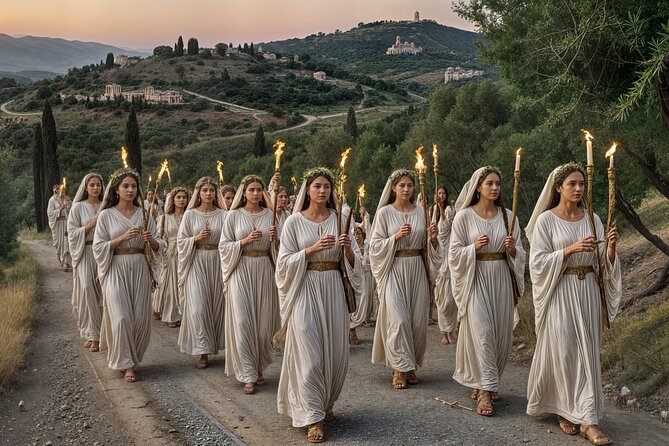
The ancient Sacred Way ran from Athens to Eleusis, a distance of roughly 20 kilometers, and served as the route for religious processions connected with the Eleusinian Mysteries. Those rites honored Demeter and Persephone and promised initiates some form of hope beyond ordinary life, though the central ceremonies were kept secret.
That secrecy gives the route a special quality. You are not simply moving between two ruins. You are following the path once used by pilgrims carrying sacred objects, singing hymns, and preparing to enter a sanctuary where outsiders were not allowed to know everything that happened.
The modern route is not one continuous walking trail. Athens has grown around much of it, roads and modern buildings have replaced sections, and you travel mainly by vehicle. Still, the sequence makes sense. Kerameikos marks the starting point, the fragments near the Kifisos River show how the road worked, Daphni adds a later religious layer, and Eleusis reveals the destination.
I find this more rewarding than a quick out-and-back to one isolated ruin. The story develops as you go. Just keep your expectations straight: this is a private transport and commentary experience, not a full walking pilgrimage with a licensed archaeologist.
You can also read our reviews of more private tours in Athens

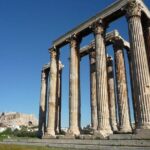

Kerameikos, where the procession began
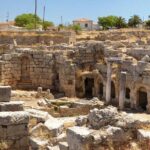
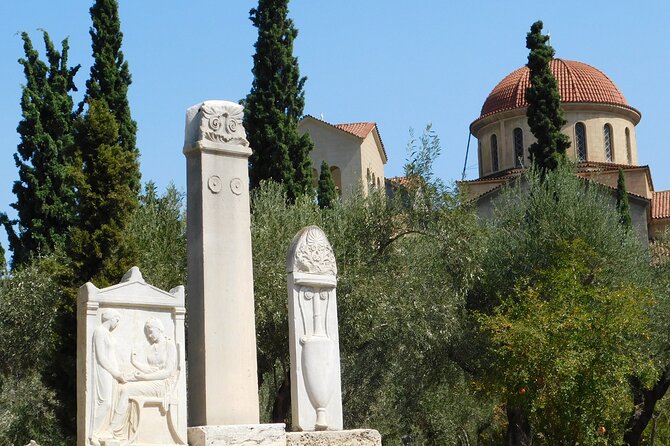
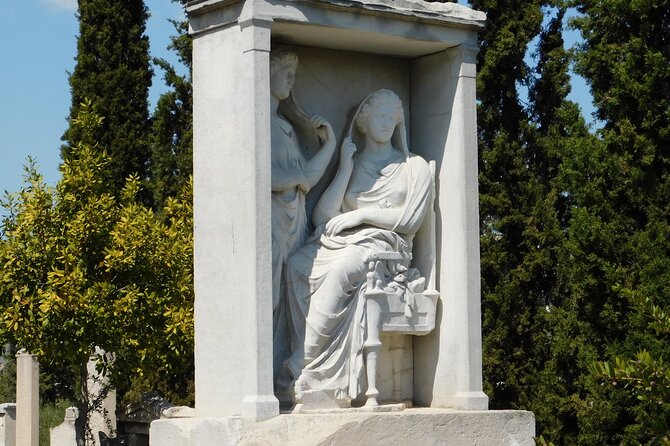
The ancient cemetery of Kerameikos is one of Athens’ most atmospheric archaeological areas. Its name comes from the potters who once worked here, but the site became best known as the city’s main burial ground and the point where the Sacred Way began its journey toward Eleusis.
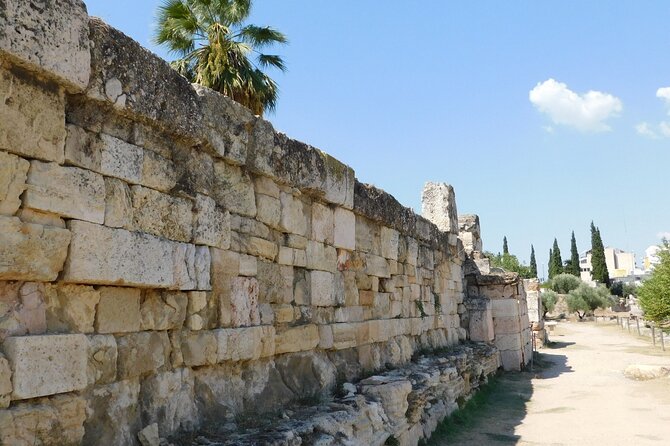
Allow about 30 minutes at the archaeological site, followed by short visits to the Dipylon Gate and Pompeion. You will see stretches of the ancient city walls, funerary monuments, grave markers, and the remains of the gates that controlled movement in and out of Athens.
The cemetery offers a useful counterpoint to the Acropolis. Instead of looking up at temples on a hill, you are looking closely at the way Athenians remembered the dead. Carved stelae and grave goods reveal family ties, social standing, artistic skill, and ideas about death.
The Dipylon Gate was the largest gateway in ancient Athens and a major entrance for people, goods, and public processions. The Panathenaic procession passed through it on its way toward the Acropolis, while the Sacred Way headed west from the same general area.
The Pompeion was connected with ceremonial preparations for the Panathenaic procession. Its remains are not as visually grand as the Acropolis, so the driver-guide’s explanation matters here. Pericles, Periklis, and Dimitris are among the guides associated with this experience, and the strongest part of their work is reported to be storytelling that connects scattered stones with the rituals once performed there.
The Kerameikos Museum deserves its own half hour. Pottery, funerary sculptures, inscriptions, and burial objects help you read the outdoor site. If you rush through the museum, the cemetery can feel like a collection of fragments. If you take time with both, the human side of ancient Athens comes through.
Admission is not included, so check the combined ticket or current entry arrangements before you go. The schedule allows only about 30 minutes for the main site and another 30 minutes for the museum, which is enough for an overview but not a slow, scholarly visit.
Following Iera Odos through modern Athens
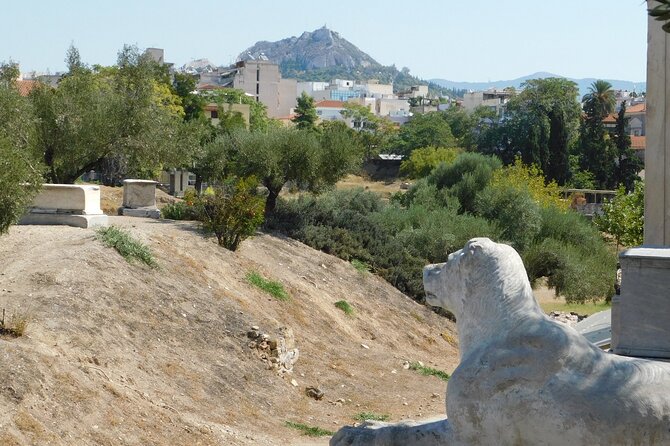
After Kerameikos, the vehicle follows the direction of the Sacred Way through parts of present-day Athens and Aigaleo. Several brief stops show how little survives in a city that has been occupied and rebuilt for thousands of years.
Near the Eleonas Metro Station, archaeological remains mark a section of the ancient road and a bridge crossing over the Kifisos River. Three surviving piers suggest a bridge of at least five arches. You will spend about 10 minutes here, so this is a quick orientation stop rather than a major ruin to explore.
The importance is easy to miss without context. Pilgrims did not simply walk across empty ground. They crossed rivers, passed gates, and moved through working parts of the ancient world. This bridge fragment gives the Sacred Way a practical side. It was a route for trade and ordinary movement as well as religious ceremony.
Another brief stop in Aigaleo focuses on the ancient road itself. Do not expect a long, uninterrupted stretch of original paving. The value is in understanding the route and its place in the Eleusinian procession.
This is one reason a private vehicle helps. You can connect small archaeological clues spread across a large urban area without trying to piece them together by public transport. The tradeoff is that several stops last only 10 minutes, so you may spend more time hearing about a place than examining it.
Daphni Monastery adds a Byzantine chapter
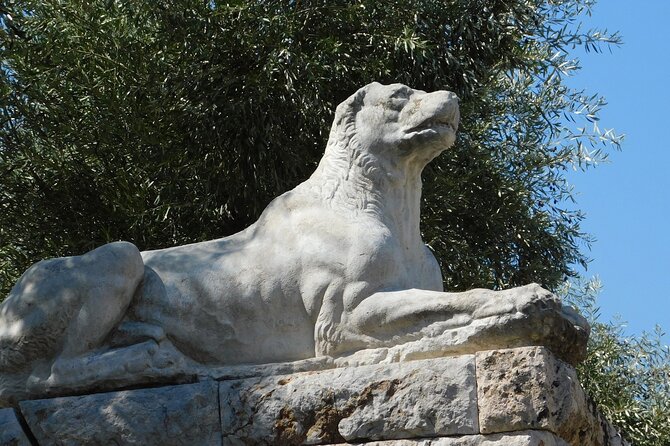
The Monastery of Daphni is the route’s most striking change of mood. Built in the 11th century and recognized as a UNESCO World Heritage Site, it sits along the old Sacred Way but belongs to the Byzantine Christian world, not classical pagan Greece.
Inside, the famous mosaic of Christ Pantocrator in the dome commands attention. Cypress trees and the monastery’s quiet setting make this a welcome pause after the traffic and exposed ruins of Athens.
The visit is scheduled for about 30 minutes and admission is listed as free. Opening arrangements can change, so it is sensible to confirm access before setting out. The monastery also gives the driver-guide a chance to explain how sacred places can acquire new meanings over time.
I especially like this stop because it prevents the day from becoming a single-note march through ancient Greek mythology. You see classical funerary art, a Roman bridge, Byzantine mosaics, and later religious traditions on one compact route.
The Sanctuary of Aphrodite and the limits of short stops
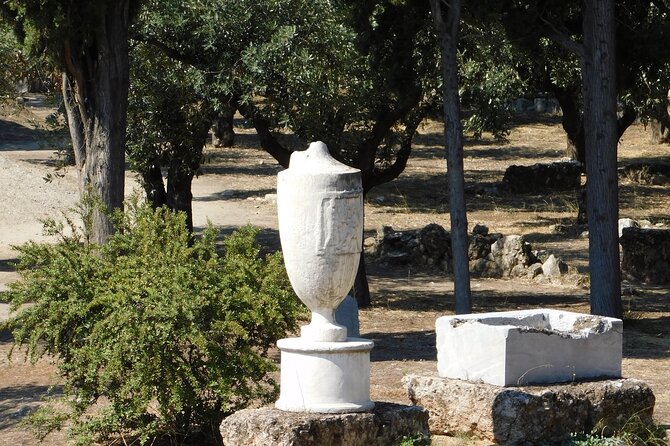
The remains of the Sanctuary of Aphrodite near Skaramagkas offer another small piece of the old pilgrimage road. The sanctuary honored Aphrodite and was located near the route from Athens to Eleusis.
Access depends on the day. The interior is open to the public on weekends. On weekdays, the stop is limited to viewing the site from outside and taking photographs.
That distinction matters. If this sanctuary is a priority, schedule the tour for a weekend and confirm the access details. Otherwise, treat it as a roadside historical marker, a chance to picture the network of shrines and sacred places that surrounded the main Eleusinian destination.
The tour also stops at a Roman bridge about one kilometer east of the Sanctuary of Demeter. Built during the reign of Hadrian around 125 CE, it measures about 50 meters long and 5.30 meters wide, with four arches and sloping approaches.
This is a short 10-minute stop, but the bridge is a useful reminder that the Sacred Way remained part of a functioning road system. Roman engineering supported the same route once used by Greek pilgrims.
A few more Athens tours and experiences worth a look



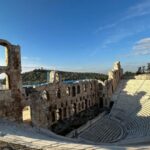

Eleusis and the heart of the Mysteries
Eleusis is where the day gains its emotional weight. The sanctuary was dedicated to Demeter and Persephone, and its rituals became among the most important religious ceremonies of the ancient Greek world.
The archaeological site and museum receive about 30 minutes each in the schedule, with additional short stops inside the sanctuary. That is enough to identify the major monuments, but you will need to move with purpose. If you want time to study inscriptions, compare architectural details, and read every display, ask about extending the visit or accept that this tour offers an introduction rather than a full archaeological study.
The Great Propylaea formed the monumental entrance to the sanctuary. Built in the second century CE under Marcus Aurelius, it echoed the Propylaea of the Acropolis. Its scale signaled that pilgrims were crossing from ordinary civic life into a sacred precinct.
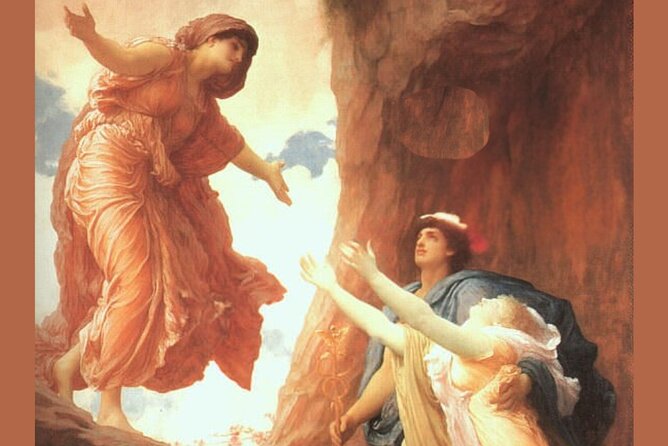
The Kallichoron Well is tied to the story of Demeter’s grief. According to the ancient tradition, Demeter rested here while searching for Persephone. The name means well of the beautiful dances, linked to the women who were said to have danced there in comfort and celebration.
Nearby, the Ploutonion is associated with Plouton, or Hades. The cave was viewed as a possible entrance to the Underworld and connected the physical sanctuary with the story of Persephone’s descent and return.
These stops are small, but they are excellent for mythology. The driver-guide can help you keep the characters and symbols straight: Demeter represents the loss of her daughter, Persephone links the worlds above and below, and the agricultural cycle gives the story its larger meaning.
The Telesterion was the great initiation hall at the center of the sanctuary. This was where the secret rites took place. The ruins cannot reveal the ceremony itself, and that is part of the fascination. You can see the scale of the room and the surrounding sacred precinct, but the central experience remains unknowable.
I would not expect a dramatic, intact temple interior. Eleusis is a site of foundations, walls, thresholds, and partial structures. Its power comes from the connection between myth, place, and ritual, not from a single perfectly preserved building.
The Eleusis Museum makes the stones easier to read
The Archaeological Museum of Eleusis is a necessary companion to the outdoor ruins. Its collection includes statues of Demeter and Persephone, reliefs, offerings, funerary objects, and other finds from the sanctuary.
The museum helps explain what the site looked like and how people used it. After seeing the Great Propylaea and Telesterion in fragments, you can study the sculpture and carved reliefs that carried the sanctuary’s religious messages.
The planned 30-minute visit is brisk. I would make the museum a priority rather than treating it as spare time after the ruins. The outdoor site gives you scale and setting. The museum provides the details.
Printed guides are also provided, according to the tour information, and they can help fill in the gaps when you are exploring without a licensed guide inside the monuments. Still, you should know the limits. The driver can explain the sites and supply historical material, but the tour does not include an official guide walking through the archaeological areas with you.
Lunch in Eleusis, with the bill left to you
The day ends with about 45 minutes at a traditional Greek taverna in Eleusis. Lunch is not included, but the stop gives you a chance to try local dishes instead of ending the tour the moment the museum closes.
Expect the kind of meal associated with a Greek taverna: grilled meats, salads, tzatziki, eggplant dip, and other familiar regional dishes. The exact restaurant and menu are not specified, so think of this as a flexible local meal stop rather than a formal food tour.
I like the timing. Ancient sanctuaries are best followed by a pause, especially after several hours in the sun. But if you are watching your budget, remember to add the meal to the advertised price.
Is $129 a good value?
At $129, the experience can be a sensible choice for a small group that values private transport and a custom pace. You get hotel or cruise-port pickup and drop-off, an air-conditioned vehicle, bottled water, WiFi, and an English-speaking driver with extensive historical knowledge.
Groups of one to four use a luxury sedan. Groups of five to seven use a minivan. That makes the cost more attractive when shared among several people, though you should confirm the current per-booking or per-person pricing before paying.
The price is less compelling if you expect a fully guided archaeological tour. Entrance fees are extra, lunch is extra, tips are extra, and no licensed guide accompanies you inside the sites. One customer paid about 120 euros per person and felt the service was closer to transport with basic explanations than to a traditional guided tour. That is a fair warning for anyone comparing this with a private archaeologist-led excursion.
On the other hand, the tour offers something a standard museum visit cannot: a connected route through several small sites that are awkward to reach independently. The private vehicle also saves you from arranging separate taxis between Kerameikos, Daphni, Skaramagkas, and Eleusis.
Who should book this private Sacred Way tour?
I would recommend it most strongly if you:
- Have a serious interest in ancient Greek religion and mythology.
- Want to see Eleusis without arranging several transport links.
- Prefer a private car to a large group coach.
- Are staying in Athens or arriving at the port.
- Enjoy historical storytelling but do not require an official guide at every monument.
- Are comfortable paying separate admission and meal costs.
I would think twice if you want a slow, highly detailed archaeological visit. The schedule includes many short stops, and the total five to six hours includes driving time. You will see a lot, but you will not have unlimited time at every ruin.
Comfortable shoes are essential. Bring water, a hat, and sunscreen, even though bottled water is supplied. Much of the archaeology is outdoors and exposed, and the tour requires walking over uneven ground.
Free cancellation is available up to 24 hours before the start time. Cancellations within 24 hours are not refunded, and poor weather may lead to a new date or a full refund. Optional airport pickup costs extra.
My verdict on the Kerameikos to Eleusis journey
This is a strong choice for seeing the Sacred Way as a connected story rather than as a pile of unrelated ruins. Kerameikos gives you the starting point, Daphni offers a beautiful Byzantine pause, and Eleusis brings the myths of Demeter and Persephone into focus through the Great Propylaea, Kallichoron Well, Ploutonion, Telesterion, and museum.
The tour’s reported rating of 4.9 out of 5, with 95 percent recommending it, reflects the appeal of the private format and the warmth of guides such as Pericles and Dimitris. The praise centers on engaging stories, good organization, printed materials, and personal attention.
Book it if you want a comfortable, private historical outing and understand that your driver-guide is not a licensed guide inside the archaeological sites. Skip it if the $129 price feels high once tickets, lunch, and tips are added, or if you want expert archaeological instruction at every stop. For the right kind of history-minded visitor, this is one of the more thoughtful ways to connect Athens with its ancient religious world.
FAQ
How long does the tour last?
The tour lasts approximately five to six hours, including the time spent driving between locations.
Where can pickup and drop-off take place?
Pickup and drop-off are available at your Athens hotel or cruise ship port. Airport pickup is optional and costs extra.
What type of vehicle is used?
Groups of one to four people travel in a luxury sedan. Groups of five to seven use a comfortable minivan. Vehicles are air-conditioned.
Are entrance fees included?
No. Entrance fees for the archaeological sites and museums are not included in the tour price.
Does a licensed guide accompany the group inside the sites?
No. The experience includes an English-speaking driver-guide with historical knowledge, but not a licensed guide accompanying you inside the archaeological sites.
Is lunch included?
No. A 45-minute lunch stop at a traditional taverna in Eleusis is scheduled, but you pay for your own meal.
What happens if I need to cancel?
You can receive a full refund if you cancel at least 24 hours before the start time. Cancellations or changes made within 24 hours are not accepted or refunded. If poor weather causes the tour to be canceled, you will be offered another date or a full refund.