REVIEW · THESSALONIKI
Private Thessaloniki Walking UNESCO Monuments Tour – 4 hrs
Book on Viator →Operated by Greece Guided Tours by Efi Kalampoukidou · Bookable on Viator
Thessaloniki’s best monuments are spread across hills, old streets, excavated ruins, and busy modern avenues. This private walk brings them together in four hours, with Efi Kalampoukidou guiding the route from the city center up to Ano Poli and back toward the White Tower. I like the mix of major UNESCO sites and less obvious corners, especially the views from Vlatadon Monastery and the old walls. I also like that Efi can shape the conversation around subjects such as early Christian art, Jewish history, Roman Thessaloniki, or local food.
The catch is simple: this is a serious walking tour. You will cover uneven ground and uphill sections, and the schedule is fairly full. The advertised Rotunda fee is inconsistent, listed once as €6 and elsewhere as €10 per person, so confirm the current charge before you go.
In This Review
- Key points to know before booking
- Why this four-hour route works
- Starting at the Venizelos statue
- Ano Poli and the city walls
- Vlatadon Monastery and a wide city view
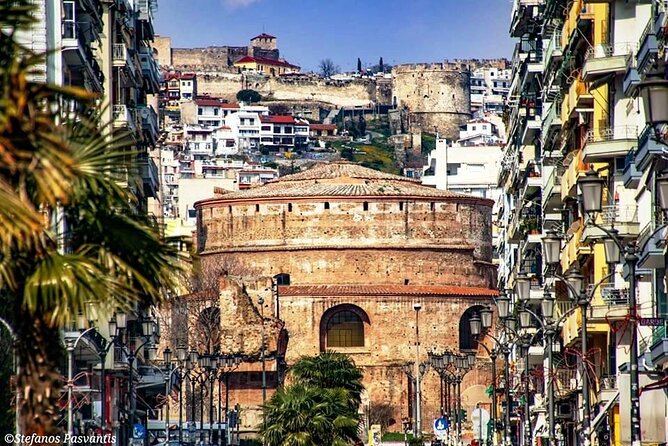
- The Rotunda, Thessaloniki’s standout monument
- Saint Demetrius, the city’s patron church
- The Greek Agora and Roman Forum
- What Efi adds beyond the monument list
- Pace, walking conditions, and group size
- Who gets the best value
- Booking details and the small points to check
- Should you book the UNESCO monuments walk?
- FAQ
- How long does the Thessaloniki UNESCO monuments tour last?
- Is this a private tour?
- Who leads the tour?
- Where does the tour start and finish?
- Is transportation included?
- Is the Rotunda entrance fee included?
- How much walking is involved?
Key points to know before booking
- A private route for up to 10 people: Your group has Efi’s attention rather than sharing a guide with strangers.
- Five important stops: The route covers Ano Poli, Vlatadon Monastery, the Rotunda, Saint Demetrius, and the Greek Agora and Roman Forum.
- Strong city views: The upper town, monastery, and fortifications give you a useful sense of Thessaloniki’s position above the Thermaic Gulf.
- A history-heavy morning: Early Christian, Byzantine, Roman, Greek, and Ottoman chapters all enter the story.
- Walking replaces transport: No private vehicle is included, so good shoes and a reasonable fitness level matter.
- A useful first-day orientation: Efi can point out markets, restaurants, shopping areas, and local foods to help shape the rest of your stay.
Why this four-hour route works
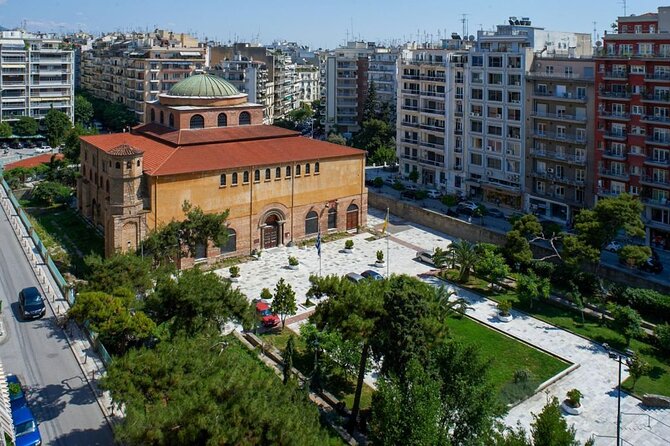
Thessaloniki can feel confusing at first. Ancient remains sit beside apartment blocks. Byzantine churches appear along ordinary streets. The old upper town rises sharply above the center, while the waterfront and White Tower pull you in the opposite direction.
That mix is exactly why a private guide helps. You are not simply checking monuments off a list. You are learning how the pieces fit together. Efi’s route connects the Roman city, the early Christian center, Byzantine Thessaloniki, and the modern city you see today.
The experience costs $232.39 per private group of up to 10 people. For two people, that is a fairly substantial spend. For six to ten people, the price becomes much more attractive because you are paying for the group rather than a separate ticket for each person. The certified guide is included, but admission to the Rotunda is not.
I see this tour as an orientation walk with serious historical content. It is especially useful near the start of a stay, when you want help understanding where to eat, which markets to visit, and how the upper town connects with the central streets. If you already know Thessaloniki well, four hours may feel less necessary unless you want focused Byzantine and UNESCO interpretation.
You can also read our reviews of more walking tours in Thessaloniki



Starting at the Venizelos statue
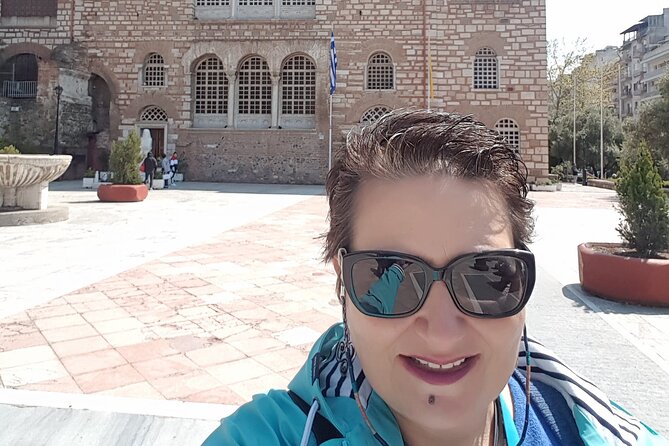
The tour begins at the Statue of Eleftherios Venizelos on Egnatia Street, near the center. This is a practical starting point because the route then moves through several major historic districts rather than beginning at a remote attraction.
Your endpoint is near the White Tower, one of Thessaloniki’s best-known waterfront landmarks. That arrangement gives the walk a useful shape: start inland, climb toward the upper town, visit the historic core, then finish closer to the sea.
The published morning time is Monday through Saturday from 9:00 to 11:00, within a four-hour tour window. Since the supplied schedule and the four-hour duration do not perfectly match, confirm the exact start time when booking. Confirmation is sent within 48 hours, subject to availability.
Ano Poli and the city walls
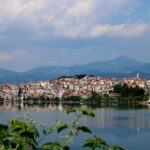
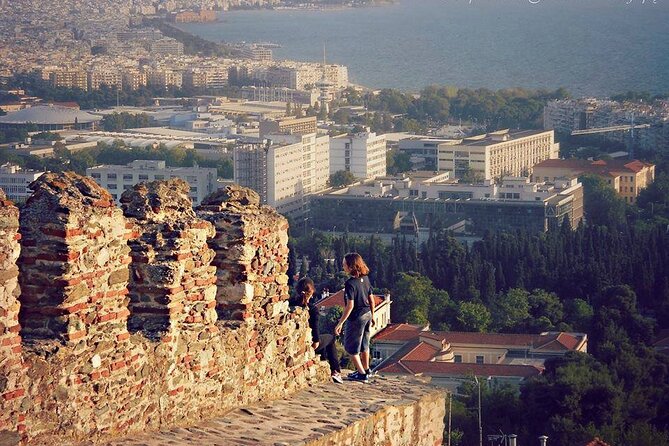
The first listed stop is Ano Poli, the upper town. You spend about 20 minutes near the Byzantine fortification and the high part of the city.
This is a good place to begin because Thessaloniki makes more sense from above. The walls show how the city was defended, while the height helps you understand the relationship between the old town, the center, and the bay. The views are one of the strongest parts of the route.
Do not expect a long archaeological visit here. The scheduled stop is short, and the emphasis is on the fortification, the setting, and the story Efi tells around it. You may also walk over uneven surfaces, so sturdy shoes are more useful than fashionable ones.
The upper town is not a flat introduction to Thessaloniki. If you have knee, balance, or stamina concerns, speak with the guide before setting out. The activity description calls for strong physical fitness and warns of substantial walking.
Vlatadon Monastery and a wide city view
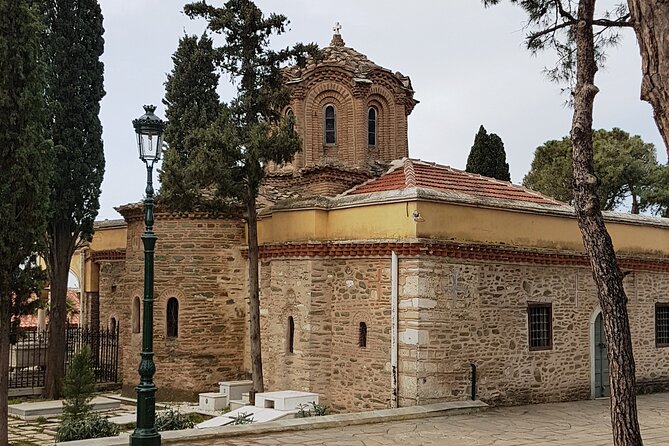
Vlatadon Monastery receives another 20 minutes. It is described as a small old church with frescoes, still used as a monastery, and it offers fine views across the city.
This stop gives the tour a quieter pause after the walls. The church is modest in scale, but that is part of its appeal. You get a closer look at religious art and worship in a setting that feels less grand than the Rotunda or Saint Demetrius.
The views also add value. After hearing about fortifications and old districts, you can look out across Thessaloniki and place those ideas on the ground. Efi’s commentary is likely to matter most here, since a small church can be easy to overlook without someone explaining what you are seeing.
The stop is listed with admission included. Still, opening hours at religious sites can vary, so your guide may need to adjust the order if access changes. That is one advantage of a private tour: the schedule has some room to respond to the day.
The Rotunda, Thessaloniki’s standout monument
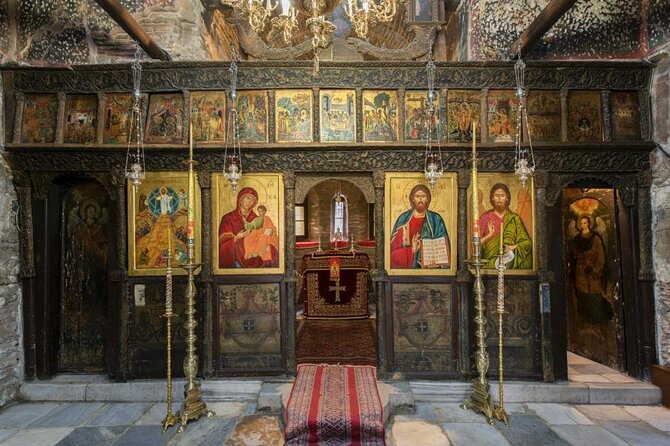
The Rotunda is allotted 20 minutes and is described as the most impressive UNESCO monument in the city. It is also presented as unique in Greece, a claim that points to its unusual form and long religious history.
This is the stop where the tour’s early Christian and Byzantine focus becomes clearest. Inside, you can expect a powerful sense of scale and a monument that has been shaped by more than one era. The building deserves a guide because bare walls and mosaics do not explain themselves. Efi’s role is to connect the architecture and art with the changing city around it.
Admission is not included. The supplied details list both €6 and €10 per person, so treat the price as unsettled and confirm it before arrival. That extra fee is small compared with the private guiding cost, but it is still useful to budget for it, especially in a larger group.
Twenty minutes is enough for a focused visit, not a slow study of every feature. If the Rotunda is your main interest, tell Efi in advance. The tour is private, and the guide has already shown a willingness to adjust the emphasis to suit specific interests.
You can also read our reviews of more private tours in Thessaloniki



Saint Demetrius, the city’s patron church
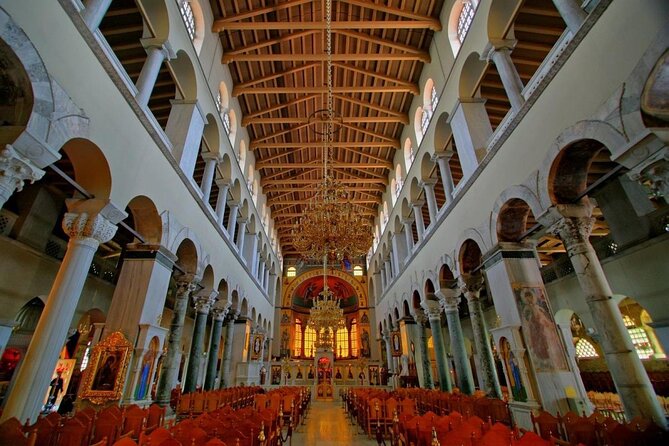
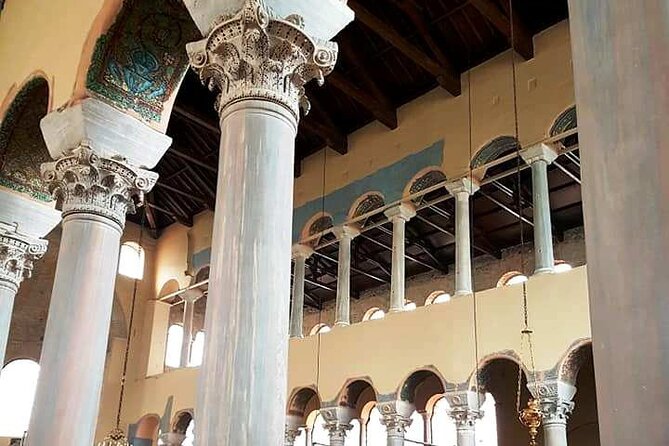
The Holy Church of Saint Demetrius is the most important and largest church in Thessaloniki, dedicated to the city’s patron saint. The scheduled visit lasts about 20 minutes, and admission is included.
This is an important stop for anyone interested in Christian art, worship, or the way a city expresses its identity through a patron saint. It also gives the route a different feel from the Rotunda. The Rotunda is unusual and monumental. Saint Demetrius is central to Thessaloniki’s religious life and civic story.
You will want to listen closely to the explanation of the church’s mosaics, architecture, and place in the city. The route does not promise an extended art-history lecture, but Efi is described as presenting information at a manageable pace and answering questions. That matters in a church, where visitors can otherwise move through quickly without grasping what makes the site important.
As with any active religious building, respectful clothing and quiet behavior are sensible, even though specific dress rules are not provided. The visit is short, so use the time well and ask questions rather than trying to photograph everything.
The Greek Agora and Roman Forum
The final listed historic stop is the Greek Agora and Roman Forum, with about 15 minutes for walking around and taking photos. This is the largest central excavation in the city.
The forum helps explain how public life worked in ancient Thessaloniki. It is not presented as a long museum visit. Instead, you walk around the excavation, take in the scale, and let the guide place the remains within the city’s wider story.
The short timing is worth noting. If you love archaeology, 15 minutes may leave you wanting more. If you are trying to see several major sites in one morning, it keeps the day moving. The forum admission is not included, and the supplied information does not give a separate ticket price.
Because the route includes more monuments along the way, the five named stops are not necessarily the only things you will see. Efi can add context between sites, and the walk itself becomes part of the lesson. Thessaloniki is at its most interesting when an ordinary street suddenly reveals a Roman, Byzantine, or Ottoman layer.
What Efi adds beyond the monument list
The strongest part of this experience is the guide’s ability to connect history with everyday Thessaloniki. Efi speaks excellent English and has a background as a certified guide. Her approach includes asking what you care about before or during the tour, then shifting the emphasis accordingly.
That flexibility is especially useful in Thessaloniki, a city shaped by many communities and periods. You can focus on early Christian history and art, or ask about Jewish history and the city’s mix of Greek, Roman, Byzantine, and Ottoman influences.
Efi also offers practical help beyond dates and buildings. She has pointed out food markets, shopping areas, restaurants, and local specialties, including the triangle-shaped cream sweets associated with the area. On one occasion, she helped arrange airport transport for the following day. On another, she assisted with finding a lunch reservation during a national holiday.
These extras are not formal inclusions, so you should not book expecting transport, meals, or restaurant reservations. Still, they show how a private guide can make a short stay easier. You get local orientation as well as monument commentary.
Pace, walking conditions, and group size
Four hours is enough time to see a lot, but it is not a relaxed café crawl. The route includes uphill walking, old surfaces, and more monuments along the way. You need a strong physical fitness level, and comfortable shoes are essential.
The private format helps with pace. Efi can stop for questions, coffee, food, or bathroom breaks when appropriate, and she can avoid racing through a subject that interests you. That said, the main stops are tightly timed, with most visits lasting 20 minutes and the Roman Forum receiving 15 minutes.
A group of two can make the walk feel conversational. A group of ten still gets a private guide, but it will take longer for everyone to gather at crossings and hear explanations. If your party is large, agree on a meeting habit before starting so nobody is left behind on the hilly streets.
The endpoint near the White Tower is convenient for continuing along the waterfront or returning to central Thessaloniki. Private transportation is not included, and this is explicitly a walking tour, so plan your arrival and departure around that fact.
Who gets the best value
I would recommend this tour to first-time visitors who want a strong historical framework in one morning. It suits couples, families with older children, and small groups of friends who prefer private conversation to a large scheduled group.
It is also a good match for people with specific interests. Tell Efi if you care most about:
- Early Christian art and architecture
- Byzantine churches and fortifications
- Jewish history in Thessaloniki
- Roman and ancient Greek remains
- Local markets and food
- Restaurant suggestions for the rest of your stay
The tour is less suitable if you want a slow, unstructured walk or if you cannot manage hills and uneven ground. It may also be less satisfying for repeat visitors who have already seen the Rotunda, Saint Demetrius, and the Roman Forum and do not need help linking them together.
The cost makes most sense for a group. At $232.39, two people pay a premium for privacy and personal attention. With a larger party of up to 10, the per-person cost drops sharply, making the guide’s local knowledge and flexible pacing a better deal.
Booking details and the small points to check
Free cancellation is available if you cancel at least 24 hours before the start time. Changes or cancellations made inside that window are not accepted for a refund, and cut-off times follow local Thessaloniki time.
The booking confirmation arrives within 48 hours, subject to availability. I would use that communication to confirm the exact meeting time, the current Rotunda admission fee, and the route’s final order.
The published tour period runs from April 14, 2021, through March 20, 2027, with Monday to Saturday morning hours listed. Because schedules and monument access can change, verify the details close to your visit.
Should you book the UNESCO monuments walk?
Book it if you want Thessaloniki explained by a local guide rather than simply photographed. Efi’s personal approach, strong English, and willingness to adjust the focus add real value, particularly if you are interested in early Christian art, Byzantine sites, Jewish history, or local food.
I would be most likely to choose it for a first or second day in the city, when the views, markets, restaurants, and street layout can shape the rest of your visit. Just plan for hills, wear proper shoes, budget for the Rotunda ticket, and confirm the conflicting admission price before you go.
FAQ
How long does the Thessaloniki UNESCO monuments tour last?
The tour lasts approximately four hours.
Is this a private tour?
Yes. Only your group participates, and the group can include up to 10 people.
Who leads the tour?
The tour is led by Efi Kalampoukidou from Greece Guided Tours. A private certified guide is included.
Where does the tour start and finish?
The tour starts at the Statue of Eleftherios Venizelos, Egnatia 78, Thessaloniki 546 24, Greece. It ends near the White Tower of Thessaloniki.
Is transportation included?
No. Private transportation is not included because this is a walking tour through the city.
Is the Rotunda entrance fee included?
No. The Rotunda admission fee is not included. The supplied details list the fee as both €6 and €10 per person, so confirm the current amount before visiting.
How much walking is involved?
The tour includes substantial walking, some on uneven surfaces and uphill sections. A strong physical fitness level is advised.