REVIEW · ATHENS
Private Tour: the Acropolis & Acropolis Museum
Book on Viator →Operated by Athens Walking Tours · Bookable on Viator
The clever part of this Athens tour is the pairing: you see the Acropolis monuments in place, then visit the Acropolis Museum to understand how the Parthenon and its sculpture once looked. That museum follow-up gives meaning to the weathered stones above.
I like the private format, which lets your guide adjust the pace and explain details that are easy to miss. I also like the friendly, story-driven guiding associated with Olesya, Georgina, and Efi, including special care for children. The main drawback is cost: at $231.89 per person, with entrance fees of about €35 extra, this is not a budget outing.
In This Review
- Key points at a glance
- Why the Acropolis and museum belong together
- A private guide changes the pace
- Beginning at Dionysiou Areopagitou Street
- The Acropolis hill and its major monuments
- Theatre of Dionysus and Sanctuary of Asclepius
- Herodes Atticus Odeon from above
- Propylaea, the monumental gateway
- The Parthenon up close
- Temple of Athena Nike
- Erechtheion and the Caryatids
- Agrippa Monument
- The Acropolis Museum for a clearer picture
- What the price really gets you
- Who should book this Athens experience?
- My take: a strong choice for guided context
- FAQ
- How long does the private Acropolis and museum tour last?
- Is the tour private?
- What language is offered?
- Are entrance tickets included?
- Where does the tour begin?
- Where does the tour end?
- Is hotel pickup included?
- What level of fitness is needed?
Key points at a glance
- Two essential Athens sights in 3.5 hours: Visit the Acropolis and finish at the modern Acropolis Museum.
- Private attention: Only your group takes part, so you can ask questions and set a comfortable pace within the planned schedule.
- Strong family appeal: Guide Georgina is praised for using stories and a warm manner to keep children engaged.
- Excellent monument coverage: See the Parthenon, Erechtheion, Caryatids, Propylaea, Temple of Athena Nike, and ancient theaters.
- Useful extras: An Athens magazine and city map help you plan the rest of your stay.
- Plan for extra costs: Acropolis and museum admission are not included, and hotel transport, food, drinks, and gratuities are also separate.
Why the Acropolis and museum belong together
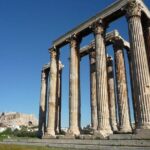
Athens can leave you with a familiar problem: you see the Parthenon, take the required photographs, and still wonder what the place looked like in its prime. This tour tackles that problem by putting the open-air monuments first and the museum second.
Up on the Acropolis, you encounter the actual setting: the steep hill, the monumental gateways, the temples, and the wide views over Athens. At the museum, you can look at sculpture and architectural pieces in a clean, modern setting. The two halves answer different questions. The hill shows you the surviving structure, while the museum helps you picture the colors, decoration, and missing pieces.
That order also makes practical sense. The Acropolis requires walking and attention to uneven ancient ground, so it is best handled while you have energy. The museum then gives you a calmer final hour and fifteen minutes, with time to look around at your own pace.
You can also read our reviews of more private tours in Athens


A private guide changes the pace
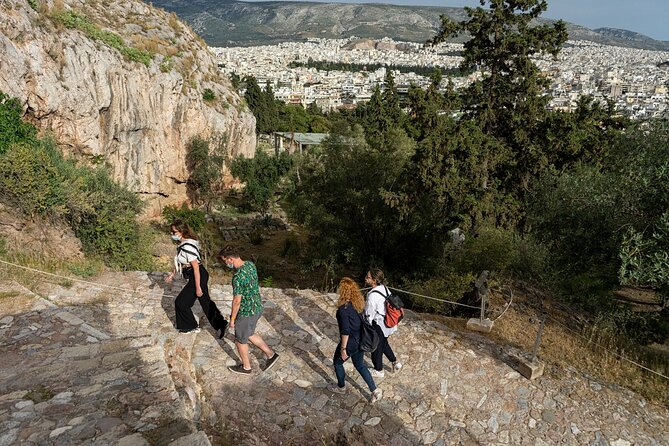
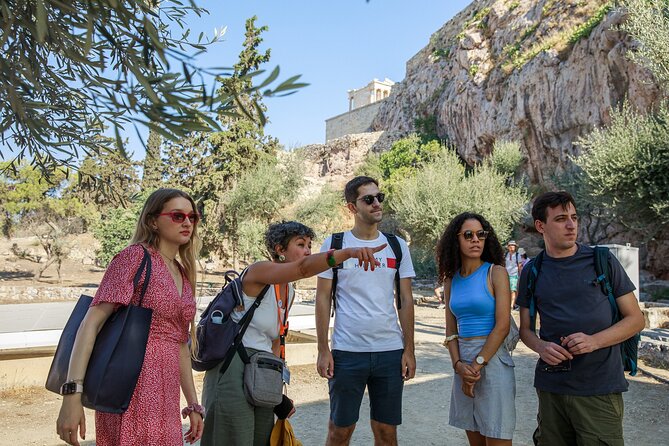
This is not a large group following a flag through a set script. The activity is private, and only your group participates. That matters most at a place as busy and visually crowded as the Acropolis, where a good explanation can easily be lost in the noise.
Your guide is licensed locally and speaks English. The supplied guide names include Olesya, Georgina, and Efi, though the particular guide assigned to your booking may differ. The strongest pattern in the comments is not simply factual information, but the way these guides present it. Olesya is described as generous and lively in her explanations. Georgina is praised for a warm approach with children. Efi is noted for experience, humor, and the ability to handle an energetic family group.
Those details make this tour especially suitable for families and first-time visitors. You can ask why a temple was built, what a myth means, or how a damaged sculpture ended up in the museum. A private guide also gives you a better chance to pause for photographs without feeling that you are holding up a busload of people.
The tradeoff is that a private tour costs more than joining a shared group or visiting independently. At $231.89 per person, the value rests on how much you want personal explanation and a carefully organized visit.
Beginning at Dionysiou Areopagitou Street
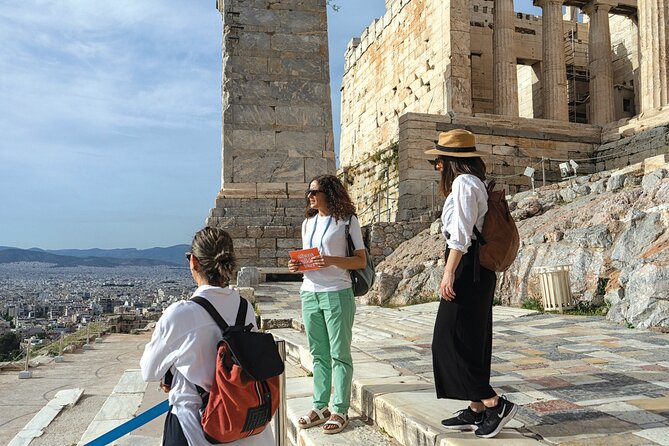
The meeting point is Dionysiou Areopagitou 3, near the Acropolis. The tour ends at the Acropolis Museum, at Dionysiou Areopagitou 15. Since there is no hotel pickup or drop-off, you need to make your own way to the start and arrange your onward transport.
The location is near public transportation, which is useful in central Athens. Allow enough time to reach the meeting point without rushing. A late arrival can matter on a timed archaeological visit, especially when your admission tickets are separate from the tour price.
The total duration is about three hours and thirty minutes. That is long enough to cover the major monuments and the museum, but not so long that the day becomes a full archaeological marathon. You should still expect a moderate level of physical effort. The Acropolis is a hill, and the visit involves walking between several ancient sites.
Wear practical shoes and bring water. Those are sensible precautions for any Acropolis visit, even though food and drinks are not included in the tour.
The Acropolis hill and its major monuments
The main Acropolis visit is planned for about an hour and a half, with several monuments covered along the way. Your guide provides the larger story, then points out the details that are easy to pass without context.
Theatre of Dionysus and Sanctuary of Asclepius
The Theatre of Dionysus is one of the first major stops, with about twenty minutes scheduled for the theater and the nearby Sanctuary of Asclepius. This is a useful opening because the Acropolis was not only a place of temples and political power. It was also tied to drama, public life, worship, and healing.
The theater gives you a sense of how public performance fit into ancient Athenian life. The sanctuary adds another layer, connecting the sacred hill with the ancient practice of seeking help from Asclepius, the god associated with healing.
Twenty minutes is enough for an explanation and photographs, but not for a long, leisurely stop. If theater history is a major interest, you may wish you had more time here. For a first visit, the scheduled pause keeps the tour moving toward the summit.
You can also read our reviews of more museum experiences in Athens

Herodes Atticus Odeon from above
The tour allows about five minutes to see the Odeon of Herodes Atticus from above. That is brief, but the viewpoint gives you a striking look at the curved ancient performance space below the Acropolis entrance.
Think of this as a visual stop rather than a full visit. You will see the structure and hear why it matters, but the tour does not set aside a long period for exploring the Odeon itself.
Propylaea, the monumental gateway
The Propylaea is the grand entrance to the Acropolis. You walk through the monumental gateway before reaching the central temples, and its scale helps explain that this was meant to feel like a formal arrival, not a casual stroll up a hill.
Your guide can help you read the gateway as architecture rather than background scenery. Columns, passageways, and the climb all work together to create a sense of ceremony. The planned ten minutes gives you a chance to take in the structure before moving toward the Parthenon.
The Parthenon up close
The Parthenon receives about twenty minutes. That is the emotional center of the visit, and you will have a close view of the temple dedicated to Athena, the patron goddess of Athens.
Photography is naturally a major part of this stop. The private format helps because your group can pause for the classic views without trying to keep up with a larger party. Still, remember that a photograph only records the outer shell. Your guide is valuable here because the temple’s purpose, design, and surviving decoration are much easier to grasp with explanation.
The museum later adds an important second look. There, you can see how sculpture and architectural decoration relate to the building above, and begin to picture the Parthenon as a finished monument rather than the pale ruin visible today.
Temple of Athena Nike
About ten minutes are set aside for the Temple of Athena Nike. It is smaller than the Parthenon, but its position near the entrance makes it an important part of the Acropolis approach.
The temple was dedicated to Athena and Nike, combining the city’s patron goddess with the idea of victory. Your guide can help you notice how much meaning the Athenians placed in location. Even a compact shrine could command attention when positioned beside the gateway.
Erechtheion and the Caryatids
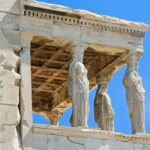
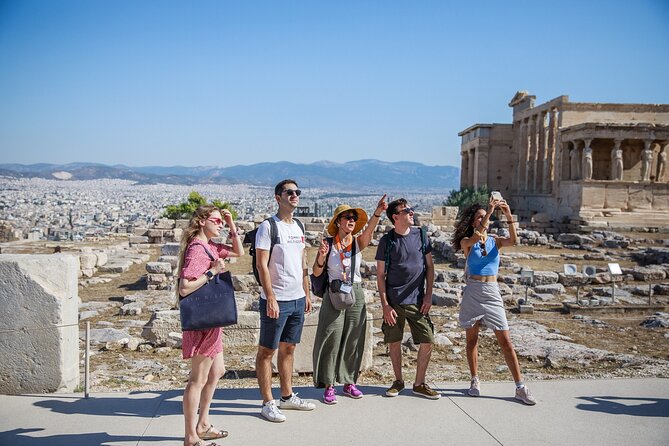
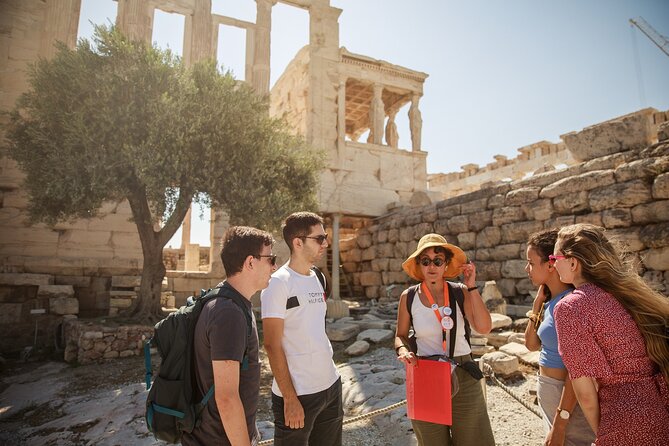
The Erechtheion gets about twenty minutes, and it is one of the most rewarding stops for close observation. Built from Pentelic marble, the temple has an elegant, unusual form that differs from the more regular appearance of the Parthenon.
The famous Caryatids are the stars here. These sculpted female figures serve as architectural supports, making the building appear both graceful and structurally daring. You will see the celebrated figures associated with the Erechtheion and hear why they are so important.
This is a spot where a guide adds real value. The temple can seem puzzling when viewed quickly, with several levels and sacred associations packed into one structure. A clear explanation helps you understand why it does not look like a simple rectangular temple.
Agrippa Monument
The Agrippa Monument is also included among the sights. It is easy to pass by without noticing, which makes it a good example of why a guided visit can be useful. You will see it as part of the Acropolis approach and receive context rather than treating the hill as a collection of famous names only.
The Acropolis Museum for a clearer picture
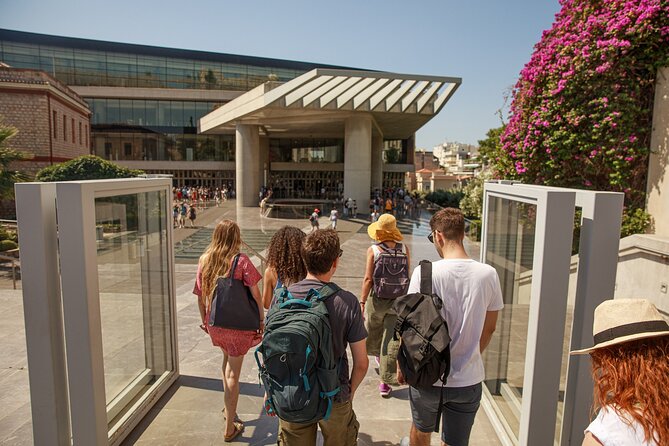
The museum portion lasts about one hour and fifteen minutes, and you explore it at your own pace. That is a welcome change after the structured walk uphill and among the monuments.
The museum is modern and impressive, but the important point for this tour is not simply the building. It serves as a visual companion to the Acropolis. After standing beside the Parthenon, you can examine the sculpture and architectural remains connected to the temples. The museum helps you imagine how the buildings might have appeared when their decoration was intact.
This is also where the tour’s central idea pays off. The guide can connect what you saw above with what you are now seeing behind glass and in the museum galleries. The result is a fuller picture of ancient Athens than either stop provides alone.
Because the museum is self-paced, you can spend more time on pieces that interest you and less on sections that do not. The scheduled hour and fifteen minutes is generous enough for a focused visit, though not necessarily enough for every gallery and every label.
The tour ends here, which is convenient. You are already near the Acropolis and central Athens, so you can continue sightseeing, find a meal, or use the supplied Athens magazine and city map to plan the next stop.
What the price really gets you
The listed price is $231.89 per person. Entrance tickets are not included, with the archaeological site and museum costing about €35 per person according to the tour details. Hotel pickup and drop-off, food, drinks, and gratuities are also separate.
That makes this a premium half-day experience. You are paying mainly for a private licensed guide, not for transport or meals. The value is strongest when you want interpretation, flexibility, and a direct route through Athens’ two essential ancient sights.
For a couple or small family, the private setup can be worthwhile because the guide’s attention is focused on your questions. Group discounts may also affect the final cost, so check the price for your exact party size before booking.
If you are comfortable reading signs and planning your own route, an independent visit will cost less. But you will need to organize admission, manage the order of the sites, and make sense of the monuments yourself. This tour earns its price when you want the meaning of the place explained as you go.
Who should book this Athens experience?
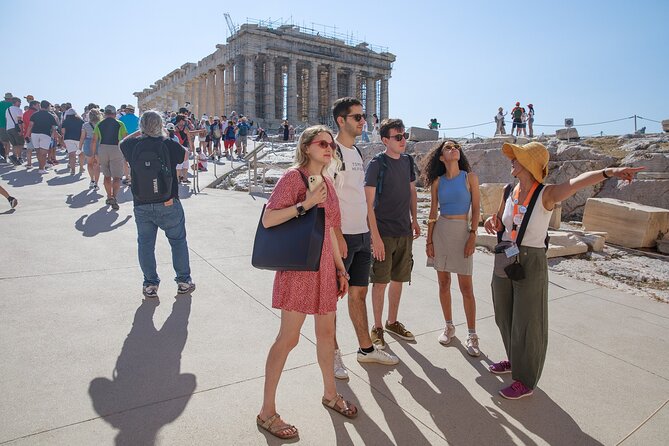
I would choose this tour for a first visit to Athens, a family that wants history presented in an engaging way, or anyone with limited time who wants the Acropolis and museum handled in one organized block.
It is also a good fit if you enjoy asking questions. The private format gives you room to focus on architecture, mythology, daily life, sculpture, or whatever catches your attention.
I would think twice if your main goal is to spend a full day at the Acropolis, linger at every monument, or keep costs very low. The schedule is well planned, but it moves through several important sites. The short stop at the Odeon, in particular, is more of a viewing opportunity than a full exploration.
Free cancellation is available if you cancel at least 24 hours before the start time. Changes or cancellations made less than 24 hours before the experience are not accepted for a refund.
My take: a strong choice for guided context
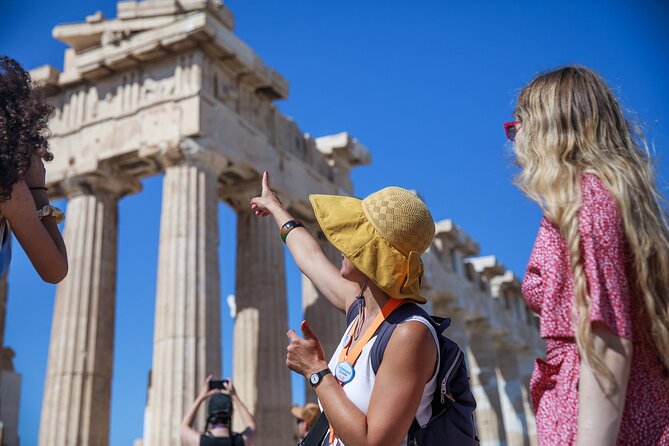
Book this tour if you want the Acropolis to make sense, not just appear in your camera roll. Its best feature is the combination of the real monuments above Athens with the museum’s help in reconstructing their original appearance.
The private guide is the other key reason to choose it. Guides such as Olesya, Georgina, and Efi are associated with warm delivery, humor, family-friendly storytelling, and strong command of Greek history. You should confirm guide arrangements when booking, but the format itself gives you the personal attention many people want at the Acropolis.
Skip it if the $231.89 price, plus roughly €35 in admission fees, does not fit your budget. For everyone else, especially families and first-time visitors, this is a focused and well-balanced way to meet ancient Athens.
FAQ
How long does the private Acropolis and museum tour last?
The experience lasts approximately three hours and thirty minutes.
Is the tour private?
Yes. Only your group participates in the activity.
What language is offered?
The tour is offered in English.
Are entrance tickets included?
No. Admission fees for the archaeological site and Acropolis Museum are not included. The listed estimate is about €35 per person.
Where does the tour begin?
It begins at Dionysiou Areopagitou 3, Athina 117 42, Greece.
Where does the tour end?
It ends at the Acropolis Museum, Dionysiou Areopagitou 15, Athina 117 42, Greece.
Is hotel pickup included?
No. Hotel pickup and drop-off are not included.
What level of fitness is needed?
A moderate level of physical fitness is recommended. The tour includes walking around the Acropolis hill and its monuments.