REVIEW · ATHENS
Running Through the History of Athens with Personal Trainer
Book on Viator →Operated by Olive Sea Travel · Bookable on Viator
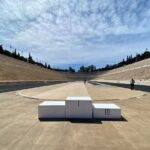
The best moment here comes at the end: you enter Athens’ Old Olympic Stadium, the marble Panathenaic Stadium that hosted the first modern Olympics in 1896. You get there on foot, warmed up by a run past the Acropolis, Ancient Agora, Temple of Hephaestus, and National Garden.
I like two things right away. First, the English-speaking trainer adjusts the pace to the group, so this is not a race or a test of athletic pride. Second, the central route gives you a useful first look at Athens while you exercise. The main consideration is the early start and the need for moderate fitness. One hour sounds easy, but Athens streets and summer heat can make running harder than expected.
In This Review
- Key points about this Athens running tour
- Why a morning run works well in Athens
- Syntagma Square to Ermou Street
- Monastiraki Square and the ancient city
- Views toward the Acropolis and the Temple of Zeus
- The National Garden and Zappeion
- Finishing inside the 1896 Panathenaic Stadium
- What the $66.23 price includes
- The personal touch from Dimitra
- Who should book this running tour?
- Practical details before you lace up
- Should you book it?
- FAQ
- Where does the Athens running tour begin?
- What time does the tour start?
- How long does the running tour last?
- Does the tour enter the Panathenaic Stadium?
- Is the running pace fixed?
- Is the tour offered in English?
- What is included in the $66.23 price?
Key points about this Athens running tour
- The Old Olympic Stadium is included: Your entrance ticket is covered, and the tour ends inside one of Athens’ most memorable sports landmarks.
- The pace is set for the group: The trainer adapts the run to the ability level on the day.
- You see major sights without a long bus ride: The route begins at Syntagma Square and connects central Athens on foot.
- Dimitra has earned special praise: Her calm pacing and local advice make the experience feel personal rather than mechanical.
- The group is capped at 15 people: That is small enough for the trainer to keep an eye on the pack.
- The price is $66.23 per person: Water, the professional trainer, and stadium admission are included, while transportation is not.
Why a morning run works well in Athens

This is a sightseeing tour with running shoes instead of a bus seat. In about an hour, you move from Syntagma Square through central shopping streets, old neighborhoods, ancient monuments, green public gardens, and the stadium that gave the modern Olympic Games their setting.
The 7:30 am departure matters. Athens can be hot, crowded, and noisy later in the day. An early start gives you cooler conditions and a quieter look at several famous places. You should still arrive ready to run, with comfortable shoes and enough water for your own needs, even though bottled water is included.
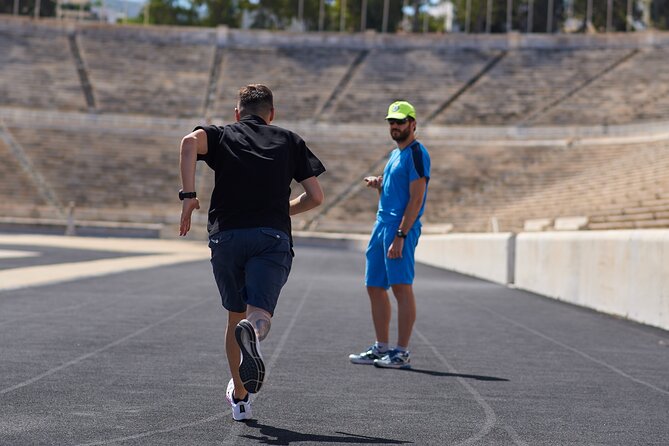
The route is not designed as a hard workout. The guide sets the pace according to the group. That makes the tour a good fit for someone who runs regularly, as well as for a reasonably fit visitor who wants a gentle jog with stops for views and stories.
You should not expect a full historical lecture at every monument. The tour lasts about one hour, so the emphasis is movement, orientation, and memorable sights. I see its value in the combination: you get a short workout, a local guide, and a fast introduction to the center of Athens.
You can also read our reviews of more historical tours in Athens
Syntagma Square to Ermou Street
The meeting point is at Public Syntagma, Karagiorgi Servias 1, near Syntagma Square. This is a practical place to start because it is central and close to public transportation. It is also easy to find compared with a meeting point hidden down a side lane.
From there, you jog along Ermou Street. This is one of the city center’s best-known shopping routes, and it connects the modern commercial heart of Athens with the older quarters farther west. The change happens quickly. Shopfronts and city traffic give way to lanes and open spaces linked to the ancient center.
Your guide speaks English, so you do not need to worry about a language barrier during instructions or sightseeing stops. That is especially useful on a moving tour, where you need to hear changes in pace and directions without fuss.
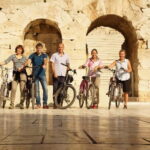
The group can include up to 15 people. That is not a private run, but it is small enough to feel manageable. If you prefer complete control over your speed, route, and stops, a private tour would suit you better. Here, the tradeoff is a lower cost and the energy of a small group.
Monastiraki Square and the ancient city
Monastiraki Square brings you into one of central Athens’ most recognizable public spaces. It is a useful place to see how the modern city sits beside ancient remains, churches, shops, and streets full of daily activity.
The running route does not ask you to spend a long time inside each archaeological site. Instead, you see the major landmarks from the route and pause for explanation and photographs. That keeps the experience moving, but it also means you should plan a separate museum or archaeological visit if you want detailed site-by-site study.
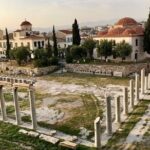
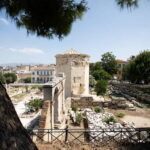
From this part of town, you get views toward the Acropolis and the Ancient Agora. The Agora was the civic center of ancient Athens, where public life, politics, trade, and debate took place. Nearby, the Temple of Hephaestus is especially rewarding to see from outside because its columns and overall form remain remarkably complete.
I like this section for orientation. If Athens is new to you, Monastiraki helps you understand the city’s layout. You are not being carried from sight to sight in a vehicle. You are connecting the places with your own feet, which makes the center easier to remember later.
Views toward the Acropolis and the Temple of Zeus
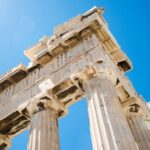
The Acropolis is the visual anchor of the run. As you pass through the central districts, you get changing views of the rocky hill and its monuments. The route includes the Parthenon and Erechtheion as major points of interest, giving you the chance to stop for photographs and hear about the buildings.
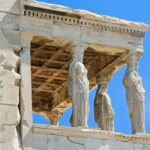
The Parthenon is the familiar symbol of Athens, but the Erechtheion adds a different note. Its unusual design and famous Caryatids make it one of the most distinctive buildings on the Acropolis. From a running tour, you should think of these as view-and-story stops, not a substitute for entering the Acropolis complex.
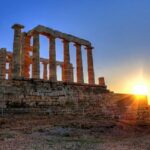
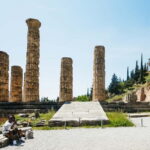
The tour also passes the Temple of Zeus. This enormous ancient temple once had a much larger presence than the surviving columns suggest. Seeing it along a route that also includes the Acropolis helps you compare different parts of ancient Athens without spending your entire morning at one site.
The supplied route also identifies a stop called the Temple of Aries. The name may refer to a site associated with Ares in the ancient city, but the experience information does not provide more detail about the stop. You can ask the trainer to clarify its exact location and story when you reach it.
The National Garden and Zappeion
The National Garden changes the tone of the run. After streets and stone monuments, you move through a calmer green area near the center of the city. It is a welcome pause, especially if the morning is already warming up.
The nearby Zappeion adds a link to modern Greek civic and Olympic history. The building and surrounding grounds sit close to the Panathenaic Stadium, so this part of the route prepares you for the final stop.
A guided run makes practical use of the garden. You get a softer surface and a little breathing room, while the trainer can keep the group together before the finish. It is also a reminder that central Athens is not only traffic, shops, and archaeological ruins.
You should keep your expectations realistic. The tour is short, so you will not explore every path or spend a long time relaxing in the garden. The point is to pass through it as part of the city route, not to treat it as a separate garden visit.



Finishing inside the 1896 Panathenaic Stadium
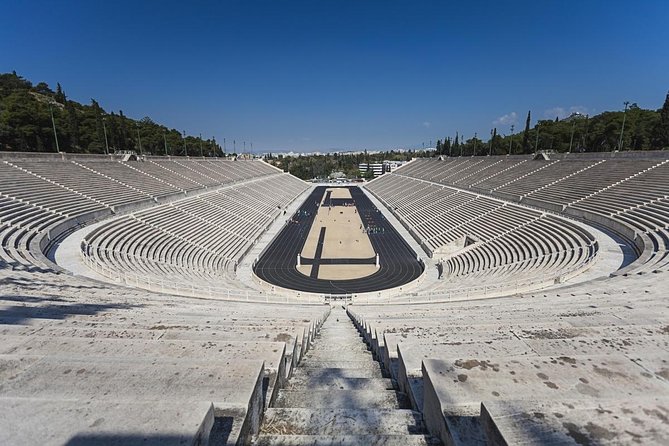
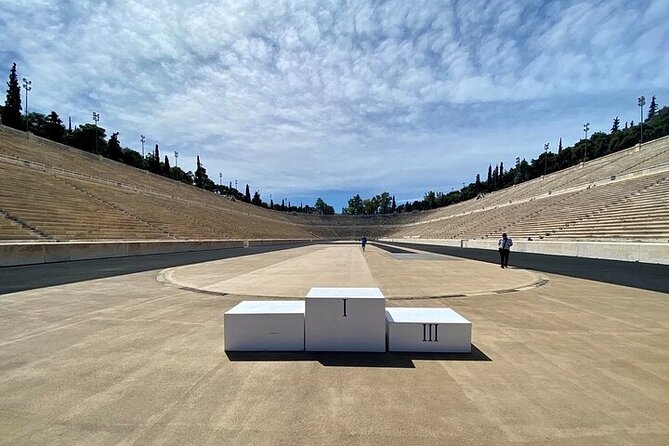
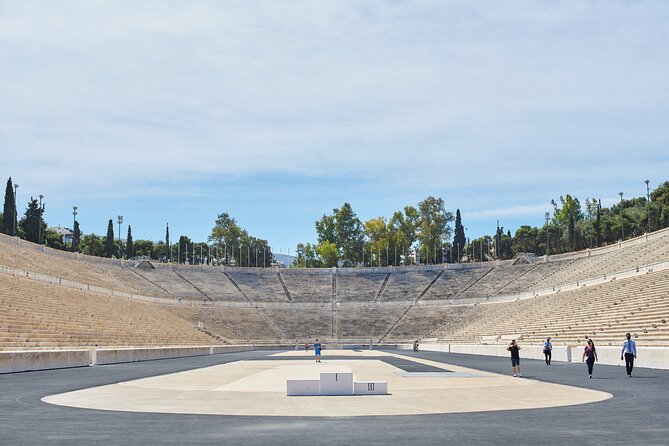
The finish at the Old Olympic Stadium, also called the Panathenaic Stadium, is the emotional payoff. Built in gleaming marble, it hosted the first modern Olympics in 1896 and remains closely tied to the origin of the modern Games.
Your entrance ticket is included, which strengthens the value of the tour. Many city runs end with a view from the pavement. Here, you get inside the stadium as a runner. That simple change gives the final stop more meaning than a quick photograph from outside.
The stadium is also known for its long, narrow shape and tiered marble seating. You can take in the setting at a slower pace after the run and picture the scale of an athletic event before modern stadium design, electronic screens, and huge transport systems.
The finish is especially appealing if you enjoy sports history. You do not need to be a serious athlete to appreciate it. The route lets you arrive with a sense of participation, even though the real work is modest and the focus remains sightseeing.
What the $66.23 price includes
At $66.23 per person, this is not the cheapest way to see Athens. You can walk many of the same central streets for free, and most major archaeological areas charge their own admission. The value comes from combining several services in a compact package.
Your fee includes:
- A professional trainer
- Entrance to the Old Olympic Stadium
- Bottled water
- Guided sightseeing in English
The stadium ticket is the key cost comparison. If you already planned to visit the Panathenaic Stadium, the tour gives you that admission plus a guided route and a workout. If you have no interest in running, the price will be harder to justify because a standard walking tour may offer more time for historical detail.
Group discounts are available, which may help if you are booking for several people. The maximum group size is 15, so you should not expect a completely private experience. Private transportation is not included, but this route is designed around central Athens and starts and ends at the same meeting point.
The tour is recommended by 90 percent of participants and has a 4.8 rating from 10 reviews. That is a strong score, but the sample is small. I would treat it as encouraging evidence rather than a guarantee that every runner will enjoy the same pace or group dynamic.
The personal touch from Dimitra
One of the clearest strengths is the trainer’s role. Dimitra was praised for pacing the run to one participant’s ability and making the outing enjoyable rather than intimidating. That detail tells you more than the phrase professional trainer ever could.
A good guide matters here because the experience has two jobs. The trainer must keep the group moving safely, and the trainer must make the city meaningful. Dimitra also shared suggestions for places to eat and things to do, which adds useful local help beyond the one-hour route.
Do not assume Dimitra will lead every departure, since the experience information does not promise a specific guide. Still, her example shows the kind of service you should hope for: attention to pace, a friendly connection with a local person, and advice you can use during the rest of your stay.
The best approach is to tell the trainer honestly how much you run. The tour pace is tailored to the group on the day, so clear information helps the guide make better choices. You do not gain anything by pretending to be faster than you are.
Who should book this running tour?
I would recommend this experience to:
- Runners who want to keep active during a city break
- Couples or friends looking for an unusual sightseeing option
- First-time visitors who want a quick central orientation
- Sports fans who like the idea of entering the 1896 Olympic venue
- Fit visitors who prefer a short guided run to a longer walking tour
- Small groups that can benefit from the available discount
It is less suitable if you want long interior visits at the Acropolis, Ancient Agora, or Temple of Zeus. Those places appear as route highlights, but the tour does not include their entrance tickets.
It may also be a poor fit if you have limited mobility or cannot maintain a moderate level of physical activity. The tour is built around jogging, even if the trainer adjusts the pace. You should also think about Athens weather, since heat can change how demanding the same one-hour route feels.
Families and mixed-ability groups should consider the pace carefully. The trainer adapts to the group, but the supplied information does not promise a walking option or a separate pace group. Ask before booking if your party includes someone who cannot jog.
Practical details before you lace up
You receive confirmation when you book, and a mobile ticket is available. The activity begins at 7:30 am and ends back at the meeting point, so you do not need to arrange a separate ride from the stadium.
Public transportation is nearby. Since the start and end are both central, you can continue sightseeing afterward without collecting luggage or returning to a distant hotel area. The tour does not include private transportation, but that omission should not be a problem for this route.
Free cancellation is available if you cancel at least 24 hours before the start time. Changes or cancellations inside that window are not accepted for a refund. Keep the local Athens cut-off time in mind when making plans.
Bring running shoes and dress for the forecast. The tour provides bottled water, but you may want additional water if the weather is warm. I would also avoid scheduling a major timed attraction immediately afterward. The run lasts about an hour, but you may want a few extra minutes at the stadium before moving on.
Should you book it?
Book this tour if you want to see central Athens at a quicker pace, enjoy running, and like the idea of finishing inside the Panathenaic Stadium. The included stadium admission and flexible group pace make the $66.23 price easier to defend, especially for visitors who would otherwise pay for a separate stadium visit.
Skip it if you want a slow archaeological tour, dislike early mornings, or need a fully accessible sightseeing route. For the right person, this is a lively one-hour introduction with a memorable finish. The strongest reason to book is not simply exercise. It is the chance to reach an important Olympic site under your own power, with a local trainer such as Dimitra helping you connect the route to the city.
FAQ
Where does the Athens running tour begin?
It begins at Public Syntagma, Karagiorgi Servias 1, Athina 105 63, Greece, near Syntagma Square.
What time does the tour start?
The start time is 7:30 am.
How long does the running tour last?
The activity lasts approximately one hour.
Does the tour enter the Panathenaic Stadium?
Yes. Entrance to the Old Olympic Stadium, also called the Panathenaic Stadium, is included in the price.
Is the running pace fixed?
No. The trainer adjusts the pace to the fitness level of the group on the day.
Is the tour offered in English?
Yes. An English-speaking professional trainer leads the activity.
What is included in the $66.23 price?
The price includes the professional trainer, entrance to the Old Olympic Stadium, and bottled water. Private transportation is not included.