REVIEW · ATHENS
Private Athens Street Art & Culture Tour
Book on GetYourGuide →Operated by Greeking.me · Bookable on GetYourGuide
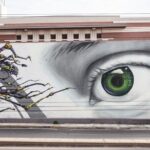
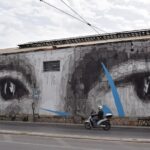
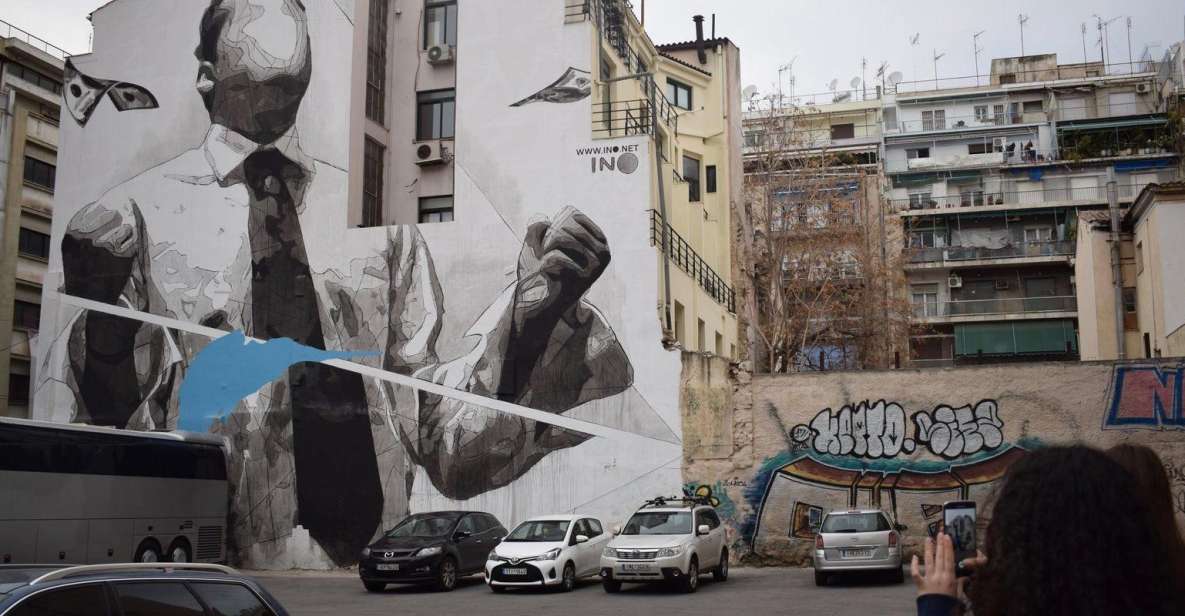
Athens turns its walls into a changing outdoor gallery, and this private walk shows you how to read it. You follow a local street artist through Monastiraki, Psyrri, Metaxourgeio, and Gazi, seeing work by artists such as iNO, Sonke, and Vasmoulakis while learning why a mural may be more than decoration.
I like the personal format and the focus on neighborhoods beyond the usual ancient sights. I also like the plain-English lessons in stencils, paste-ups, throw-ups, bombings, tags, pieces, and wild-style graffiti. The main drawback is physical: the walk is not suitable for people with mobility impairments or pregnant women, and three hours on city streets can be tiring.
In This Review
- Key points to know before you book
- Why Athens street art deserves three hours
- Starting at Monastiraki Metro Station
- Monastiraki and Psyrri: from busy streets to local walls
- Metaxourgeio: public art with a political voice
- Gazi and the route toward Omonoia Square
- What the guide adds to the experience
- Price, private groups, and overall value
- Who should take this walk
- Practical advice for making the most of it
- Should you book the Athens street art tour?
- FAQ
- Where does the Athens street art tour begin?
- Where does the tour finish?
- How long does the tour last?
- What neighborhoods does the route include?
- What language is the tour conducted in?
- Is this a private tour?
- Is the tour suitable for everyone?
Key points to know before you book
- A private three-hour walk: The $259 rate covers a group of up to four, so the value improves when you fill the group.
- A local street artist leads the way: Your guide explains technique, terminology, politics, and social commentary rather than simply pointing at painted walls.
- The route crosses four central neighborhoods: You begin at Monastiraki Metro Station and finish at Omonoia Square, passing through Psyrri, Metaxourgeio, and Gazi.
- The artwork keeps changing: Athens street art is temporary, so the exact pieces you see can vary.
- The tour is in English: It is a private group experience, with no food, drinks, or personal expenses included.
- The tone is social and political: Expect discussion of protest, public space, and modern Greek life alongside color and technique.
Why Athens street art deserves three hours
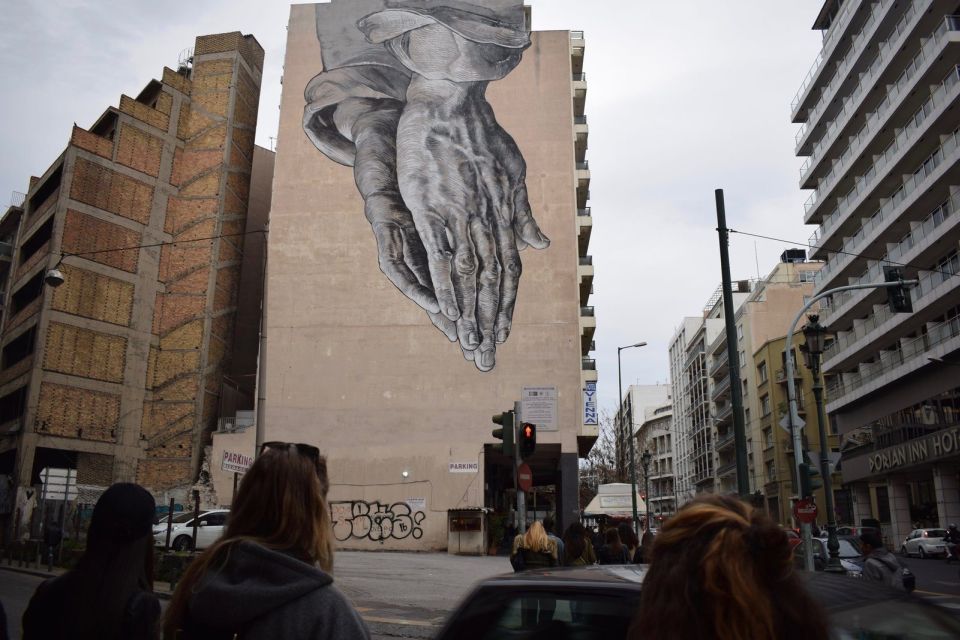
Athens is a particularly good city for a street art walk because the art is woven into ordinary streets. You are not entering a museum with finished rooms and labels. You are walking through working neighborhoods, where murals, tags, paste-ups, and painted shutters appear beside shops, apartments, cafés, and vacant walls.
That setting changes the way you look. A large mural may catch your eye first, but your guide helps you notice the smaller work nearby. A stencil can carry a sharp message in only a few shapes. A paste-up can appear overnight and disappear under a new layer of paint. A tag may look quick and careless until you understand its place in the local scene.
I appreciate that this tour treats street art as a form of public conversation. Athens walls can speak about politics, social pressure, protest, identity, and daily life. The guide connects what you see to the city around you, so the walk is not just a hunt for attractive photographs.
The word graffiti itself comes from a Greek word, a fitting detail for a city where writing and images have long occupied public space. You do not need an art background to follow the tour. The guide explains the language of the scene as you go, which makes the experience accessible even if you normally pass graffiti without a second glance.
You can also read our reviews of more private tours in Athens



Starting at Monastiraki Metro Station
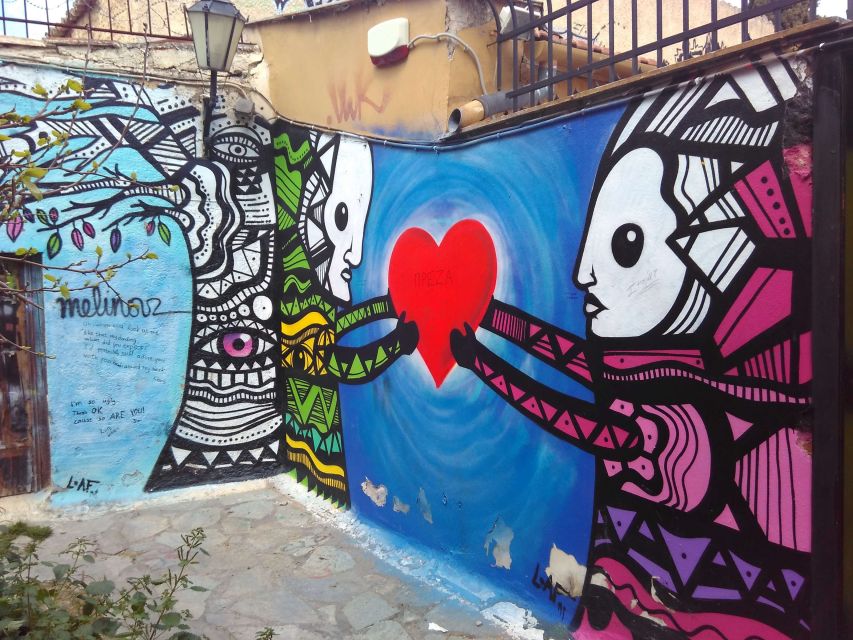
The meeting point is outside Monastiraki Metro Station, on the square. This is a practical place to begin because it is easy to locate and puts you near several central areas with strong street art activity.
Monastiraki is also a useful contrast to the quieter side streets ahead. The square is a familiar Athens meeting point, but the tour quickly shifts away from standard sightseeing. Instead of spending the morning inside an ancient monument, you begin looking at contemporary marks layered onto the living city.
The guide sets the tone here. You can expect an introduction to the Athens street art scene and an explanation of the different forms you will encounter. Since the guide is a practicing street artist, the conversation can cover both the visual side and the practical vocabulary of the work.
Your first lesson may include the difference between a tag, a piece, a mural, and a throw-up. These terms matter because they describe different intentions, levels of effort, and ways artists claim space. The walk becomes easier to understand once you know what you are looking at.
Monastiraki and Psyrri: from busy streets to local walls

The route includes Monastiraki and Psyrri, two areas where old Athens and newer city culture meet. Here, you can expect a mix of small streets, commercial activity, and walls covered with many layers of work.
The appeal is not only the biggest mural. Look for how pieces interact with one another. One artist may paint over another. A sticker or pasted image may interrupt a large composition. A wall that seems chaotic from a distance can reveal a clear order when the guide explains the styles.
Psyrri is a good place to consider the difference between art made for a broad public and work intended mainly for other artists. A polished mural may be designed to attract attention from anyone passing by. A tag, wild-style piece, or quick throw-up may speak more directly to people who understand the code.
This is also where the private format helps. With a group of only your own companions, you can ask why a particular image was placed there, how a technique works, or what a symbol may suggest. The guide can respond to your interests instead of delivering a fixed speech to a large crowd.
The exact artwork cannot be guaranteed. Athens street art changes quickly, and pieces can be painted over, damaged, or removed. That is part of the nature of the medium, but it is worth knowing if you are booking because of one specific image seen online.
Metaxourgeio: public art with a political voice
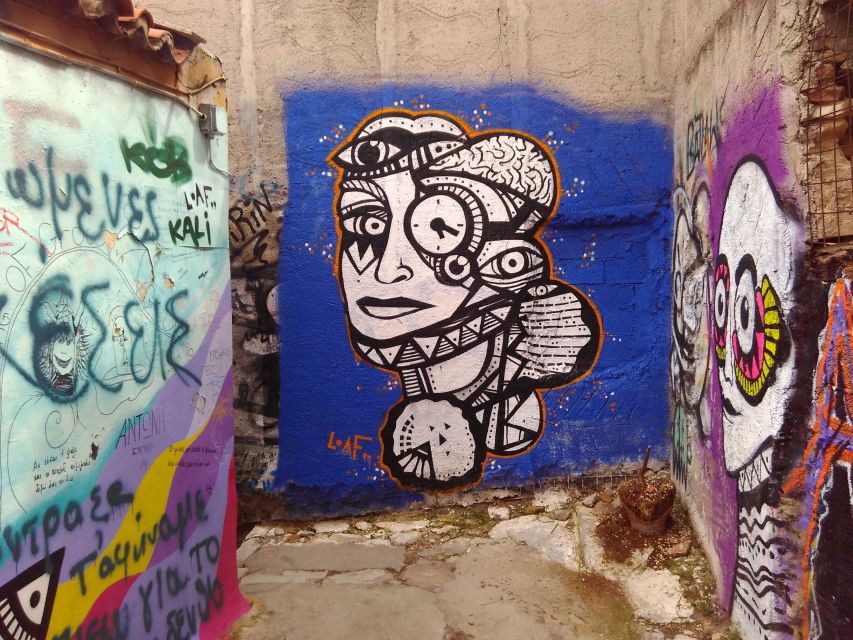
Metaxourgeio gives the walk some of its strongest social and political weight. The neighborhood is associated with alternative culture, and its walls provide room for large statements as well as quick interventions.
Here you learn to look at street art as a response to the moment. A mural may address government, inequality, protest, or economic pressure. The art can be beautiful, angry, playful, or deliberately unsettling. Your guide explains how the image works and why street artists choose public walls rather than galleries.
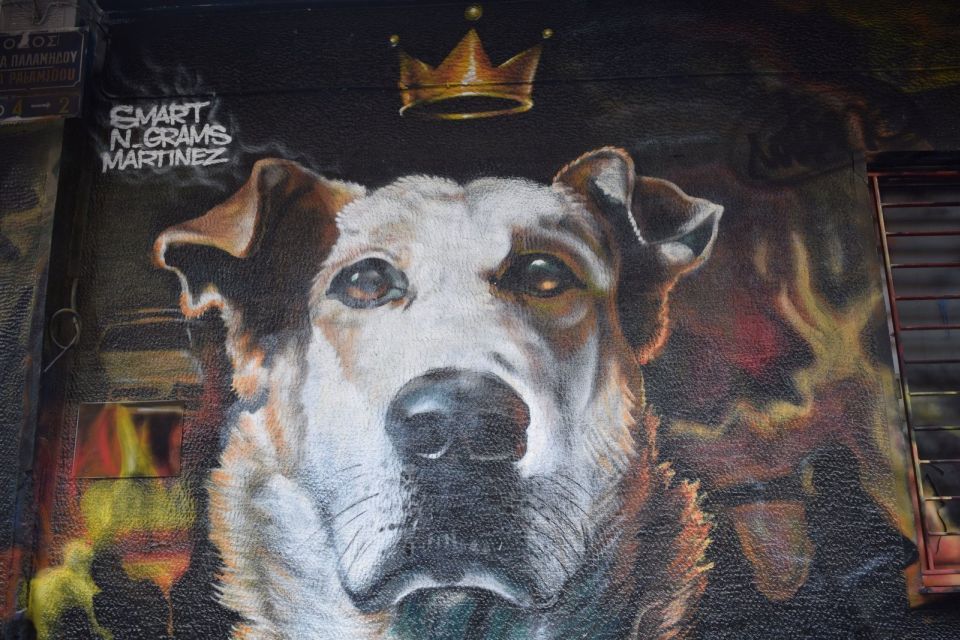
One especially memorable subject connected to Athens street art is the graffiti image of Loukanikos, the protest dog who became known during anti-austerity demonstrations. A past participant chose this tour after seeing that image online, then found the city’s artistic quality and sense of its time more striking than expected. The detail shows why a local guide matters: the picture is more than an amusing dog portrait when you know the political setting behind it.
You should not expect every famous work to still be in place. Instead, use the tour to understand the wider practice. Athens street art is not a static collection of landmarks. It is a moving record of what artists and residents want to say in public.
This part of the walk may be especially rewarding if you enjoy contemporary art, urban studies, photography, or modern Greek politics. It also works for curious teenagers, since the subject is direct, visual, and tied to real public events. A family group with older children can ask questions and compare the styles without needing museum etiquette.
Gazi and the route toward Omonoia Square
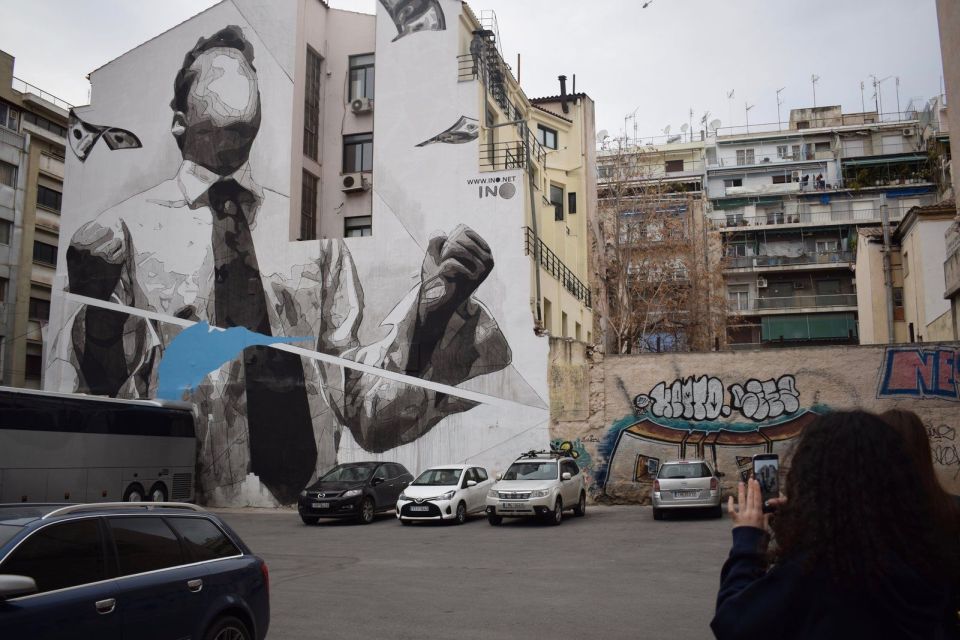
The tour also passes through Gazi before ending at Omonoia Square. Gazi adds another setting for seeing how street art adapts to changing urban spaces. You may find bold murals, post-graffiti, installations, and smaller pieces sharing the same streets.
The guide introduces terms such as bombing, which refers to quickly putting up a large amount of work, and wild-style graffiti, which uses complex interlocking letters and shapes. You also hear about stencils, paste-ups, and guerrilla art. These categories are useful because they show that street art is not one single style.
As you walk, pay attention to scale. Some works depend on a full building wall. Others are made to be noticed at eye level. A paste-up can be carefully prepared away from the street, then attached in minutes. An installation may use an object or altered feature of the city rather than paint alone.
The finish at Omonoia Square is practical if you plan to continue exploring central Athens. It also gives the walk a clear endpoint after three hours on foot. The activity description promises photo stops and scenic views along the route, but it is best to think of these as pauses within a neighborhood walk, not formal viewpoints or a sightseeing bus circuit.
Because the tour ends in a different place from where it begins, wear comfortable shoes and keep your plans flexible afterward. You will need to make your own way from Omonoia Square, and food, drinks, and personal purchases are not included.
A few more Athens tours and experiences worth a look



What the guide adds to the experience
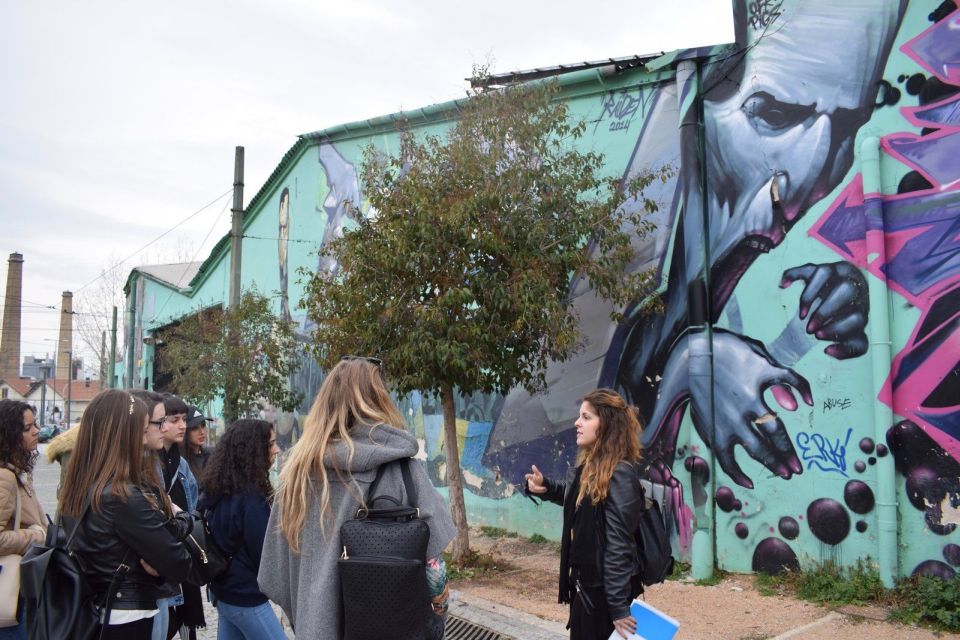
The guide is the most important part of this tour. A street art walk without context can become a string of photographs. A guide who understands the scene can show you how to look, explain the vocabulary, and connect an image to the city around it.
Eugenia is named in one booking account as a terrific guide who encouraged good conversation. Other descriptions highlight an enthusiastic and well-prepared female guide whose English was easy to understand and who adapted to the group’s wishes. Guides can change, so you should not assume Eugenia will lead every departure, but the experience is designed around an English-speaking local guide and street artist.
The strongest feature is the conversation. You can ask about technique, the difference between legal and illegal work, the role of politics, or the reason street art has grown across Athens. The guide can also help you avoid a common mistake: treating every painted wall as the same kind of work.
This is not an art-school lecture. The useful information arrives while you stand in front of actual pieces. You learn a term, apply it to a nearby wall, and then see how another artist uses a different approach.
Price, private groups, and overall value
The price is $259 per group of up to four people. For one person, that is expensive for a three-hour walking tour. For four people, it works out to about $65 per person, which is a more reasonable rate for a private guide with a specialized subject.
The private setup matters here more than it would on a basic orientation walk. Street art raises questions, and the best parts of the experience come from stopping, looking closely, and talking. A small private group can keep the pace comfortable and focus on the styles or political themes that interest you.
You are paying for access to a guide’s local knowledge, not for admission to a site or a meal. There are no included food or drink stops, and you should budget separately for anything you buy along the way.
The value is strongest for people who would otherwise walk past the art without understanding it. If you already spend time studying Athens graffiti and know the major artists, you may still appreciate the access and conversation, but the tour’s teaching element may be less important to you.
The tour has a full score from nine recorded ratings, with praise focused on the guide’s preparation, enthusiasm, clear English, and willingness to respond to individual interests. The comments are brief, so I would not treat them as proof that every departure will be identical. Still, the pattern points to the guide as the main strength.
Who should take this walk
I would choose this tour if you want a different view of Athens beyond temples, museums, and postcard streets. It suits adults who like public art and families with teenagers who may prefer a moving, visual activity to a formal gallery.
It is also a good fit if you want to discuss modern Greece rather than focus only on antiquity. The political and social themes give the walk more substance, while the range of techniques keeps it accessible.
The tour is suitable for all ages according to the activity details, but it is not suitable for pregnant women or people with mobility impairments. The route uses city streets and lasts three hours, so anyone with concerns about walking should take those limits seriously.
You should also choose a different activity if you need a guaranteed list of specific murals. The city’s artwork changes rapidly, and the tour is about understanding the scene as much as checking off famous pieces.
Practical advice for making the most of it
Meet outside Monastiraki Metro Station on the square, and arrive ready for a walking tour rather than a seated presentation. Comfortable footwear is sensible because the route moves through several neighborhoods and includes small streets.
Keep your camera ready, but look before you photograph. The guide’s explanation of a stencil, paste-up, tag, or mural may change which details you notice. Take pictures of the wider wall as well as close-ups, since placement and neighboring work are part of the meaning.
Ask questions. The private format gives you room to steer the conversation toward artists, politics, techniques, or the history of a particular image. If you are with teenagers, invite them to identify the methods they see and decide which pieces communicate most clearly.
Plan your next activity from Omonoia Square, not Monastiraki. The tour does not return to the starting point, and you will want to know where you are heading once the walk finishes.
The activity allows cancellation up to 24 hours before the start for a full refund, and you can reserve while paying later. Starting times vary, so check availability when choosing your date.
Should you book the Athens street art tour?
Book it if you want a private, talkative introduction to Athens street art and modern city life. The guide’s local perspective, the route through Monastiraki, Psyrri, Metaxourgeio, and Gazi, and the discussion of political imagery make this far more useful than wandering around and taking random wall photographs.
The price makes the most sense for a group of four. Solo visitors may find it costly, while friends or family members can share the fee and ask questions at their own pace.
Skip it if you need a short, easy stroll, a guaranteed set of famous murals, or a tour with food and transport included. For everyone else, this is a thoughtful way to see Athens as a city still making and arguing with itself, one wall at a time.
FAQ
Where does the Athens street art tour begin?
It begins outside Monastiraki Metro Station on the square in Athens.
Where does the tour finish?
The walk finishes at Omonoia Square, Athina 104 31, Greece.
How long does the tour last?
The tour lasts three hours.
What neighborhoods does the route include?
The route includes Monastiraki, Psyrri, Metaxourgeio, and Gazi, with the walk ending at Omonoia Square.
What language is the tour conducted in?
The live tour guide speaks English.
Is this a private tour?
Yes. It is offered as a private group experience for up to four people.
Is the tour suitable for everyone?
The activity is listed as suitable for all ages, but it is not suitable for pregnant women or people with mobility impairments.