REVIEW · ATHENS
Seafood feast Private Cooking Class
Book on Viator →Operated by Eat with your Greek Cousin · Bookable on Viator
Athens has plenty of places to eat seafood, but this private cooking class lets you work for your dinner, then enjoy it at the same table. Dionysia welcomes you into the kitchen with the easy warmth of a family gathering, and the menu centers on Greek coastal dishes such as shrimp saganaki, stuffed squid, grilled octopus, and mussels with tomato and ouzo.
I like two things right away: you can choose among several seafood dishes, and unlimited drinks are included, from local wine and beer to ouzo and raki. The four-hour pace also gives you time to cook, talk, and eat without feeling rushed. The main consideration is price: at $185.22 per person, this is a serious splurge, especially if you are not keen on seafood or alcohol.
In This Review
- Key points to know before booking
- Cooking seafood at Eat With Your Greek Cousin
- Choosing between shrimp saganaki and stuffed squid
- From Greek salad to rustic bread
- A Greek dessert with a family touch
- Unlimited wine, beer, ouzo, and raki
- What the four-hour schedule means for you
- Is $185.22 per person good value?
- Who will enjoy this Athens cooking class?
- How to decide before you book
- FAQ
- Where does the seafood cooking class begin?
- Where does the activity end?
- How long does the cooking class last?
- Is this a private activity?
- What seafood dishes can I choose from?
- Are drinks included?
- Is transportation provided?
- Can I cancel for a full refund?
Key points to know before booking

- Dionysia leads a private, family-style class: Only your group takes part, so the meal feels more personal than a large demonstration.
- You choose from classic Greek seafood dishes: Options include shrimp saganaki, stuffed squid, grilled octopus with Santorini fava, and mussels steamed with tomato and ouzo.
- The meal is built around hands-on cooking: You help prepare the food rather than simply watching a chef work.
- Drinks are included without a fixed limit: Local wine, beer, ouzo, raki, coffee, and tea are part of the experience.
- The menu includes more than seafood: Greek salad or dakos, rustic bread, and yogurt-based cheesecake round out the meal.
- The meeting point is central Athens: The class begins and ends at Eat With Your Greek Cousin, El. Venizelou 64, Athina 106 71.
Cooking seafood at Eat With Your Greek Cousin
The class begins at Eat With Your Greek Cousin on El. Venizelou 64 in central Athens. You arrive at the meeting point, meet Dionysia, and settle into a home-style cooking session rather than a formal restaurant meal.
That setting matters. Greek food is often at its best when it is shared slowly, with conversation between courses and a few small dishes spread across the table. This class aims for that feeling. You are not simply handed a plated meal. You take part in making it, then sit down to eat what your group prepared.
The class lasts about four hours, which is long enough for a full meal and several cooking stages. I like that length for a private food experience. A shorter class might teach one recipe and send you on your way. Here, you get a fuller look at how seafood, vegetables, bread, cheese, herbs, and drinks fit together in a Greek meal.
Dionysia is the guide and host. Her welcome is a major part of the experience. You can expect an informal tone, plenty of conversation, and the feeling of being received in someone’s kitchen rather than processed through a cooking studio. That personal touch is especially useful if you want food to be the main way you connect with Greek culture.
You can also read our reviews of more private tours in Athens



Choosing between shrimp saganaki and stuffed squid
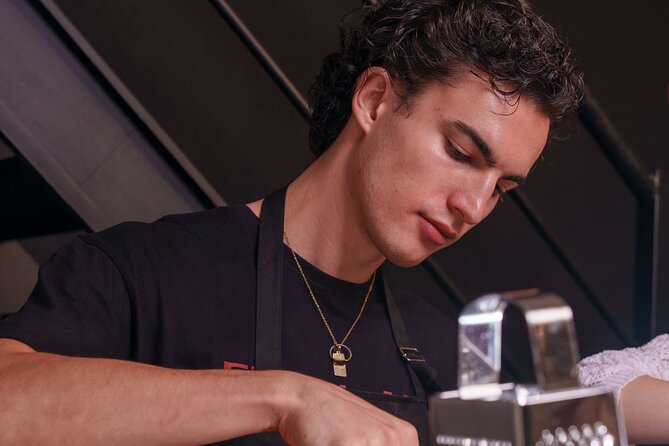
The seafood choices give you some control over the meal. The exact selection is not presented as a fixed menu, so you should expect to choose from the available options with your host. That is good news for diners who have strong preferences, though anyone with seafood allergies should confirm details before booking.
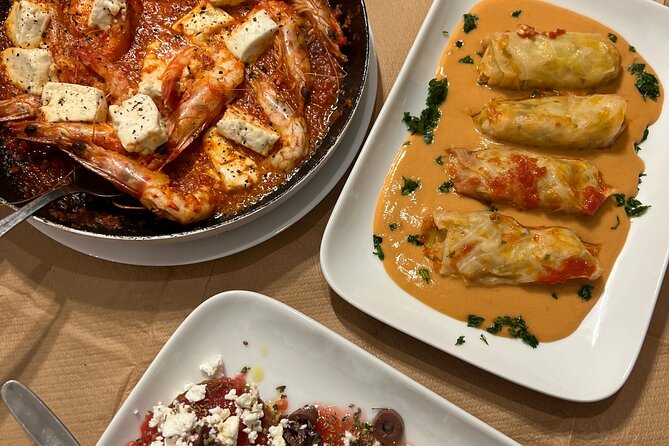
Shrimp saganaki is one of the most approachable choices. The shrimp are cooked in tomato sauce and finished with crumbled feta. The sauce is the star here, and rustic bread is made for soaking it up. If you want a familiar Greek dish with bright tomato, salty cheese, and easy table appeal, this is likely the safest pick.
Stuffed squid offers a more involved preparation. The squid is filled with rice, herbs, and cheese, creating a dish that feels closer to home cooking than a quick grilled seafood plate. It is also one of the more interesting choices if you want to learn how Greek cooks turn a simple ingredient into a complete main course.
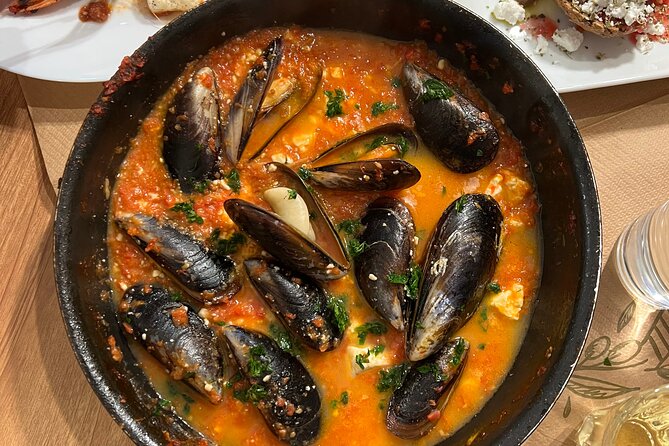
Mussels steamed in tomato and ouzo bring a sharper Greek note. The ouzo adds anise flavor to the fragrant broth, while the tomato gives the dish body. This is a good choice for someone who wants a seafood dish with a distinct local character, but the flavor of ouzo may not suit every palate.
The class also includes grilled octopus with Santorini fava. Octopus can be a tricky ingredient, so preparing it as part of a guided class gives the dish added interest. The accompanying fava is a smooth purée made from yellow split peas, associated with Santorini. Together, the smoky seafood and soft purée create a contrast in texture and flavor.
From Greek salad to rustic bread
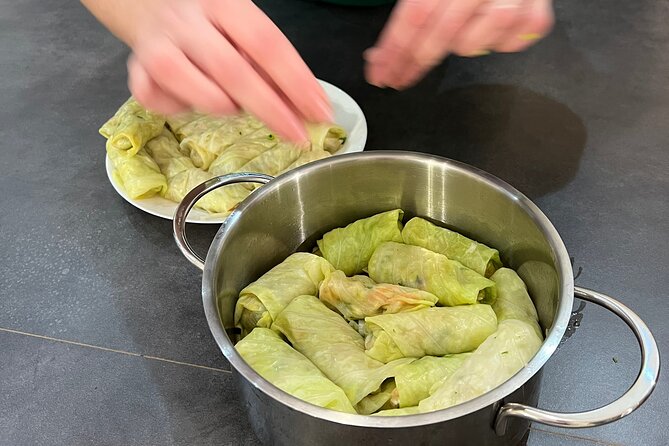
A seafood feast needs something fresh and simple beside it. You may prepare dakos or a Greek salad, depending on the chosen menu. Both provide a break from the richer seafood dishes.
Dakos is a Cretan-style preparation built around crisp rusks, tomato, and cheese. It has a firm texture and works well as a small shared plate. Greek salad is more familiar, with fresh vegetables and the clean salty note of feta. Either choice helps keep the meal from becoming too heavy.
Rustic bread is another small but important part of the table. It gives you something to eat with the shrimp saganaki sauce, mussel broth, or any juices left on the plate. In a cooking class, bread can seem like a minor detail, but it is exactly the sort of practical food that makes the meal feel complete.
The menu is not only about technical cooking. It is about how Greeks eat. Several dishes are shared, sauces are put to good use, and the meal moves from preparation to long, relaxed eating. I would choose this class over a recipe-focused lesson if your main goal is a social food experience.
A Greek dessert with a family touch
Dessert is a yogurt-based Greek cheesecake topped with seasonal spoon sweets made by Dionysia’s mother. That small detail gives the final course a more personal quality than a standard restaurant dessert.
Spoon sweets are traditionally served in small portions, often with coffee or water, and their flavor changes with the fruit or preserve available. Because the topping is seasonal, you should not expect one fixed flavor every time. The cheesecake itself is described as light and creamy, which makes sense after a substantial seafood meal.
Coffee and tea are included, so you can finish the meal in a slower Greek style. This is not an experience where dessert is rushed out before the table is cleared. The four-hour schedule leaves room for that final pause, which is often when a private class feels most relaxed.
Unlimited wine, beer, ouzo, and raki
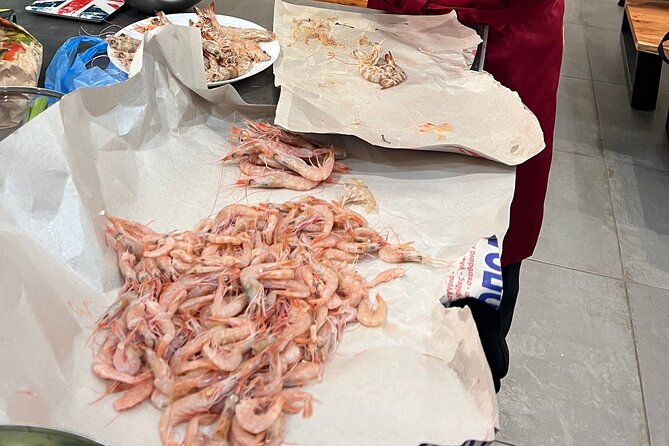
The drink package is a major part of the price. Local wine and beer are included, along with traditional spirits such as ouzo and raki. Coffee and tea are also provided.
Unlimited drinks can make the experience feel generous, especially if your group enjoys sitting over a meal. It also means you do not need to keep adding small drink charges while cooking and eating. For a group that plans to sample Greek spirits, the inclusion has real value.
Still, this feature should not decide the booking for everyone. If you do not drink alcohol, the $185.22 price becomes harder to justify. The class is private, guided, and food-focused, but the drink package clearly forms part of the overall value.
Use some care with ouzo and raki. They are strong spirits, and the relaxed setting can make it easy to drink more than planned. You can enjoy the local flavors without treating the unlimited offer as a challenge.
You can also read our reviews of more cooking classes in Athens


What the four-hour schedule means for you
Four hours is a substantial block of your Athens day. You will need time to reach El. Venizelou 64, take part in preparation, eat the meal, and return to your sightseeing plans afterward.
The advantage is that you are not trying to squeeze a full cooking lesson into a narrow gap between major sights. Seafood preparation can involve several steps, and the longer format gives Dionysia room to explain, guide, and let you participate. You also get time to sit at the table and enjoy the result.
The drawback is the same: this is not a quick lunch activity. If you have a tightly packed schedule, the class may force you to drop another plan. I would place it on a day when food is one of your main reasons for being in Athens, not on a day built around several timed museum visits.
The activity starts and ends at the same meeting point. No air-conditioned vehicle is included, so you arrange your own way there and back. The location is near public transportation, which helps, but the booking does not provide a transfer service.
The ticket is mobile, and confirmation is provided at booking. Service animals are allowed. Since this is a private activity, only your own group participates, which is useful for families, couples, or friends who prefer not to cook in front of strangers.
Is $185.22 per person good value?
At $185.22 per person, the class costs more than a normal seafood meal in Athens. You are paying for several things at once: a private four-hour session, a professional guide, the cooking instruction, the food, dessert, and unlimited drinks.
The value is strongest for a small group that wants a private event. If you split the experience with friends or family, the personal setting and long meal can make the cost feel more reasonable. You also avoid paying separately for wine, beer, ouzo, raki, coffee, and tea.
The price is less attractive if you mainly want to eat seafood. A restaurant will likely give you more choice in a shorter amount of time, and you will not have to participate in preparation. This class earns its price through the setting and the activity, not simply through the ingredients.
I would also factor in the two especially strong endorsements attached to the experience. One diner described it as the highlight of an Athens trip, while another, who had taken cooking classes in several countries, singled it out as a favorite. Those comments point to the class’s strongest feature: the welcome and the sense of family around the meal.
Who will enjoy this Athens cooking class?
This is a good match for seafood lovers who want more than a restaurant table. You will get the most from it if you enjoy handling ingredients, asking questions, and eating slowly with a host.
It also suits couples and small groups celebrating a special occasion. Because the class is private, you can share the meal with your own companions and set a more comfortable pace. Families may enjoy it too, provided everyone in the group is happy with the seafood-centered menu.
The experience is less suitable for picky eaters, strict non-drinkers, or anyone looking for a low-cost activity. The menu does include salad, dakos, bread, and dessert, but seafood remains the focus. The supplied information does not describe vegetarian substitutions, so ask before booking if that matters to you.
The class requires good weather. If poor weather cancels it, you are offered another date or a full refund. It also requires a minimum number of participants, so a cancellation for that reason brings the same choice of another date or a full refund.
How to decide before you book
Ask yourself one simple question: do you want a seafood dinner, or do you want to spend four hours making and sharing one?
If you want the first, choose a restaurant. If you want the second, this class has a clear appeal. You get hands-on work with Greek seafood, a private setting, a host named Dionysia, a family-style dessert, and drinks that remain available throughout the meal.
I would book it for a food-centered Athens day, especially if shrimp saganaki, stuffed squid, octopus, and ouzo sound better than another standard sightseeing stop. I would skip it if your budget is tight, your schedule is packed, or your group is divided about seafood.
FAQ
Where does the seafood cooking class begin?
The class begins at Eat With Your Greek Cousin, El. Venizelou 64, Athina 106 71, Greece.
Where does the activity end?
The activity ends back at the same meeting point.
How long does the cooking class last?
The experience lasts approximately four hours.
Is this a private activity?
Yes. Only your group participates in the activity.
What seafood dishes can I choose from?
Options include shrimp saganaki, stuffed squid, grilled octopus with Santorini fava, and mussels steamed in tomato and ouzo. The meal may also include dakos or Greek salad, rustic bread, and Greek cheesecake.
Are drinks included?
Yes. Included drinks are local wine, beer, ouzo, raki, coffee, and tea. Alcoholic beverages are included as part of the experience.
Is transportation provided?
No air-conditioned vehicle is included. The meeting point is near public transportation.
Can I cancel for a full refund?
Yes. You can cancel at least 24 hours before the experience start time for a full refund. Changes or cancellations made less than 24 hours before the start time are not accepted for a refund.