REVIEW · ATHENS
The Best Way to See and Learn about Athens in 6 hours
Book on Viator →Operated by Timeless Athens Tours · Bookable on Viator
Athens packs thousands of years into a surprisingly compact city center, and this private six-hour tour gives you a practical way to connect the big sights without wrestling with maps, traffic, or the midday heat. You’ll move by comfortable private vehicle, then walk through the Acropolis, museums, markets, and old neighborhoods.
I like the door-to-door pickup, especially if you’re coming from a cruise ship or squeezing Athens into a long layover. I also like the local angle: drivers such as Markos, John, Dem, and Makis explain Greek mythology, daily life, and food, then point you toward an authentic taverna if you want lunch.
The main consideration is that this is a driver-guide service, not automatically a fully licensed guiding service inside archaeological sites. Your driver can explain Athens in the car and at drop-off points, but a licensed guide costs extra and entrance fees are not included.
In This Review
- Key points to know before booking
- Why private transport makes Athens easier
- The Acropolis: Parthenon, Caryatids, and wide city views
- The Acropolis Museum puts the ruins in context
- Zeus, the stadium, and the modern center
- Ancient Agora and the Temple of Hephaestus
- Plaka, Monastiraki, and the food side of Athens
- What the driver-guide adds
- Is six hours enough?
- Who should book this Athens tour?
- Should you book it?
- FAQ
- How long does the Athens private tour last?
- How many people can join the private tour?
- Where can pickup take place?
- Is transportation included?
- Are entrance fees included?
- Can the driver guide inside the Acropolis and museums?
- Is lunch included?
- Can I cancel for a full refund?
Key points to know before booking
- Private transport for up to three people: The $505.23 group price makes more sense when shared by two or three people.
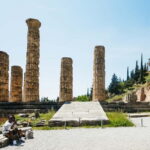
- The Acropolis leads the day: Allow about 90 minutes for the Parthenon, Erechtheion, Temple of Athena Nike, and Propylaea.
- Museum time is built in: You get about an hour at the Acropolis Museum, though admission costs extra.
- Ancient and modern Athens share the route: The schedule links the Agora and Temple of Hephaestus with Syntagma, the Parliament, Omonia, and the neoclassical center.
- Food can be part of the day: Petralona and the Central Market offer local stops, but lunch and drinks are your responsibility.
- Start early if you can: The Acropolis is far more pleasant before the strongest heat and largest crowds.
Why private transport makes Athens easier
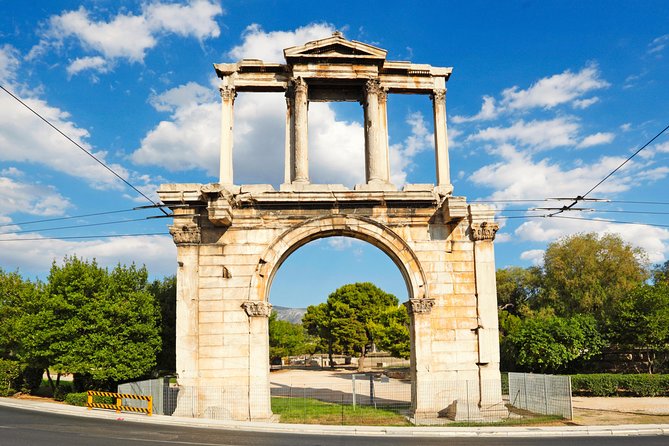
Athens is not difficult to visit, but its major sights are spread across busy streets, steep paths, and large archaeological grounds. In six hours, a private car saves time between the Acropolis, the stadium, Syntagma Square, the Academy, the Agora, and Plaka.
Pickup is available from a hotel, apartment, Piraeus port, cruise ship, or a specified city location. That flexibility matters if your day begins at the harbor or ends with an airport connection. The tour also includes parking fees and baggage charges, useful extras if you are carrying luggage or traveling between a port and central Athens.
The price is $505.23 per group of up to three people. For three people, that works out to about $168 per person before admissions, meals, and gratuities. For a couple, it is a higher-cost half-day, but you are paying for a private vehicle, a personal schedule, and transport that removes much of the city’s friction.
The vehicles described by the company and past bookings include clean, comfortable Mercedes cars with air conditioning. Drivers have also supplied cold water and, in some cases, stopped for coffee or pastries. Those touches are not listed as guaranteed inclusions, so treat them as possible extras rather than promises.
You can also read our reviews of more tours and experiences in Athens.

The Acropolis: Parthenon, Caryatids, and wide city views
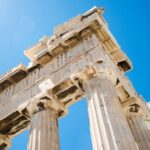
The Acropolis is the heart of the day. You spend about 90 minutes on the hill, where the Parthenon shares attention with the Erechtheion, Temple of Athena Nike, and Propylaea.
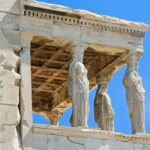
The Parthenon is the famous temple dedicated to Athena, but the other buildings deserve your attention too. The Erechtheion is known for its six female figures, the Caryatids, used as architectural supports. The Temple of Athena Nike is smaller, but its position near the entrance gives it a proud view over Athens.
The Propylaea is the monumental gateway to the hill. As you move through the site, you can look down toward the Odeon of Herodes Atticus, the Theatre of Dionysus, and the Areopagus, also called Mars Hill. These views help you understand that the Acropolis was not an isolated monument. It was part of a larger civic and religious center.
You should expect uneven ground, stone surfaces, and walking in the open sun. The driver cannot accompany you inside the archaeological site unless you add a licensed guide, so ask at booking if you want detailed explanations during the visit itself.
This distinction is important. The driver-guides are described as friendly and well informed about Greek history, mythology, and culture. They can prepare you during the drive and explain what you are seeing from outside, but Greek regulations restrict drivers from guiding inside archaeological sites and museums.
Admission is not included. The supplied information gives an approximate entrance cost of 30 euros per person, but you should confirm the current price and ticket arrangements before your visit. If you are short on time, ask how your entry will be handled, since the Acropolis is the most time-sensitive part of the day.
The Acropolis Museum puts the ruins in context
After the hill, the tour allows about an hour at the Acropolis Museum. This is one of Athens’ most useful museums because it focuses on objects and sculptures connected directly to the Acropolis.
The museum helps you see details that can be easy to miss outdoors. After looking at the Caryatids and temples on the hill, you can study related pieces in a cooler, more controlled setting. It is also a good place to make sense of the site’s long story rather than treating the Parthenon as one isolated photo stop.
Admission is extra, and one hour gives you a useful introduction rather than a slow, complete visit. If museums are your main interest, you may want to spend longer here and trim another stop. If this is your first visit to Athens, the planned hour gives you a sensible balance.
Zeus, the stadium, and the modern center
The Temple of Olympian Zeus receives about 20 minutes. It was the largest temple built in Athens, and even its surviving columns give you a strong sense of scale. This is a quick outdoor stop, so comfortable shoes, water, and sun protection help.
The Panathenaic Stadium gets another 20 minutes. Built in marble, it hosted the first modern Olympic Games and is linked with the story of Pheidippides announcing victory after the Battle of Marathon. You have enough time for photos and a quick look around, but not a long stadium visit.
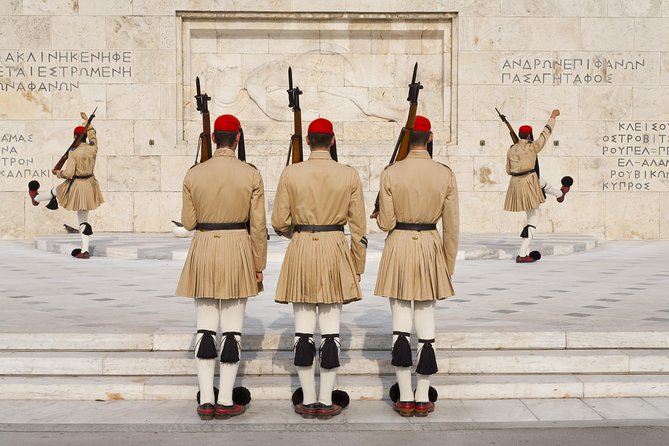
At Syntagma Square, you see the Parliament building and the Tomb of the Unknown Soldier. The Evzones, wearing traditional uniforms based on the 1821 war period, guard the tomb. The changing of the guard is a popular sight, but its timing is not guaranteed by the six-hour schedule. Ask your driver if the day can be arranged around it.
The Academy of Athens, University, and National Library form the neoclassical Athenian Trilogy along Panepistimiou Street. The stop lasts about 10 minutes, which is enough for the grand facades and photographs. The National Library also has a newer building described as part of Athens’ cultural trilogy.
Omonia Square gives you another look at central Athens. Together with Syntagma and Monastiraki, it forms what locals call the historic triangle. These short drives are useful because you see Athens as a living capital, not just a collection of ancient stones.
Ancient Agora and the Temple of Hephaestus
The Ancient Agora is one of the best stops for understanding how Athens functioned. It was a marketplace and civic center, and it is associated with philosophers speaking to the public.
You get about 40 minutes at the site, followed by about 10 minutes for the Temple of Hephaestus and 20 minutes in the Museum of the Ancient Agora. The Temple of Hephaestus is described as the best-preserved temple in Athens, making it especially rewarding even if you have already seen the Parthenon.
The museum sits within the archaeological site. It is smaller and more focused than the Acropolis Museum, with objects tied to everyday life and public activity in ancient Athens. Twenty minutes is brief, but enough for a first look.
Entry is not included for the Agora. The schedule gives this area a meaningful amount of time, but you should still watch the clock. A private tour can reduce wasted transit time, yet the Acropolis, museum, and Agora together can consume most of the day.


Plaka, Monastiraki, and the food side of Athens

Plaka gets about 30 minutes and sits directly below the Acropolis. It is the oldest neighborhood in Athens, with older buildings, souvenir shops, cafés, and places to eat.
This is a good place to switch from monuments to daily life. You can walk, browse, and get a feel for the streets beneath the sacred hill. Thirty minutes is enough to look around, but not enough for a long meal or serious shopping.
Monastiraki is the center of the flea-market area and another part of the historic triangle. It mixes souvenir shops, food places, and archaeological sites. The route may also pass through the Central Open Food Market, where Athenians shop for meat, fish, and other food at local prices.
If you want lunch, Petralona offers a more local neighborhood setting outside the main tourist zone. The company can take you to a taverna there, but lunch is optional and not included. This is one of the best chances to make the tour feel less like a checklist, especially if your driver recommends a place he personally likes.
Past drivers have also stopped for coffee, pastries, and Greek foods such as spanakopita. Again, these are not guaranteed parts of the published service. Tell your driver early if food matters to you so the schedule can allow time for it.
What the driver-guide adds
The strongest feature of this tour is the human element. Drivers including Markos, John, Dem, Makis, and Yanis are described as warm, punctual, and able to explain Greek mythology, history, food, and modern life in clear English.
Some drivers use videos or time-lapse material in the car to show how monuments may have looked in the past and how the city has changed. That can be especially helpful before you enter the Acropolis or Agora, because the ruins make more sense when you have a picture of the original buildings.
You also get the chance to ask practical questions. A good driver can explain where Athenians eat, which coffee shop he prefers, how the changing of the guard works, or which neighborhoods sit outside the usual sightseeing circuit.
Still, keep the driver-guide limits in mind. The driver cannot provide guiding inside the archaeological sites and museums. If you want detailed commentary beside the monuments, add a licensed guide for an extra fee. That cost may be worthwhile for first-time visitors who care more about historical explanation than maximum coverage.
Is six hours enough?
Six hours is enough for a strong overview, not a complete Athens visit. The planned route includes at least nine major stops plus drives through several central squares and neighborhoods.
The schedule works best when you accept that some stops are quick. Ten minutes at the Academy, 20 minutes at Zeus, and 30 minutes in Plaka give you orientation and photographs. They do not allow long exploration.
The Acropolis and Acropolis Museum deserve the most attention. If you want a leisurely museum visit, long shopping time, or a relaxed lunch, you will need to drop stops or book a longer tour. The company also operates longer private outings, but this specific experience is built around a concentrated city overview.
Heat is another reason to start early. The Acropolis has little shade, and Athens can be very hot. An early start also improves your chance of seeing the main monuments before the busiest period.
Who should book this Athens tour?
I would consider this a strong match for first-time visitors, cruise passengers, families or small groups, and anyone with only one day in Athens. It is also useful after a long flight, when a private vehicle is more appealing than figuring out public transport and city streets.
The tour suits you if you want the major sights with a local driver, comfortable transfers, and the freedom to ask for food or neighborhood suggestions. It is less suitable if you prefer to move slowly, spend hours in museums, or have a strict budget.
Free cancellation is available if you cancel at least 24 hours before the start time. Confirmation is issued within 48 hours, subject to availability. Most people can participate, and the activity is private, so only your group joins.
Should you book it?
Book this tour if your priority is seeing the main Athens sights in one efficient private outing. The Acropolis, museum, Ancient Agora, stadium, Parliament, Plaka, and central squares give you a broad first look, while the driver adds useful context and local food advice.
Think twice if the $505.23 group price feels high, or if you want a licensed guide inside every archaeological site. For two or three people, the cost buys comfort and saved time. For one person, it is harder to justify.
My practical choice would be an early pickup, confirmed Acropolis entry, and an added licensed guide if ancient history is your main reason for coming. Ask to include the changing of the guard when timing permits, and reserve enough room for a short meal in Petralona or another local stop.
FAQ
How long does the Athens private tour last?
The tour lasts approximately six hours.
How many people can join the private tour?
The group price covers up to three people, and only your private group participates.
Where can pickup take place?
Pickup is available from any hotel, apartment, Piraeus port, cruise ship, or a specific location in Athens.
Is transportation included?
Yes. Private driver-guide service, parking fees, and baggage charges are included.
Are entrance fees included?
No. Entrance fees are extra. The provided information gives an approximate cost of 30 euros per person.
Can the driver guide inside the Acropolis and museums?
No. Drivers can explain the sights during transport and outside the sites, but only licensed guides may guide inside archaeological sites and museums. A licensed guide can be added for an extra fee.
Is lunch included?
No. Lunch and drinks are not included. An optional stop at a taverna in Petralona can be arranged.
Can I cancel for a full refund?
Yes, if you cancel at least 24 hours before the experience starts. Cancellations made less than 24 hours before the start time are not refunded.