REVIEW · THESSALONIKI
Thessaloniki Private Historic Walking Tour
Book on Viator →Operated by Athens Walks Tour Company · Bookable on Viator
Thessaloniki’s story is packed into a walkable stretch of churches, Roman ruins, Ottoman traces, and waterfront landmarks. This private tour begins at Saint Dimitrios, leads you through the church’s underground crypt, and connects the city’s ancient and Byzantine chapters with the help of an archaeologist guide.
I like the one-to-one attention and the way the route mixes famous sights with local orientation. I also like the chance to adjust the pace: Maria has accommodated a guest with a knee problem, while other guides have shaped the walk around particular interests. The main drawback is price. At $264.90 per person, it is a serious spend unless your group values a private guide and divides the cost among several people.
In This Review
- Key points to know before booking
- Why this four-hour walk works well on your first day
- Saint Dimitrios and the underground crypt
- Rotunda: a Roman building with several lives
- Galerius Arch and the old imperial center
- The Roman Forum and the Greek Agora
- Ending at the White Tower
- A private guide makes the difference
- Price, group size, and what you actually receive
- Who should book this Thessaloniki walk?
- Should you book it?
- FAQ
- How long is the Thessaloniki Private Historic Walking Tour?
- Where does the tour begin?
- Where does the tour end?
- Is the tour private?
- Is admission to the main sights included?
- Is the tour offered in English?
- What happens if the weather is poor?
Key points to know before booking
- Saint Dimitrios comes first: Meet your guide at the church entrance and begin with Thessaloniki’s most important Christian monument.
- The crypt adds a rare underground layer: Ancient baths and religious remains sit below the church.
- Roman Thessaloniki gets plenty of time: The Rotunda, Galerius Arch, and Roman Forum show how much of the modern city grew around older foundations.
- The walk is private: Only your party takes part, so the guide can adjust explanations, timing, and pace.
- Rotunda entry is included: Admission to the White Tower, Saint Dimitrios, Galerius Arch, and Roman Forum is not included.
- A local sweet finishes the experience: Bougatsa semolina pie is included, a small but useful introduction to Thessaloniki’s food culture.
Why this four-hour walk works well on your first day
Thessaloniki can feel confusing at first. Its sights are spread through a busy modern city, yet the old layers are often tucked beside ordinary streets, shops, and traffic. A private walk gives you a map in your head, not just a list of monuments.
The route covers Roman, Byzantine, Christian, Ottoman, and Jewish chapters. That range matters. Thessaloniki is not simply an ancient Greek city with a few ruins added later. It was shaped by several ruling powers and religious communities, and the guide’s job is to connect those changes without turning the morning into a classroom lecture.
The four-hour length is useful. You get enough time for major sites, questions, photographs, and a sweet break, but you are not committing to a full day on foot. The pace can be relaxed. One guide, Maria, was able to cover a large part of the city while accommodating a guest’s knee, and the private format makes that kind of adjustment more realistic.
I would book this early in your stay. The route passes near many central areas, and a private guide can point out places to return to later. One couple who took the walk near the start of a ten-day visit found that it helped them move around the city with more confidence afterward.
The meeting point is the entrance to the Holy Church and Crypt of Saint Demetrius at Ag. Dimitriou 81-83. Wear comfortable shoes. Thessaloniki’s streets are manageable, but four hours of walking still adds up, especially in summer. A hat is also sensible in the warmer months.
You can also read our reviews of more walking tours in Thessaloniki



Saint Dimitrios and the underground crypt
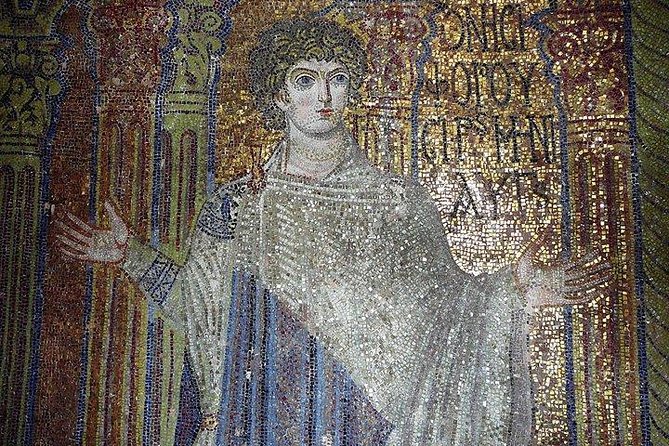
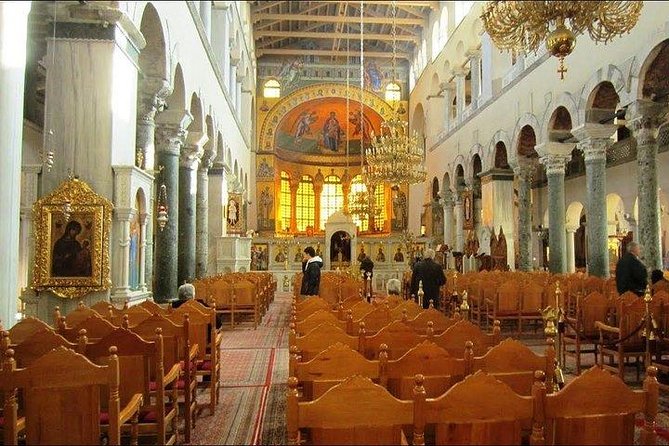
Begin at the Church of Saint Demetrius, the city’s patron saint. The church is part of Thessaloniki’s UNESCO-listed collection of Early Christian and Byzantine monuments, and it gives the tour its strongest opening.
Inside, your guide can explain why Saint Demetrius became so important to the city and how the church fits into Thessaloniki’s Byzantine past. The building is not just a beautiful place for photographs. It is a working religious site with centuries of political, spiritual, and architectural change behind it.
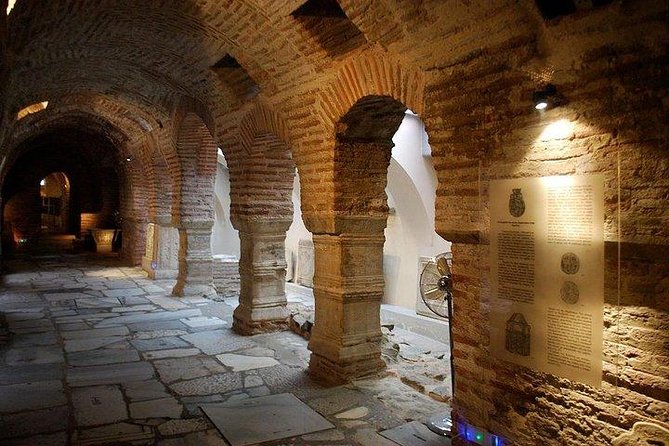
The crypt below is the more unusual part. This subterranean area was only revealed in recent times and includes ancient baths and religious architecture. You get a direct sense of how older structures were buried, reused, and rediscovered beneath the city.
This stop is scheduled for about an hour, which is appropriate. There is enough here to reward careful looking, and a good guide can explain the links between the church above and the remains below. You should not rush this part just to reach the Roman monuments.
Admission to the church is not included, so allow for that extra cost. Children under 18 receive half-price entrance tickets when they show a passport. The supplied information does not give the adult admission price, so check the current amount before booking if you are keeping a strict budget.
Rotunda: a Roman building with several lives
The Rotunda is one of Thessaloniki’s oldest religious sites. Built by the Romans in 306 AD, it belongs to the period when the empire was reorganized into four regions under the Tetrarchy.
That political background makes the building easier to understand. The Rotunda was not created as an isolated church. It was part of a larger imperial setting connected with Galerius and the city’s Roman power structure. Over time, the building took on religious roles that changed with the city’s rulers and communities.
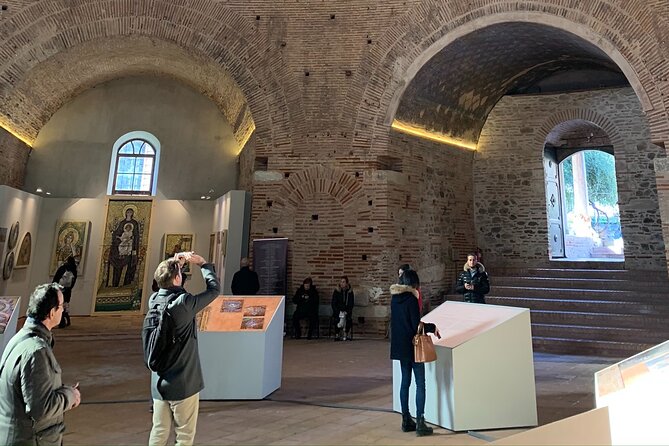
You have about 20 minutes here. That is enough for an explanation and a close look, though it is not a long museum visit. The Rotunda is the only listed admission specifically included in the tour price, which improves the value slightly.
I would pay attention to the change in scale as you enter. The structure feels far larger and more imposing than its exterior suggests. Your guide’s archaeological background is especially useful here because the building’s meaning depends on what it was built for, what it later became, and how the city changed around it.
Galerius Arch and the old imperial center
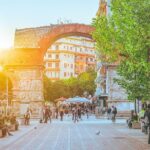
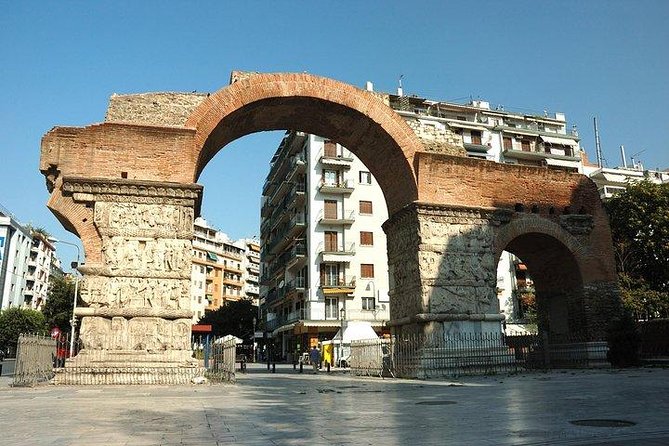
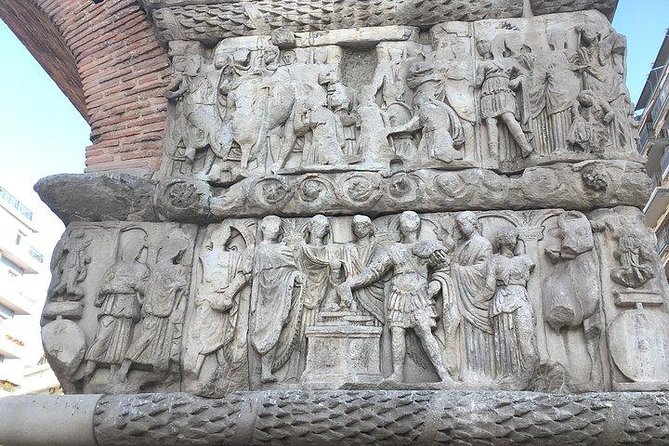
A short stop at the Arch of Galerius follows the Rotunda. The arch and Rotunda were key pieces of the wider palatial complex, and the surviving structure gives you a glimpse of the scale of Roman Thessaloniki.
The arch is sometimes called Kamara. Its original purpose is not entirely settled. It may have been connected to a mausoleum, while some archaeologists believe it served as a Roman temple. That uncertainty is worth hearing. Ancient sites are not always neat stories with every answer in place.
The planned stop lasts about 15 minutes. This is enough for photographs and a focused explanation, but the arch is not a major enclosed attraction where you will spend a long time. Admission is listed as not included, so confirm whether any current charge applies when you book.
This is also a good place to notice the city’s modern rhythm. The remains do not sit in an empty archaeological park. Thessaloniki’s present-day streets continue around them, which makes the Roman past feel less remote and more like part of everyday life.
The Roman Forum and the Greek Agora
The Roman Forum is one of the tour’s best stops for understanding how public life worked in ancient Thessaloniki. Located near the upper side of Aristotelous Square, it is a large, two-level complex with two-story stoas.
The site was uncovered by accident in the 1960s. That detail gives you a useful reminder: major parts of ancient Thessaloniki remain below the modern city, sometimes waiting to be noticed during ordinary construction.
The forum served as a public and commercial center, and the broader agora area has hosted traders for thousands of years. Your guide can connect the ruins with the city’s long role as a place of exchange, not just a military or religious center.
The stop lasts about 30 minutes. You will have time to see the terraces and understand the layout, but do not expect a huge open-air ruin field. The site is urban and compact. Its value lies in the explanation and the way it fits into the city around you.
Admission is not included. That matters because several of the principal stops carry separate entry costs. Ask for the current total before you commit, especially if you are traveling with children or have several people in your party.
You can also read our reviews of more private tours in Thessaloniki



Ending at the White Tower
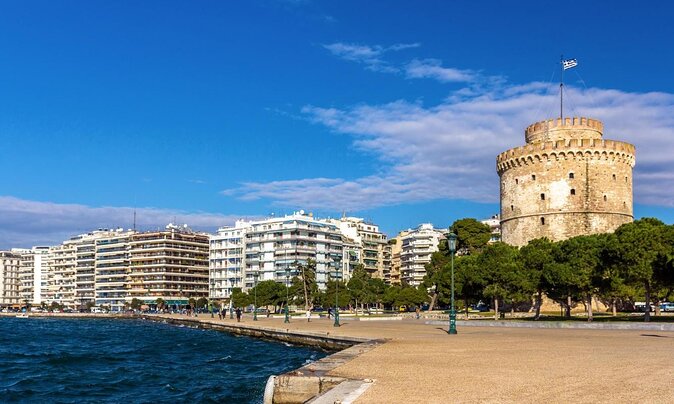
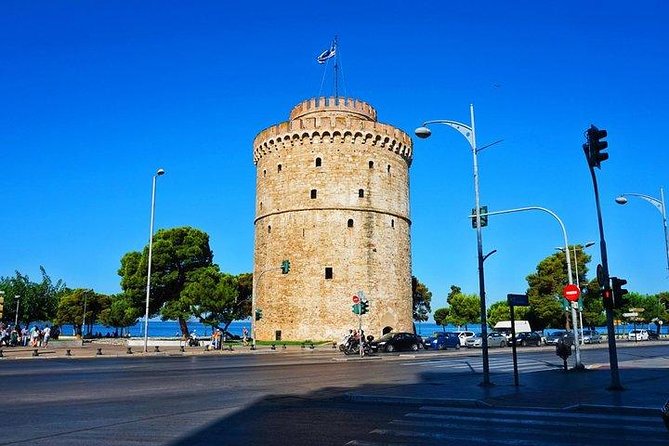
The White Tower is Thessaloniki’s best-known landmark and its modern symbol. It sits on the waterfront, making it a natural final sight after the inland Roman and Byzantine stops.
The present tower replaced an older Byzantine fortification. The Ottoman Empire rebuilt it after taking Thessaloniki in 1430, and the tower later became a prison and a place of executions. Its clean white appearance can hide a harsh past, so the historical explanation matters as much as the waterfront view.
The exterior was substantially remodeled and whitewashed after Greece took control of the city in 1912. Today, it also functions as a museum. The tour allows about 30 minutes here, but admission inside is not included.
If you want to climb through the museum, budget extra time and money, or ask the guide how the timing works. The description presents the White Tower as the finishing point, while the meeting-point information says the activity ends back at the Saint Dimitrios meeting point. That is a small but important detail to clarify before the morning begins.
Even if you only see the exterior, the stop gives the walk a strong finish. You move from the city’s underground Christian remains to its Roman monuments and then to a waterfront tower tied to the Ottoman and modern Greek periods.
A private guide makes the difference
The strongest reason to choose this experience is the guide, not the number of monuments. A standard group walk has to keep moving at one pace. Here, your guide can spend longer on Saint Dimitrios if you care about religious history, or give more attention to Roman engineering if that is your main interest.
Several guides are named in the supplied information. Maria is described as friendly, clear, and especially strong on history. She has adjusted the walking pace for a guest with a knee problem, allowed time for photographs, and added local food stops. Vasiliki is described as engaging and flexible, giving information without making the experience feel like a lecture. Anna Semertzi led one private-feeling walk with strong explanations of the city’s history, customs, religions, and archaeological sites.
Guide assignments can change, so you should not assume you will receive a particular person. Still, these details show what the experience is designed to provide: a personal conversation rather than a fixed speech.
The local dessert is bougatsa, a semolina pie associated with Thessaloniki. It is a modest inclusion, but a useful one. Food gives you another way into the city, and a short sweet stop can break up a morning of stones, dates, emperors, and church history.
Price, group size, and what you actually receive
The listed price is $264.90 per person. For one or two people, that is expensive for a four-hour walking tour, especially because several admission tickets are extra.
The calculation changes for a larger private group. Group discounts are offered, and the cost of a private guide divided among several people may compare more favorably with multiple individual tours. You are paying for a guide devoted only to your party, not simply for entry to the monuments.
Rotunda admission is included. White Tower, Saint Dimitrios, the Arch of Galerius, and the Roman Forum are listed as extra. The included bougatsa is a pleasant touch, but it does not change the main value calculation.
I would choose this tour if you care about context, questions, and a flexible pace. I would skip it if you prefer to enter every site independently, spend a long time inside museums, or keep sightseeing costs low. You can see some of these landmarks on your own, but you will lose the connections between them.
Who should book this Thessaloniki walk?
This experience suits first-time visitors who want to get oriented quickly. It also fits history-minded people who want Roman and Byzantine sites explained in the same morning rather than visited as disconnected stops.
Families can benefit from the private format because the pace and explanations can be adjusted. Children under 18 receive half-price entry tickets with a passport, although the tour price itself is listed per person and group discounts may apply.
It is also a good choice for anyone who worries about getting lost in a new city. The route links central landmarks and gives you a practical sense of how the major areas fit together. You will still need comfortable footwear, and summer heat makes a hat worthwhile.
The walk is offered in English, confirmation arrives at booking, and most people can participate. It is near public transportation, but no hotel transfer is promised as a standard feature. Pickup is offered in the general tour information, so confirm the exact arrangement rather than assuming door-to-door service.
Should you book it?
Book this tour if you want Thessaloniki explained by a private archaeologist guide and you value a flexible, human pace. The crypt of Saint Dimitrios, the Roman Forum, and the Rotunda give the morning real depth, while the White Tower supplies a clear landmark at the end.
The price is the deciding factor. It is worthwhile for a small group that will use the guide fully, ask questions, and take advantage of local advice for the rest of the stay. For a solo visitor or budget-minded couple, the extra admissions and per-person cost may be hard to justify.
My practical advice is to schedule it on your first full morning, wear good shoes, bring a hat in summer, and confirm the exact ending point and admission costs before departure. If that fits your plans, this is a strong way to get Thessaloniki’s many historical layers into focus.
FAQ
How long is the Thessaloniki Private Historic Walking Tour?
The tour lasts approximately four hours.
Where does the tour begin?
Meet your private guide at the entrance to the Holy Church and Crypt of Saint Demetrius, at Ag. Dimitriou 81-83 in Thessaloniki.
Where does the tour end?
The listed route describes the White Tower as the final stop, while the meeting-point details say the activity ends back at the meeting point. Confirm the exact end point with the provider before the tour.
Is the tour private?
Yes. Only your group participates in this private activity.
Is admission to the main sights included?
Admission to the Rotunda is included. Entry to the White Tower, Church of Agios Dimitrios, Arch of Galerius, and Greek Agora and Roman Forum is not included.
Is the tour offered in English?
Yes. The tour is offered in English.
What happens if the weather is poor?
The experience requires good weather. If it is canceled because of poor weather, you will be offered another date or a full refund. You can cancel for a full refund up to 24 hours before the start time.