REVIEW · ATHENS
Anc. Corinth, Mycenae, Epidaurus & Nafplio Full Day Private Tour
Book on Viator →Operated by Athens Taxi Travel · Bookable on Viator
The big appeal here is range. In one long day from Athens, you can see the Corinth Canal, walk through the ruins of Mycenae, test the famous acoustics at Epidaurus, and finish in handsome Nafplio. It is a lot of Greece in one outing, but the private car keeps the day practical.
I like the freedom to set your own pace, and I like the small comforts: air-conditioning, Wi-Fi, and bottled water. Drivers such as Kostas and Andreas are praised for being friendly, flexible, and well informed about ancient history. The main drawback is that the day is packed, and your driver is not a licensed guide who enters the archaeological sites with you.
In This Review
- Key points to know before booking
- Why this private day trip works from Athens
- The Corinth Canal makes a quick first stop
- Ancient Corinth connects ruins with early Christianity
- Mycenae brings the Bronze Age to life
- Epidaurus explains ancient Greek healing and theater
- Nafplio gives the day a welcome change of pace
- Palamidi is the best final viewpoint
- The driver service is the real product
- Timing, cost, and who should book
- Should you book this Corinth, Mycenae, Epidaurus, and Nafplio tour?
- FAQ
- How long does the private tour last?
- How many people can join the tour?
- Is a licensed tour guide included?
- What entrance fees should I expect?
- Is lunch included?
- What does the vehicle include?
Key points to know before booking
- Four major destinations in one day: Corinth, Mycenae, Epidaurus, and Nafplio cover ancient engineering, Bronze Age Greece, theater, medicine, and modern Greek history.
- Private pacing: You can spend more time at a favorite site or move along when the heat and ruins begin to blur together.
- Driver, not site guide: Your English-speaking driver can explain the places and answer questions, but will wait while you explore the monuments.
- Plan for extra costs: Entry fees total €55 per person for the listed paid sites, and lunch is not included.
- Palamidi is worth protecting time for: The fortress gives Nafplio its best views and adds a bit of exercise to the day.
- A long, road-heavy outing: The advertised duration is about nine to ten hours, so an early start helps you see the main sights without rushing.
Why this private day trip works from Athens
The Peloponnese begins just beyond Athens, but its ancient sites are spread out. Public transportation can get you to some of them, though connecting Corinth, Mycenae, Epidaurus, and Nafplio in one day would be awkward and time-consuming.
A private vehicle solves the main problem: transfers. You are not standing at a bus stop between archaeological sites, checking departure times, or trying to work out how to reach a hilltop fortress after a long visit. The driver collects your group, keeps the vehicle cool, and takes you directly between stops.
The price is $548.05 for up to four people. Split four ways, that is about $137 per person before entrance fees and lunch. Add the listed €55 in admission charges per person, and the total cost becomes less modest. Still, for a family or small group, the price can make sense when you value door-to-door transport and a day built around your interests rather than a fixed group schedule.
The private format matters most if your group has mixed energy levels. One person may want to study every column, while another is ready for shade after twenty minutes. You can adjust the pace instead of keeping up with a guide and a larger party.
You can also read our reviews of more private tours in Athens



The Corinth Canal makes a quick first stop
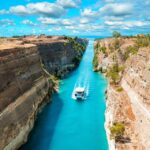
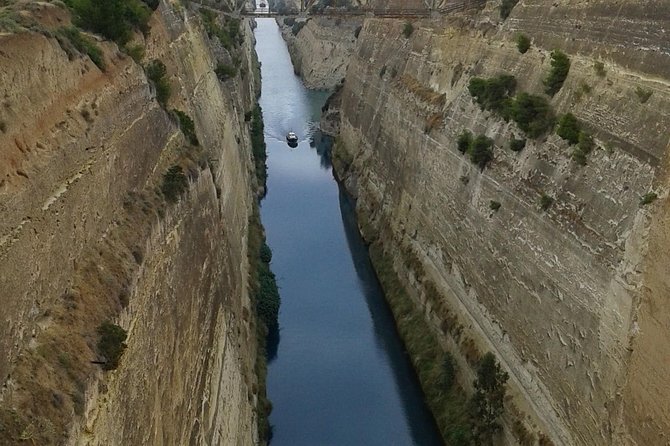
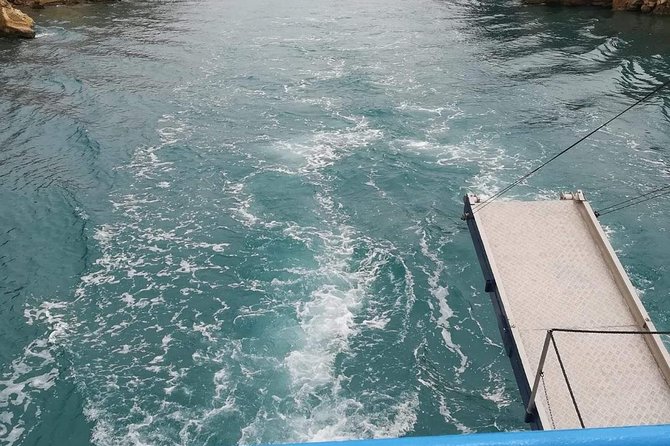
The Corinth Canal is an excellent way to begin. It cuts through the narrow Isthmus of Corinth and links the Aegean and Ionian seas. At about 6.4 kilometers long, it is a striking piece of 19th-century engineering.
You get roughly 30 minutes here, enough for photos and a look down into the steep-sided cut. The stop is free, so it adds interest without adding to the budget.
The canal is more about scale and setting than a long historical visit. You will not spend hours learning how it was built, but you will quickly understand why this narrow strip of land mattered to shipping and military strategy. Bring your camera, then move on before the day’s schedule starts to tighten.
Ancient Corinth connects ruins with early Christianity
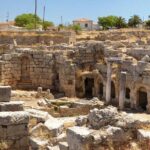
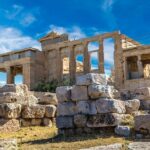
Ancient Corinth gives you a clearer sense of a working city than a single isolated temple. The site includes the Agora, streets, public buildings, and the Temple of Apollo. Corinth was a major commercial center, and its location helped it link routes across the Greek mainland and the Peloponnese.
The connection with the Apostle Paul adds another layer. Corinth appears in the New Testament, so the site can be especially meaningful if you are interested in early Christianity as well as classical Greece.
The planned visit is about an hour, followed by around 30 minutes in the Archaeological Museum of Ancient Corinth. The museum helps fill in the gaps left by the ruins. Pottery, sculptures, and ordinary objects show how people lived from the Geometric period through Roman times.
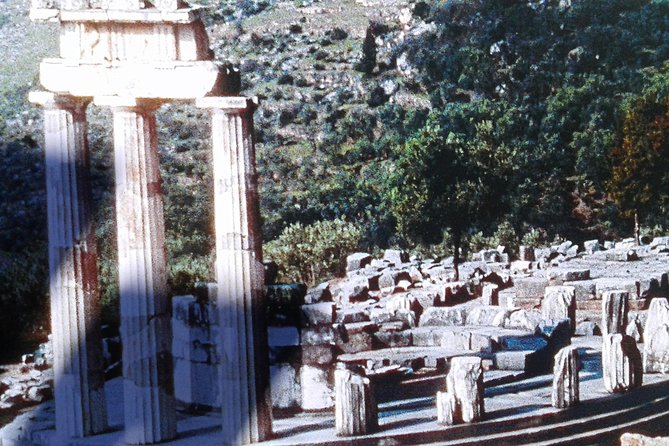
The Temple of Apollo receives its own short stop, though it is part of the Ancient Corinth site rather than a separate destination in practical terms. Its surviving Doric columns date to the sixth century BC, making it one of Greece’s oldest stone temples. Fifteen minutes is enough to admire it, but not enough for a detailed architectural study.
The key practical point is admission. Ancient Corinth and its museum are listed at €15 per person, payable on site. Since your driver does not enter as an official guide, you will explore the ruins and museum on your own unless you arrange a licensed guide separately.
Mycenae brings the Bronze Age to life
Mycenae is the day’s most powerful archaeological stop. This hilltop citadel belonged to the Mycenaean civilization of the Late Bronze Age, long before the classical Athens most visitors picture when they think of ancient Greece.
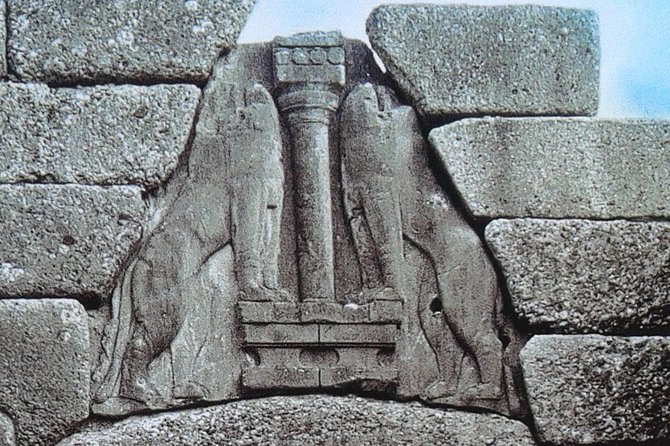
The entrance through the Lion Gate is the instant highlight. Built around 1250 BC, it carries a huge stone lintel and a relief of two lions. The gate is not merely a photo stop. It gives you a direct sense of the size and force of Mycenae’s builders.
Inside the citadel, you will see massive defensive walls and the remains of the palace complex. The stonework is often called Cyclopean because later Greeks imagined that only giants could have moved such enormous blocks. That old name tells you something about the impression the site makes.
The formal schedule allows about 30 minutes at the archaeological site, with another 15 minutes for the Lion Gate. Those times overlap in spirit, and you should not treat them as separate full visits. A half-hour is enough to see the principal features, but it is short if you want to walk widely around the citadel or linger over the views.
The Archaeological Museum of Ancient Mycenae adds another 30 minutes. Look for pottery, jewelry, sculptures, and funerary objects. Gold masks and objects from royal tombs help explain the power and ceremony of the people who ruled here.
You will also visit the Treasury of Atreus, often called the Tomb of Agamemnon. This tholos tomb has a tall entrance and a circular chamber covered by a corbeled dome. It is one of the clearest examples of Mycenaean building skill, and the interior is more memorable than its brief 15-minute allocation suggests.
The listed admission for Mycenae, its museum, and the Treasury of Atreus is €20 per person. The itinerary separately marks some Mycenae stops as free, but the inclusion notes make clear that you should budget for the combined site ticket.
Epidaurus explains ancient Greek healing and theater
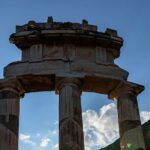
Epidaurus changes the subject from royal power to health and performance. The Sanctuary of Asklepios was an ancient center devoted to Asclepius, the god of medicine. People came seeking cures, religious help, and relief from illness.
The sanctuary included temples, baths, altars, and spaces linked to healing rituals. Dream interpretation and herbal remedies formed part of the ancient approach to care. Even if you are not especially interested in medical history, the site helps you see that Greek religion was tied to practical hopes for better health.
The Archaeological Museum of Epidaurus gives context through sculptures, inscriptions, and daily objects. It also helps explain the sanctuary’s buildings and the role of Asclepius. The visit is planned for about 30 minutes, followed by a similar amount of time at the theater.
The Ancient Theatre of Epidaurus is the star here. It could hold up to 14,000 spectators and remains famous for its acoustics and graceful design. Stand near the center of the orchestra and speak softly, if conditions allow. The point is not a magic trick, but the theater’s careful shape makes sound carry with remarkable clarity.
The theater is still used for performances, which gives the place a useful link between ancient culture and Greece today. You can walk through the seating area and look down toward the stage, imagining a crowd arriving for a festival connected to the sanctuary.
Again, the timing is tight. The published schedule gives 30 minutes for the museum, 30 minutes for the theater, and 15 minutes for the sanctuary. Those short blocks work for a highlights visit. They do not leave much room for a slow archaeological walk, extended museum study, or a long stop at every structure.
The Epidaurus site and museum cost €20 per person. The theater and sanctuary are part of this paid archaeological visit, so factor that fee into your total.
A few more Athens tours and experiences worth a look
- All Day Cruise -3 Islands to Agistri,Moni, Aegina with lunch and drinks included
★ 5.0 · 4,958 reviews



Nafplio gives the day a welcome change of pace
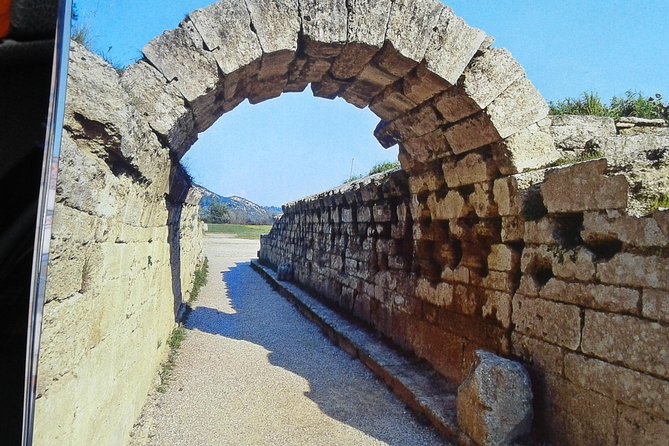
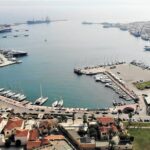
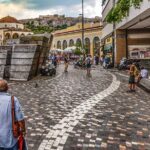
After so many stones and ancient names, Nafplio feels refreshingly human. This coastal town has Venetian, Neoclassical, and Ottoman influences, with streets made for a slower walk and a pause at a café.
You get about 90 minutes here, the longest leisure stop of the day. Use it well. Walk around Syntagma Square, browse the shops, take photos along the waterfront, or sit down for a local meal. Lunch is not included, so this is the natural place to eat.
Nafplio was the first capital of modern Greece, a fact that adds political history to its attractive architecture. It is also a good place to simply rest. After the early canal stop and several archaeological sites, you may appreciate an hour without a museum label or excavation plan.
Across the harbor, Bourtzi sits on a small island. The Venetian fortress was built in the 15th century to guard the port. This tour includes a short photo stop from the waterfront, about ten minutes, rather than a full island visit. A boat ride is possible in general, but it is not included in the described experience.
The Akronafplia Fortress is another historic stronghold above town. Its foundations reach back to ancient times, and Byzantine, Venetian, and Ottoman rulers all left their mark. The stop offers views across the Argolic Gulf, though the schedule does not assign it a separate timed visit.
Palamidi is the best final viewpoint
Palamidi Castle sits high above Nafplio and is the strongest reason to save energy at the end. Built by the Venetians in the 18th century, it has ramparts, bastions, and broad views over the town and gulf.
The scheduled visit lasts about 30 minutes. That gives you time to see the fortress and enjoy the view, but it is not a leisurely fortress exploration. If stairs or uneven ground are a concern, tell the driver early so your group can discuss how to use the available time.
One review specifically points to Palamidi as a must-see part of the day. I agree with the priority, not because it is the largest site, but because it offers the visual payoff the earlier ruins cannot. From above, Nafplio’s position and the shape of the harbor make sense at once.
The driver service is the real product
The drivers are not licensed guides, and they do not accompany you inside the archaeological sites. That distinction matters. You receive transportation and English commentary, not a formal guided tour with site interpretation at every monument.
The driver can answer questions, explain the broad story, and help you organize the day. Kostas is praised for arriving early, bringing cold water, adjusting the pace, and helping a group reach the airport on time after the outing. Andreas is praised for safe driving, historical knowledge, and pointing out attractive scenery along the route.
Those personal touches are useful, but they should not change your expectations. If you want detailed explanations beside every ruin, request a licensed guide in advance, subject to availability and an additional charge. If you are comfortable reading signs and exploring independently, the driver format gives you more privacy and flexibility.
The vehicle includes air-conditioning, Wi-Fi, bottled water, and private transportation. In the hot months, air-conditioning is not a minor perk. You will spend much of the day outdoors, and a cool ride between sites helps keep the final stops enjoyable.
Timing, cost, and who should book
Nine to ten hours is a reasonable estimate for this route, but it is a full day with substantial driving. The listed stop times add up quickly, and road conditions or a longer lunch can squeeze the final visit. Start early and decide in advance which places matter most to you.
The tour suits a group of up to four who wants:
- Door-to-door transport from Athens
- A private vehicle instead of a fixed group
- A broad introduction to the eastern Peloponnese
- Flexibility for children, older family members, or mixed interests
- An English-speaking driver with historical knowledge
It is less suitable if you want a slow, scholarly day at each site. Mycenae and Epidaurus deserve more than the allotted highlights visit if ancient architecture is your main passion.
The basic price does not include lunch, a licensed guide, or admission. For four people, the listed entry fees add €220 in total. Ask about the guide before booking if that service is important to you, and confirm the pickup details for your Athens address.
Most people can participate, and the tour is offered in English. Free cancellation is available up to 24 hours before the start time. Changes or cancellations inside that window are not accepted for a refund.
Should you book this Corinth, Mycenae, Epidaurus, and Nafplio tour?
Book it if you want to cover several major sites in one day without wrestling with public transportation. The private format, flexible pace, cold water, and comfortable vehicle give this demanding route a practical edge.
Go in with clear expectations: the driver is a helpful history-minded escort, not an official guide inside the monuments. Budget the extra admission fees, protect enough time for lunch, and do not expect a leisurely visit at every stop.
For a small group that values convenience and variety, this is a strong Athens day trip. If you want maximum archaeological detail, book a licensed guide and consider giving Mycenae or Epidaurus its own dedicated day.
FAQ
How long does the private tour last?
The experience lasts approximately nine to ten hours, including transportation and visits to the Corinth Canal, Ancient Corinth, Mycenae, Epidaurus, and Nafplio.
How many people can join the tour?
The price covers a private group of up to four people.
Is a licensed tour guide included?
No. The drivers speak fluent English and can provide historical commentary, but they are not licensed guides and do not accompany you inside the archaeological sites. A licensed guide may be requested, subject to availability.
What entrance fees should I expect?
Ancient Corinth and its Archaeological Museum cost €15 per person. Mycenae, its Archaeological Museum, and the Treasury of Atreus cost €20 per person. Epidaurus and its Archaeological Museum cost €20 per person.
Is lunch included?
No. Lunch is not included, so you should plan to buy a meal during the Nafplio stop or elsewhere along the route.
What does the vehicle include?
The private, air-conditioned vehicle includes Wi-Fi and bottled water. Pickup is offered, and the tour is provided in English.