REVIEW · ATHENS
Ancient Sparta & Mystras Private Day Tour from Athens
Book on Viator →Operated by Olive Sea Travel · Bookable on Viator
Sparta and Mystras start with a canal detour. This private day trip links Corinth Canal with the ghost city of Mystras and key Sparta landmarks, all with easy hotel pickup.
I love the private pacing. You can slow down for viewpoints and photo stops without waiting on a bus schedule. I also like that the driver-style commentary turns the long drive into a story, so places like Salamis and Leonidas feel connected, not random.
The main thing to consider is cost creep: the tour price is premium, and you’ll also pay about €34 for site entrances, plus you may want to budget extra if you want a licensed guide inside.
In This Review
- Key highlights worth planning around
- The big idea: turning a long drive into a good day
- Getting to the Peloponnese: pickup, transport, and real-world timing
- Corinth Canal: the 1892 cut you can actually walk across
- Mystras: Byzantine ghost city views with monasteries still in use
- Sparta’s Acropolis and theater: what’s there, and how to read it
- Leonidas Monument and the Spartathlon finish line
- Museum of Olive and Greek Olive Oil: a quick stop that makes sense
- Price and value: what you’re paying for, and what to budget
- What to wear and bring so the walking feels good
- Should you book this Sparta and Mystras private day tour?
- FAQ
- How long is the Ancient Sparta & Mystras private day tour from Athens?
- Is hotel pickup and drop-off included?
- Does the price include entrance fees for the sites?
- Do we have a licensed tour guide inside the sites?
- Is the tour private or shared with other people?
- What happens at the Corinth Canal stop?
- Is bungee jumping offered at the canal?
- What language is the tour offered in?
- Can I cancel and get a full refund?
Key highlights worth planning around
- A two-for-one history day: Byzantine Mystras plus classic Sparta in the same long outing
- Corinth Canal on foot: a short pedestrian bridge walk with the chance of bungee jumping on some days
- Private car control: adjust pickup time and set your own walking rhythm
- Mystras is still active: monasteries in use, not just empty ruins
- Viewpoints come with effort: citadel walks mean you’ll earn the panoramas
- Know what’s not included: entrance fees and any licensed site guide
The big idea: turning a long drive into a good day
This is one of those Athens trips where the drive matters. You’re not just hopping between two ruins and calling it a day. You start with the Corinth Canal, then you head deep into the Peloponnese toward Mystras, and you finish in Sparta, with the timing built around how you’ll actually experience each place.
I like the structure because it’s balanced. Mystras does the heavy lifting with Byzantine churches, palaces, and monastery life. Sparta gives you the ancient context and key monuments, but it’s shorter and more place-based than big-and-busy like Athens.
One more practical upside: it’s a private format. That means hotel pickup and drop-off from Athens, plus you can take breaks without negotiating with a group. The day still runs about 10 hours (traffic can change the exact timing), but the pacing feels under your control.
You can also read our reviews of more private tours in Athens



Getting to the Peloponnese: pickup, transport, and real-world timing
Pickup is part of the deal, and the pickup time is adjustable. That matters in Athens, where traffic and timing can turn a good plan into a stressful one. You’ll also have a dedicated vehicle the whole day—listed as private transportation—with bottled water included.
The driver role is important to understand. You’ll be with a professional driver who provides historical context, but the driver isn’t licensed to accompany you inside the sites or museums. In plain terms: you’ll get great storytelling and direction for the day, but when you want a license-level, inside-the-building narration, you’ll need to arrange a licensed tour guide on request (additional cost is listed as 390€).
If you’re the type who hates time lost hunting for bathrooms, tickets, or meeting points, this format helps. Most of the friction is removed before you even reach the Peloponnese.
Corinth Canal: the 1892 cut you can actually walk across
Your first stop is the Corinth Canal. You start with a drive along the coast, passing seaside villages and views tied to Greek naval history—there’s a mention of Salamis, connected to the famous naval battle between Athenians and Persians.
Then you hit the canal itself. The canal opened in 1892, separating the Peloponnese from the rest of Greece and linking the Saronic Gulf to the Corinthian Sea. That’s not just trivia. It explains why this spot feels like a crossroads in engineering and strategy.
You’ll get about 15 minutes there, plus time to walk across a pedestrian bridge to see the canal closer. On some days, there’s also an option for bungee jumping if you feel like adding a little adrenaline to your history day. The canal stop is listed as free for admissions.
My practical take: use the short window wisely. This is not a long wander. If you want photos, do them first while you have clear light, then use the rest of the time to stand still and watch the water and scale.
Mystras: Byzantine ghost city views with monasteries still in use
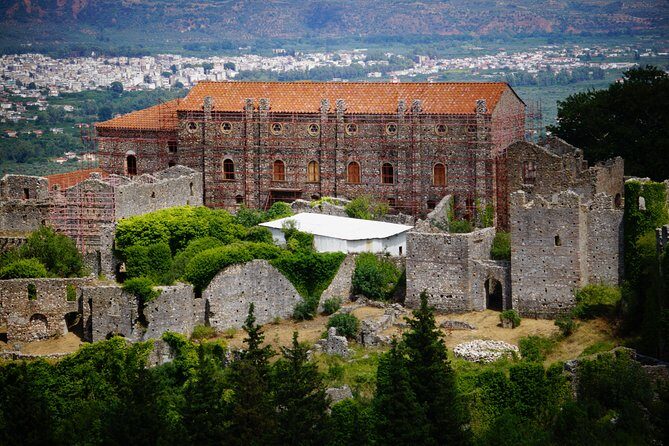
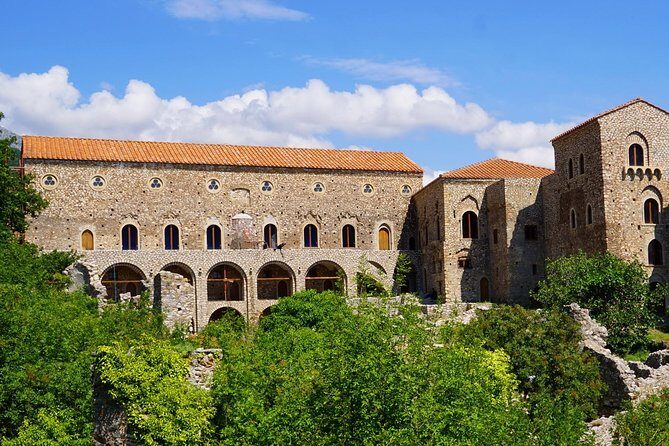
If Sparta is the headline, Mystras is the plot twist. This is described as a “ghost city,” fortified on a citadel, and unique among Greek sites for how many Byzantine-era buildings it preserves—churches plus everyday houses, mansions, and palaces—while also showing Frankish elements.
What makes it worth your time is that it’s not only dead stones. The monasteries are still in use, and monks can show visitors around their small community. That changes the feel. You’re not just looking at artifacts. You’re in a place where religious life continues, even if quietly.
You’ll have about 2 hours at the archaeological site. The route matters. You start higher up and reach the citadel, which gives you the big panoramic views over the surrounding areas. Then you walk down toward palaces and royal courtyards. The descriptions make it clear there’s a downhill element, so bring footwear with grip.
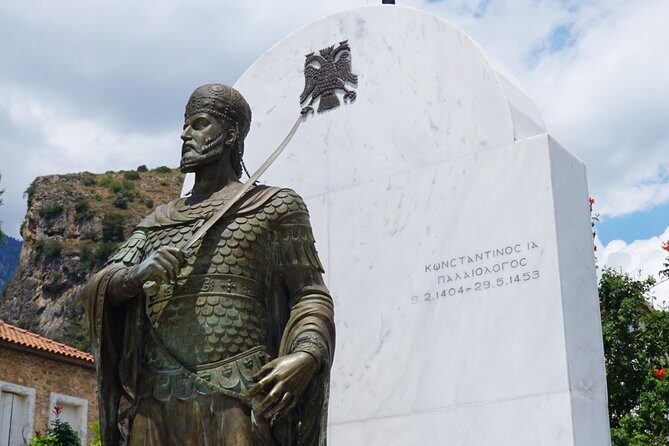
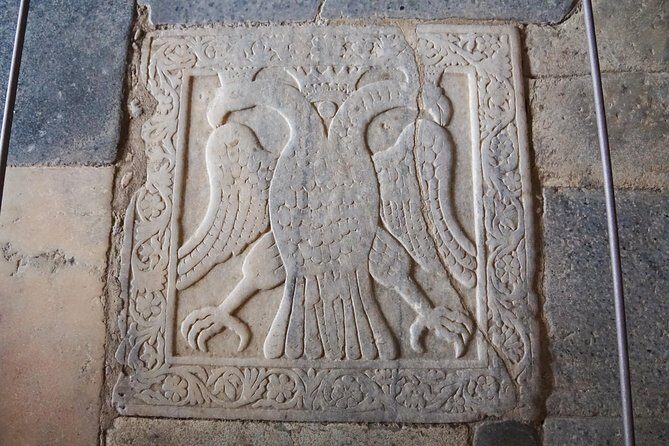
There are also specific moments that history fans will love. Before you exit, you come to the chapel of St. Demetrios. On the floor is a plaque with a two-headed eagle symbol of Byzantium, and it’s associated with Constantine Palaiologos kneeling there before he was crowned the last emperor of Byzantium.
Two reality checks so you plan expectations correctly:
- Some structures may not be open in the way you might imagine. The palace of Mystras is noted as being under restoration for many years, so your visit centers on the churches, monasteries, and walkable historic areas that are accessible.
- If your day falls on a site closure date, your time can shrink. Site openings can be decided by the authorities, so it’s smart to confirm opening hours for your exact visit date before you arrive.
Sparta’s Acropolis and theater: what’s there, and how to read it
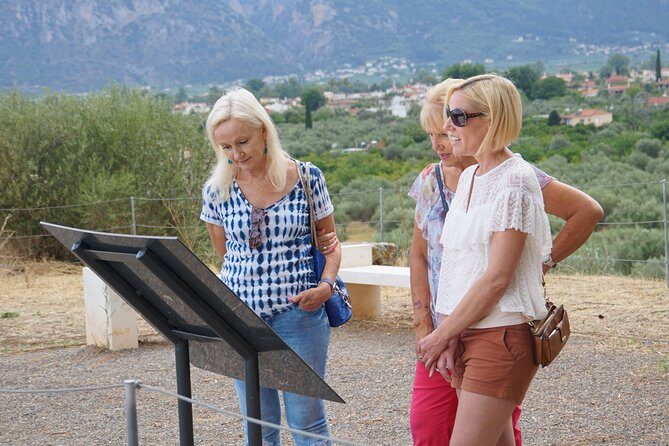
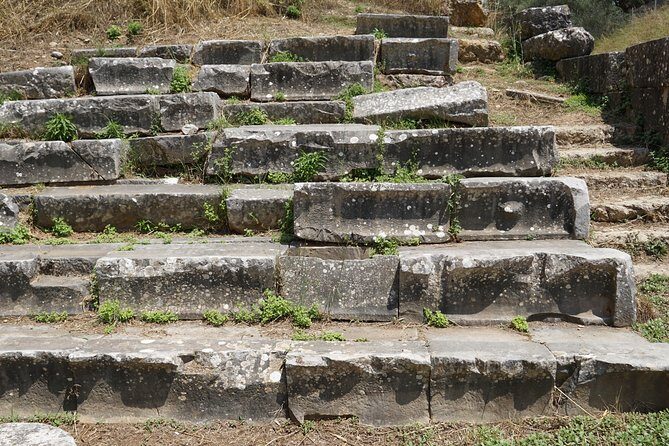
Next comes Sparta, and the tour keeps things focused. You spend about 30 minutes at the Acropolis and Ancient Theater area, with admissions listed as free for this stop.
The key is knowing what Sparta is in this format. Sparta is not trying to be a giant museum complex. It’s a set of meaningful points that help you understand the city’s structure and identity—especially its reputation as an enduring rival to Athenian democracy.
The tour context frames Sparta as a military society by ancient standards, ruled by two kings and a small aristocratic group. It also ties Sparta to legendary and historical anchors you may already know: Helen of Troy and Menelaus in the Mycenaean period, and later Leonidas and the 300 Spartans associated with Thermopylae in 480 BCE.
My advice for this stop: treat it like archaeology with atmosphere. Slow down. Read the ground level. Even when ruins are modest, the setting helps. You’re also likely to come after Mystras, so your brain will be better at spotting what’s Byzantine here and what’s older or different there.



Leonidas Monument and the Spartathlon finish line
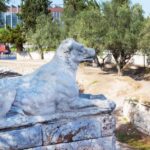
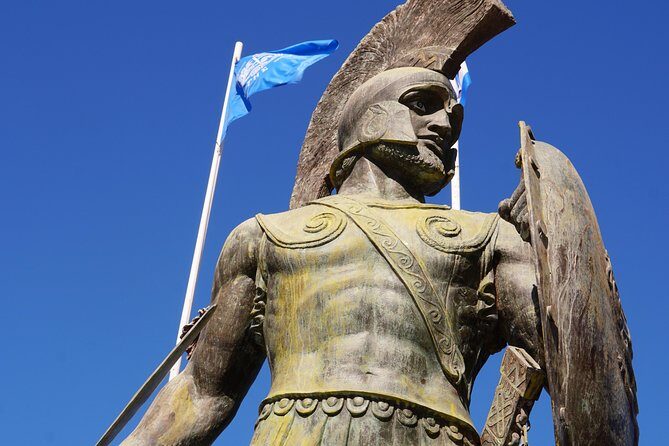
After Sparta’s main landmarks, you pass the stadium area and then stop at the Leonidas Monument. This part is shorter—about 10 minutes—and admissions are listed as free.
The monument is tied to modern endurance culture. It marks the ending point of the Spartathlon race, which runs from Athens to Sparta, a distance listed as 245.3 km. Even if you’re not a runner, that detail connects the ancient name to something living today.
If you like photo ops, this is one to take seriously. It’s an easy stop compared to the walking at Mystras, and it gives your day a memorable anchor before you start the long drive back to Athens.
Museum of Olive and Greek Olive Oil: a quick stop that makes sense
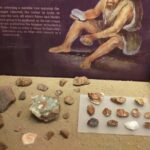
To balance all the stone-and-citadel time, the itinerary includes a practical culture stop: the Museum of the Olive and Greek Olive Oil. You’ll spend about 20 minutes here, and it’s listed as not included in the entrance fees.
The goal is simple: learn about Greece’s most famous product. Olive oil is one of those things you taste everywhere, but it’s still nice to see how people explain its importance, production, and role in Greek life—especially after a day focused on ancient politics and military legends.
Also, this time box helps. Twenty minutes is enough to keep momentum without turning the day into a museum marathon.
Price and value: what you’re paying for, and what to budget
The tour price is listed at $340.93 per person for an approximately 10-hour private day with pickup and drop-off from Athens. For many people, the cost feels high until you break down what’s included.
Here’s the value logic:
- Private transportation means you’re not spending the day waiting on bus timing. You also get point-to-point convenience across a long distance.
- Bottled water and a dedicated driver reduce small hassles when the day starts early and ends late.
- Hotel/Airbnb/Port pickup and drop-off means you don’t have to solve Athens logistics on your own.
Now the costs to plan for:
- Entrance fees are not included, and they’re listed as €34.00 per person (Ancient Sparta, Mystras, and the olive-related museum).
- If you want a licensed guide inside the sites and museums, there’s an additional listed cost of 390€.
So is it worth it? It usually pencils out best when you care about the time savings and prefer a private format over group touring. If you’re happy with public transport and self-guided visits, you may find cheaper options. But if you want a smooth day where the drive feels guided and the timing feels controlled, the premium price starts to look more reasonable.
What to wear and bring so the walking feels good
This is not an all-flat stroll day. At Mystras, you’ll walk from higher areas down toward palaces and courtyards. The day also builds in viewpoint time, which often means standing around with cameras and then walking again.
Wear comfortable shoes with good grip. If you skip this, the ruins and paths can feel more tiring than they should.
Bring a light layer for the change in air as you get away from Athens. And if you’re picky about water, don’t worry—you’ll have bottled water during the tour.
For photos: plan to take some at Mystras first, then again in Sparta. Mystras viewpoints tend to give you the most dramatic wide-angle payoff, while Leonidas Monument gives you a clean, iconic anchor near the end.
Should you book this Sparta and Mystras private day tour?
Book it if you want a high-efficiency Athens day that combines two of the most important stops in the Peloponnese—Mystras for Byzantine atmosphere and Sparta for the ancient backbone. The private car, hotel pickup, and guided framing from the driver make it feel like a single planned outing rather than a pile of transfers.
I’d hesitate if your main goal is to see lots of expansive, ticket-heavy sites in Sparta itself. Sparta here is short, and Mystras does most of the work. Also, if you’re visiting on a day when a site is closed, your schedule can get smaller than expected—so it’s smart to confirm openings for your specific date before you lock your plans.
If you’re flexible, bring sturdy shoes, and want the countryside drive to feel worth it, this is a solid way to do Sparta and Mystras in one long day.
FAQ
How long is the Ancient Sparta & Mystras private day tour from Athens?
The tour runs for approximately 10 hours, and the exact timing depends on the time of day and traffic conditions.
Is hotel pickup and drop-off included?
Yes. The tour includes pickup and drop-off from Athens (including hotel/Airbnb/port pickup).
Does the price include entrance fees for the sites?
No. Entrance fees are not included, and they’re listed as €34.00 per person for Ancient Sparta, Mystras, and the Olive and Olive Oil Museum.
Do we have a licensed tour guide inside the sites?
Not necessarily. The driver is not licensed to accompany you inside sites or museums. A licensed tour guide can be hired upon request, with an additional cost of 390€ (availability-dependent).
Is the tour private or shared with other people?
This is a private tour/activity. Only your group participates.
What happens at the Corinth Canal stop?
You make a stop at the Corinth Canal and have time to walk across a pedestrian bridge to see the canal closer. The canal stop is listed as admission-free.
Is bungee jumping offered at the canal?
There is an option for bungee jumping on some days if you choose to do it, but it is not presented as a required or included part of the tour.
What language is the tour offered in?
The tour is offered in English.
Can I cancel and get a full refund?
Yes. Free cancellation is available up to 24 hours before the experience start time for a full refund.