REVIEW · ATHENS
Athens: Ancient Agora E-Ticket and Audio Tour
Book on GetYourGuide →Operated by Clio Muse Tours · Bookable on GetYourGuide
Democracy has a walking path. This Ancient Agora experience pairs a fast e-ticket with an offline audio tour on your phone, so you can focus on ruins and ideas instead of check-in hassles. One thing to plan for: the self-guided directions can feel a little vague in spots, especially when paths and signage don’t help much.
I like how the route mixes major discussion places (Solon’s legal reforms, the lawmakers at the Bouleuterion) with story-rich stops tied to famous Athenians like Aristides the Just and Pericles. You also get payoff views over the Acropolis from the Pnyx area, plus a museum break that lets you cool down while the details sink in.
If you want a no-stress way to learn what the Ancient Agora did for Athens, this hits the sweet spot. Just bring headphones and a charged phone, and be ready to download everything beforehand, because there’s no internet access inside the archaeological site.
In This Review
- Key things I’d pay attention to
- Ancient Agora vs. the Acropolis: why this one feels more human
- Price and time: what $30 buys you (and when it’s a smart move)
- Getting in smoothly: the e-ticket and offline-first mindset
- The audio tour’s story arc: from Hephaestus to citizen lawmaking
- Museum of the Ancient Agora: learn the methods, not just the marble
- Mars Hill and the politics of place
- Pnyx and Rock of Ares: the viewpoints that make the system make sense
- Prison of Socrates area: philosophy in a concrete setting
- Ending near the Theatre of Dionysus: a strong finale
- Practical tips that prevent most problems
- Who should book this Agora e-ticket and audio tour
- Should you book this Ancient Agora experience?
- FAQ
- How long is the Ancient Agora e-ticket and audio tour?
- Does this include entry to the Ancient Agora?
- Is the tour guided by a person?
- Can I download the audio tour for offline use?
- Is there internet access at the archaeological site?
- What languages are available for the audio tour?
- Do I need headphones?
- How do I use my e-ticket at the entrance?
- Is this wheelchair accessible?
Key things I’d pay attention to
- Offline audio plus an offline interactive map helps you keep moving without roaming charges
- Hephaestus, Solon, and the Bouleuterion set up the whole democracy story from the start
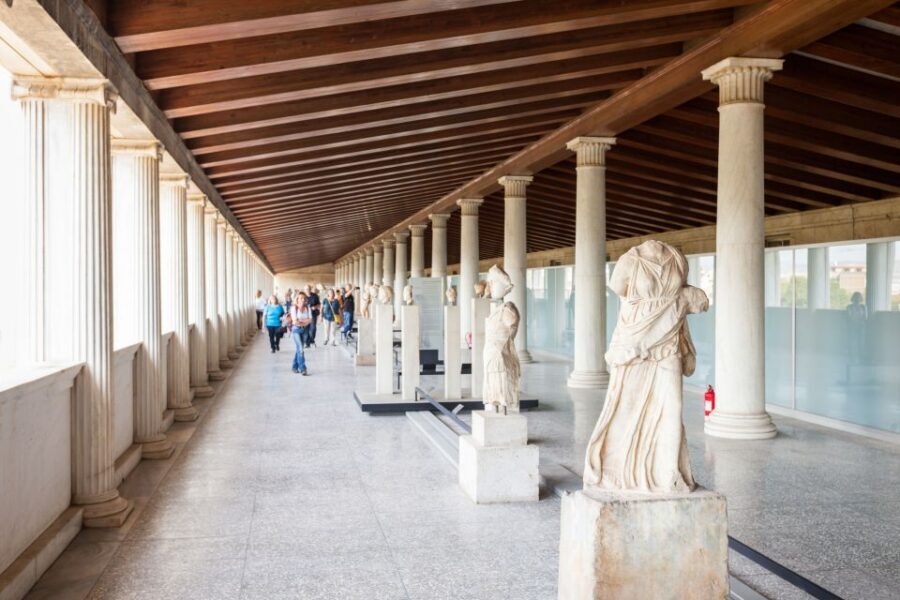
- Museum of the Ancient Agora is worth your time, and the 2nd floor view is often overlooked
- Pnyx and Rock of Ares viewpoints give you the geography behind the politics
- Prison of Socrates area ties philosophy to real locations you can stand on
- The walk ends near the Theatre of Dionysus, one of the best finale points in central Athens
Ancient Agora vs. the Acropolis: why this one feels more human
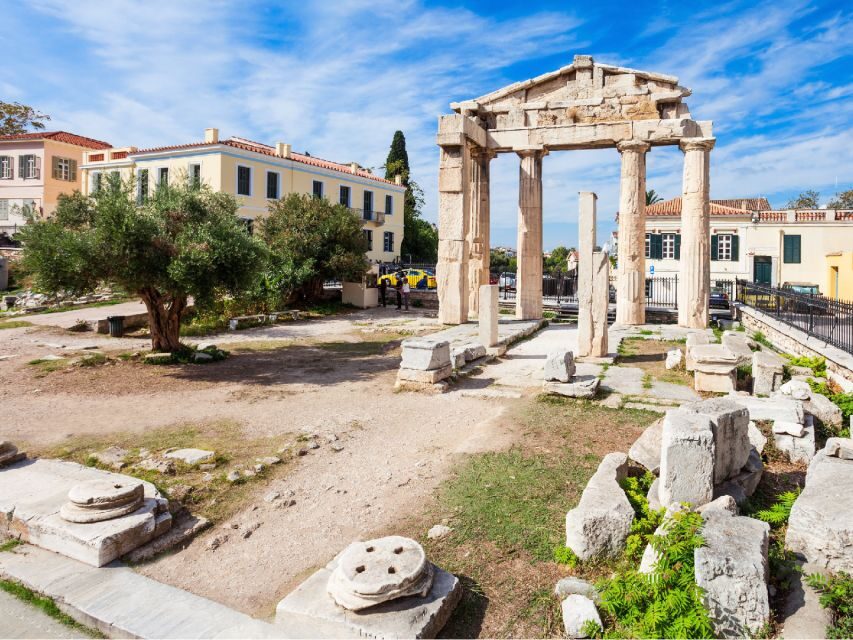
In Athens, most people line up for the Acropolis first. I get it. But the Ancient Agora gives you something different: the day-to-day spaces where citizens argued, voted, and made rules. It’s not just temples and statues. It’s the setting for the arguments that shaped the city.
With this experience, you’re not limited to reading plaques. You follow an audio tour that explains how Athenian democracy evolved and then checks in with the places where that evolution actually happened. I like this approach because you can pace yourself, stop to take photos, and still understand what you’re looking at without hunting for a guidebook.
You’ll cover multiple standout stops tied to classical Athens: the Museum of the Ancient Agora, Mars Hill, the Pnyx, and the Prison of Socrates area. Then you finish close to the Theatre of Dionysus, which is a strong closer if you want your last minutes to feel theatrical in both senses.
A few more Athens tours and experiences worth a look



Price and time: what $30 buys you (and when it’s a smart move)

At about $30 per person for roughly 90 minutes to 2 hours, you’re buying two things: a ticket to enter and a structured learning path you can do at your own pace.
Is it worth it? For me, the best value is when you want the context that makes these ruins click. If you only want to wander, you can do that. But the Agora is packed with meaningful sites, and the audio tour turns them into a storyline. You also get offline content and an offline map, which matters in Greece when data plans and signal can be unpredictable.
This format is also a good match if you hate feeling rushed by group tours. You’re free to move slowly through viewpoints, linger at museum exhibits, and re-listen if something lands late.
That said, it’s not a live guide. If you’re hoping for spontaneous Q&A or a person who can adjust to your interests on the spot, you’ll want something else.
Getting in smoothly: the e-ticket and offline-first mindset

Your entry is handled through a pre-booked e-ticket. Before you go, download your ticket and the audio tour so they work without internet. This isn’t optional. The site has no internet access, and the tour experience is designed around being offline.
At the entrance, you’ll validate at the machines. You’ll need the ticket either printed or downloaded on your phone. One practical detail: a GetYourGuide voucher isn’t accepted at the entrance. You need the e-ticket sent separately by the local partner (and yes, check spam folders just in case).
Meeting point can vary depending on what you booked, so follow the instructions in the separate email. Once you’re through, you’ll rely on the audio path and the offline map to keep your bearings.
The audio tour’s story arc: from Hephaestus to citizen lawmaking

The tour starts with big-picture context, and that’s one reason it works. You begin at the foot of the hill where the Temple of Hephaestus still looks radiant, and the audio guides you through the chain of events that made democracy possible.
You’ll hear about Solon and his legal reforms. That matters because democracy in Athens wasn’t just one moment. It was a series of changes that helped create a civic culture where citizens could influence decisions.
As you continue uphill near the Tholos, you’ll get to the ruined Bouleuterion, the place where 500 Athenians met daily to shape proposals and laws for the popular assembly. Even if you’re not a political-history person, the tour makes this feel real: this is the machinery behind civic decisions.
Then the audio brings in human characters. Aristides the Just and Pericles appear as story threads that connect reforms to actual people. The good part is you don’t just get dates. You get motivation and consequence, which makes the ruins feel less like random stones.
Museum of the Ancient Agora: learn the methods, not just the marble
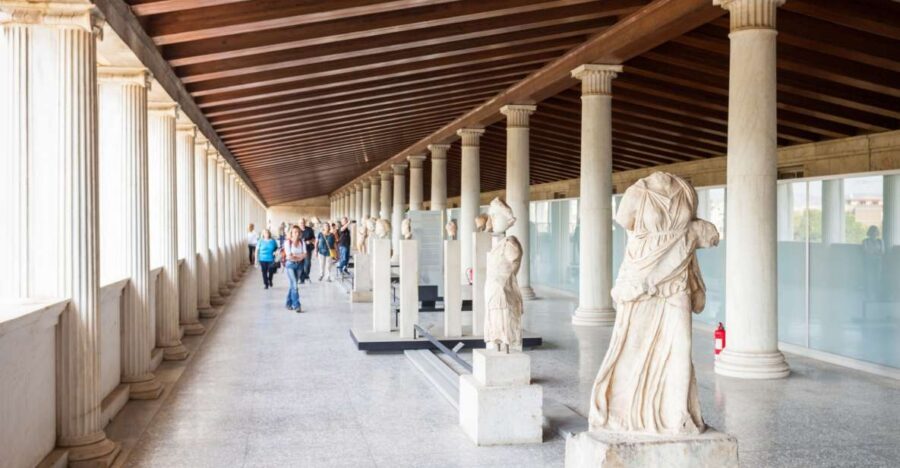
I strongly recommend building in museum time rather than treating it as a quick stop. The Museum of the Ancient Agora gives you context for what you’re seeing outside, and it’s air conditioned, which can save your afternoon stamina.
Inside, the tour’s focus is on how the Athenians defended their democracy from malign influence. That’s a great topic because it counters a common assumption. Democracy didn’t run itself on good vibes. It needed rules, institutions, and enforcement.
A practical tip: if you want a photo-worthy, different perspective, don’t miss the museum’s 2nd floor. The elevated view can show the Panathenaic Way from a vantage point many people skip. Even if you’ve seen the route on maps before, it lands differently once you can see it from above.
A few more Athens tours and experiences worth a look






Mars Hill and the politics of place

Mars Hill is one of those spots where the audio tour earns its keep. You’re not just standing at a famous name on a hill. You’re placed into the logic of how Athens organized authority and debate.
Because the audio tour is structured around the evolution of the system, you’ll feel the connection between institutions and the physical spaces that hosted them. That makes it easier to remember what each site actually contributed.
If you’re someone who tends to forget names after an hour of walking, this stop is a good anchor. It connects the earlier setup (Solon and lawmaking) to a more familiar “this is where decisions happen” feeling.
Pnyx and Rock of Ares: the viewpoints that make the system make sense

The tour doesn’t just point you to famous ruins. It also uses views as a teaching tool. From the hill of the Pnyx and the Rock of Ares, you get postcard-style outlooks toward the Acropolis area.
This is where democracy starts to feel geographic. Seeing the city layout helps you understand why public assembly mattered. Citizens weren’t debating in the abstract. They were shaping choices for a real place with visible boundaries.
I also suggest timing your Pnyx portion carefully. If you do this in the heat, you’ll feel it fast. Going earlier in the morning or later in the afternoon helps you enjoy the walk instead of sweating through it while trying to listen.
Prison of Socrates area: philosophy in a concrete setting
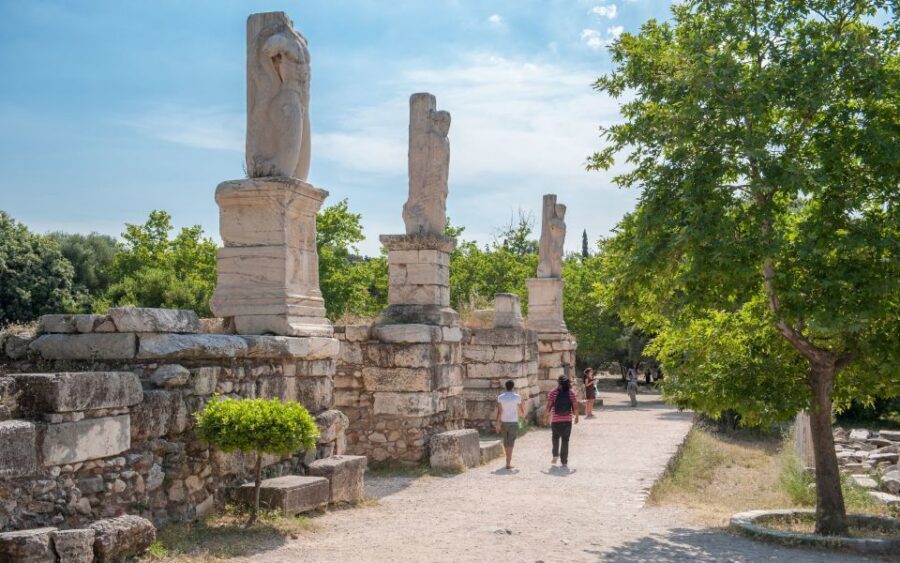
One of the standout elements here is the visit around the Prison of Socrates area as you ascend on the hill of Philopappos.
What I like about including this stop in an audio route is that it changes how you think about famous names. You’re not just hearing that Socrates was involved in a trial. You’re given a sense of where his story played out spatially.
The audio tour’s emphasis on the evolution of democracy also makes Socrates feel like more than a textbook character. It ties philosophy to the risks and conflicts that emerge when civic systems collide with ideas.
And if you’re a fan of character-driven history, you’ll probably enjoy how the audio tour tells stories connected to the Agora experience, including references such as Samuel the Cobbler and his relationship to Socrates.
Ending near the Theatre of Dionysus: a strong finale

The tour ends near the Acropolis archaeological site, in front of the Theatre of Dionysus.
This is a smart finishing choice. The Theatre of Dionysus is described as the oldest theatre of the world, and it’s also tied to the stage where tragedies by Aeschylus, Sophocles, and Euripides were staged. Even if you’ve never seen a Greek tragedy, ending here makes the whole civic world feel connected: democracy, debate, and public performance in the same city.
It also gives you an easy “last-photo” location. You’ll likely want a few minutes here before you head on, since it’s a high-impact closing point.
Practical tips that prevent most problems
Here’s how to make the self-guided format work smoothly:
- Download everything before you arrive. The site has no internet access, and you need the offline audio and offline map to function.
- Bring headphones and a charged smartphone. The audio tour is included, but you still need your own listening setup.
- Skip the big-bag problem. Luggage or large bags aren’t allowed.
- Plan for photo interruptions. If you use your phone camera and zoom while listening, the audio may pause. If you care about staying on track, take photos quickly and then let the audio resume.
- Don’t overtrust vague directions. Some paths can run parallel and names may not be obvious on-site. Use the offline map and treat the audio cues as best-effort pointers, not street-level GPS.
- Museum break is not wasted time. The museum helps you understand outside ruins, and the air conditioning can be a real win.
- Choose the right time of day. Going early or late helps you walk longer without cooking in the heat.
Device compatibility matters too. The audio tour isn’t compatible with Windows phones, and older iPhones/iPods/iPads listed as incompatible (like iPhone 5/5C and older models). If you’re unsure, check your device against the stated compatibility list before your trip.
Who should book this Agora e-ticket and audio tour
This is a great fit if you:
- want a self-paced Athens experience without hunting for explanations
- like history that connects politics to real places
- prefer audio learning over reading plaques all day
- travel with a smartphone you can keep charged and used offline
It may be less ideal if you:
- need step-free access throughout. It’s not suitable for wheelchair users, and some points aren’t wheelchair accessible
- want a live guide or guided group Q&A
- are traveling with a Windows phone or an older iPhone/iPad model that isn’t compatible with the audio
Should you book this Ancient Agora experience?
Yes, I’d book it if your priority is context with flexibility. For about $30, the offline audio tour turns the Ancient Agora into a storyline you can follow without paying for a live guide. If you want to understand how democracy actually worked in the city, this format does that well.
I’d hesitate only if you strongly need flawless turn-by-turn navigation or you’re expecting a fully marked walking route like a theme park. The offline map helps, but directions can be hit-or-miss once you’re out among the ruins.
If you’re comfortable downloading the audio first, wearing good walking shoes, and using your phone like a guide, this is one of the more satisfying ways to spend your time in central Athens.
FAQ
How long is the Ancient Agora e-ticket and audio tour?
It takes about 90 minutes to 2 hours, depending on how long you spend at stops and in the museum. Starting times depend on availability.
Does this include entry to the Ancient Agora?
Yes. You get an adult e-ticket for the Ancient Agora included with the booking.
Is the tour guided by a person?
No. It’s self-guided with an audio tour on your smartphone. A live guide is not included.
Can I download the audio tour for offline use?
Yes. You’re instructed to download the audio tour and use offline content on your phone, including an offline interactive map to help avoid roaming charges.
Is there internet access at the archaeological site?
No. There is no internet access in the archaeological site, so you need the offline downloads done ahead of time.
What languages are available for the audio tour?
The audio tour is available in English, Italian, Greek, German, Spanish, and French.
Do I need headphones?
You should bring headphones. The activity includes the audio tour, but it does not include a smartphone or headphones.
How do I use my e-ticket at the entrance?
After booking, you receive a separate email with your e-ticket and instructions. You’ll need to validate at the machines, using either a printed ticket or the downloaded ticket on your phone. GetYourGuide vouchers are not accepted at the entrance.
Is this wheelchair accessible?
It’s not suitable for wheelchair users, and some points of interest are not wheelchair accessible.