REVIEW · ATHENS
Athens: City of Rebellion
Book on GetYourGuide →Operated by Culture Hunters · Bookable on GetYourGuide
Athens protest stories start on a tourist corner. This 150-minute private walk connects the famous squares with the less-told struggles that shaped modern Athens, from Ottoman-era resistance to today’s Exarchia neighborhood. You’ll hear how people pushed back against fascism, violence, and oppression, and how that mindset still shows up in the city’s streets.
I especially love two things. First, the way Maelle ties major landmarks to real moments of defiance, so Athens feels like one continuous argument about freedom. Second, you get real conversation time in a small private group, not a lecture you tune out halfway through.
One caution: this is a walking-and-standing route, and it’s not suitable for mobility impairments. Also, if you’d rather keep your Athens experience strictly ancient and museum-clean, the political focus may feel too direct.
Street-smart rebellion theme: You start in Monastiraki and move toward Syntagma while the story stays political, not just scenic.
Exarchia with context and care: You learn why this neighborhood became known for activism, art, and social justice without turning it into a spectacle.
Syntagma to Parliament continuity: You’ll connect modern protest energy with older struggles for Greek freedom.
Maelle’s conversational style: Expect thoughtful Q&A and room for your questions, not a one-way talk.
Site-to-story pacing: Stops are short but meaningful, so you keep momentum while learning the connections.
Practical help beyond the route: The guide also shares ideas for what to do and where to eat around Athens.
In This Review
- Start in Monastiraki: Ottoman Athens and the Roots of Rebellion
- Metropolitan Church Stop: A Fast Reset for What Comes Next
- The Syntagma Walk: Protest History Right in the City’s Pulse
- Hellenic Parliament and the Tomb: National Memory With a Point of View
- Kolonaki Pass-By: The “Polished” City Meets the Political Story
- Academy of Athens: Culture, Institutions, and Who They Serve
- Exarchia: Where Activism, Art, and Everyday Life Interlock
- Secret Stop and Small Side Streets: Learning Through Not-Obvious Corners
- Finish at Plateia Exarcheion: A Strong Ending and a Thoughtful Aftertaste
- Price and Time: Is $88 Worth 150 Minutes?
- Who This Tour Fits Best
- Practical Tips Before You Go
- Should You Book Athens City of Rebellion?
- FAQ
- Where is the meeting point for the Athens City of Rebellion tour?
- How long is the tour?
- Is this a private tour?
- What languages are available?
- Where does the tour start and where does it end?
- What should I bring?
- Is the tour suitable for people with mobility impairments?
- Can I cancel for a refund?
Start in Monastiraki: Ottoman Athens and the Roots of Rebellion
You begin at Pl. Monastirakiou 2, right in the Monastiraki Square area, in front of Pantanassa Church. Look for your guide with a sign reading Athens City of Rebellion, then settle into a pace that’s built for learning on your feet.
Monastiraki can feel like a classic tourist hub, but on this tour it acts like a time machine. You’re taken back to Athens under Ottoman rule, where resistance wasn’t a slogan—it was survival, bargaining, and community action. The big payoff here is that you don’t treat Greek independence like a finished museum exhibit. You see it as something people fought for with risk on the line.
This is also why the tour starts here: it’s easy to reach, easy to orient from, and it lets you shake off the idea that Athens is only ancient marble. Once you’re walking, the story keeps moving.
Metropolitan Church Stop: A Fast Reset for What Comes Next
Early on, you pass the Metropolitan Church of Athens. The stop is brief, and that’s deliberate. Maelle uses these moments to reset your focus—helping you notice how Athens layers identities over time, sometimes right next to each other.
If you’re the type who likes to understand how a city “thinks,” these quick passes are useful. You’ll start seeing the route as a map of meaning, not just a straight line from one landmark to the next.
A downside for some people: if you were expecting a slower start with longer explanations at every major monument, this tour won’t match that. But the tradeoff is energy. You’ll keep your attention because the story keeps upgrading at the next corner.
You can also read our reviews of more city tours in Athens



The Syntagma Walk: Protest History Right in the City’s Pulse
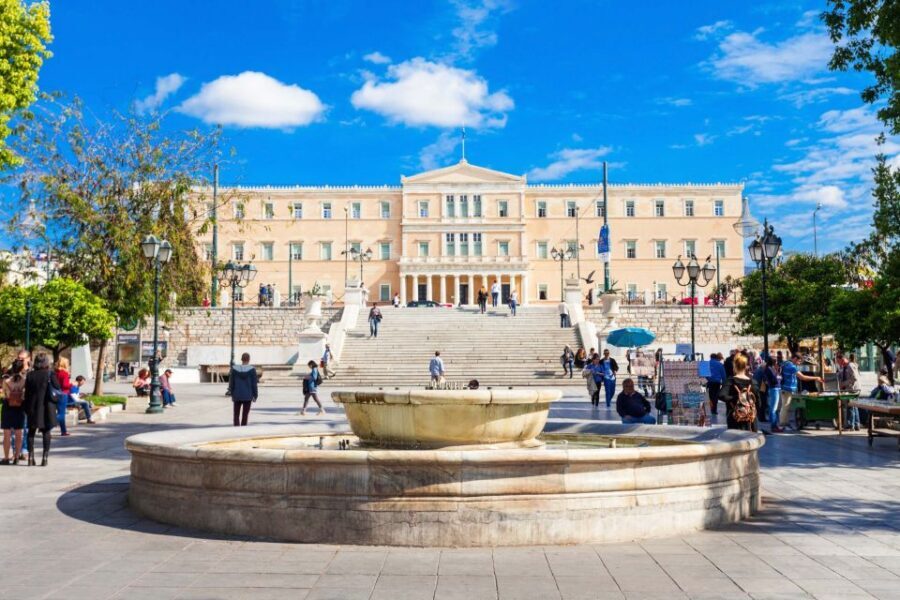
After Monastiraki, you head toward Syntagma Square, the heartbeat of modern-day demonstrations. This is where the tour gets more intense in a good way. You’ll learn about the heroic acts and massive popular movements that pushed for freedom—first against old rulers, then later against newer threats like fascism, violence, and oppression.
Syntagma isn’t just a place with a pretty view. It’s a stage where political emotion is visible. The value of this section is the connective tissue: you’ll understand why today’s protests aren’t random. They rhyme with earlier resistance, even if the names and tactics change.
The tour also works well if you’ve already been reading about Greece. Instead of memorizing dates, you’ll connect what you know to what you’re seeing in the street.
Hellenic Parliament and the Tomb: National Memory With a Point of View
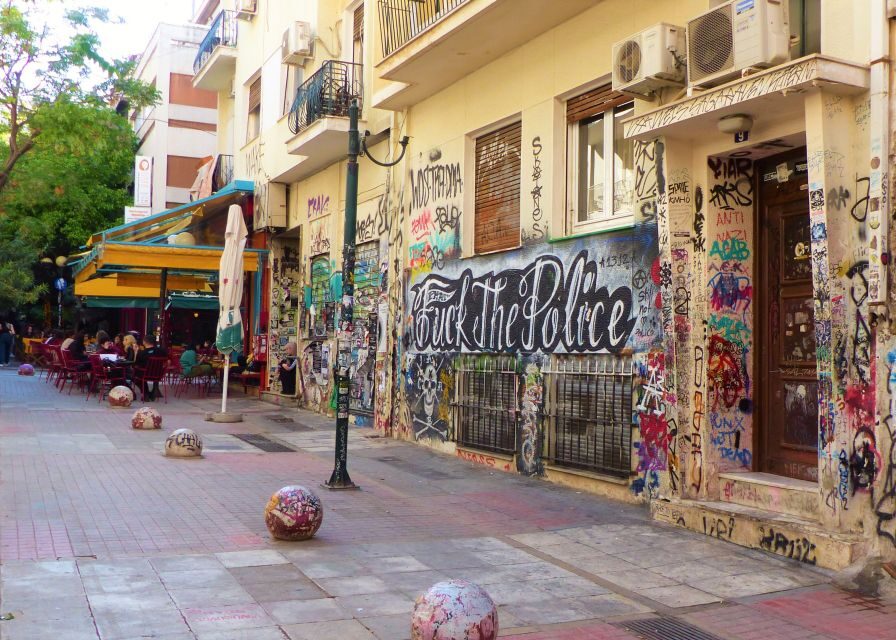
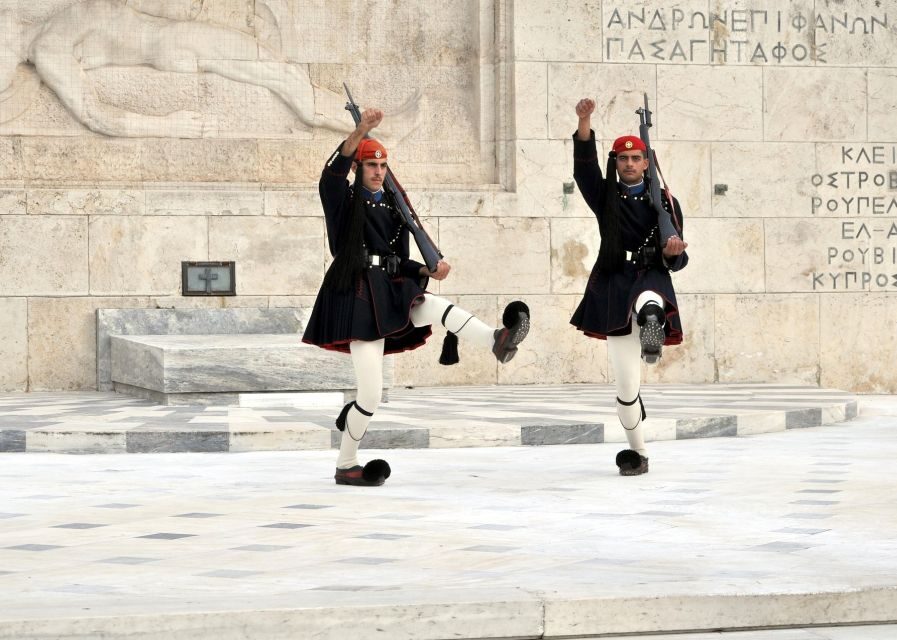
Next you spend time around the Hellenic Parliament and then visit the Tomb of the Unknown Soldier. These are the kind of sites that can feel ceremonial if you’re not given context. Here, you’re guided toward how national memory is shaped—and how that shape influences public life.
At Parliament, the discussion lands on the power struggles behind modern governance. At the Tomb, you get a different angle: how a country remembers sacrifice, and how that memory can either unify people or be used to justify hard lines.
This section can be heavy, even when it’s delivered with clarity and humor. One reason it works is that Maelle doesn’t treat resistance as a fantasy. She keeps it grounded in real pressure points—what people face, what they risk, and what they demand.
Kolonaki Pass-By: The “Polished” City Meets the Political Story
You’ll pass Kolonaki, which many visitors experience as elegant and upper-crust. On this tour, that pass-by matters because it gives contrast. You’re not only seeing where politics happens. You’re also learning where it gets masked, simplified, or sanitized in daily life.
It’s an easy part of the walk—short and not overly detailed—but it helps you keep your balance. Athens isn’t one mood. The tour keeps showing you that different neighborhoods process power in different ways.
Academy of Athens: Culture, Institutions, and Who They Serve
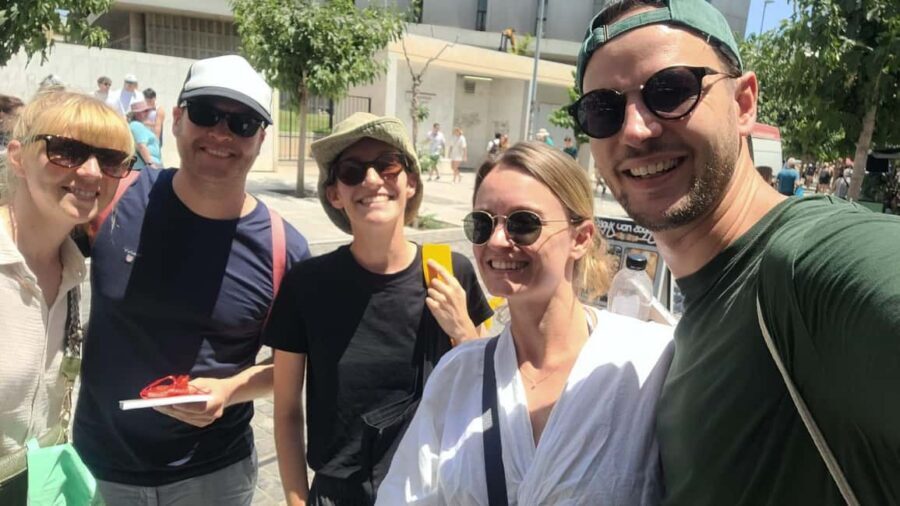
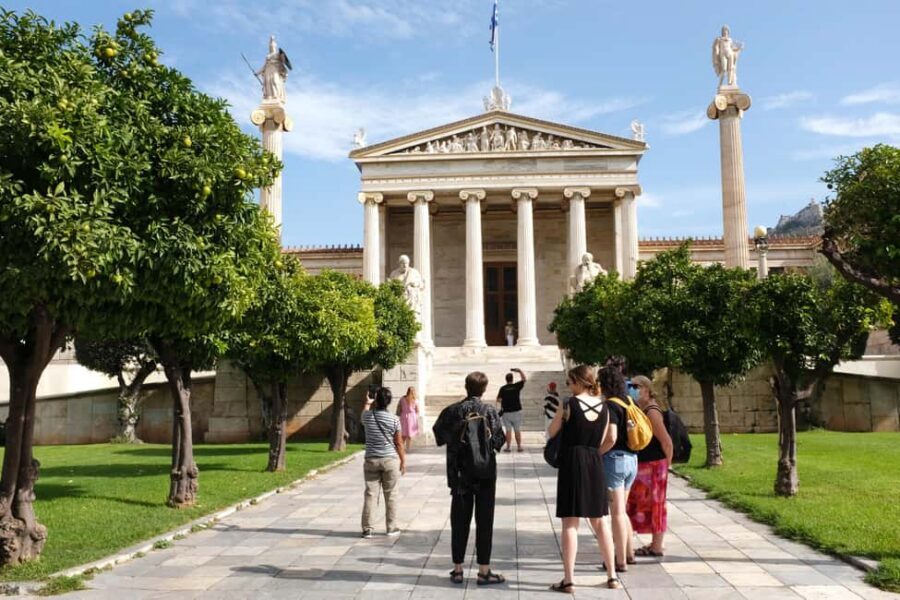
You also visit the Academy of Athens area. This is a key moment for turning your brain back on after the big square energy. Institutions and cultural prestige matter here because they shape what gets taught, what gets funded, and whose ideas become the default story.
You’ll walk away with a practical takeaway: when you understand institutions, you understand how political ideas spread. That makes the tour feel more useful for everyday life in Athens, not just for history trivia.
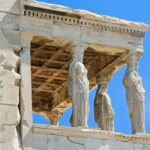



Exarchia: Where Activism, Art, and Everyday Life Interlock
Then comes the portion many people remember most: Exarchia. This neighborhood is explained as a hotbed of resistance and activism, and you learn why it attracts people who want social change. You’ll hear about a community that welcomes anarchists, refugees, the LGBT+ community, and artists—along with the creative energy that shows up in street life.
What I like about this part is the tone. The goal isn’t to treat Exarchia like a theme park or a political poster. The guide’s emphasis is respect and context. You’re reminded that you’re walking through lived communities, not curated backdrops.
The tour also connects present activism to older patterns of resistance, so it doesn’t feel like a sudden topic switch. It reads like a continuation.
One detail that sticks: Maelle is careful about how she moves through the neighborhood—so you don’t get the feeling of turning people’s daily spaces into “content.” That approach affects your whole experience. You’ll feel more like a guest, less like a consumer.
Secret Stop and Small Side Streets: Learning Through Not-Obvious Corners
Between Exarchia’s main points, you’ll have a secret stop and additional short “small side street” moments. These are the parts that keep the tour from feeling like a checklist of famous addresses.
From what you’re shown and discussed, you’ll learn to read the city. Graffiti, wall marks, and street art aren’t treated as decoration. You’ll be prompted to think about what they communicate—and why certain images and messages show up when they do. You’ll even discuss street art in a way that helps you connect the visuals to social pressures.
If you love Athens for its texture, this is where you’ll feel it most. If you hate surprises, you may find these stops slightly harder to predict. But that unpredictability is the point: rebellion history often lives in the margins.
Finish at Plateia Exarcheion: A Strong Ending and a Thoughtful Aftertaste
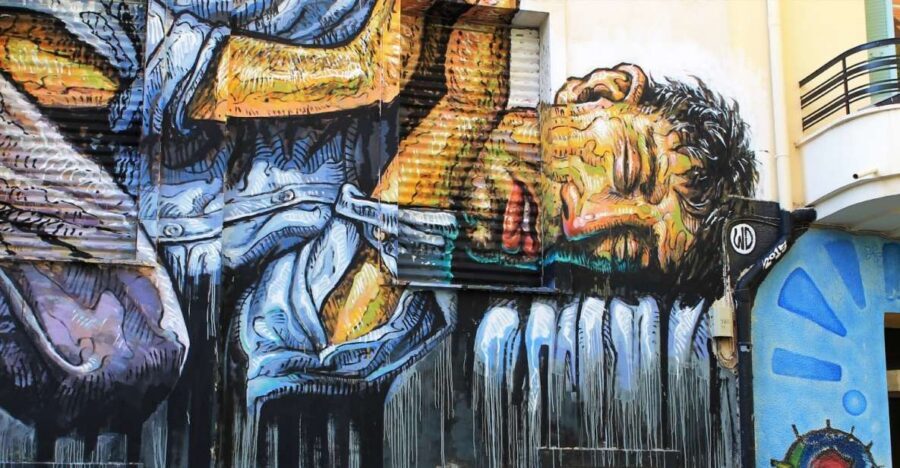
The tour ends at Plateia Exarcheion. This finishing choice matters. Instead of sending you back to tourist center comfort, you close in the neighborhood where the story has been building toward something real.
A lot of people leave Exarchia feeling stunned, in the best way: you see the city more sharply, and you notice how modern Athens still argues with its past. Even if you don’t agree with every movement discussed, you understand the forces shaping people’s lives.
Also, Maelle typically adds personal recommendations—where to eat, what to see, and what to do next—so the tour doesn’t end when the walk ends. It becomes part of how you plan the rest of your trip.
Price and Time: Is $88 Worth 150 Minutes?

At $88 per person for a 150-minute private experience, the value is strongest if you care about modern Greek society as much as the ancient sites. You’re paying for a guided narrative, plus flexibility and conversation time that a self-guided walk can’t provide.
You also get language support in English or French, and you’re with a guide who focuses on under-discussed history and present-day struggles. For a short trip, that “skip the guesswork” factor is huge. You’ll walk away with a clearer mental map of Athens, not just more photos.
The one drawback is that you can’t treat this like a casual stroll. The route includes multiple guided segments and you’ll stand and walk for a couple of hours. If you want a low-effort sightseeing day, this might feel like work.
Who This Tour Fits Best
This is a great match if you:
- Want Athens beyond the usual ancient highlights
- Like politics, protests, and social movements (without heavy jargon)
- Enjoy neighborhood context and street-level storytelling
- Prefer a smaller group where you can ask questions
It might not be your best fit if:
- You’re uncomfortable with political themes and present-day activism
- You need step-free, low-walking access (the tour isn’t suitable for mobility impairments)
- You want a purely culture-and-views walk with minimal discussion
Practical Tips Before You Go
Do the basics well, because the tour depends on your comfort:
- Wear comfortable shoes. You’ll be on your feet.
- Bring a hat, sunscreen, and water, especially in warm weather.
- Dress for weather changes. Athens can shift quickly.
One more tip: go with questions. This tour works best when you’re curious about how history becomes public life. If you ask about street art, police repression, gentrification, or community resilience, you’ll get more out of the conversations.
Should You Book Athens City of Rebellion?
I’d book it if your Athens bucket list includes meaning, not just monuments. This tour gives you a way to connect Ottoman-era resistance, modern protest energy at Syntagma, and neighborhood activism in Exarchia into one coherent story.
Skip it only if you want a low-political sightseeing day or if mobility limitations make the walking-and-standing tough. Otherwise, for the price and time, it’s a strong buy—especially with Maelle’s human, respectful approach and the way she turns street scenes into history you can actually feel.
FAQ
Where is the meeting point for the Athens City of Rebellion tour?
You meet in Monastiraki Square in front of Pantanassa Church, at Pl. Monastirakiou 2. Your guide will have a sign that says Athens City of Rebellion.
How long is the tour?
The tour lasts about 150 minutes.
Is this a private tour?
Yes. It’s described as a private experience with a private group.
What languages are available?
The live guide is available in English and French.
Where does the tour start and where does it end?
It starts at Monastiraki Square (in front of Pantanassa Church) and finishes at Plateia Exarcheion.
What should I bring?
Bring comfortable shoes, a sun hat, sunscreen, and water.
Is the tour suitable for people with mobility impairments?
No, it is not suitable for people with mobility impairments.
Can I cancel for a refund?
Yes. Free cancellation is available up to 24 hours in advance for a full refund.