REVIEW · ATHENS
Athens half day Private Tour
Book on Viator →Operated by Andrew's Unique Tours · Bookable on Viator
Athens in half a day feels like a cheat code. This private outing is built for maximum sights in minimal time, using a car transfer plus a focused walk on the Acropolis and nearby landmarks. You get English-speaking support, and a driver who can explain what you’re looking at while keeping things moving.
I especially like the setup: pick-up and drop-off from your hotel (or Piraeus) means you’re not wasting the morning figuring out routes. The route also balances the big hitters with a real Athens feel, from stadium marble to the old streets of Plaka. One thing to consider: major sites like the Acropolis require advance planning for timed entry and tickets, and those are not fully included.
In This Review
- Key things to know before you go
- Private 5-hour Athens hits: what this tour is really good at
- Price and value: when $342.43 per group makes sense
- How guidance works: driver explanations vs a licensed Acropolis guide
- Acropolis timing and entry planning: the part you must get right
- Entering the Acropolis from Propylaea: the walk that sets the tone
- Parthenon, Erechtheion, and the “why these designs still matter” effect
- Odeon of Herodes Atticus and the Theatre of Dionysus: ancient entertainment in two acts
- Panathenaic Stadium: the Athens you don’t expect
- Academy of Athens and the Presidential Guards: a quick modern stop with serious symbolism
- Lycabettus viewpoints, Plaka, and Monastiraki: the old city mood shift
- Mount Lycabettus
- Plaka
- Ancient Agora of Athens
- Monastiraki
- Pacing and physical demands: who this suits best
- What makes this tour feel “worth it” beyond the checklist
- Should you book this Athens half-day private tour?
- FAQ
- How many people are included in a group?
- Where can you be picked up?
- How long is the private tour?
- Is the tour in English?
- Are Acropolis tickets included?
- Do I need a licensed guide?
- What transportation is provided?
- What if the weather is bad?
- What level of walking is expected?
Key things to know before you go
- Private group size (up to 3) means you can move at a human pace.
- Hotel or Piraeus pickup cuts down the “first day in Athens” stress.
- Acropolis walk first so you see the monuments when your energy is highest.
- Admissions and timed entry aren’t included for the Acropolis and some other stops.
- Professional history-minded drivers, with an optional licensed guide at extra cost for the Acropolis.
Private 5-hour Athens hits: what this tour is really good at
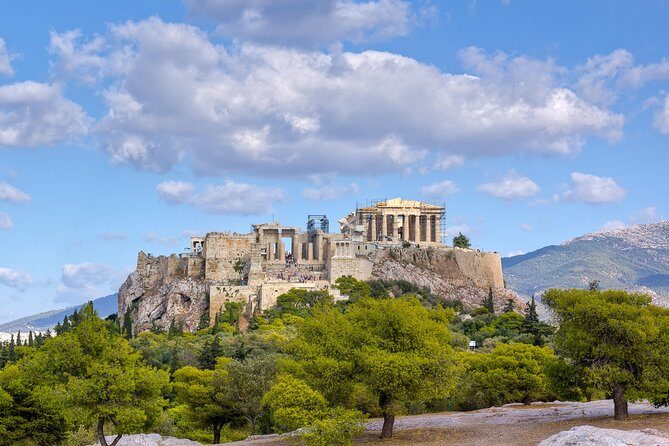
This is a smart choice if you want the “greatest hits” of Athens without turning the day into a logistics puzzle. The tour runs about 5 hours 10 minutes, which is long enough to cover the Acropolis area and still reach the surrounding neighborhoods and ancient ruins.
It’s also ideal if you’re traveling with limited time. A private format means you’re not stuck waiting for a group to get snacks, buy tickets, or argue about where the photo spot is. Your driver handles the driving and gives context as you go.
And yes, it’s designed with real transfer efficiency in mind. Pick-up from any Athens hotel or the Piraeus cruise ship terminal, then drop-off afterward. That matters in Athens, where traffic and finding parking can eat up your sightseeing time fast.
You can also read our reviews of more private tours in Athens



Price and value: when $342.43 per group makes sense
The price is listed as $342.43 per group, up to 3 people. For a private car tour, that’s usually where the value lives: you split the cost, and suddenly you’re paying for convenience rather than paying for “one person’s seat on a coach.”
Here’s the honest math to think about: most of what you’re buying is the private transportation, the driver time, and the time-saving routing. The major site entry/timed slots are extra, so your final total will depend on how many people you have and whether you add a licensed guide for the Acropolis.
If you’re a couple, or two friends, this can feel like a sweet spot. If you’re traveling solo, it may still be worth it if you care more about pace and avoiding crowds than stretching your budget.
How guidance works: driver explanations vs a licensed Acropolis guide

Your tour includes a professional driver with historical knowledge. That driver can explain what you see, but they’re not licensed to accompany you inside every site.
If you want a fully licensed guide for the Acropolis itself, you can add that on request (availability varies). The listed add-on is €170 for 1 hour 30 minutes focused on the Acropolis visit.
In practice, this means you can choose your style. If you like a “driving + walking + quick explanations” approach, you’re covered. If you want more detail while you’re among the Parthenon-level crowds and details, adding a licensed guide for the Acropolis is the cleanest upgrade.
Acropolis timing and entry planning: the part you must get right
The Acropolis area is where the tour’s biggest wow-factor is, and it’s also where planning matters most.
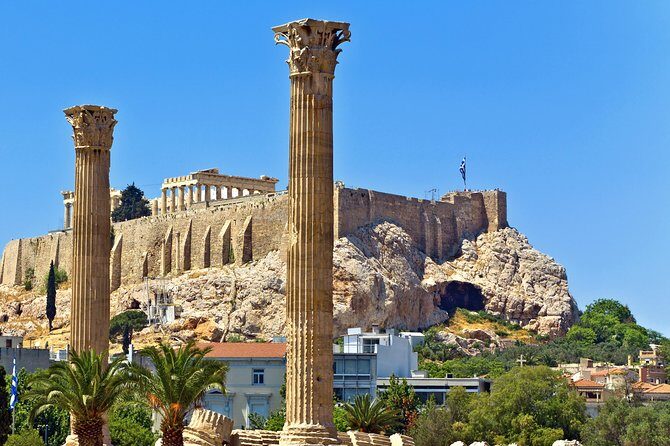
The itinerary includes multiple stops across the hill—Propylaea, Temple of Athena Nike, the Parthenon, the Erechtheion, and viewpoints toward Piraeus, plus a look at the Theatre of Dionysus and the Odeon of Herodes Atticus. Those are not quick pull-offs; they’re the core walking section.
You’ll need to handle Acropolis admission/tickets and the timed-entry slot. The tour notes a required Acropolis & slopes slot time cost of €30 per person, and it states that under 18 is free. The tour provider says you’ll receive a link with details to book entrances yourself.
I like this approach because it’s transparent. But it also means you should plan ahead, especially if you’re visiting in high season. Buying the correct timed entry before you arrive is what keeps your Acropolis visit from turning into a waiting game.
Entering the Acropolis from Propylaea: the walk that sets the tone
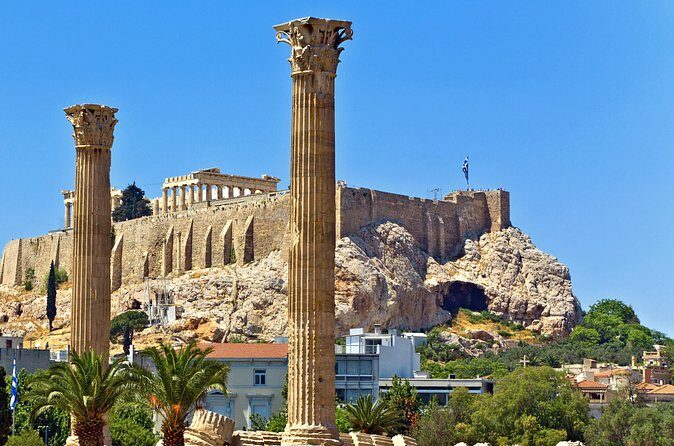
You start at the Acropolis on its naturally fortified hill, and the whole thing is built around a sense of history layered on top of history. Even before you reach the Parthenon, the route makes you feel how strategic this hill was in ancient Athens.
You’ll pass through Propylaea, the monumental gateway designed by Mnesikles and constructed around 437–432 BC. This is one of those transitions that helps you get oriented fast. It’s like stepping onto a stage set where the big monuments line up in your field of view.
From there, you’ll hit key stops that act like anchors for the Acropolis story:
- Temple of Athena Nike (built around 420 BC). It’s described as the earliest fully Ionic temple on the Acropolis.
- Parthenon (constructed between 447 and 438 BC), dedicated to Athena Parthenos.
- The Erectheion on the north side, tied to worship of Athena Polias and Poseidon.
- Quick views and structural stops along the way, including the ancient theatre zone below.
One practical tip: with this kind of packed Acropolis route, I’d plan to move at your own speed. The tour is private, so you should feel free to stop for questions and photos rather than racing the group.
- All Day Cruise -3 Islands to Agistri,Moni, Aegina with lunch and drinks included
★ 5.0 · 4,958 reviews



Parthenon, Erechtheion, and the “why these designs still matter” effect

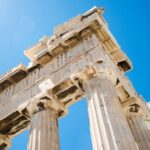
The Parthenon stop is short—around 20 minutes listed for the Parthenon itself—but it’s set up to make that time count. You’re not just looking at stones; you’re looking at an artwork built for Athens at the height of its power, dedicated to their patron.
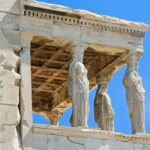
The Erectheion adds a different flavor. It’s an Ionic temple on the north side, and the key point for visitors is that it was connected to the worship of Athena Polias and Poseidon. That helps you understand why this site feels important in a way that goes beyond one famous monument.
Even with brief timing, the tour structure keeps you moving between what each structure symbolizes. That’s a big deal if it’s your first time on the Acropolis. You leave with a clearer mental map: gateway, goddess temples, the famous main hall, and the nearby theatre elements that shaped civic life.
Odeon of Herodes Atticus and the Theatre of Dionysus: ancient entertainment in two acts
One of the smartest parts of this tour is that it doesn’t treat the Acropolis as only temples. You also get theatre and performance culture.
You’ll see:
- Odeon of Herodes Atticus, a Roman stone theatre structure on the southwest slope. It appears in the plan in more than one stretch of time, including a longer look later on.
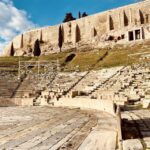
- Theatre of Dionysus Eleuthereus, described as the oldest open-air theatre in the world.
This theatre stop matters because it connects the ruins to the names you’ve likely heard in school: plays associated with Aeschylus, Sophocles, Euripides, and Aristophanes. Even if you only spend a few minutes here, the context gives the stone meaning.
Drawback to keep in mind: because these theatre stops are short, you won’t get a full, slow museum-style walk. If you’re the type who wants to read every inscription and take a deep historical tour, consider adding more time on your own after the car drop-off.
Panathenaic Stadium: the Athens you don’t expect
After the Acropolis, you head to Panathenaic Stadium. This is a great breather stop because it doesn’t feel like the usual archaeological site with scattered ruins.
The stadium is tied to the ancient 4th-century BC stadium idea, but what surprises visitors is how modern it feels while still being based on ancient form. The description notes that the stadium wasn’t rebuilt in the same way modern ruins are. In 1896, during the first modern Olympic Games, work was done for renovation of its marble covering.
It also says the financing came from Georgios Averof, and that the present-day shape matches the ancient stadium shape. For first-time visitors, it’s a clear reminder that Athens doesn’t just show you the past. It reuses it.
Expect about 20 minutes here, so use that time to walk the perimeter viewpoints and grab photos without feeling rushed.
Academy of Athens and the Presidential Guards: a quick modern stop with serious symbolism
From the stadium area, you’ll also see a building copy connection: the tour notes the Academy of Athens, founded by constitutional decree in 1926, and describes the building as a copy of the Propylaea of the Acropolis.
This is a fun contrast. You’re seeing ancient architecture echoed in modern civic design, which helps the Acropolis feel less like a one-time monument and more like a living design language in Athens.
Then comes the Presidential Mansion, formerly called the New Palace, now housing the Presidency of the Hellenic Republic. The plan highlights the ceremonial guards (a unit guarding the Tomb of the Unknown Soldier and the Presidential Mansion).
This stop is included for about 20 minutes, and it’s best treated as a pause. You get a taste of contemporary Athens pageantry without derailing the ancient-heavy day.
Lycabettus viewpoints, Plaka, and Monastiraki: the old city mood shift
After the monuments and civic stops, you move into the neighborhood side of Athens.
Mount Lycabettus
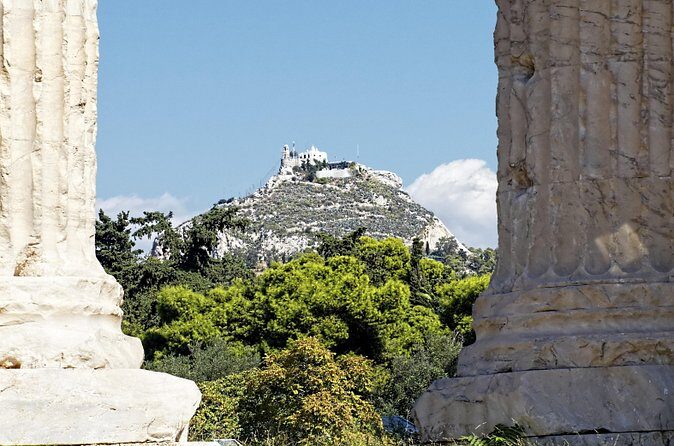
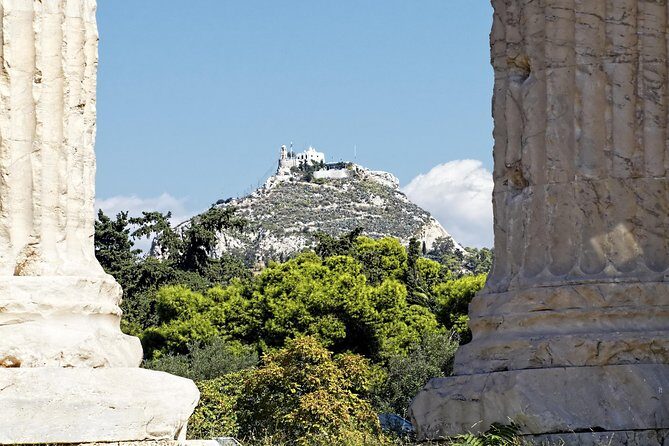
You’ll spend about 15 minutes at Mount Lycabettus, noted as the highest point in central Athens at 277 meters. The big value here is the view potential. Even if you don’t take the full long climb yourself, the stop helps you understand why Athenians treat this hill like a yearly ritual.
Plaka
Next is Plaka, the old historical neighborhood under the Acropolis. The description places it between Syntagma and Monastiraki metro stations and emphasizes its village-like feel: neoclassical buildings, cafes, small museums, souvenir shops, and narrow streets.
The plan gives you about 15 minutes, which means it’s not a deep stroll. It’s more of a taste—enough to orient you so that if you return later, you’ll know what streets to follow.
Ancient Agora of Athens
Then you get Ancient Agora, described as a market and a meeting hub, destroyed and rebuilt through centuries, including damage during Persian attacks in 480 BC. You’ll have about 1 hour here, which is a solid chunk in a half-day plan.
This longer stop is important because it shifts you from “monuments on a hill” to “the daily life engine of an ancient city.” Even if the ruins are partial, the purpose of the space comes through.
Monastiraki
Finally, you’ll reach Monastiraki for about 30 minutes. It’s described as a flea market neighborhood and a major shopping district, with souvenir shops and specialty stores. Think of it as your flexible wrap-up zone: snack, browse, and decide what you want to come back for later.
Pacing and physical demands: who this suits best
This tour is listed for travelers with moderate physical fitness. That’s a good fit for most people who can handle walking on uneven ground and climbing some steps around the Acropolis zone.
The Acropolis portion also means weather matters. The experience notes it requires good weather, and if conditions are poor, you’re offered another date or a full refund.
If you’re someone who enjoys structured sightseeing and wants your first Athens day to feel productive, this works well. If you’re looking for a slow, museum-level Athens with long sit-down breaks and lots of reading time, you may find the overall pacing intense.
What makes this tour feel “worth it” beyond the checklist
Here’s what I think is genuinely valuable in how this tour is run:
You’re not only seeing famous places—you’re seeing how they relate. Starting at Propylaea then moving through temples and theatre makes the Acropolis feel like a civic complex, not scattered landmarks.
You also get help that goes beyond narration. One of the best signals from the experience is that the driver can assist with Acropolis time slot/ticket readiness before the visit, and can bring visuals like a map and photos to help you understand where you are in real time.
On top of that, the experience notes the driver may provide small extras such as a booklet and postcards related to the stops. That’s not essential, but it’s a nice touch if you like remembering your route.
Should you book this Athens half-day private tour?
Yes, book it if you want a first-pass Athens that hits the big monuments and still leaves you with real neighborhood context (Plaka, Monastiraki) plus a meaningful ancient site stop (Agora). The private format, pick-up from hotel or Piraeus, and English-speaking support make it feel efficient without being rushed like a group bus day.
I’d think twice if you hate timed entry planning or you want a deeply detailed, slow-paced history session. In that case, either plan extra time on your own at the Acropolis or add a licensed Acropolis guide so the visit matches your style.
If your goal is see the essentials, understand what you’re seeing, and keep the day sane, this tour is a very solid choice.
FAQ
How many people are included in a group?
The tour price is listed per group for up to 3 people.
Where can you be picked up?
You can be picked up from any hotel in Athens or from the Piraeus cruise ship terminal.
How long is the private tour?
It runs for about 5 hours 10 minutes.
Is the tour in English?
Yes, it’s offered in English.
Are Acropolis tickets included?
No. Entrance tickets and the Acropolis & slopes time slot are not included. The Acropolis & slopes slot time is listed as €30 per person (18 and under is free), and you’ll book it in advance.
Do I need a licensed guide?
A licensed tour guide is not included by default. A licensed guide can be added upon request for an extra €170 for 1 hour 30 minutes to visit the Acropolis (availability applies).
What transportation is provided?
The tour uses a private air-conditioned SUV such as a Kodiaq or Volkswagen, or a Mercedes C/E class.
What if the weather is bad?
The experience requires good weather. If it’s canceled due to poor weather, you’ll be offered a different date or a full refund.
What level of walking is expected?
It’s intended for travelers with moderate physical fitness. You’ll do a walking route on the Acropolis area and visit multiple sites within the half day.