REVIEW · ATHENS
Athens: Philosophy and Democracy Walking Tour
Book on GetYourGuide →Operated by Athens Classic Tours · Bookable on GetYourGuide
Democracy sounds different when you hear it outside. This 3.5-hour Athens walk, led in English by Panos, threads philosophy and politics through the city’s ancient hubs. I love how he makes the ideas feel human, not textbook-only, and I love the small group setup (max 15), which keeps it interactive. The one catch: you’re walking a lot in real city conditions, and site admissions are not included.
You also get smart variety: Kerameikos and its graves, Monastiraki’s flea-market energy, the Roman Agora area, and a hilltop finale at Philopappos Hill with big views. It runs rain or shine, and it’s listed as not suitable for people over 70, with just a few steps at the end—so plan around that and wear good shoes.
In This Review
- Key Highlights You’ll Feel on This Walk
- Why Panos Turns Athens Into a Philosophy and Democracy Lesson You Can Walk
- Where You Start at the Statue of Theseus and Get Oriented Fast
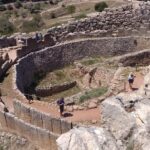
- Kerameikos Archaeological Site: Graves, Pericles, and Civic Power
- Monastiraki Flea Market Energy Meets the Roman Agora Layer
- Tower of the Winds: Ancient Weather Forecasting and Timekeeping
- Ancient Agora to Pnyx Hill: Democracy on the Ground, Not in a Book
- Hadrian’s Library, Plaka Pass-By, and the Acropolis Big Picture
- Price, Pace, and Comfort: Is $49 Worth It for You?
- Should You Book This Philosophy and Democracy Walking Tour?
- FAQ
- How long is the Athens Philosophy and Democracy Walking Tour?
- Where do I meet the guide?
- Is the tour in English?
- Are admissions to the sites included in the price?
- Can kids join this tour for free?
- What should I bring?
- Does the tour run in bad weather, and is it easy walking?
- What’s the cancellation situation?
Key Highlights You’ll Feel on This Walk
- Panos’ storytelling connects ideas to specific stones, from Athenian politics to major philosophers
- Small group format (max 15) means more questions and a less rushed vibe
- Tower of the Winds shows how ancient Athenians tracked weather and time
- Pnyx Hill is where democracy becomes more than a concept
- Philopappos Hill views give you a clean, memorable payoff at the end
- Many stops are exterior or low-entry, since most tickets are site-based rather than tour-based
Why Panos Turns Athens Into a Philosophy and Democracy Lesson You Can Walk
This is the kind of Athens tour that changes how you look at ruins. Panos doesn’t just point at the Ancient Agora and move on. He builds a line between how Athenians argued about government, how they reasoned about truth, and how that thinking still shapes your modern world—without turning it into a lecture where your brain checks out.
A big reason people rate this tour so highly is the tone: story-driven, a bit humorous, and grounded in place. You’ll hear names tied to the world of philosophy and how their ideas connect to civic life in Athens. And you’ll spend real time at the exact spots where public debate, education, and political life overlapped.
The best part for me is that it feels like learning with your feet. You’re not memorizing facts to pass a test. You’re building a mental map—so later, when you wander on your own, you’ll know what you’re looking at and why it matters.
You can also read our reviews of more walking tours in Athens


Where You Start at the Statue of Theseus and Get Oriented Fast
You begin at the statue of Theseus, opposite the train station, across the road. That’s an easy meeting point if you’re arriving by public transit, and it helps you get your bearings quickly before the walk starts.
From there, the route keeps a practical rhythm: you’re not stuck in one neighborhood all day. You move through Athens’ major layers of civic life—ancient Greek spaces first, then the Roman-era “overlay” in the same general zone—so the city starts making sense as one long timeline.
Even with a lot of ground covered, the pace is meant to feel manageable. The tour is described as easy, with only a few steps at the end, and the main requirement is straightforward: bring comfortable shoes. The rain-or-shine note matters too, because this is a walking-focused experience.
If you only have one morning to get the big picture, this start-to-finish flow helps you build that big picture fast—before you decide what to revisit more deeply.
Kerameikos Archaeological Site: Graves, Pericles, and Civic Power
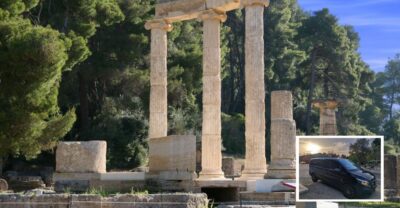
Kerameikos sets the tone immediately because it’s not just “old stones.” This archaeological site is tied to burial traditions for centuries, which gives you a different angle on Athens: public life and private memory lived close together. As you’re walking through the area, you also learn why it mattered to prominent Athenians over time.
One standout detail here is the connection to Pericles. The tour frames Kerameikos as a place where he delivered his famous speech—so you’re not only hearing about politics, you’re standing in a space used for public-facing ideas. That connection is powerful because it makes democracy feel like a lived project rather than an abstract timeline.
Kerameikos also helps you understand why Athens cared so much about education and reasoning. In the Greek way of thinking, civic identity wasn’t separate from intellectual identity. You’ll get that sense on this walk, and Kerameikos is a strong launch point for it.
Practical note: it’s archaeological terrain, so you’ll benefit from shoes with grip and good ankle support. Even on an “easy tour,” the ground can be uneven.
Monastiraki Flea Market Energy Meets the Roman Agora Layer
After Kerameikos, the walk shifts gears to Monastiraki. This is a great contrast stop. Instead of only ancient ruins, you get the livelier atmosphere of a flea market area with antique shops and the kind of scavenger-hunt browsing that turns into its own Athens memory.
Then you return to the historical core with the Roman-era layer of the city. The tour includes Hadrian’s Library and nearby stops around the Roman Agora area. This matters because it shows how later rulers kept reusing Athens’ cultural “center of gravity,” even after the political era changed.
You also get a sense of how public spaces evolved. Greeks built meeting and debate spaces; Romans continued the idea, but with their own architectural language. Walking between these points helps you spot the continuity: people still gathered, discussed, and organized civic life, even as styles and institutions shifted.
If you care about “how cities change while still staying themselves,” this is one of the tour’s best strengths. You don’t just see Athens as one frozen museum scene—you see Athens as a place that kept rebuilding on top of its past.
Tower of the Winds: Ancient Weather Forecasting and Timekeeping
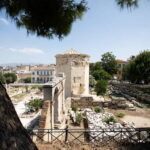
Tower of the Winds is one of the stops that makes the philosophy theme feel extra real. It’s an octagonal marble tower in the Roman Agora zone, and it served as a wind indicator and also a clock. In other words: this wasn’t just pretty architecture. It was practical.
The tour explains how it worked as a kind of early meteorological station—used to forecast weather. That’s a fascinating bridge between science and everyday life, because it shows how Athenians paid attention to nature in a structured way.
Why this matters for your experience: the theme of the tour isn’t only democracy as voting. It includes sciences, arts, and education. Tower of the Winds is a physical example of those values in action. You can almost feel the logic: observe patterns, measure consistently, plan your day around what’s coming.
Also, this is a stop where the guide’s storytelling style shines. Panos tends to connect the “how” to the “why,” so you leave understanding not just what the tower did, but what it represented in Athens’ approach to reasoning.
- All Day Cruise -3 Islands to Agistri,Moni, Aegina with lunch and drinks included
★ 5.0 · 4,958 reviews


Ancient Agora to Pnyx Hill: Democracy on the Ground, Not in a Book
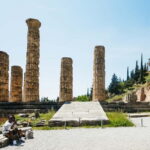
The Ancient Agora of Athens is the heart of the civic story. This was once the focus of political, commercial, administrative, and social activity—so it’s where you’d expect civic debate and public life to overlap. As you walk through the area, you’re learning how daily spaces supported bigger ideas like citizen participation and public accountability.
Then you move toward Pnyx Hill, the historic location for democracy. Standing there is like stepping into the physical logic of the system. You get to see how geography and architecture shaped public speech and decision-making.
The tour also includes the ancient Greek mausoleum of Philopappos Monument at the hilltop area, and you’re told to admire the views from there. I love this kind of ending because your brain finally gets a chance to stop scanning and start absorbing. After hours of connections and stories, the panoramic perspective helps “lock in” the mental map you built earlier.
One more reason this section works so well: the guide ties philosophical theories to the same civic world that produced democratic institutions. So it’s not philosophy floating in the air. It’s philosophy tied to how people argued, persuaded, and organized society.
Hadrian’s Library, Plaka Pass-By, and the Acropolis Big Picture
You’ll see Hadrian’s Library as part of the walk, with a nearby stop at the Roman Agora area. Hadrian’s Library helps reinforce the theme of education and intellectual culture in Athens. Even when you can’t read everything on-site, the purpose is clear: Athens cared about learning, not just power.
Plaka is passed by on the route too. That’s useful even if you’ve seen postcards already. It reminds you that the old Athens grid still influences how people live and walk today. It’s the kind of contrast that makes the ancient parts feel closer to your present-day experience.
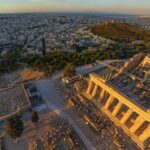
Finally, the Acropolis gets treated as a big-picture backdrop rather than the main event of this specific tour. That’s intentional. If you plan a separate Acropolis-focused visit later, this tour’s approach is ideal because it doesn’t pull you into long ticket lines or heavy focus all at once. Instead, you get context for what you’ll see from above—why Athens built the way it did and how the city’s political and intellectual life fed into its monumental image.
Net effect: by the time you look toward the Acropolis later, you’ll recognize the story threads you picked up during the walk.
Price, Pace, and Comfort: Is $49 Worth It for You?
At $49 per person for a 3.5-hour guided walking tour, the value is mostly about what you get in your brain, not what you get in your photo album. You’re paying for an English live guide, a small-group format (max 15), and a structure that links multiple major sites through one clear theme: philosophy and democracy.
But you should budget for site admissions separately. The tour notes that admissions are not included for stops like Athens entry, Hadrian’s Library, the Roman Agora, Tower of the Winds, and the Ancient Agora. Since several of these are in the same general zone, that’s still workable—but don’t assume $49 covers everything.
Pace-wise, it’s described as easy with only a few steps at the end. Still, it’s a walking tour, in rain or shine, so bring comfortable shoes and plan for uneven sidewalks and archaeological surfaces. It’s also listed as not suitable for people over 70.
Best fit? I’d book this if you want Athens as a thinking city, not just a skyline. It also works well for first-timers who want a strong orientation in a morning or early afternoon, and for families where kids can handle a guided history-and-ideas format (children up to 14 join for free, with the same general tour length).
Should You Book This Philosophy and Democracy Walking Tour?
Book it if you want Athens explained through the ideas that built it. If you care about how democracy formed, why people argued in public, and how philosophy connected to civic life, this tour gives you that thread and then shows you where it happened.
I’d also book it if you’re the kind of person who likes guided context before you explore on your own. This route sets up what to look for later, especially around the Ancient Agora area and the hilltop views.
Skip it only if you know you don’t want a walking-focused experience, you’re sensitive to weather, or you fall into the listed age limitation. Otherwise, $49 for a small-group, English live guide who connects ideas to real locations is a smart value play—especially if this is one of your only guided moments in Athens.
FAQ
How long is the Athens Philosophy and Democracy Walking Tour?
It lasts 3.5 hours.
Where do I meet the guide?
You meet in front of the Statue of Theseus, opposite the train station, across the road.
Is the tour in English?
Yes, it’s a live English guide.
Are admissions to the sites included in the price?
No. Admissions to sites are not included, including entry for Athens, Hadrian’s Library, the Roman Agora, the Tower of the Winds, and the Ancient Agora of Athens.
Can kids join this tour for free?
Children up to 14 years old join for free.
What should I bring?
Wear comfortable shoes.
Does the tour run in bad weather, and is it easy walking?
It takes place rain or shine. It’s described as an easy tour with a few steps at the end, and it’s not suitable for people over 70.
What’s the cancellation situation?
You can cancel up to 24 hours in advance for a full refund.