REVIEW · ATHENS
Athens: the Great Greek Philosophers Guided Tour in Spanish
Book on GetYourGuide →Operated by Secrets of Greece IKE · Bookable on GetYourGuide
One hill can change how you see the whole city. This Athens Great Greek Philosophers guided tour in Spanish strings Plato, the Aeropagus, and Socrates’ story into one walkable idea-map of ancient Greece.
Two things I really like: the guide-led storytelling (with lots of room for questions), and the way the route links famous names to specific places you can stand in. One heads-up: it’s a 150-minute walking tour, so you’ll want comfortable shoes and water ready before you start.
In This Review
- Key things to notice before you go
- Entering the tour at the Statue of Plato
- From the Greek Agora to the hill of Pnyx: ideas in public space
- Aeropagus: where debate met consequences
- Socrates’ prison: the cost of being wise
- How the Spanish guide makes it click
- Time and pacing: making 150 minutes work in Athens
- Price value: $34 for a guided story with real stops
- Who should book this tour?
- Should you book the Athens Great Greek Philosophers guided tour?
- FAQ
- What is the meeting point?
- How long is the tour?
- What language is the tour guided in?
- What is the price per person?
- What’s included in the tour price?
- Are food and drinks included?
- What should I bring?
- Where are the main highlighted stops?
- Is there free cancellation?
- Can I reserve without paying right away?
Key things to notice before you go
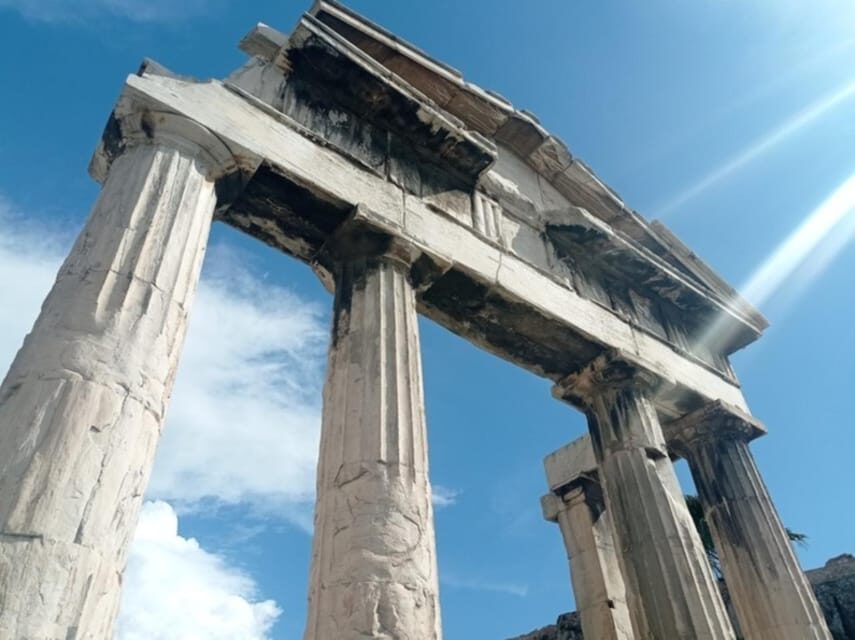
- The tour starts at the Statue of Plato, so you get context before you even move.
- Aeropagus is part of the route, connecting philosophy to real-world consequences.
- Socrates Prison is included, giving Socrates’ “wise ends up paying dearly” theme a physical setting.
- The story runs from the Agora to Pnyx, so you see how ideas moved through civic space.
- Spanish-language live guiding, with an active, discussion-friendly tone mentioned in the feedback.
Entering the tour at the Statue of Plato
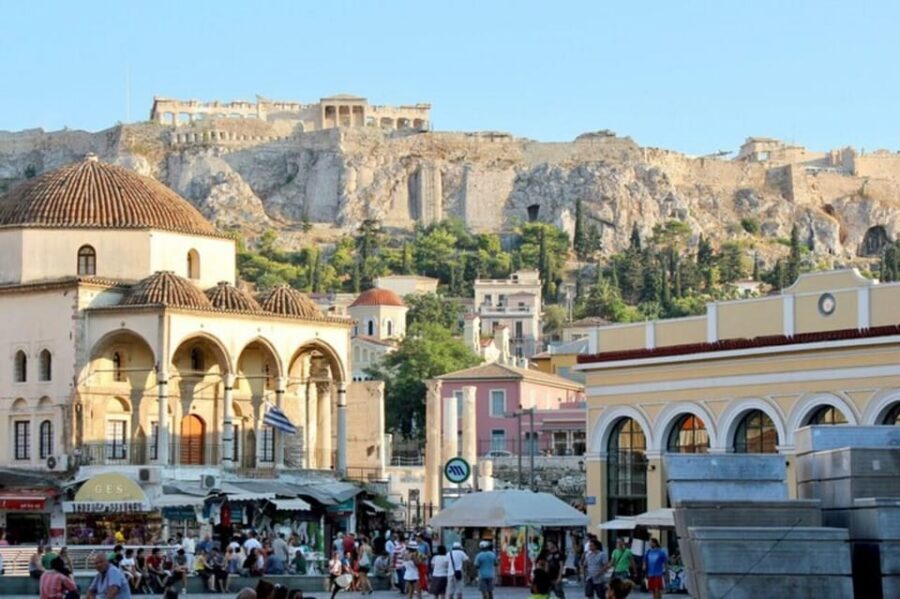
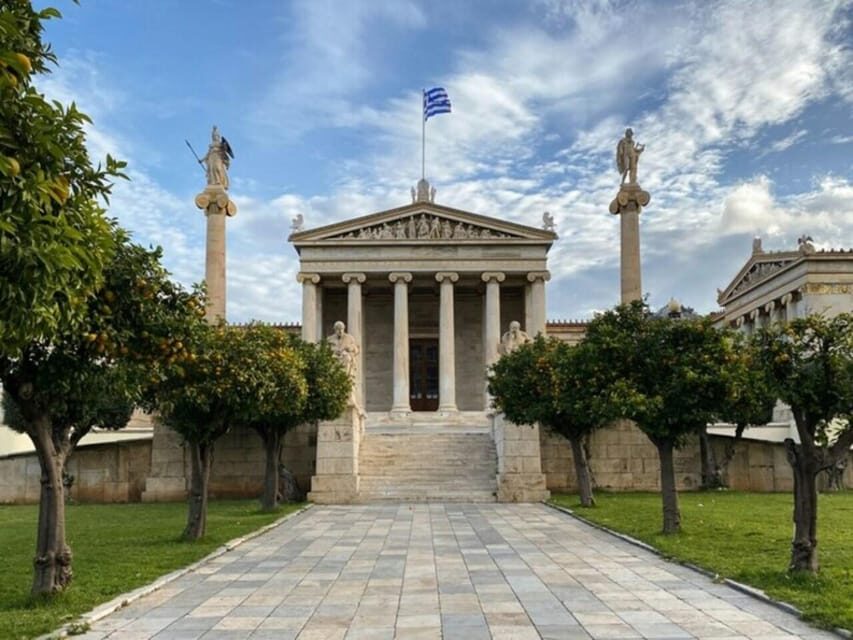
Meet in front of the Statue of Plato, and plan to arrive 10 minutes early. That timing matters more than it sounds. You want those first few minutes to settle in and get the framework your guide will use for the whole walk.
What I like about this setup is simple: instead of jumping straight into ruins or random street corners, you begin with the central idea—philosophy as something that shaped public life. From there, the tour is built like a guided lesson you can literally walk through.
And since the language is Spanish, you’ll get the best experience if you’re comfortable following conversation. If your Spanish is intermediate, you’ll likely keep up with the main storyline and the questions. If it’s beginner-level, you might still enjoy the sights, but the discussion part could feel like hard work.
You can also read our reviews of more guided tours in Athens



From the Greek Agora to the hill of Pnyx: ideas in public space
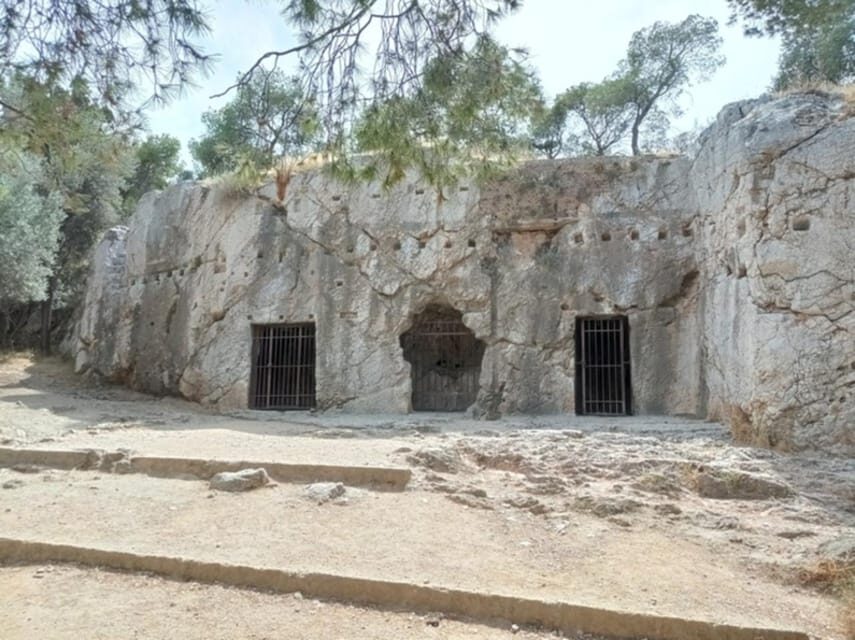
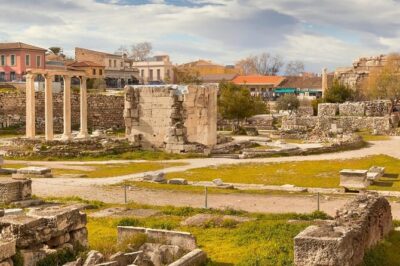
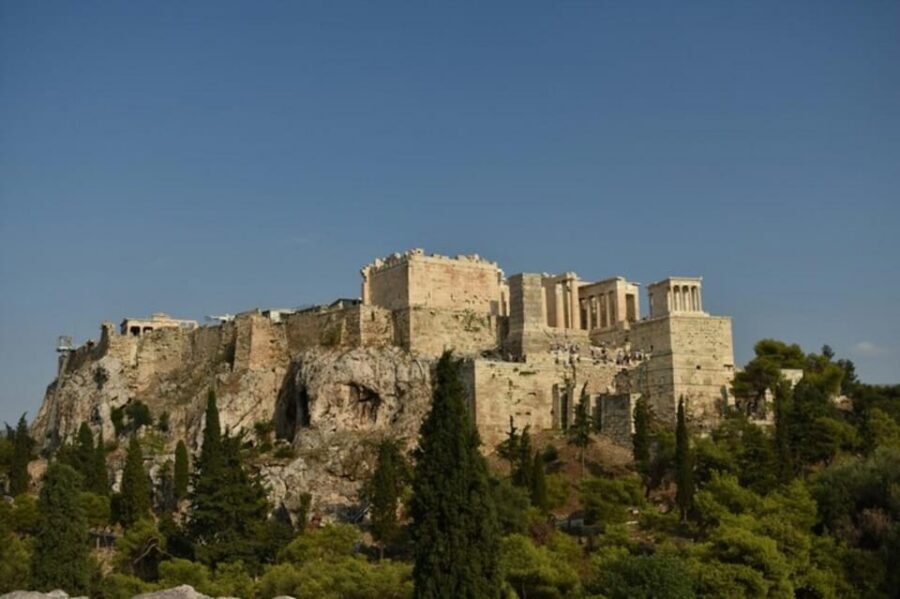
The tour’s main thread follows the city from the Greek agora toward the hill of Pnyx. You’re not just sightseeing. You’re watching philosophy take shape in the spaces where ordinary people gathered, argued, and decided things together.
In practical terms, this is why the route works. When you connect a philosopher’s ideas to the place where civic debate happened, the concepts stop feeling like abstract school topics. You start asking different questions, like: who had the right to speak, what counted as persuasion, and why “thinking” could become dangerous in a society built on order.
You’ll also hear the tour framed around the birth of philosophy and its key personalities—especially Socrates. The course of the story isn’t straight-line facts. It’s more like a chain of cause-and-effect: how questioning became a habit, how that habit collided with power, and why some thinkers ended up paying for it.
Aeropagus: where debate met consequences
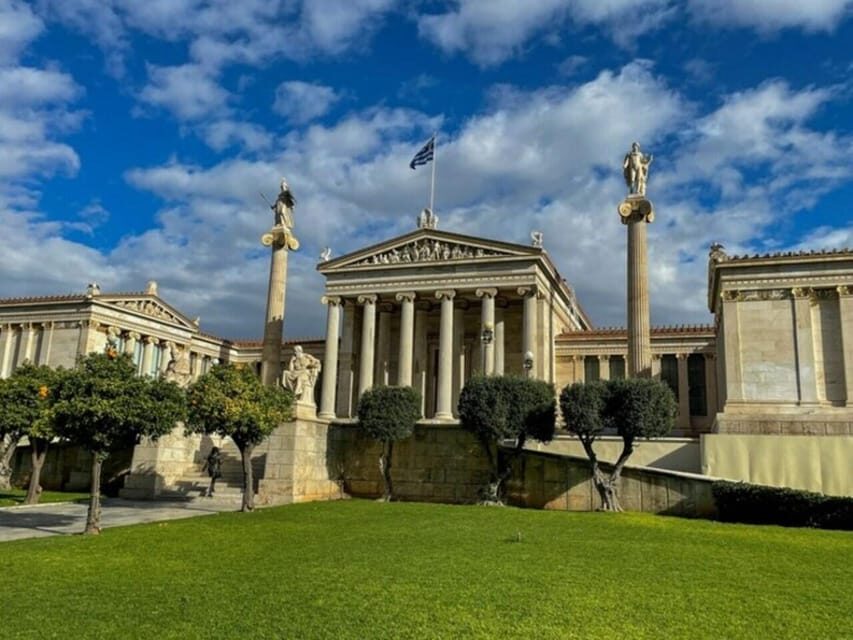
One of the standout stops is Aeropagus. Even without turning it into a lecture, the hill setting naturally adds tension to the story. It’s the kind of place that makes you think about judgment, authority, and what happens when ideas threaten the system.
This is where the tone described in the feedback becomes important. The strongest tours don’t only name people and dates. They help you connect the dots between a philosopher’s method—asking questions, challenging assumptions—and the social reality of ancient Athens.
If you like your history with stakes, this stop tends to deliver. You’ll finish the Aeropagus section with a clearer sense of why philosophy wasn’t only about beauty or theory. In Athens, it also had to fit into public life, law, and reputation.
Socrates’ prison: the cost of being wise
Another included highlight is Socrates Prison. The tour explicitly leans into the theme that being wise can come with consequences. Standing near the sites tied to Socrates’ fate changes the emotional weight of the story. It’s harder to treat Socrates like a distant textbook figure.
This stop is also where the guide’s storytelling style can make a big difference. In the reviews, guides like Gregory (and in at least one case, Sunny) are described as engaging, encouraging group thinking, and happy to answer questions. That kind of interaction matters most when the story turns heavier.
If you enjoy philosophical ideas but you also like human drama—choices, conflicts, moral pressure—this is the part that usually lands hardest. You’ll likely come away thinking less about “Socrates the name” and more about “Socrates the person and what his questioning cost.”
How the Spanish guide makes it click
The tour is led by a live official tour guide in Spanish. What makes this experience feel different, based on the feedback you have here, is the teaching style: the guides don’t just point at places. They run a narrative, then loop the group into it.
A few details that show up again and again:
- The guide encourages questions rather than treating them as interruptions.
- The pace is built around explanations that try to make concepts understandable, even if you’re not a philosophy specialist.
- The guide sometimes adapts on the fly to match the group’s interests.
You’ll also hear that some guides add humor, keep discussions moving, and ask mind-stretching questions. That’s a big part of the value. A philosophy tour can become either dry or too abstract. Here, the goal is to turn ideas into something you can react to while you’re walking through the city.
If your Spanish is strong, you’ll probably enjoy the discussion component the most. If it’s not, focus on following the main storyline and enjoy the fact that the guide is translating big ideas into everyday conversation.

Time and pacing: making 150 minutes work in Athens
The tour lasts 150 minutes. That’s long enough to connect multiple areas without feeling like you’re trapped for half a day, but it’s also long enough that fatigue can creep in if you ignore your body.
Here’s what I recommend so you don’t fight the clock:
- Wear shoes you can walk in for real distance, not just museum distance.
- Bring water. The tour info is blunt about it for a reason.
- Give yourself a little buffer time before the meeting so you’re not arriving stressed.
Also, Athens heat can swing hard depending on season and hour. Even when the tour feels “mostly history,” you’re still outside for a good chunk of time. Show up rested, and you’ll hear more, remember more, and enjoy the questions more.
Price value: $34 for a guided story with real stops
At $34 per person for 150 minutes, the value depends on what you want from Athens.
If you’re the type of traveler who likes:
- guided context (instead of wandering alone),
- a clear narrative arc,
- and a tour that links philosophy to specific sites,
…then this price is fairly fair. You’re paying for interpretation, not just movement. The “official tour guide” inclusion matters because the experience is story-based, and the stop selection (Statue of Plato, Aeropagus, Socrates’ prison, plus the Agora and Pnyx context) suggests you’re meant to learn, not just look.
If you mainly want photo stops with minimal walking and minimal talk, you might feel the cost more than the benefit. But if you want your Athens to make you think, $34 for a two-hour guided philosophy walk is a solid deal.
Who should book this tour?
This is a good fit for you if:
- you want Spanish-language guidance,
- you like philosophy but also want it grounded in place,
- you enjoy tours where your questions are welcome,
- you like a walking route that gives you a map of ideas, not just a checklist.
It’s also a great option if you’re curious but not a “philosophy person.” The guide approach described in the feedback suggests they explain concepts in a way that works for beginners, while still giving enough depth for people who already know the names.
Should you book the Athens Great Greek Philosophers guided tour?
I’d book it if you want Athens to feel like more than monuments—if you want the city to explain itself through the people who argued there. The strongest reason to choose it is the combination of key philosopher sites and a discussion-friendly Spanish guide style.
Book it sooner if you:
- enjoy question-and-answer learning,
- want a focused 150-minute plan instead of planning route logic yourself,
- and like stories tied to places you can stand on.
Skip it only if walking and conversation aren’t your thing. If you prefer silent self-guided browsing, this won’t feel as comfortable.
If you’re in the “I want meaning with my history” camp, this tour is an efficient way to leave Athens with more than photos—you’ll carry away ideas you can’t quite un-think.
FAQ
What is the meeting point?
Meet in front of the Statue of Plato, 10 minutes before the tour starts.
How long is the tour?
The tour duration is 150 minutes.
What language is the tour guided in?
The live guide speaks Spanish.
What is the price per person?
The price is listed as $34 per person.
What’s included in the tour price?
The tour includes an official tour guide.
Are food and drinks included?
No. Food and drinks are not included.
What should I bring?
Bring comfortable shoes and water.
Where are the main highlighted stops?
Highlights include the Statue of Platon, Aeropagus, and Socrates Prison.
Is there free cancellation?
Yes. You can cancel up to 24 hours in advance for a full refund.
Can I reserve without paying right away?
Yes. The listing offers reserve now & pay later, meaning you can book your spot and pay nothing today.