REVIEW · ATHENS
Athens: The Mythology Tour of Acropolis & Acropolis Museum
Book on GetYourGuide →Operated by Greeking.me · Bookable on GetYourGuide
The most memorable part of this four-hour tour is the way Greek mythology is tied to actual places. At the Theater of Dionysus, you hear how Athens turned stories of gods and heroes into public drama. At the Erechtheion, the contest between Athena and Poseidon gives the temple a human, political edge. This is not just a walk among old stones. It is a tour of the stories Athens used to explain itself.
I like the private format, which lets your guide adjust the pace and explain things clearly to a family or a group with different levels of interest. I also like the split between two hours on the Acropolis and two hours in the museum. The main drawback is important: entrance fees are not included, and that cost was not clear enough for at least one booking party. You should confirm the current admission price before paying.
In This Review
- Key points to know before booking
- Why mythology changes the Acropolis experience
- The Theater of Dionysus and the public life of myth
- The Asklepieion and the myth of healing
- The Propylaea and Athena Nike
- The Parthenon and Athena’s political image
- The Erechtheion and the contest between two gods
- Two hours inside the Acropolis Museum
- Is $518 for two people good value?
- Who will enjoy this private mythology tour?
- Should you book it?
- FAQ
- Where does the tour meet?
- Where does the tour finish?
- How long does the experience last?
- Is the tour private?
- What language is the tour offered in?
- Are entrance fees included?
- Can I cancel for a refund?
Key points to know before booking
- Theater of Dionysus: Begin where ancient Athenian drama was born, with mythology presented as public performance.
- Asklepieion stories: Learn about Asclepius, the mythical healer whose powers even caused tension with Zeus.
- Athena’s Acropolis: Connect the Propylaea, Athena Nike, Parthenon, and Erechtheion to the city’s divine protector.
- Two-hour museum visit: See myth-related statues and artifacts with the same guide who led you uphill.
- Private English tour: The group is limited to your party, with guides such as Nino Tsavalos and Tavouti M. Sapfo named in especially strong feedback.
- Budget carefully: The listed price is $518 for up to two people, but site admission is extra.
Why mythology changes the Acropolis experience
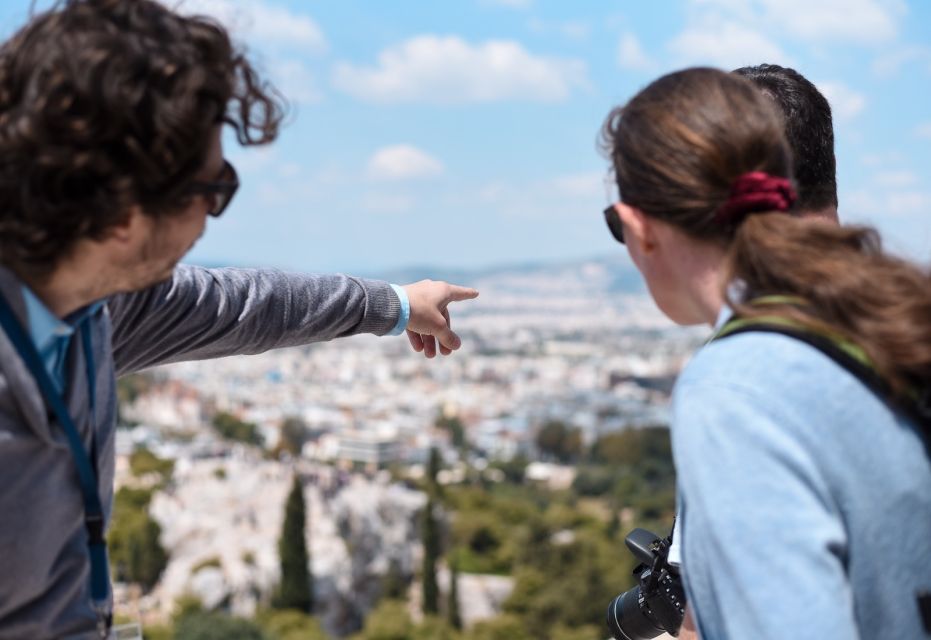
The Acropolis can be hard to read at first. You see marble columns, broken foundations, and crowds gathering near the Parthenon. Without a clear story, the hill may feel like a grand but scattered collection of ruins.
This tour gives those remains a framework. The guide explains how myths shaped Athens, its religious life, its festivals, and its idea of civic identity. You are not asked to treat every tale as literal history. Instead, you see how the people of Athens used the stories of Athena, Poseidon, Dionysus, Asclepius, and other figures to express ideas about power, healing, art, and responsibility.
That approach is useful for first-time visitors. It also works well if you already know the basic Greek myths but want to connect them to the places where Athenians honored them. The stories become less like a list of names and more like a map of the city’s beliefs.
The tour begins at the entrance of the Acropolis Metro Station on Makrygianni Street. From there, you walk toward the Acropolis and begin the uphill portion. Wear shoes that feel secure on uneven ground, and plan for a steady four-hour outing. The activity is not suitable for people with mobility impairments, so this is not the right choice if steep or uneven paths are a serious concern.
You can also read our reviews of more museum experiences in Athens



The Theater of Dionysus and the public life of myth
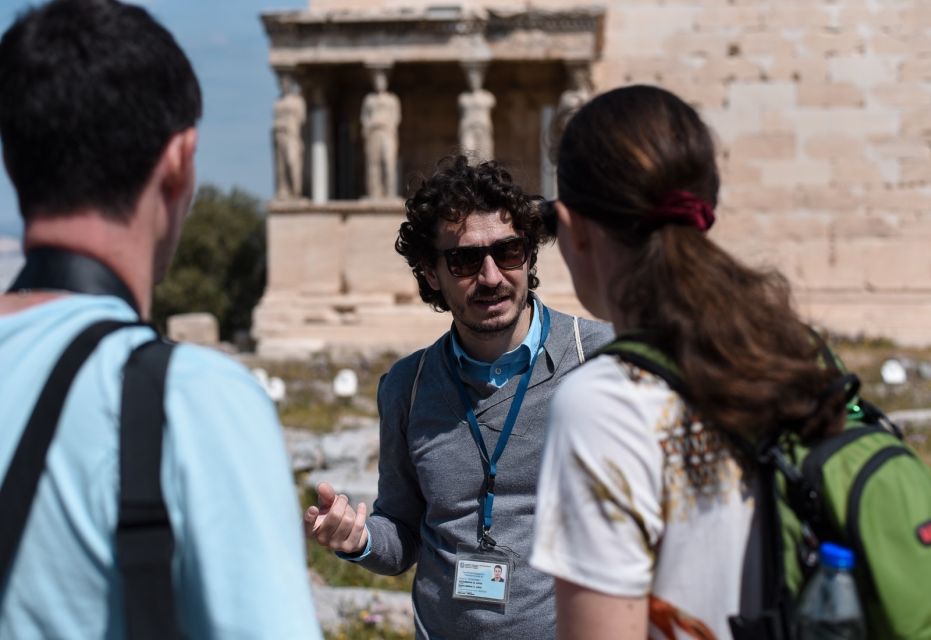
The first major stop is the Theater of Dionysus, set on the lower slope of the Acropolis. This is a smart starting point because it introduces mythology through performance rather than only through temples and statues.
Ancient drama allowed Athenians to examine the behavior of gods, heroes, rulers, and ordinary people. Myth was not merely private entertainment. It could raise questions about pride, justice, family, war, and the limits of human judgment. Your guide uses the theater to show how those tales became part of public life.
I like this opening because it gives you an early reason to care about the places ahead. When you later see Athena’s temples and mythic figures in the museum, you have already considered how stories were shared with a whole city.
The theater stop also makes the tour a good match for families with older children. A strong guide can explain the myths without turning the visit into a school lecture. One family with children aged 10, 14, and 16 found that the four hours passed quickly, which suggests that the storytelling format can hold the attention of different ages.
The Asklepieion and the myth of healing
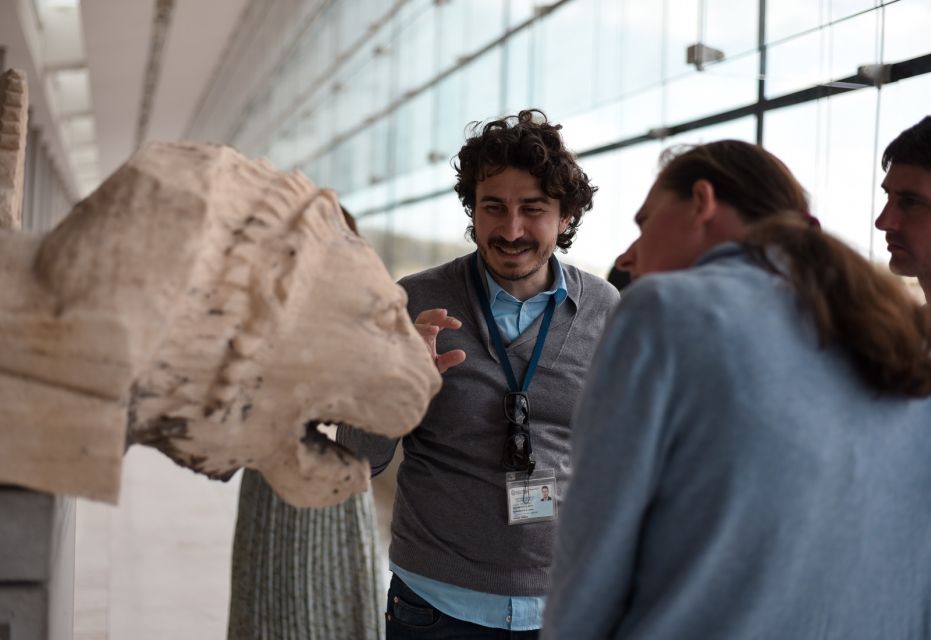
As you continue uphill, the tour passes the Asklepieion, a sacred place linked to Asclepius. In Greek mythology, Asclepius was an extraordinary healer. His abilities were so powerful that they stirred the jealousy of Zeus.
This stop gives the tour a different mood. The Theater of Dionysus is tied to drama and public emotion. The Asklepieion turns your attention to illness, hope, and the desire for relief. It also shows that the Acropolis area was connected to more than worship of Athena and military power.
Ask your guide to slow down here if healing traditions interest you. The supplied tour description promises the myths and mysteries of Asclepius, but it does not list every surviving feature or artifact you will see at the site. The value comes mainly from the explanation of what the place meant and how the story of Asclepius fits into Athenian religious life.
For children, this can be one of the more approachable myths. It has a clear central figure and a dramatic conflict, but it also opens a useful conversation about how ancient people understood health and divine favor.
The Propylaea and Athena Nike
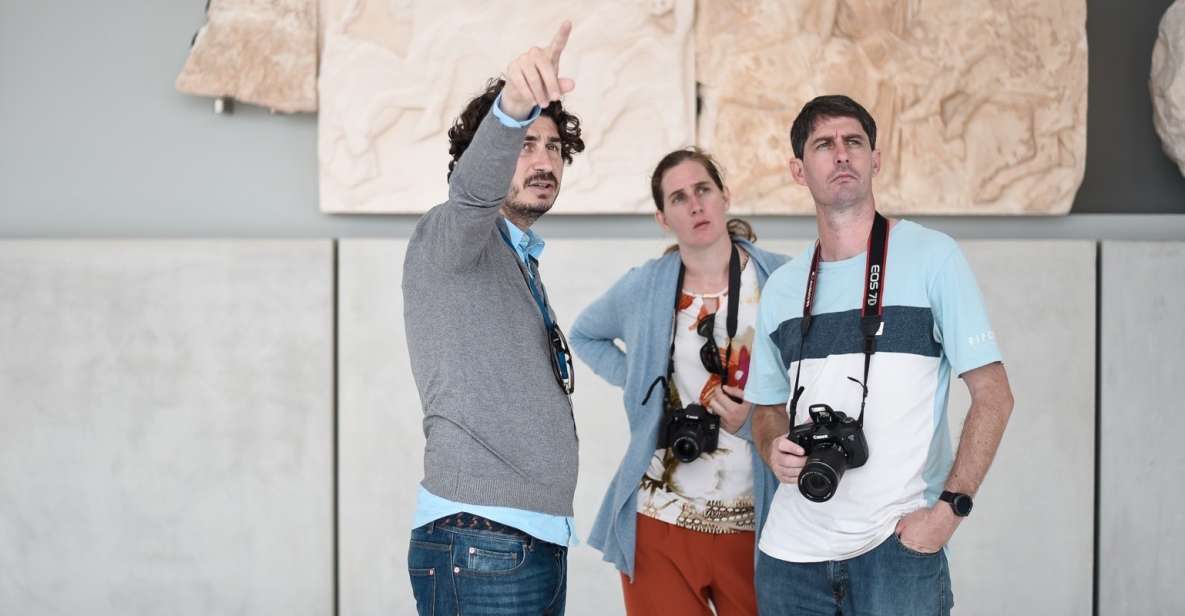
The route then reaches the Propylaea, the monumental marble gateway to the Acropolis. This is where the approach changes from an uphill walk into a formal entrance to the sacred hill.
The guide connects the gateway with Athena Nike, the victorious goddess honored by Athens. That link matters because the Acropolis was not simply a scenic high point. It expressed the power, protection, and ambitions of the city.
The Propylaea is also a good place to pause and take in the structure of the visit. You are moving through a sequence of thresholds, from theater to healing sanctuary to monumental gateway. The mythology is not being added as decoration after the fact. It explains why these spaces mattered to the people who built and used them.
The route requires walking uphill, and the ground may be demanding for anyone with limited mobility. The activity information specifically says it is not suitable for people with mobility impairments. If you are traveling with someone who cannot manage the ascent comfortably, consider a less walking-intensive way to visit the Acropolis area.
The Parthenon and Athena’s political image
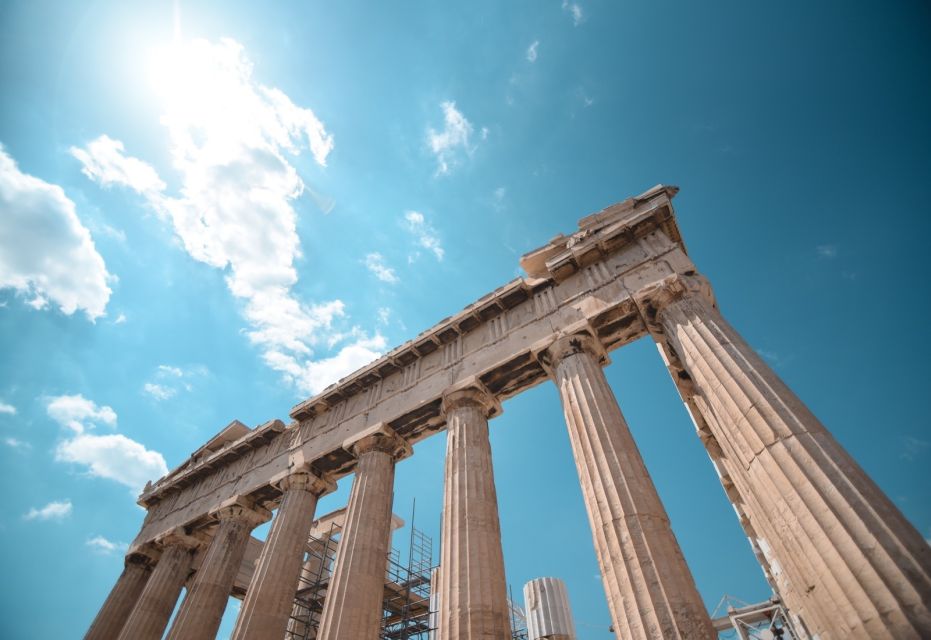
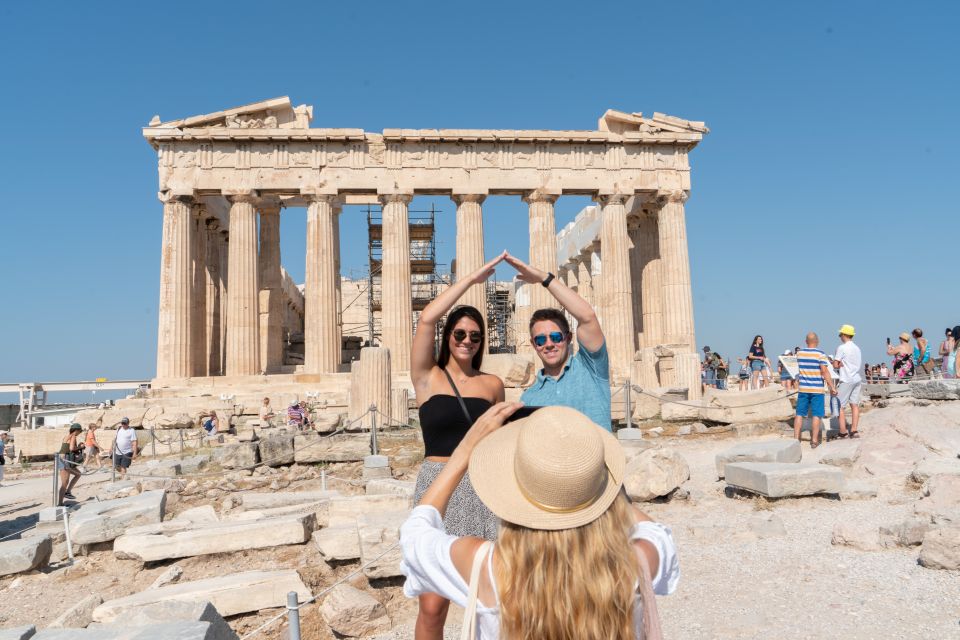
The Parthenon is the emotional center of the Acropolis visit. It is familiar from photographs, but the mythological framing gives you more to look for than columns and scale.
Here, the guide explains how myth was woven into the identity, values, and political vision of classical Athens. Athena was not an abstract goddess placed on a pedestal. She was presented as the city’s divine guardian, and the Acropolis helped turn that relationship into architecture.
The tour does not treat the Parthenon as an isolated monument. Instead, you see it as part of a larger Athenian message about wisdom, victory, civic order, and divine protection. That makes the stop especially valuable if you want more than a quick photograph.
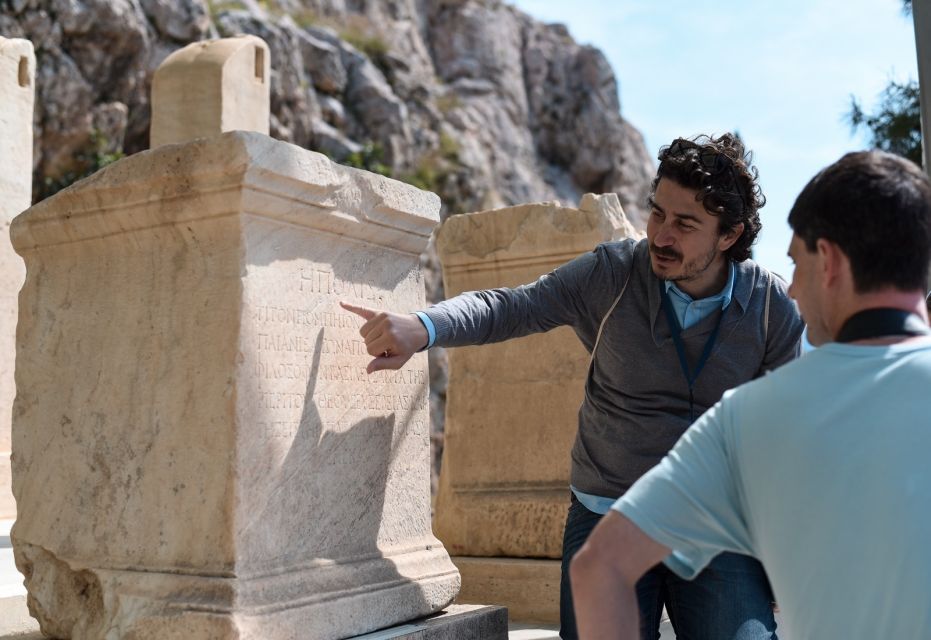
Your guide’s storytelling style will affect the experience. Nino Tsavalos received particularly strong praise for giving information suitable for different levels of familiarity with the site. Tavouti M. Sapfo was also singled out for making a private family visit engaging from beginning to end. The provider is Greeking.me, and the advertised language is English.
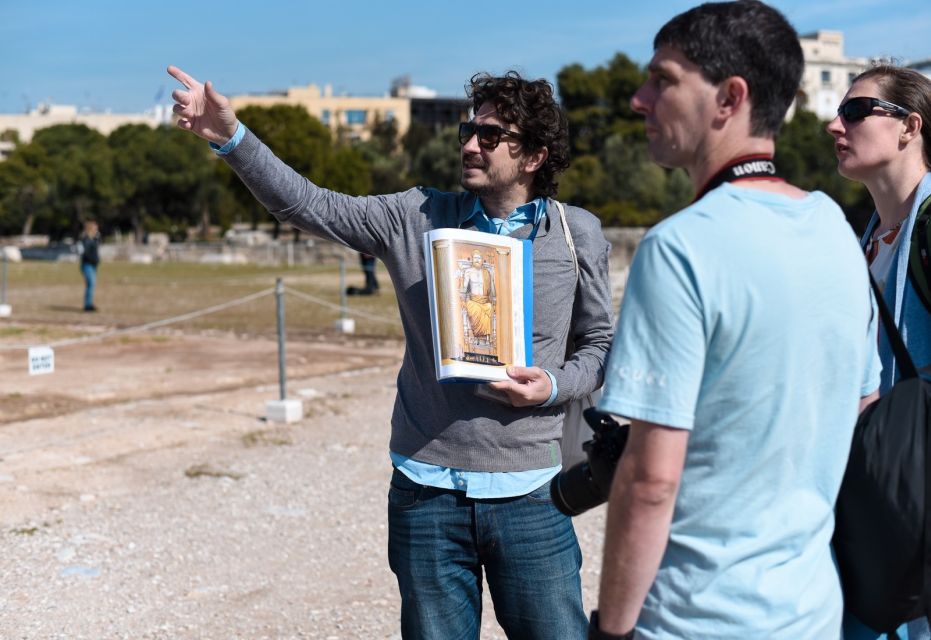
Because this is a private group, you can ask for clarification without worrying about holding up a large tour. That is a real benefit at a place where visitors often arrive with very different questions. The format should suit couples, families, and small groups who prefer conversation to a fixed speech.
- All Day Cruise -3 Islands to Agistri,Moni, Aegina with lunch and drinks included
★ 5.0 · 4,958 reviews



The Erechtheion and the contest between two gods
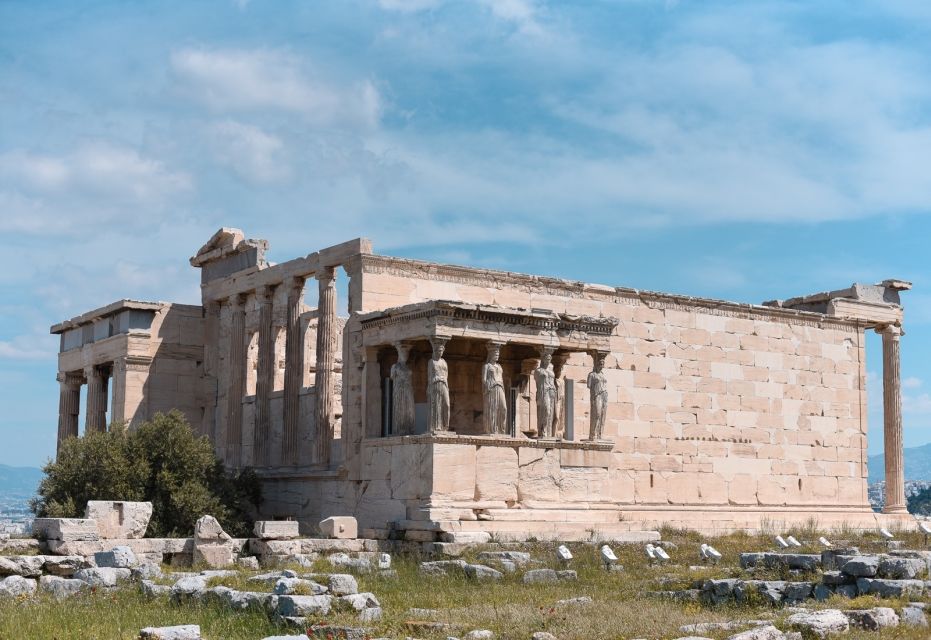
The next major stop is the Erechtheion, a temple associated with Athena and the legendary contest between Athena and Poseidon. The story gives this building a particular sense of rivalry and place.
Athena and Poseidon represent competing claims to protect Athens. The myth helps explain why the city’s identity was tied so closely to its patron goddess. It also gives you a way to understand why different sacred associations could exist on the same hill.
The Erechtheion is a good reminder that the Acropolis was not built around one simple story. Several myths, rituals, and religious traditions overlapped here. Your guide’s job is to make those connections clear without burying you under names and dates.
This is also a stop where you should listen closely to the site’s meaning rather than expect a long list of objects. The tour centers on mythology and interpretation. If your main goal is detailed architectural measurement or a specialist study of construction techniques, another tour may suit you better.
Two hours inside the Acropolis Museum
The tour ends at the Acropolis Museum, where the second half of the experience takes place. The museum portion lasts about two hours and is guided by the same private tour format.
This is an important advantage. After seeing the Acropolis in its original setting, you can examine statues and other artifacts connected to the myths you have just discussed. The guide can link the objects in the galleries to Athena, the stories of the gods, and the wider religious world of ancient Athens.
I like ending at the museum rather than returning to the metro station. You finish indoors, with the option to continue exploring the museum after the guided portion if the admission arrangements allow it. The listed tour itself ends at the Acropolis Museum, so you should not expect transportation back to your hotel.
The museum also helps fill gaps left by the ruins. On the hill, many sculptures and decorative elements are absent, damaged, or difficult to read from ground level. In the museum, artifacts connected to those traditions can be examined more closely.
The exact object-by-object route is not specified, so you should not book this expecting a guaranteed list of individual masterpieces. What is clear is that the guide focuses on legendary artifacts and myth-related treasures. If you want a broad introduction to the museum with a strong story line, this format makes sense.
Is $518 for two people good value?
The advertised price is $518 per group of up to two people. That is a high total for a four-hour walking tour, especially because admission to the Acropolis and Acropolis Museum is not included.
The price becomes easier to assess if you are traveling as two people and place a high value on a private guide. You receive four hours of live English narration, a planned route through two major sites, and the chance to ask questions at your own pace. For a couple who wants focused attention rather than a large group, that can be worthwhile.
For families, the calculation is different. The private group may include more than two people, but the listed rate is still based on a group of up to two, so you need to confirm how additional participants affect the total. Add the required site entrance fees before comparing this with other Athens tours.
The clearest warning concerns admission costs. One booking party believed the amount paid covered the tour and later faced additional entrance charges. To avoid that surprise, ask for the current Acropolis and museum ticket prices before booking, and confirm exactly which tickets your guide will arrange or require you to buy.
The flexible cancellation policy helps reduce some booking risk. You can cancel up to 24 hours before the activity for a full refund, and the reserve-now, pay-later option lets you hold a place without paying immediately. Still, flexibility does not remove the need to check the final total.
Who will enjoy this private mythology tour?
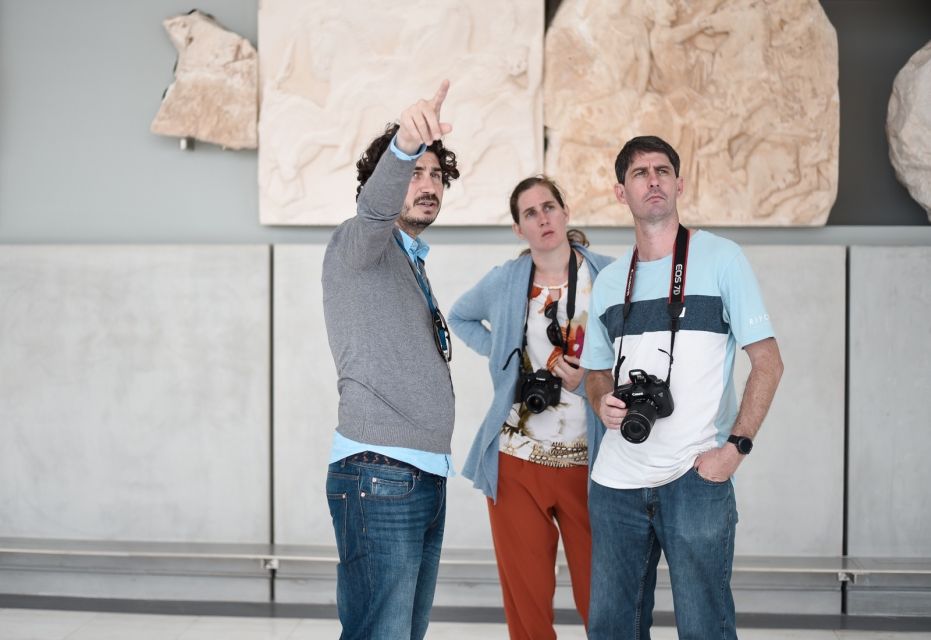
I would recommend this tour most strongly if you want the Acropolis to feel like a place of stories, not just a famous monument. It is a good fit for:
- First-time visitors who want a clear introduction to the Acropolis
- Families with school-age children and teenagers
- Couples who prefer a private guide and a slower question-and-answer format
- People who enjoy mythology, drama, religion, and ancient art
- Visitors who want the Acropolis and museum handled in one four-hour plan
You may want a different experience if you dislike walking uphill, have limited mobility, or want a purely architectural tour. You should also reconsider if you are looking for a low-cost visit, since the private price is substantial and entrance fees are extra.
The tour is offered in English only. If you need another language, this activity will not meet that need based on the information provided. Food and drinks are not allowed, so plan around that rule during the four-hour outing.
Should you book it?
Book this tour if you want a private, story-led introduction to Athens and are willing to pay for personal attention. The strongest reason to choose it is the clear arc from drama at the Theater of Dionysus, to healing at the Asklepieion, to Athena’s power on the Acropolis, and finally to mythic artifacts in the museum.
The main caution is the cost. At $518 for up to two people, plus entrance fees, this is not a bargain tour. Before booking, confirm every admission charge and make sure the uphill route suits your group.
If those details work for you, the tour offers a focused way to connect the myths of Athens with the actual places, temples, and objects that kept those stories alive. The praise for guides including Nino Tsavalos and Tavouti M. Sapfo also points to the importance of the individual guide, so request a guide who is comfortable adapting the explanations to your group’s ages and interests.
FAQ
Where does the tour meet?
Meet at the entrance of the Acropolis Metro Station on Makrygianni Street.
Where does the tour finish?
The tour finishes at the Acropolis Museum.
How long does the experience last?
The experience lasts four hours, with about two hours at the Acropolis and two hours at the Acropolis Museum.
Is the tour private?
Yes. It is offered as a private group experience.
What language is the tour offered in?
The live guided tour is offered in English.
Are entrance fees included?
No. Entrance fees to the Acropolis and Acropolis Museum are not included in the listed price.
Can I cancel for a refund?
Yes. You can cancel up to 24 hours in advance for a full refund. The reserve-now, pay-later option allows you to book without paying immediately.