REVIEW · ATHENS
Athens: Women in Ancient Greece
Book on GetYourGuide →Operated by Culture Hunters · Bookable on GetYourGuide
Some ancient monuments feel new again.
This women-focused Athens walking tour is one of the most original ways to see the city, because the big sights become stories about daily life, power, and limits for Greek women. I love how you view places like the Ancient Agora and the Acropolis from a female perspective, and I also love the way Maelle turns history into lively, conversation-based storytelling rather than a lecture. One thing to plan for: it is a walking tour with steps, so it may not work well if you have mobility or heart-related concerns.
You start in the lively Monastiraki area, then move through classic landmarks and a few lesser-seen corners that help you connect myth to real routines. You’ll hear how goddesses and myths shaped expectations, plus stories of women who pushed back, from Sappho to Aspasia and Agnodice. It’s 2 hours, it’s guided in English or French, and it’s priced at $88 in a way that makes sense if you care about meaning, not just photo stops.
In This Review
- Key things I’d circle on your Athens map
- How this tour changes what you notice in Athens
- Meeting at Monastiraki: start where the day-to-day city begins
- Hadrian’s Library and Athens’ layers: why “women’s Athens” fits old stone
- Plaka streets and the Gate of Athena Archegetis: myth with a point
- The secret stop: where the tour gets its personality
- Ancient Agora through women’s lives: turning a “men’s history” site into yours
- Pnyx and the first democratic votes: who had a say
- Acropolis views and Filopappou Hill: finishing with perspective
- What stories you’ll hear: myths, famous names, and surprising details
- Practical reality check: tickets, walking pace, and comfort
- Price and value: is $88 worth a 2-hour walking tour?
- Who should book this tour (and who might want a different one)
- Quick FAQ
- FAQ
- Where do I meet the guide?
- How long is the tour?
- What parts of Athens do you visit?
- Are archaeological site tickets included?
- What is included in the price?
- What should I bring?
- Is this tour suitable for people with mobility issues?
- What languages is the tour offered in?
- Should I book Women in Ancient Greece?
Key things I’d circle on your Athens map

- Women’s lens on major sites: the Agora and Acropolis views come with context you do not usually get
- Maelle’s teaching style: story-driven, interactive, and easy to follow
- Myth meets everyday life: Athena, Penelope, Demeter, and Pandora show up with social meaning
- Fascinating “defied expectations” names: Sappho, Aspasia, Agnodice, and more
- Short, efficient route: enough highlights for a 2-hour slot without feeling rushed
- Comfort planning matters: bring water and sun protection, since you’re outdoors most of the time
How this tour changes what you notice in Athens
Athens is famous for democracy, philosophy, and great men with great names carved in stone. This tour flips that script. You still see the classic structures, but your guide constantly asks: what did women do, what did they want, and what did society allow?
That shift matters because it turns the city into something you can read like a text. A gate is no longer just architecture. A meeting place is no longer just an “Agora day.” You start noticing who held power, who had voice, and who lived under rules that were enforced through family, religion, and reputation.
You can also read our reviews of more tours and experiences in Athens.


Meeting at Monastiraki: start where the day-to-day city begins

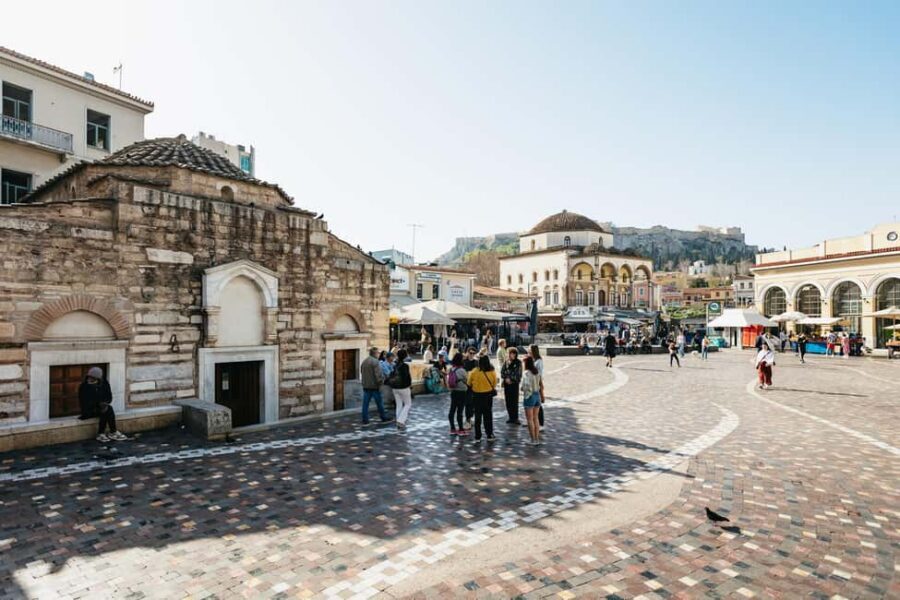
You meet near the Holy Church of the Virgin Mary Pantanassa on Monastiraki Square, where your guide holds up a sign for Women in Ancient Greece. This is a smart starting point because Monastiraki is active and messy in a very Athens way. You get oriented fast, and it sets expectations: this won’t be a quiet museum crawl.
The opening moments are basically a warm start. You’ll get a framework for the themes of the walk—how myths and social roles shaped women’s lives—and then you’re ready to connect that theme to what you see in the streets.
Hadrian’s Library and Athens’ layers: why “women’s Athens” fits old stone
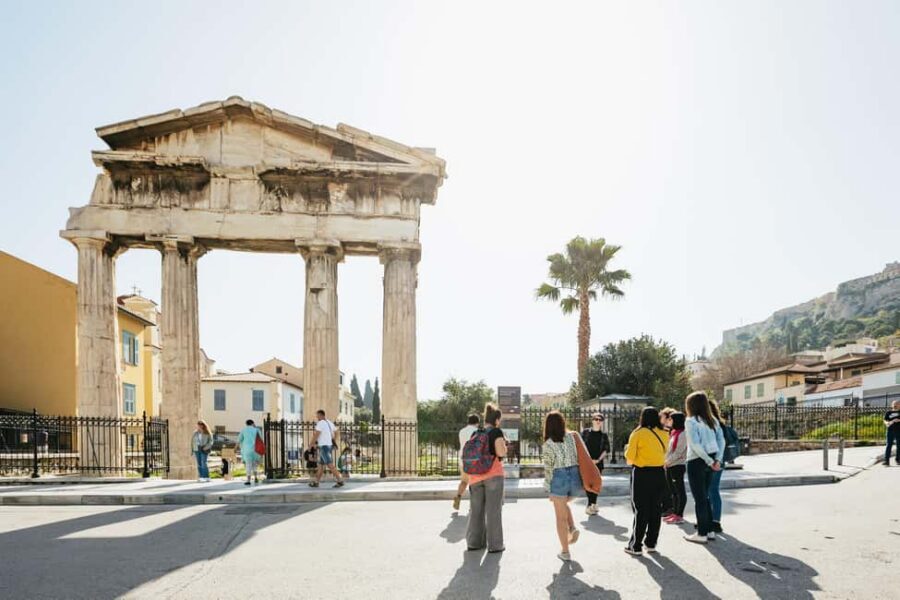
One early stop is Hadrian’s Library. Even if you’re only viewing from outside, you still get the feeling of scale and purpose that made Athens so influential. The tour’s strength here is how it helps you hold two time periods at once: the physical monument in front of you, and the ancient social world your guide is describing.
This is also where the tour’s pacing works well. You get quick context without spending your whole morning at one site. In about minutes, you’re already moving again, which keeps the stories from fading into general background.
Plaka streets and the Gate of Athena Archegetis: myth with a point

From Plaka, you head toward the Gate of Athena Archegetis. Athena is not just a name from a myth book. In this tour, she becomes a lens for social expectations, because the Greeks used goddesses to explain what a “proper” life could look like.
What I like about this part is that the tour doesn’t treat mythology like decoration. Athena connects to identity, education, civic life, and the way religion helped shape public rules. You also get the sense that Athens was built to tell stories, not just to house people.
The secret stop: where the tour gets its personality
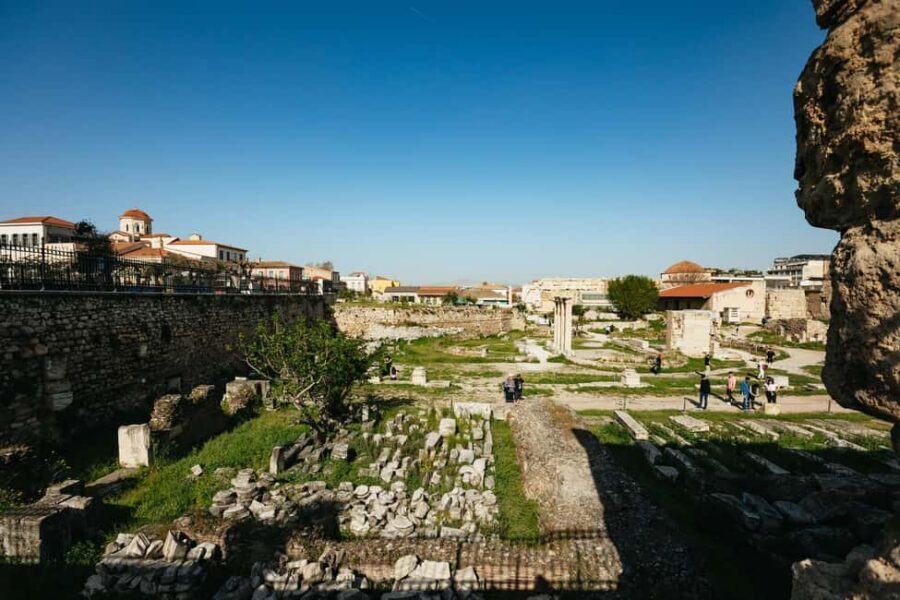
You’ll make a secret stop, a brief change in scenery that keeps you from feeling like you’re only visiting the same big names everyone else posts online. The exact spot is part of the charm: it adds variety, and it gives the guide room to tell a story that won’t fit neatly into the major monument stops.
Even with short time here, you usually end up with something memorable: a different angle, a quieter street moment, or a small setting that makes the talk feel more personal than “standing in front of a landmark.”
- All Day Cruise -3 Islands to Agistri,Moni, Aegina with lunch and drinks included
★ 5.0 · 4,958 reviews


Ancient Agora through women’s lives: turning a “men’s history” site into yours
The Ancient Agora is a highlight for most Athens trips. On this tour, it becomes a highlight for a different reason. Instead of treating the Agora as only a backdrop for politics and public speaking, your guide connects it to how civic life intersected with women’s roles.
This is where you’ll hear stories that bring the social world into focus, including legendary episodes tied to women in different Greek regions. You also learn how class and status mattered, not only whether someone was born female. That matters because it prevents the tour from turning into one simple idea about women across the board. The goal is nuance: women had different lives depending on family, wealth, and city culture.
Pnyx and the first democratic votes: who had a say

Pnyx is where the tour hits a powerful contrast. You’re standing at the site associated with early voting and political process, and your guide explains how democracy worked in practice. It’s not just “cool ancient politics.” It becomes a lesson in limits: who got to participate, and who was pushed to the edges.
This part also connects well to the mythology thread. Greek myths often explained roles as natural or deserved. Democracy, by contrast, was a system built on participation. Seeing both themes together makes the tension feel real.
And yes, you get that classic Athens “look out” feeling from the elevated areas. The difference is that your guide keeps steering the conversation back to people, not just views.
Acropolis views and Filopappou Hill: finishing with perspective
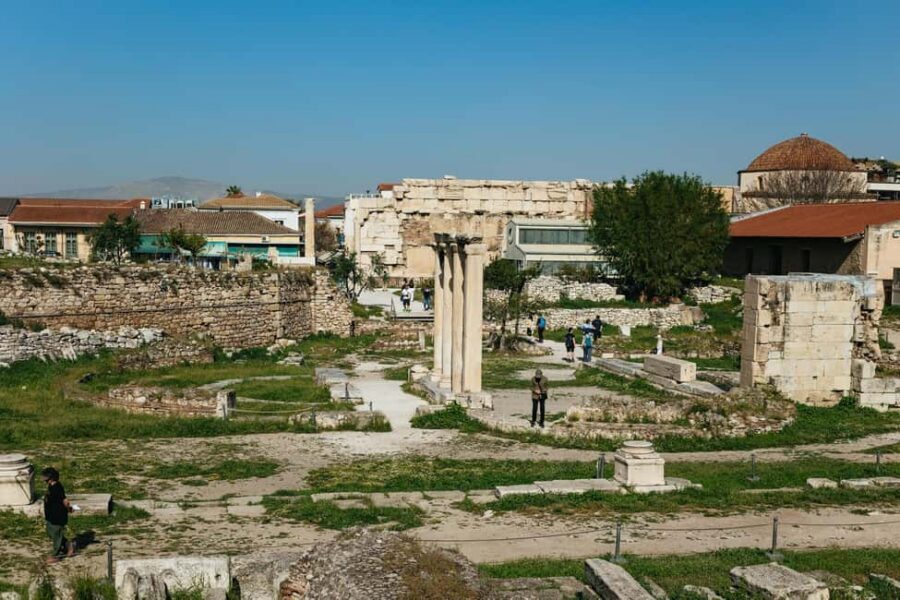
From the viewpoint stop and toward Filopappou Hill, you’re essentially giving your brain a final “read of the city.” The tour includes Acropolis moments through sightlines rather than ticketed interior visits, so you get monument recognition without needing to line up or rush.
Filopappou Hill adds a softer landing. It’s not just a wrap-up; it’s where the day’s stories start to click together. You remember the goddesses, the women who challenged expectations, and the social mechanisms that shaped daily life. Then you look at Athens again, and it’s not the same city you imagined at the start.
You’ll finish with drop-off at Rovertou Galli 69, Kiosk, so it’s easy to keep exploring afterward in the direction you want.
What stories you’ll hear: myths, famous names, and surprising details
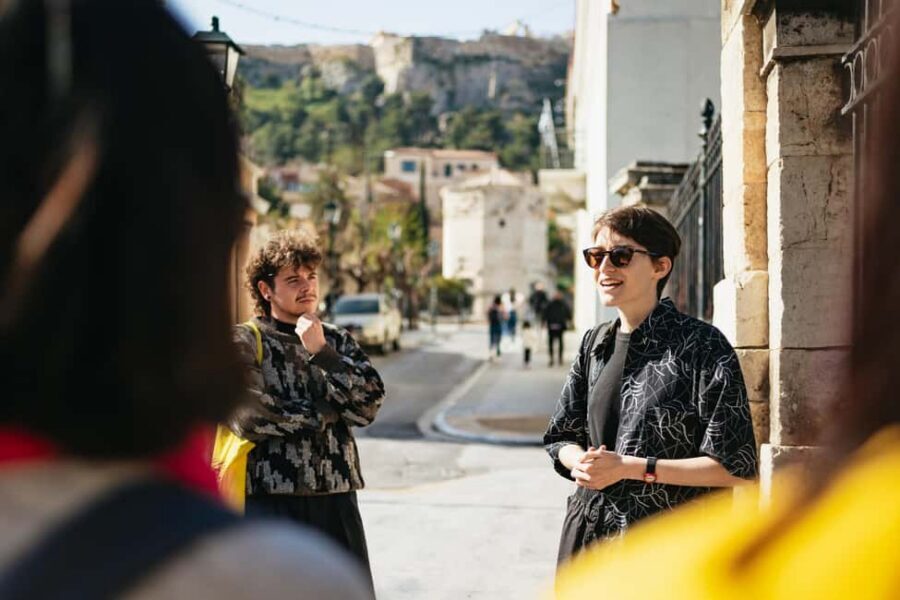
The tour is built around women in ancient Greece as real characters, not footnotes. You’ll hear about how mythology shaped society through goddesses and legendary figures such as Athena, Penelope, Demeter, and Pandora. These names might sound familiar, but your guide uses them to explain social expectations: work, reputation, family roles, and why certain behaviors were praised or punished.
You’ll also hear about women who defied expectations, including Sappho, Aspasia, and Agnodice. The point isn’t just that they were talented. It’s that their lives show what was possible when a woman was able to push against the boundaries of her time.
Along the way, the stories may also touch on episodes like the kidnapped Spartan girls and the mysterious idea of a women’s festival in Athens. This blend of myth, legend, and cultural practice helps you understand how women’s lives were framed publicly, even when they weren’t the ones writing the official records.
Practical reality check: tickets, walking pace, and comfort
A key planning detail: tickets to archaeological sites are not included, and the tour is described as exterior views only. So if your priority is entering buildings, you’ll likely want to pair this with at least one separate ticketed visit during your Athens stay.
Also plan for walking. The route includes steps and some uneven outdoor surfaces. It is not suitable for wheelchair users, and people with mobility impairments or heart problems may need to skip it.
Bring practical stuff:
- Sun hat
- Sunscreen
- Water
And do yourself a favor: wear shoes that handle stone and hills. The tour is only 2 hours, but Athens floors add up fast.
Price and value: is $88 worth a 2-hour walking tour?
At $88 per person for 2 hours, this is not the cheapest option in Athens. What justifies the cost is the specificity. Most tours give you the same “big monuments” story, even if they add a theme. This one uses women’s lives as the organizing principle, and the guide’s job is to keep making that theme land at each site.
It also includes a guide, the walking tour, and a small gift. Your group stays private if you choose that option, and multiple recent guests highlight how small and friendly the format feels.
If you like your history with names, context, and questions you can’t stop thinking about later, this pricing is fair. If you only want quick sightseeing stamps, you may find it too story-heavy.
Who should book this tour (and who might want a different one)
This is a great fit if you:
- care about history that includes women as active participants
- want a fresh angle on classic Athens stops like the Agora and Acropolis views
- enjoy guided conversations, not only facts read aloud
- like mythology with real-world social meaning
You might choose something else if:
- you can’t handle steps or prolonged outdoor walking
- you mainly want to enter archaeological sites with tickets rather than see exteriors
Quick FAQ
FAQ
Where do I meet the guide?
Meet your guide on Monastiraki Square in front of the Church Pantanassa (Holy Church of the Virgin Mary Pantanassa). The guide will be holding a sign for Women in Ancient Greece.
How long is the tour?
The tour lasts about 2 hours.
What parts of Athens do you visit?
You’ll see places such as Hadrian’s Library, the Gate of Athena Archegetis, the Ancient Agora of Athens, Pnyx, and you’ll also have viewpoint moments and finishes at Filopappou Hill. The Acropolis is included through the views rather than tickets.
Are archaeological site tickets included?
No. Tickets are not included, and you get exterior views only.
What is included in the price?
A guide and the walking tour are included, and there is also a small gift. Private group format is available if you select the private option.
What should I bring?
Bring a sun hat, sunscreen, and water.
Is this tour suitable for people with mobility issues?
No. It includes steps and may not be suitable for people with health or mobility difficulties. It’s listed as not suitable for wheelchair users and those with heart problems.
What languages is the tour offered in?
The guide offers the tour in English and French.
Should I book Women in Ancient Greece?
I’d book it if you want Athens history with a new lens and you enjoy being taught by an expert who keeps the pace lively. This tour isn’t just “women in ancient times” as a theme; it’s a way to see major monuments differently, connecting myth, social roles, and real names like Sappho and Aspasia.
If you can handle walking with steps and you’re okay with exterior views (no extra site tickets), you’ll likely leave with a smarter, more human picture of Athens than you started with.