REVIEW · ATHENS
Beat the Heat Acropolis Tour – Small group
Book on Viator →Operated by Alternative Athens · Bookable on Viator
Cooler steps up the Acropolis, minus the crush. This Beat the Heat tour is built for afternoons when the stone feels less punishing, and the small-group pace keeps you moving without getting swallowed by the crowd. You also get a wireless headset, so you can follow the guide’s explanations without craning your neck or shouting.
Here’s the one big catch: the Acropolis entrance fee is not included, so you’ll need to budget extra for the ticket (€30 per person). If you forget to pre-purchase and the line is long, it can squeeze your time on site.
For the money, I like that you hit the major stops with a real story behind each one, from the Theatre of Dionysus to the Parthenon. And with names like Maria, Michalis, Athina, and Christia leading groups, the tone tends to be lively and easy to follow.
In This Review
- Key Highlights Worth Your Time
- Why This Afternoon Timing Works on the Acropolis Hill
- Meeting Point at the Arch of Hadrian: Start Smart, Stay Organized
- The Tour Flow: How a 2-Hour Route Gets You the Real Meaning
- Stop-by-Stop: What Each Site Teaches You (and What to Look For)
- 1) Theatre of Dionysus Eleuthereus (Oldest Theatre Roots)
- 2) Temple of Athena Nike (Victory Without Leaving)
- 3) Erechtheion (Myth, Cult, and a Temple Built for a Purpose)
- 4) Propylaea (The Grand Entrance to the Sacred Space)
- 5) Parthenon (Doric Perfection, Civic Pride, and Time for Photos)
- The Value Equation: What You Get for Around $54
- Crowds, Hearing, and the One Lesson Everyone Learns
- Who This Tour Is Best For (and Who Might Want Another Option)
- My Booking Advice: Should You Book This One?
- FAQ
- How long is the Beat the Heat Acropolis tour?
- What does the tour include?
- Is the Acropolis entrance ticket included in the price?
- Where do we meet for the tour?
- What group size should I expect?
- What language is the tour offered in?
- Are strollers or large bags allowed?
- What should I wear for the Acropolis?
- Is the tour canceled if weather is bad?
- Can I cancel for a full refund?
Key Highlights Worth Your Time

- Small group, max 15 people for a calmer pace and easier listening
- Wireless headset to catch every myth and architectural detail
- Timed for heat and crowd control with an afternoon schedule
- Major Acropolis sites in one run including Dionysus, Erechtheion, and the Parthenon
- Useful map of ancient Athens to connect what you’re seeing
- Plan for the €30 Acropolis ticket since it’s not included
Why This Afternoon Timing Works on the Acropolis Hill
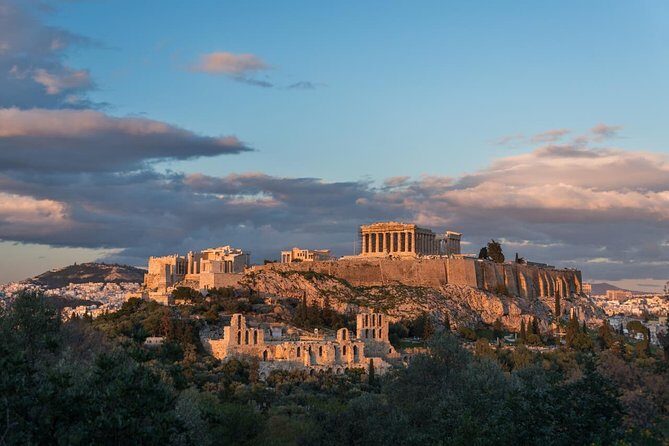
The Acropolis is one of those places where time of day changes everything. In the heat, even short walks feel longer. Crowds make it harder to hear explanations, and it becomes easy to just look, not understand.
This tour targets the late-day hours, when the air is more tolerable and the site tends to feel less chaotic than mid-day. That matters because the Acropolis isn’t just one stop. It’s a steep climb with multiple viewpoints and tight spaces, so a better rhythm can mean the difference between stress and actually enjoying the experience.
If you can swing a later slot (some people specifically like the 5pm idea), you may also get the bonus of softer light. One of the most memorable moments from these types of tours is standing near the Parthenon as the day cools down and Athens shifts from harsh midday glare into something more photographic.
You can also read our reviews of more tours and experiences in Athens.


Meeting Point at the Arch of Hadrian: Start Smart, Stay Organized

You start at the Arch of Hadrian on Leof. Vasilisis Amalias 50. It’s a handy location because it’s a recognizable landmark and it’s near public transportation, so you’re not stuck figuring out weird backstreets before the tour even begins.
You’re also aiming for clean logistics from the start because the Acropolis entry ticket is separate. The good news is you can ask for help pre-purchasing entry tickets ahead of time. If you do that, you reduce the risk of losing time to long lines once you arrive.
One more practical thing: don’t show up planning to bring a big bag or stroller. Strollers, backpacks, and big bags are not allowed at the Acropolis, and the tour is built around moving efficiently between stops.
The Tour Flow: How a 2-Hour Route Gets You the Real Meaning
The full experience runs about 2 hours, with the core visits paced across several signature points. Dionysus, Athena Nike, Erechtheion, and the Propylaea each get around 15 minutes, then you spend about an hour at the Parthenon itself.
That structure is useful. Short stops work for context—what you’re looking at and why it mattered. The longer Parthenon stop gives you time to notice details you’d likely miss if you were just racing up and down.
Also, you’re not left to puzzle it all out. A licensed English-speaking guide walks you through what the structures were for, how myths connect to civic pride, and why these sites sit where they do.
And yes, wireless headsets are part of the deal, which is a big quality-of-life upgrade. Even if you end up near the middle or back of the group, you should still be able to follow the commentary without playing “guess the words” over crowd noise.
Stop-by-Stop: What Each Site Teaches You (and What to Look For)
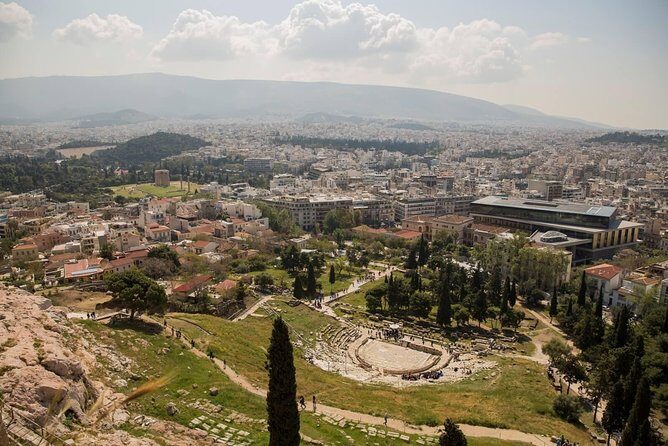
1) Theatre of Dionysus Eleuthereus (Oldest Theatre Roots)
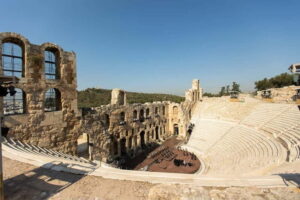
Your first major stop is the Theatre of Dionysus Eleuthereus. This is the kind of place where the history isn’t just in the stones—it’s in the legacy of performance.
Dionysus was the god of wine and grape harvest. And this theatre is described as the oldest founded theatre in Athens. It was also the stage where major Greek playwrights had unsurpassed works performed for the first time—Aeschylus, Sophocles, Euripides, and Aristophanes.
What to do here: look for the idea of the theatre as a civic event, not just entertainment. The guide’s explanations make it clearer that these dramas weren’t random shows. They reflected ideas, values, and debate in a public setting.
Timing note: it’s about 15 minutes, so aim to absorb the big picture rather than trying to study every architectural detail like an archaeologist.


2) Temple of Athena Nike (Victory Without Leaving)
Next is the Temple of Athena Nike. Even if the structure looks smaller than the Parthenon, it carries a powerful message.
Athena is worshipped in connection with Nike, the goddess of victory in Greek mythology. The story you’ll hear here is that the cult statue at this temple had no wings, so Nike would never leave Athens.
This is one of those “myth as propaganda” moments. You’re seeing how religious imagery reinforced civic confidence and military identity.
Timing note: again, about 15 minutes. Use that short window to connect the symbolism—victory was something Athens wanted to keep close, not something that could fly off.
3) Erechtheion (Myth, Cult, and a Temple Built for a Purpose)
After that comes the Erechtheion. This temple is tied to worship and to the presence of a revered cult statue of Athena, described as being ancient and wooden.
It was constructed on the Acropolis to house that statue, and the temple is generally framed as reflecting Athens during its height of power and influence.
What to focus on: understand why the temple exists at all. It’s not just “a building on a hill.” It’s part of a religious system, designed around what the community needed to honor and preserve.
Timing note: about 15 minutes. You’ll get enough context to recognize what makes it distinct when you later glance at it from other angles.
4) Propylaea (The Grand Entrance to the Sacred Space)
The Propylaea is the gateway to the Acropolis. It’s easy to treat gates as practical architecture, but in places like this, gates also set your mindset.
Think of it as the threshold from the regular city into the sacred high ground. The guide helps you read that transition: you’re not just walking upward; you’re stepping into a deliberately designed space for worship, ceremony, and civic identity.
Timing note: around 15 minutes. This is a quick stop, so pay attention to how the gateway frames the world behind you and the sites ahead.
5) Parthenon (Doric Perfection, Civic Pride, and Time for Photos)
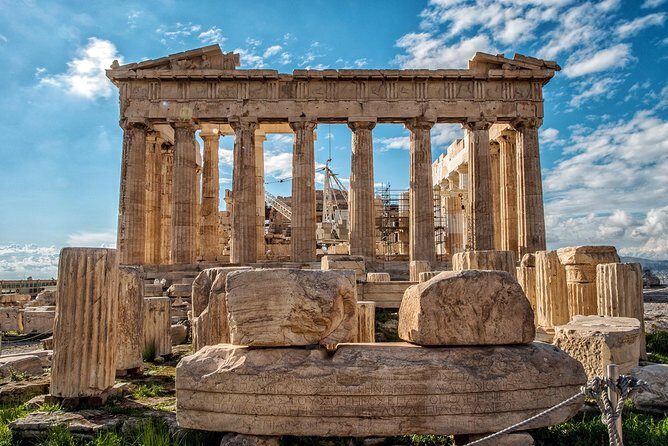
Finally, you reach the Parthenon, the star of the Acropolis and the stop with the most time—about an hour.
This temple dominates the hill. It was built in the mid-5th century BCE and dedicated to Athena Parthenos (Athena the Virgin). It’s often described as the culmination of the Doric order, the simplest of the classical Greek architectural styles.
What makes the Parthenon click on a guided visit is the combination of architecture and meaning. You’re not only seeing columns and stone. You’re learning what the design communicates, and how the building fits into the larger story of Athens.
Practical tip: the top can feel steep and slippery in places. One helpful reminder from these experiences is to wear walking shoes with good grip. If you’re cautious on the stone, you’ll enjoy the viewpoints more instead of worrying about your footing.
Timing note: the site closes around 16:30, depending on the day’s schedule. So if your tour runs late, you may want to arrive ready to move when it’s time.
The Value Equation: What You Get for Around $54
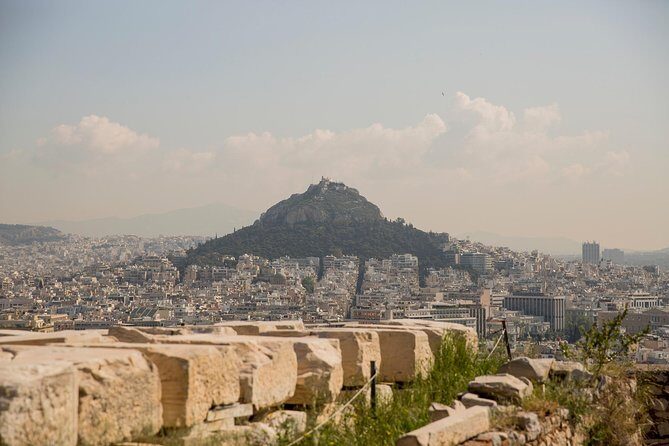
At $54.44 per person, the price is relatively low for a guided, headset-equipped tour covering the main Acropolis highlights. The real financial equation is the entrance ticket, which adds €30 per person. That means the total cost is really about paying for interpretation and route management, plus paying separately for site access.
What you’re buying is not just “someone walks with you.” You’re getting:
- A licensed English-speaking guide
- Wireless headsets for easier listening
- Small-group format for less pushing and better navigation
- A map of ancient Athens to connect the dots
If you tried to do this alone, you’d likely lose time. Crowds make it hard to move smoothly, and reading signs in the wrong order can leave you missing the point of what you’re seeing. Here, the order matters because each stop builds on the last.
Also, a small group can change the feel immediately. When you’re not packed in like a school bus, you can actually hear the story and notice details before you’re rushed along.
Crowds, Hearing, and the One Lesson Everyone Learns
Even with a headset, the Acropolis is loud in its own way. People gather. Phones come out. Guides are explaining over a moving wave of noise.
That’s why the small-group size matters so much. When you’re only sharing space with up to 15 people, you’re less likely to be stuck behind shoulders at every stop.
There’s one more reality check: the tour depends on you being ready with your entry ticket. Since Acropolis entry isn’t included, don’t gamble that you can buy everything on arrival without stress. Lines happen. Time limits happen. It’s better to handle entry in advance.
If you want the cleanest experience, ask about pre-purchasing entry tickets when you book, and plan your arrival so you’re not flustered at the meeting point.
Who This Tour Is Best For (and Who Might Want Another Option)
This tour fits best if you:
- Want a guided route that hits the core Acropolis sites without turning into a marathon
- Prefer a small group over the big-bus chaos
- Appreciate learning myths and architecture in a guided order
- Want the chance to visit during cooler afternoon hours
You might think twice if you:
- Are traveling with very young kids who need lots of free play time, since this route includes multiple listening stops
- Hate the idea of buying the Acropolis entrance ticket separately
- Need strollers or large bags to move around comfortably, since those aren’t allowed at the Acropolis
My Booking Advice: Should You Book This One?
I’d book this if your top priorities are a calmer pace, clear context, and an afternoon schedule that makes the climb feel manageable. The combination of licensed guiding, headset support, and the tight route through Dionysus, Athena Nike, Erechtheion, Propylaea, and the Parthenon is a practical way to get real meaning from a place that can otherwise blur into photos.
Just don’t treat it like an all-in-one ticket package. Plan for the €30 Acropolis entry fee first. If you do, you’ll spend your energy on the ruins and the stories, not on ticket lines and last-minute stress.
FAQ
How long is the Beat the Heat Acropolis tour?
It runs about 2 hours.
What does the tour include?
You get a 2-hour guided tour with an English-speaking licensed guide, a small-group experience (maximum 15 travelers), a fun map of ancient Athens, and wireless headset support to follow the guide.
Is the Acropolis entrance ticket included in the price?
No. Acropolis entry fees are not included, and the tour lists an additional €30 per person for the ticket.
Where do we meet for the tour?
Meet at the Arch of Hadrian, Leof. Vasilisis Amalias 50, Athina 105 58, Greece, and the tour ends at the Acropolis of Athens.
What group size should I expect?
The tour has a maximum of 15 travelers.
What language is the tour offered in?
The tour is offered in English.
Are strollers or large bags allowed?
No. Strollers, backpacks, and big bags are not allowed at the Acropolis and should not be brought on the tour.
What should I wear for the Acropolis?
Good walking shoes help, since parts of the terrain can be slippery and the hills are steep.
Is the tour canceled if weather is bad?
It requires good weather. If it’s canceled due to poor weather, you’ll be offered a different date or a full refund.
Can I cancel for a full refund?
Yes. Free cancellation is available up to 24 hours in advance for a full refund.