REVIEW · CRETE
Chania Old Town Artisans and Sightseeing Private Walking Tour
Book on Viator →Operated by Wonderers · Bookable on Viator
Chania’s Old Town makes sense fast. I liked how this private walk ties the artisans, food, and architecture into one story, and how Sophia (a passionate guide with Crete traditions in her voice) adjusts the route to what you care about. I also really enjoyed the start: a breakfast bougatsa with coffee/tea sets the tone before you hit the lanes. One thing to plan for: there’s no hotel pickup, so you’ll need to reach the meeting spot on your own.
I found the route genuinely practical for first-timers. You pass major landmarks in a tight area—Old Town streets, a Greek Orthodox Cathedral, Venetian dockyards and fortifications, and Ottoman-era religious sites—so you get the “who ruled here” timeline without feeling like you’re studying a textbook. Because it’s private (only your group), the pacing can match your speed and photo habits.
The tour is weather-dependent, since it’s mostly outdoors, and it runs about 3–4 hours. If you’re the type who hates walking or expects constant sit-down stops, you may want a slower option—but for most people, this is an easy way to get oriented and find local food rhythms quickly.
In This Review
- Key highlights worth knowing before you go
- Entering Chania’s Old Town with a guide makes it click
- Breakfast bougatsa: the best way to start a walking tour
- From Old Town streets to a Greek Orthodox Cathedral moment
- Spotting the blend of religions in Chania’s oldest preserved church area
- Venetian dockyards and fortifications: learning the waterfront story
- The only mosque built from scratch during the Ottoman Occupation
- Byzantine walls: seeing the city as a collage
- Price and value: what $108 gets you (and what it doesn’t)
- Logistics: where to meet, where you end, and how to plan your time
- Who this Chania tour suits best
- Should you book this tour?
- FAQ
- How long is the Chania Old Town Artisans and Sightseeing private walking tour?
- How much does the tour cost?
- Is this tour private or shared?
- What’s included in the tour?
- What isn’t included?
- Where do I meet and where does the tour end?
- What language is the tour offered in?
- What if the weather is bad?
- Is free cancellation available?
Key highlights worth knowing before you go
- Bougatsa breakfast included: you start with the Chania classic plus coffee or tea, not just sightseeing.
- Sophia’s flexibility: she communicates well and steers the walk toward your interests (and better photo angles).
- Multiple religions in one compact loop: you’ll notice how different communities shaped the buildings you see today.
- Venetian dockyard + fortifications story: you’ll walk away understanding how the waterfront changed roles over time.
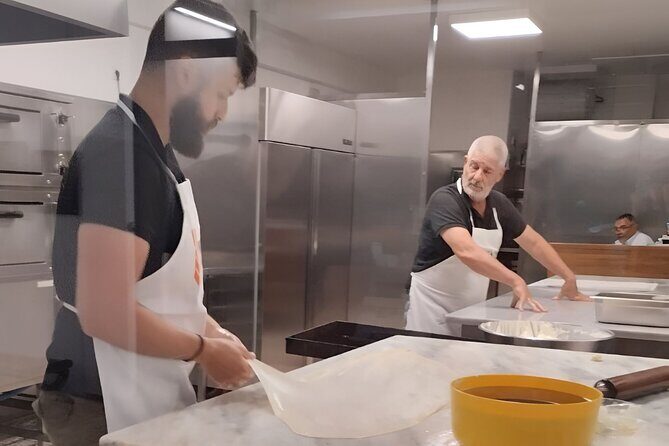
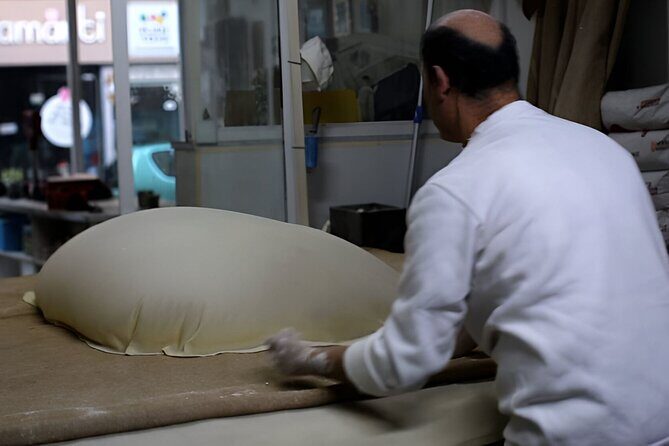
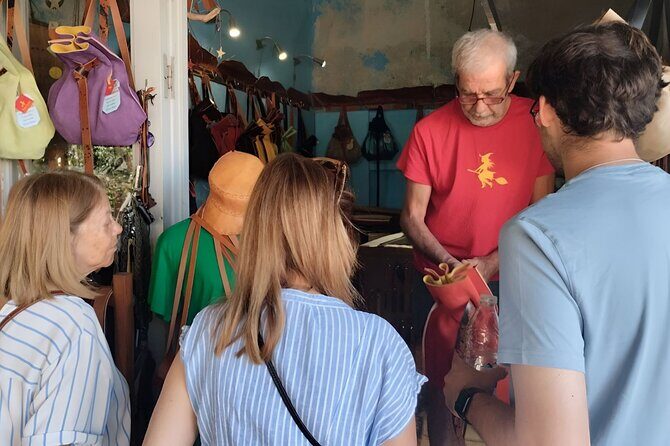
- Filo-making and local food guidance: the route includes a filo-making demonstration moment and Sophia points you to where locals eat.
- Easy finish at the Byzantine Walls: you end at a major landmark instead of looping back the same way.
Entering Chania’s Old Town with a guide makes it click
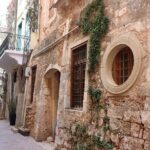
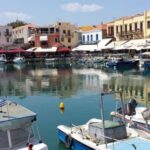
Chania’s Old Town can feel like a film set: pretty lanes, layered stone, and buildings that look like they’ve always been there. With a guide, it stops being just scenic. You learn what to look for as you walk—how the city’s different eras show up in the shapes, materials, and religious buildings.
This tour focuses on the “read the street” experience. You get an organized path through the key areas where the story changes: market life, churches, waterfront power, Ottoman-era presence, and Byzantine fortifications. If you’re doing Chania for the first time, I love that you get oriented quickly rather than wandering and hoping you stumble onto the right context.
There’s also a smart realism to the route. For example, you pass by a market that’s currently under renovation. Even if a few scenes are temporarily less photogenic, you still get the bigger picture of how the neighborhood works.
You can also read our reviews of more walking tours in Crete
Breakfast bougatsa: the best way to start a walking tour
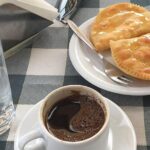
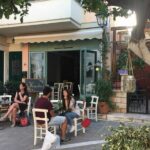
This is not a tour that starts mid-morning hungry. You begin with breakfast bougatsa of Chania, plus coffee and/or tea. It’s a small included moment, but it matters: it gives you energy early and helps you ease into local food culture instead of saving it all for later.
Bougatsa is one of those “you’re in the right place” foods. And because it’s included, you avoid the common travel mistake of paying for breakfast again near your next stop just to stay on schedule. The timing also works well with the walking rhythm—eat first, then use the rest of the morning to explore.
Practical tip: if you’re sensitive to long waits for pastries in busy spots, show up a few minutes early. That way, you’re fueled and not rushed before you meet your guide.
From Old Town streets to a Greek Orthodox Cathedral moment
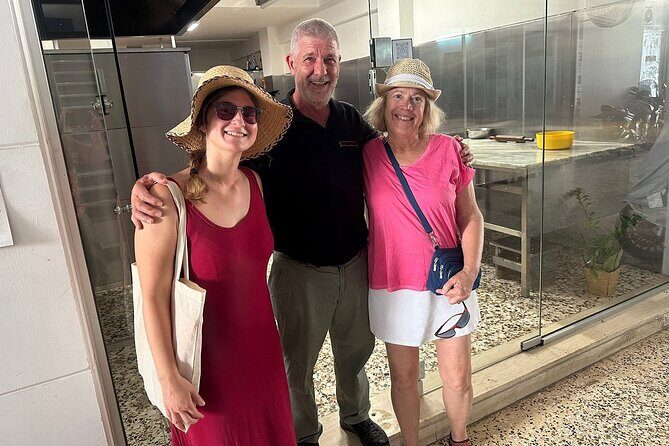
Once you’re fueled, the tour turns into a guided walk through the Old Town streets, with time to wander and take it in. There’s a stop that’s clearly designed for atmospherics and orientation: about two hours exploring the old quarter with admission-free time.
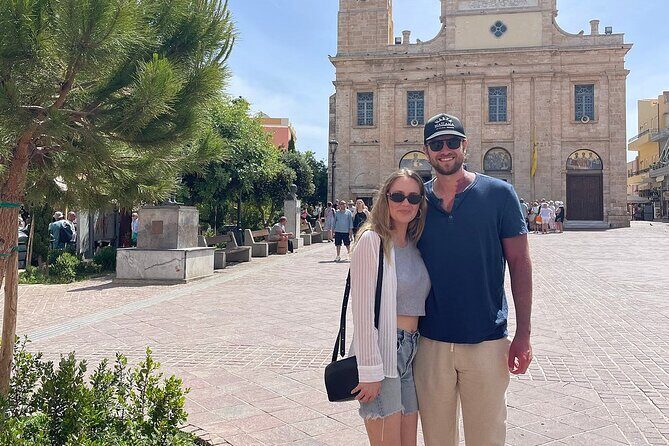
In the middle of that, you also spend time at the city’s Greek Orthodox Cathedral. It’s one of those landmarks that helps you read the city’s religious layers. Even if you’re not a “church architecture nerd,” you’ll pick up a sense of scale and style just by comparing what you see with nearby buildings you’ve already passed.
This part of Chania is also where you’ll feel the local texture. Narrow streets, everyday life around you, and the way people move through the area. If you’re traveling with a group and not everyone cares about the same sights, this is a good compromise section: you’ll get both meaning (history cues) and pleasure (street views).
Spotting the blend of religions in Chania’s oldest preserved church area
One of the most memorable aspects is how the tour highlights the architectural blend of different religions in a preserved older church setting. You admire the look and get context for how these layers coexist in one city.
This isn’t about memorizing dates. It’s more about training your eyes. When a guide points out how one building’s features reflect later influences—or how different worship traditions can leave visible marks—you start noticing details you would otherwise walk past.
What I appreciate here is balance. Chania can be described in postcard terms, but this tour gives you a reason those postcards look the way they do. You end up seeing religion, empire, and city life as parts of one evolving place, not isolated attractions.
Venetian dockyards and fortifications: learning the waterfront story
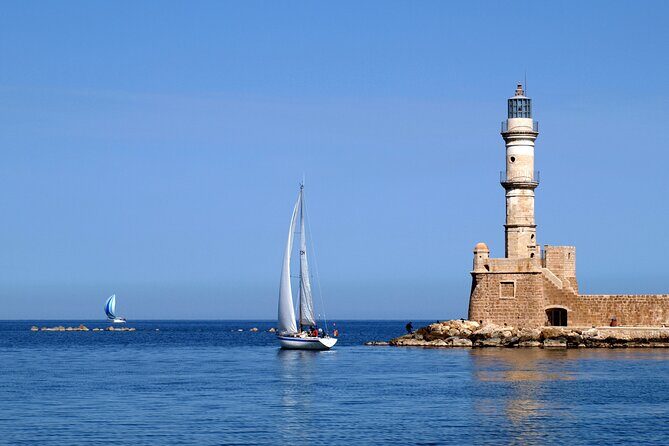
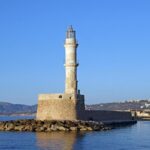
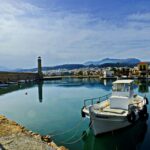
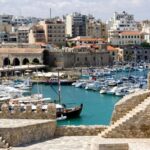
The tour spends real time with the waterfront timeline—starting with the Venetian Dockyards area. You’ll pass by as your guide narrates how the waterfront’s purpose shifted over the years. That narration is the key. Without it, “Venetian” can become a sticker on the map. With it, you understand the practical logic: ports, trade, defense, and how buildings got reused when power changed hands.
Then you move into seeing the Venetian fortifications. Fortifications aren’t only about walls. They teach you about movement, protection, and what mattered to rulers. When you’re walking toward and around these structures, you start to understand how Chania defended itself and why the city’s layout makes sense.
Photo tip: if you like waterfront architecture shots, aim for slightly earlier in the walk so the light isn’t too harsh. Even if you don’t control the sun, your guide’s help with photo opportunities can improve your results more than any app.
You can also read our reviews of more private tours in Crete



The only mosque built from scratch during the Ottoman Occupation
The tour includes a standout stop tied to the Ottoman era: the only mosque built from scratch during the Ottoman Occupation. That line alone makes this worth paying attention to, because it implies intention—this wasn’t just a reuse situation. It was construction and commitment.
When you see this kind of landmark in the middle of a compact walking route, it changes how you understand the rest of what you’ve seen. The churches and Venetian structures suddenly feel like chapters in the same story, not separate stops.
If you’re the type who likes religious and architectural context without getting overloaded, this is a good way to do it. You get a clear anchor point, and the surrounding viewpoints help you connect it to the neighborhood around it.
Byzantine walls: seeing the city as a collage
Toward the end, you admire the Byzantine walls—described as a “collage” of different civilizations. That phrase matters. It’s how Chania often feels in real life: not one clean, single-era look, but layered materials and influences.
This end point also helps your day plan. You finish at the Byzantine Walls of Chania area (Sifaka 41, Chania). So instead of retracing your exact path back to your starting point, you close the walk at a meaningful landmark.
If you want to keep exploring afterward, you’re in a good position to do a follow-up wander on your own. If you’re tired, it’s still a strong closing moment. Either way, you leave with the “what am I looking at?” instinct switched on.
Price and value: what $108 gets you (and what it doesn’t)
At $108.02 per person for a 3–4 hour private walking tour, the value comes from three things:
- You’re not just buying access to sights. You’re buying a local guide who connects those sights into one explanation.
- You get an included breakfast bougatsa plus coffee/tea, which reduces extra spending during your first morning of exploring.
- It’s private, so your group doesn’t have to match someone else’s pace or interests.
What to factor in: hotel pickup and drop-off aren’t included, and the tour doesn’t list other meals as included. In practice, Sophia may guide you toward local food options, and the route includes an important filo-making demonstration moment, but you should still expect that any extra dining beyond the included breakfast could cost extra.
One more value clue: this tour has a strong booking pattern—on average it’s booked about 49 days in advance. That tells me it’s popular during the season and with people who want a first-day orientation. If your dates are fixed, don’t wait until the last week.
Logistics: where to meet, where you end, and how to plan your time
You meet at Bougatsa Chania, Apokoronou 37, Chania 741 50, Greece and end at Byzantine Walls of Chania, Sifaka 41, Chania 731 32, Greece. That start-to-finish difference is handy if you’re continuing your day after the tour, but it does mean you should plan your next step before you start walking.
The good news: it’s described as near public transportation, so you’re not stuck in a hard-to-reach corner. Also, service animals are allowed, and most travelers can participate—which usually means the walking level is manageable for a wide range of visitors.
Because it’s a walking tour, I’d still bring the basics: comfortable shoes, sun protection if it’s bright, and a small water plan. The tour needs good weather, so if conditions aren’t right, you’ll either get offered a different date or a full refund.
Who this Chania tour suits best
This is a great match if you want:
- A private guide to set your pace and adjust to what you care about.
- The fastest way to understand Chania’s layers: Venetian, Ottoman, Orthodox, and Byzantine remnants.
- Food culture without chaos—starting with bougatsa, plus Sophia’s local guidance and the filo-making demonstration moment.
- A tour that feels useful on your first day, so you can navigate the rest of the trip with more confidence.
It might be less ideal if you:
- Hate walking in older streets.
- Want a tour that starts with hotel pickup and ends back at your hotel.
- Prefer only one historical era and would rather avoid a mixed timeline.
Should you book this tour?
I’d book it if you’re serious about getting your bearings and you like tours that connect food and architecture with real context. Sophia’s reviews point to a guide who’s flexible, communicates well, and helps you shape the route around your interests—plus the route includes a filo-making demonstration moment and genuine food stop guidance. That combo is hard to beat for a first day in Chania.
If you’re planning ahead anyway, this is the kind of private tour that rewards early scheduling—because it helps the rest of your trip feel easier. Just go in knowing it’s a guided walk, not a sit-down museum day, and you’ll handle it with the right expectations.
FAQ
How long is the Chania Old Town Artisans and Sightseeing private walking tour?
It lasts about 3 to 4 hours.
How much does the tour cost?
The price is $108.02 per person.
Is this tour private or shared?
It’s a private tour/activity, so only your group participates.
What’s included in the tour?
Included items are breakfast bougatsa of Chania, coffee and/or tea, and a local guide.
What isn’t included?
Hotel pickup and drop-off are not included.
Where do I meet and where does the tour end?
Meet at Bougatsa Chania, Apokoronou 37, Chania 741 50, Greece. The tour ends at Byzantine Walls of Chania, Sifaka 41, Chania 731 32, Greece.
What language is the tour offered in?
The tour is offered in English.
What if the weather is bad?
The experience requires good weather. If it’s canceled due to poor weather, you’ll be offered a different date or a full refund.
Is free cancellation available?
Yes. You can cancel up to 24 hours in advance for a full refund. If you cancel less than 24 hours before the start time, the amount paid won’t be refunded.