REVIEW · DELPHI
Gaia’s Mythical Cave – Hiking Corycian Cave
Book on GetYourGuide →Operated by Trekking Hellas · Bookable on GetYourGuide
The most striking part of Gaia’s Mythical Cave is that this is not just a walk to a cavern. You follow an old route into the first natural sanctuary of Delphi, a place tied to Gaia, the nymphs, and Pan, then enter a cave shaped by water and used by people for thousands of years.
I like two things here: the quiet fir-forest hike gives you a real taste of Mt. Parnassos National Park, and the cave comes with stories that make its rough rock walls feel alive. Guides Hilda and Hélène have also brought warmth and strong cultural discussion to the outing, with Hélène praised as a French-speaking guide.
The main caution is simple: this is a genuine hike, not a short walk from a parking area. You need basic fitness, proper hiking shoes, and comfort with uneven ground, heights, insects, and a dark cave. The cave is not suitable for people with claustrophobia, vertigo, mobility problems, or several other health concerns.
In This Review
- Key points to know before booking
- Walking into the first sanctuary of Delphi
- One hour through Mt. Parnassos fir forest
- Reaching Palaiovouna hill and its wide views
- Entering Corycian Cave, home of nymphs and Pan
- From Neolithic shelter to Classical sanctuary
- What the four-hour schedule feels like
- Is $82 a fair price?
- Who should take this hike
- Small details that make the day easier
- Should you book Gaia’s Mythical Cave?
- FAQ
- How long does Gaia’s Mythical Cave hike last?
- Where does the hike take place?
- How much does the activity cost?
- Is transportation included?
- What languages are available?
- How large is the group?
- What should I bring?
- Is the hike suitable for children?
- Can I cancel the booking?
Key points to know before booking
- The cave is linked to ancient Delphi: Pilgrims once used an old footpath between Delphi and Corycian Cave.
- The walk passes through fir forest: The route takes about an hour to reach the cave and gives you a feel for Mt. Parnassos beyond the archaeological site.
- The views reach far beyond the cave: From Palaiovouna hill, you can see higher Parnassos summits, the altitude plateau, and the sea.
- Myth and archaeology share the same space: Corycian Cave was connected with Gaia, the Corycian Nymphs, and Pan, while finds show human use from the Neolithic era through the Classical period.
- The group is very small: A maximum of seven participants makes it easier to ask questions and discuss the myths, history, and local culture.
- The $82 price includes a guide and snack: Transportation is not included, so you need to arrange your own way to the meeting point.
Walking into the first sanctuary of Delphi
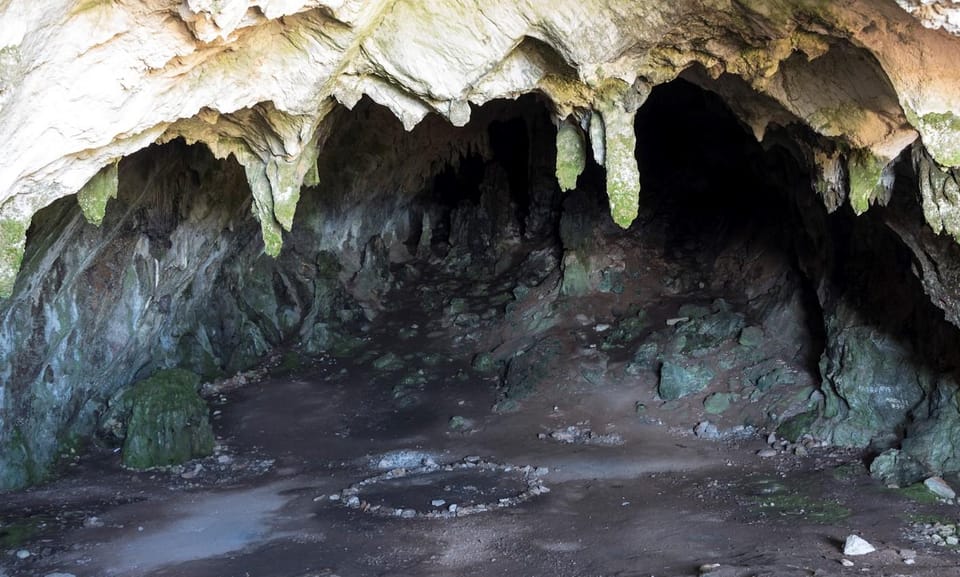
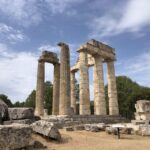
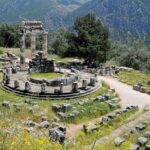
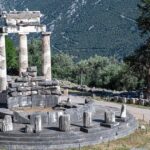
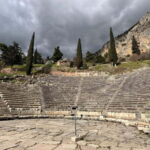
Most people come to Delphi for the famous ruins, the Temple of Apollo, and the museum. Gaia’s Mythical Cave adds another layer to the area: a wild religious site outside the main archaeological zone, where nature itself was part of the sacred setting.
The ancient connection matters. Corycian Cave is linked to Delphi by a footpath used by pilgrims, so the hike is not simply a modern route chosen for scenery. You are moving through an older network of worship and travel, one that connected the formal sanctuary at Delphi with a rougher place devoted to earth, wild nature, nymphs, and gods.
The activity is run by Trekking Hellas and lasts four hours. The group is limited to seven people, which suits this kind of outing. A large group can make a narrow trail feel crowded and can turn a discussion into a speech. With seven or fewer, you have a better chance to ask about the stories, the rock shapes, the route, and the relationship between the cave and Delphi.
English and Greek are offered. Two recent guide names connected with especially strong experiences are Hilda and Hélène. Hilda led a cultural exchange that included discussion of different customs and backgrounds. Hélène was praised for guiding in French and for explaining the history and myths of the Delphi area while walking.
You can also read our reviews of more hiking tours in Delphi
One hour through Mt. Parnassos fir forest
The walk to Corycian Cave takes about an hour through a lush fir forest. That timing gives you a useful sense of the outing: it is long enough to feel like a proper mountain hike, but not an all-day trek.
You should expect a natural trail rather than a paved approach. The supplied information does not give a precise difficulty rating, so I would plan for uneven ground and a steady walk. Basic physical condition is required, and hiking shoes are specifically recommended. Sandals, flip-flops, slippers, open-toed shoes, and high heels are not suitable.
The forest is one of the best reasons to choose this activity instead of spending all your time around Delphi’s ruins. The sanctuary can feel formal and monumental. Here, you get trees, mountain air, changing views, and the sense of entering a place that was valued for its setting as much as for its buildings.
Bring water in a reusable bottle, sunscreen, sunglasses, and a sun hat. A waterproof bag is useful for protecting small items, especially if weather changes or the cave is damp. Food and drinks are not allowed in the vehicle, though the activity includes a snack. Since transportation is not included, the vehicle restrictions may not matter to you, but the packing advice does.
Reaching Palaiovouna hill and its wide views
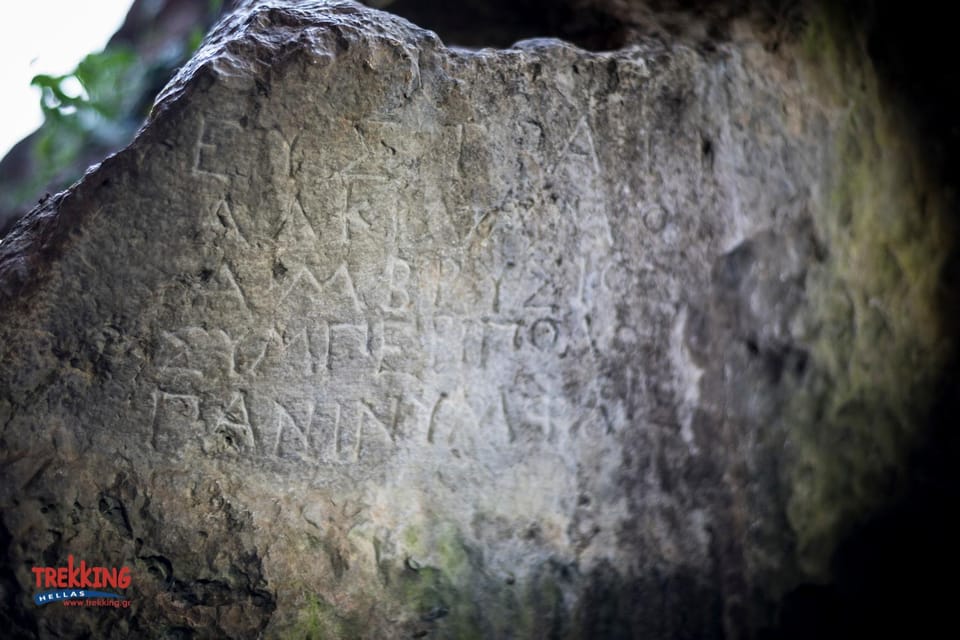
The entrance to the cave is hidden near the summit of Palaiovouna hill. That detail helps explain the character of the outing. You are not walking up to a large, obvious tourist entrance with signs and crowds. The destination reveals itself after the forest route and climb.
From the hill, you can look toward the higher summits of Mount Parnassos, the high plateau, and the sea. The combination is a strong payoff for the uphill effort. You get mountain scenery in several directions, rather than a single viewpoint aimed at one famous monument.
This is also where the outing makes sense for anyone who has already visited Delphi and wants a different view of the region. The archaeological site shows the power of the ancient sanctuary through stone structures and inscriptions. Palaiovouna shows how much of Delphi’s appeal came from the mountains around it.
The elevation and exposed sections mean sun protection matters. Use sunscreen, carry water, and wear a hat. If you have vertigo or trouble with heights, this is one of the activities to approach with caution. Vertigo is specifically listed among the reasons not to take part.
Entering Corycian Cave, home of nymphs and Pan
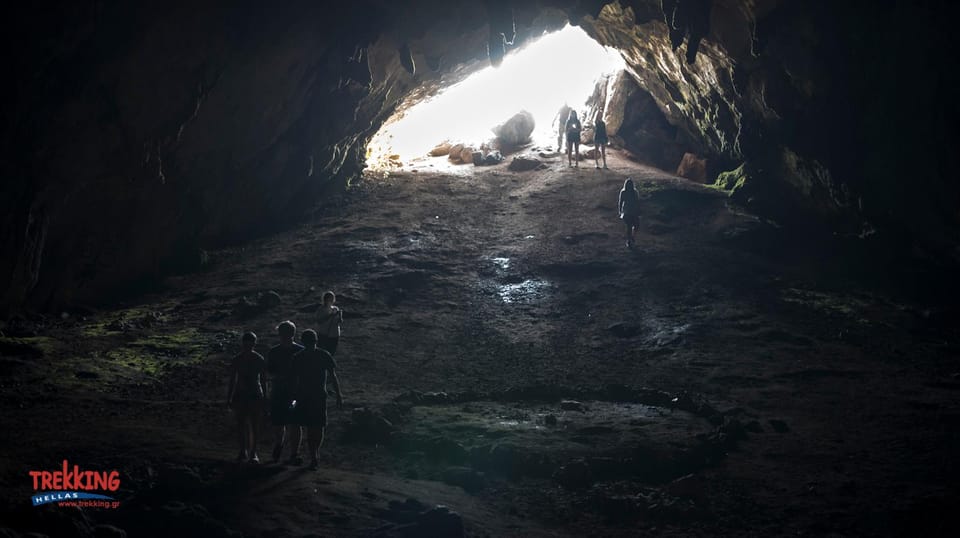
Corycian Cave was dedicated to the Corycian Nymphs and Pan, the god associated with wild life. Its older connection reaches further, to Gaia and her daughters, giving the cave an earth-centered character that fits its underground setting.
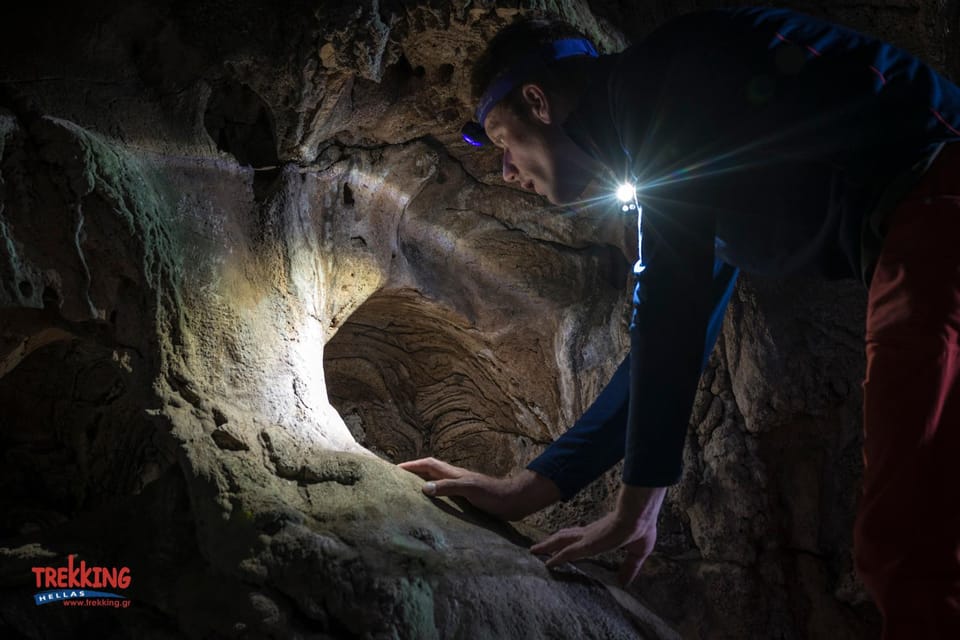
The ancient stories say divine spirits visited the cave. You do not need to accept the myths literally to understand why people treated this place as sacred. Water shaped the cavern over a very long period, and its rock walls form unusual figures that have been identified as the witch, the rabbit, and the thinker.
Those shapes are a good reason to listen closely to the guide. A cave can become a quick look at rocks if no one explains what you are seeing. The guide helps connect the physical forms with the stories and with the way ancient people understood natural places.
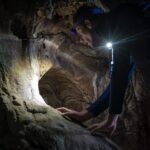
The cave is described as grand and fascinating, but you should not confuse mythic importance with modern comfort. This is a natural cave, not a polished attraction designed for easy access. The information does not promise lighting, paved paths, handrails, or other visitor facilities, so you should be ready for a more basic setting.
Claustrophobia is listed as a reason not to participate. That warning deserves attention. Even people who enjoy outdoor hikes can feel uneasy once they move into a dark, enclosed space. If you are unsure how you react in caves, this may not be the right activity for you.
From Neolithic shelter to Classical sanctuary
The archaeological value of Corycian Cave adds weight to the myths. Scientific research found evidence of human use from the Neolithic era, with discoveries continuing through the Classical period.
That span is hard to picture until you connect it with the setting. People were using this cave long before modern tourism, roads, or organized hiking. Different communities returned to the same underground space over many centuries, giving it both a religious and human story.
The cave is therefore valuable for two different reasons. It is a geological site formed by underground water, and it is an archaeological site shaped by repeated human use. The guide’s explanations help you hold those two ideas together instead of treating the cave as only a scenic stop.
The connection to Delphi also makes the visit more than an isolated mountain excursion. Ancient pilgrims could travel between the main sanctuary and the cave by foot. You are seeing part of a wider sacred area, not just a single monument.
What the four-hour schedule feels like
The total duration is four hours. The stated hike to the cave takes about one hour, leaving time for the approach, explanations, cave visit, views, snack, and the return portion of the outing.
That length works well for a half-day plan. You can pair it with time in Delphi without giving up an entire day, though you should avoid scheduling yourself too tightly. Mountain activities can move at the pace of the group and trail conditions.
The four hours also allow the guide to do more than point out the entrance. The strongest part of this experience is the connection between walking, myth, archaeology, and local culture. Hilda’s outing included extended discussion about different cultures, while Hélène’s guidance combined the regional stories with the route itself.
You will not receive transportation as part of the $82 price. That is the biggest practical point to settle before booking. Work out how you will reach the start point, and allow enough time so you are not arriving rushed or underprepared.
Is $82 a fair price?
At $82 per person, this is not a bargain-basement walk. The price includes an English-speaking Trekking Hellas guide, a snack, taxes, and liability insurance. The group limit of seven is important here because a small group gives the guide room to explain the cave and adjust the conversation to your interests.
You are paying for more than trail access. The value comes from having a guide interpret a place that combines mythology, archaeology, geology, and Delphi’s wider religious setting. Without that context, you could still see a cave, but much of its meaning would be easy to miss.
The price is less attractive if you mainly want a short nature stroll or a quick photo stop. Transportation is extra, and the route demands proper clothing and a reasonable level of fitness. If you are already comfortable arranging transport and you care about the stories behind a place, the cost is easier to justify.
The small-group format is the strongest value point. A maximum of seven people is much more personal than a standard coach excursion, and it suits a cave where questions and careful pacing matter.
Who should take this hike
I would choose this for someone staying around Delphi who wants to move beyond the main ruins and spend time outdoors. It suits people who like mythology, ancient religion, geology, and mountain walking in equal measure.
It is also a good fit if you enjoy asking questions. The experience can support conversation about the cave, the gods and nymphs associated with it, the ancient pilgrimage route, and the way different cultures understand sacred places.
The age range is given as 8 to 75, but the safety notes also say the activity is not suitable for people over 70. If you are in that older range, confirm your suitability before paying. Children under eight cannot participate.
You should not book this hike if you are pregnant, have mobility impairments, back problems, heart problems, high blood pressure, or a cold. It is also not suitable for wheelchair users, people with insect allergies, visually impaired people, or anyone who struggles with vertigo or enclosed spaces.
Small details that make the day easier
Wear sturdy hiking shoes with closed toes. Take a reusable water bottle, sun protection, and a waterproof bag. Avoid large luggage, oversized bags, strollers, scooters, bikes, skateboards, and similar items.
The restrictions are strict because this is a hiking and cave outing, not a transport service for bulky belongings. You also cannot bring pets, though assistance dogs are allowed. Weapons, sharp objects, alcohol, drugs, fireworks, and anything used to make a fire are prohibited.
Smoking is not allowed indoors or in the vehicle. Food and drinks are not allowed in the vehicle, while a snack is included in the activity. These are small points, but knowing them beforehand prevents an awkward start.
Free cancellation is available up to 24 hours before the activity for a full refund. You can also reserve now and pay later, which helps if you are building a flexible Delphi schedule.
Should you book Gaia’s Mythical Cave?
Book it if you want a small-group mountain walk with a strong sense of place, not a simple sightseeing transfer. The combination of fir forest, high views, ancient pilgrimage paths, mythology, and a natural cave gives you a different way to understand Delphi.
I would especially recommend it to active visitors who have already seen the main archaeological site and want a more physical, less formal experience. The cave’s long human use and the stories of Gaia, the nymphs, and Pan give the outing real substance.
Skip it if you need easy access, dislike enclosed spaces, or are looking for an activity with transportation included. For the right person, $82 is a reasonable price for a small group, a guide, insurance, snack, and an unusual place that links nature with Delphi’s oldest traditions.
FAQ
How long does Gaia’s Mythical Cave hike last?
The activity lasts four hours. The hike to Corycian Cave takes about one hour through fir forest, with time also allowed for the cave, views, explanations, snack, and the rest of the route.
Where does the hike take place?
It takes place in Central Greece, in the National Park of Mt. Parnassos. Corycian Cave is near the summit of Palaiovouna hill and is connected with Delphi by an ancient footpath.
How much does the activity cost?
The price is $82 per person. It includes the English-speaking Trekking Hellas guide, a snack, taxes, and liability insurance.
Is transportation included?
No. Transportation is not included, so you must arrange your own transport to the activity.
What languages are available?
The live guide service is available in English and Greek. A French-speaking guide, Hélène, has also led this experience.
How large is the group?
The group is limited to seven participants, making this a small-group activity.
What should I bring?
Bring sunglasses, a sun hat, sunscreen, hiking shoes, a reusable water bottle, and a waterproof bag.
Is the hike suitable for children?
Children under eight cannot participate. The listed age range is 8 to 75, but the safety information also says the activity is not suitable for people over 70, so older participants should check before booking.
Can I cancel the booking?
Yes. You can cancel up to 24 hours in advance for a full refund. Reserve now and pay later is also available.