REVIEW · ATHENS
Home made Greek Yogurt Class
Book on Viator →Operated by Melinas Delight Cuisine · Bookable on Viator
The most useful part of this Athens cooking class is that you do not simply watch someone make yogurt. With Melina guiding you, you begin with two glasses of organic milk and follow the process from the first step, then use your homemade yogurt in both savory and sweet recipes. It turns a familiar Greek food into something you can repeat at home.
I like the class for two clear reasons: personal attention and practical cooking ideas. It is a private activity for your own group, and Melina has a way of involving children as well as adults. I also like that the lesson goes beyond tzatziki, showing how yogurt can work in dressings, sauces, cakes, snacks, dips, and smoothies.
The main consideration is the price, $108.89 per person, which is a serious outlay for a three-and-a-half-hour food lesson. The value improves if you enjoy hands-on cooking, want recipes you will actually use, or are visiting Athens with family and prefer a local kitchen activity to another sightseeing stop.
In This Review
- Key points to know before booking
- Turning two glasses of milk into Greek yogurt
- Making tzatziki with your own yogurt
- Sweet and savory recipes beyond the dip
- Melina’s stories add a Greek food lesson
- A private class that works well for families
- Getting to Agias Varvaras 47 in Chalandri
- Is $108.89 per person a fair price?
- What to bring and how to prepare
- Who will enjoy this Athens food class?
- Booking, weather, and cancellation details
- Should you book this homemade Greek yogurt class?
- FAQ
- Where does the homemade Greek yogurt class take place?
- How long does the class last?
- What language is the class offered in?
- How much does the class cost?
- Is this a private activity?
- What food will I make?
- Can I cancel for a full refund?
Key points to know before booking
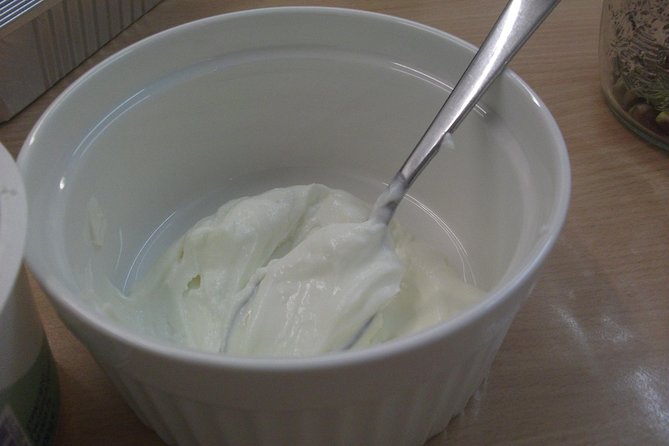
- You make yogurt from scratch: The class begins with organic milk and explains the basic method step by step.
- Melina teaches the class: Her warm, patient approach is especially useful for families with children.
- Tzatziki is part of the lesson: You make the dip with your own yogurt and serve it with fresh vegetable sticks.
- Sweet and savory recipes are included: The yogurt becomes a starting point for everyday cooking, not just a one-time dish.
- The class is private: Only your group participates, which allows more questions and personal guidance.
- The meeting point is in Chalandri: You meet at Agias Varvaras 47, with public transportation nearby.
Turning two glasses of milk into Greek yogurt
This class starts with a simple idea: take two glasses of organic milk and turn them into homemade Greek yogurt. That opening matters because it gives you a clear sense of proportion and process rather than presenting yogurt as some mysterious kitchen trick.
Melina leads you through the stages in order. The supplied details do not give exact temperatures, resting times, or equipment, so you should expect to learn those specifics during the lesson rather than rely on a fixed recipe printed here. That is useful for a beginner, since the questions that come up in a real kitchen are often about texture, timing, and what to do when the result is not quite right.
The lesson is aimed at people who want to make yogurt easily and from scratch. You will not need to treat the class as a specialist cheese-making course. It is more practical than that, focused on a food you can use in normal meals at home.
I like this approach because yogurt is both distinctly Greek and very adaptable. You can eat it on its own, but the real payoff comes from learning how it fits into other dishes. A good class should send you home with more than a pleasant afternoon. This one is designed to give you a repeatable kitchen skill.
A few more Athens tours and experiences worth a look


Making tzatziki with your own yogurt
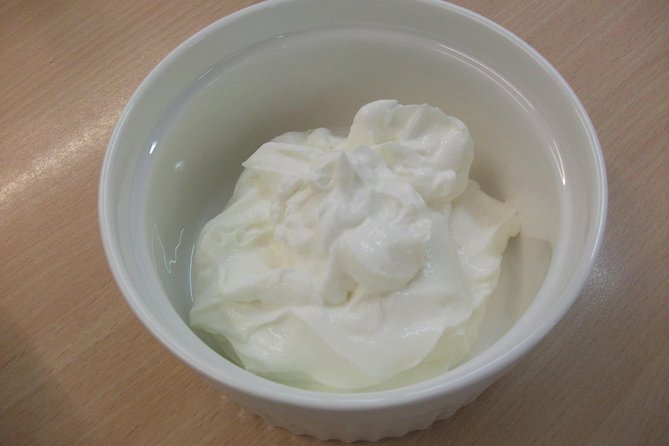
The listed starter is tzatziki with fresh vegetable sticks. You learn to make traditional tzatziki using the yogurt you have made, then serve it as a dip with fresh vegetables.
That pairing gives the first part of the class an immediate result. Tzatziki is familiar to many people who visit Greece, but making it yourself helps you understand the balance behind the dish. It is not just a white sauce served beside grilled food. It can be a dip, a spread, a sauce, or part of a larger meal.
The practical value is high here. Once you know the method, you can use homemade yogurt for a quick snack or put the dip on a family table. Melina also explains ways to use yogurt and tzatziki in everyday cooking, so the lesson does not end when the vegetables are gone.
Do not expect a long restaurant-style tasting menu. The focus is on preparation, participation, and learning. If you want a large meal with many separate courses, this is not the right food activity. If you want to understand one central Greek ingredient and make something with it, the format makes sense.
Sweet and savory recipes beyond the dip
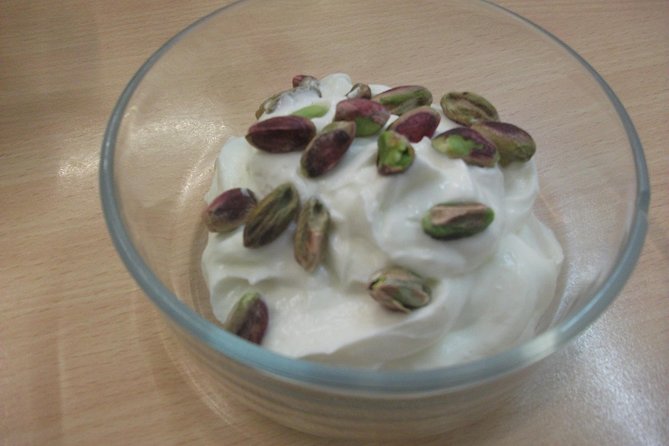
After the tzatziki, the class expands into sweet and savory yogurt-based recipes. The information provided does not name every finished dish, so you should not book expecting a fixed list of cakes or sauces. Instead, think of the yogurt as a base ingredient and the lesson as a guide to possible uses.
Melina’s suggestions include dressings, sauces, cakes, snacks, dips, and smoothies. That range is one of the strongest reasons to consider the class. Yogurt can add tang to a savory dressing, body to a sauce, moisture to a cake, or coolness to a smoothie. You are encouraged to use your own imagination, but the class supplies the practical tips needed to get started.
I especially like the balance between traditional food and flexible home cooking. Greek yogurt is often treated abroad as a breakfast product or a topping. Here, you see how it can move through several parts of the day. One batch can become breakfast, a dip, a sauce, or a dessert ingredient.
This also makes the class suitable for cooks with different levels of confidence. A first-time cook can follow the basic yogurt method and make a familiar dip. Someone who cooks often can focus on adapting the yogurt to new recipes. The private format should make it easier to ask for advice based on your own habits and taste.
Melina’s stories add a Greek food lesson
Melina does more than give instructions. She shares stories and legends connected with yogurt and feta cheese, adding cultural context to the cooking. Those details help explain why these foods matter in Greek kitchens instead of leaving you with a set of disconnected recipes.
I value this kind of storytelling when it stays tied to the food in front of you. You are not sitting through a general lecture on Greece. You are learning about yogurt, feta, tzatziki, and the ways these ingredients appear in cooking and family life.
One participant also bought Melina’s family cookbook after the class. That does not mean you should assume a cookbook is included in the $108.89 price. It does show that the recipes and family connection can continue beyond the afternoon, especially if you want a more lasting reminder of the food lesson.
The class is offered in English, which keeps the instructions clear for English-speaking visitors. Since it is a private activity, you can ask Melina to repeat a step or explain a cooking term without worrying about holding up a large group.
A private class that works well for families
Only your group participates in this activity. That is a major advantage over a large cooking workshop, especially if you are bringing children or have different cooking abilities in your group.
Melina has been praised for taking time to engage children in each step. That detail is important for parents. A child is more likely to stay interested when they can take part in the process instead of watching from the side, and yogurt-making gives the class a simple sequence to follow.
You should still consider your group’s attention span. The activity lasts about three and a half hours, while the stated afternoon opening window runs from 3:30 PM to 6:30 PM. That is a substantial block of time for a food lesson, particularly with younger children. Ask yourself if your family enjoys sitting, mixing, listening, and repeating steps before you book.
For adults, the private setting offers a different benefit. You can shape the conversation around your own cooking questions, dietary habits, and favorite uses for yogurt. The details provided do not promise special dietary substitutions, so you should raise any food concerns when booking rather than assume they can be handled.




Getting to Agias Varvaras 47 in Chalandri
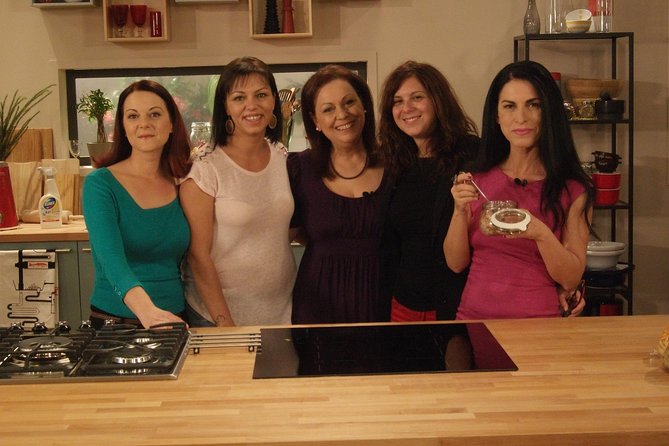
The class begins and ends at Agias Varvaras 47, Chalandri 152 31, Greece. It is near public transportation, which makes the location more practical than a meeting point that requires a long taxi ride or private transfer.
Chalandri is outside the main sightseeing core of central Athens. That can be a plus if you want to see a less tourist-focused part of the city, but it also means you should allow time to reach the address. The supplied details do not specify the nearest station, route, or travel time, so check your route before the afternoon start.
Because the activity returns to the same meeting point, you do not need to work out a separate end location. That is convenient if you are carrying food notes, ingredients, or anything purchased during the class.
The scheduled operating dates run from June 1, 2020 through January 17, 2027, Monday through Saturday, from 3:30 PM to 6:30 PM. Availability still depends on the date you select, so confirm the exact start time when booking. Mobile tickets are accepted, and confirmation is provided at the time of booking.
Is $108.89 per person a fair price?
At $108.89 per person, this is not a budget cooking demonstration. You are paying for a private class, about three and a half hours of instruction, hands-on yogurt-making, several recipe ideas, and direct time with Melina.
The price makes more sense for a small private group than for one person seeking a quick introduction. If several people in your group will cook, ask questions, and use the recipes later, the cost buys a shared activity rather than just one prepared dish.
I would compare it with what you want from an Athens food experience. A market tour or group cooking lesson may offer more stops or more dishes for less money. This class offers a narrower subject with more personal attention. The question is not simply how much food you taste. It is whether learning a skill you can repeat at home is worth the extra cost.
The homemade yogurt is also a useful measure of value. If you already know how to make yogurt and rarely use it, the class may feel too specialized. If you have always wanted to learn but never known where to begin, the instruction and practical ideas may justify the fee.
What to bring and how to prepare
You do not need to arrive with a detailed cooking plan. A little preparation will help you get more from the time with Melina.
Think about the ways you already use yogurt at home. Do you want a better dip, a sauce for vegetables, a smoothie, a cake ingredient, or a quick snack? Bringing those questions in your head gives the class a useful direction.
You should also wear comfortable clothes suitable for a hands-on kitchen activity. The supplied information does not specify an apron, equipment, or what ingredients are provided, so do not assume anything beyond the stated organic milk and class menu. If you have allergies or dietary restrictions, ask about them before the activity.
A phone can be helpful for saving notes if photography is permitted, but permission is not stated. The most important thing to take home is the method, not just a picture of the finished tzatziki.
Who will enjoy this Athens food class?
I would recommend it most strongly to:
- Families looking for an interactive activity with a patient teacher
- Couples or small private groups who prefer cooking to sightseeing
- Visitors interested in Greek food traditions and family recipes
- Home cooks who want to make yogurt from scratch
- People who like practical souvenirs they can use after returning home
It may be less suitable if you want a fast activity, a large tasting menu, or a class centered on many classic Greek dishes. The subject is focused on yogurt and the recipes that grow from it.
The English-language format helps if you want to follow every step without translation. The private group setting is also useful for mixed-age groups, though the length means you should think carefully about whether young children will enjoy a full afternoon lesson.
Booking, weather, and cancellation details
You can cancel for a full refund if you do so at least 24 hours before the start time. Changes or cancellations made less than 24 hours in advance are not accepted for a refund.
The activity requires good weather, and it also requires a minimum number of participants. If poor weather or an unmet minimum causes the class to be canceled, you will be offered another date or experience, or a full refund.
That policy gives you some protection, but keep the deadline in mind. Cut-off times follow local Athens time. Since the class operates Monday through Saturday, you have several possible days, but Sunday is not listed among the regular operating days.
Should you book this homemade Greek yogurt class?
Book it if you want a personal, food-centered activity and like the idea of bringing home a skill rather than another souvenir. Melina’s patient attention, family-friendly teaching, Greek food stories, and broad list of yogurt uses give the class more substance than a short recipe demonstration.
Think twice if $108.89 feels high for a focused lesson or if you are looking for a full Greek cooking menu. The class is about one ingredient, but it uses that ingredient in enough sweet and savory ways to make the subject worthwhile for curious cooks.
For families, private groups, and anyone who has always wanted to make yogurt from scratch, I would put this on the shortlist. For a quick, inexpensive taste of Greek food, choose a simpler option.
FAQ
Where does the homemade Greek yogurt class take place?
The meeting point is Agias Varvaras 47, Chalandri 152 31, Greece. The activity ends back at the same meeting point.
How long does the class last?
The experience lasts approximately three hours and 30 minutes. The listed operating window is Monday through Saturday from 3:30 PM to 6:30 PM.
What language is the class offered in?
The class is offered in English.
How much does the class cost?
The listed price is $108.89 per person.
Is this a private activity?
Yes. Only your group participates in the activity.
What food will I make?
You begin by making homemade Greek yogurt from two glasses of organic milk. You then make savory and sweet yogurt-based recipes, including traditional tzatziki served with fresh vegetable sticks.
Can I cancel for a full refund?
Yes, if you cancel at least 24 hours before the experience start time. Cancellations or changes made less than 24 hours before the start time are not refunded or accepted. If the class is canceled because of poor weather or an unmet minimum, you will be offered another date or a full refund.