REVIEW · ATHENS
Ancient Agora Self-Guided Tour with 3D & Audio (No Ticket)
Book on GetYourGuide →Operated by Culture App · Bookable on GetYourGuide
Democracy meets 3D audio. This self-guided Ancient Agora Athens tour lets you read and listen at your own speed, with offline access and visuals that help you picture what you’re standing in.
The big win for me is the 3D reconstructions paired with expert audio narration. You also get text, images, videos, panoramas, and 360° views that make the site easier to follow. One watch-out: figuring out which audio track matches which monument can be a little confusing in the moment.
If you like your sightseeing flexible, this works well. Just be ready for one possible snag: some people run into download size and audio-selection confusion, so plan your setup before you step into the open-air ruins.
In This Review
- Key Points to Know Before You Start
- What This Ancient Agora Athens Tour Really Feels Like
- Price and Value: $8 Plus the Real Ticket Cost
- Before You Go: Download Like You Mean It
- Setup Time vs. On-Site Time: How to Avoid Getting Frustrated
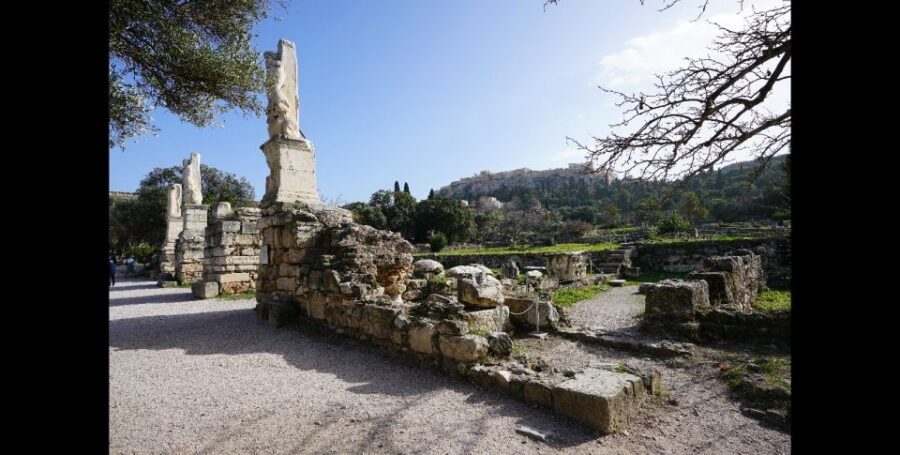
- The Agora as Athens’ Civic and Commercial Hub
- The Birthplace of Democracy: How to Read the Political Spaces
- Socrates and the Philosophers: Turning Teaching into a Place You Can Feel
- Temple of Hephaistos: Why This Stop Matters and How to Use the Visuals
- Stoas, Temples, and Daily Life: Making the Agora Feel Lived-In
- The App Experience: What Works, What Can Feel Clunky
- Best Fit: Who This Tour Will Please Most
- Should You Book This Ancient Agora Self-Guided Tour?
- FAQ
- Is the entrance ticket to the Ancient Agora included?
- How much is the Ancient Agora ticket?
- Does the app work offline during the visit?
- What’s the total cost?
- How long is the tour valid?
- Which languages are available?
- How much storage does my phone need?
- What phone requirements are needed?
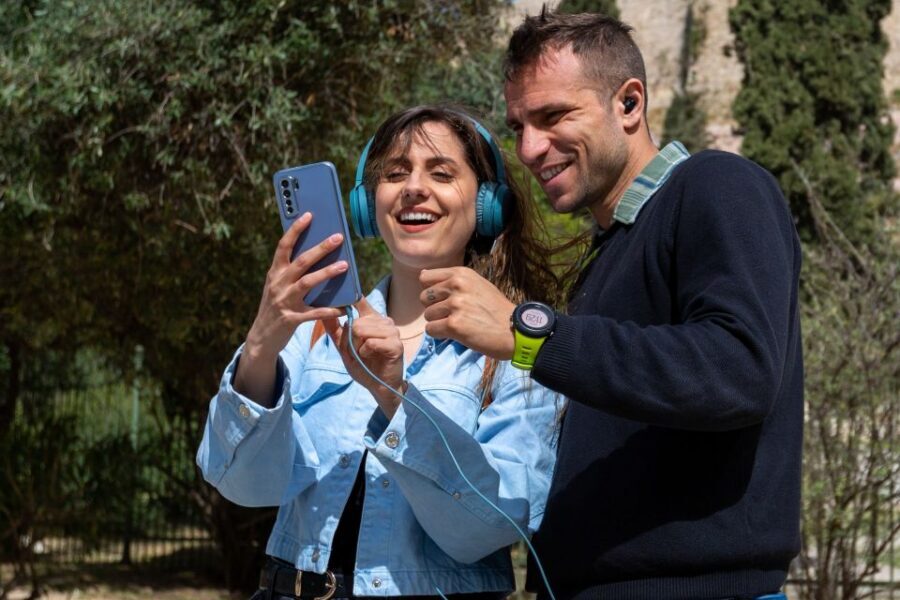
- Do I need earphones?
- Is there a live guide or pick-up service?
- Can I cancel after booking?
Key Points to Know Before You Start
- Offline-first smartphone tour so you can keep walking without data or roaming
- 3D reconstructions and 360° views to help you understand the Agora’s layout
- Audio in 8 languages (English, Greek, German, Spanish, Italian, French, Dutch, Chinese)
- Entrance ticket not included, so budget for the site entry separately
- Designed for self-paced exploring, not fixed group timing
- App needs phone prep: about 200MB storage and fully charged battery
What This Ancient Agora Athens Tour Really Feels Like

This is not a guide walking beside you. It’s a smartphone tour that turns the 6th-century BC Athens Agora into a guided experience through audio, text, and visuals you trigger while you’re onsite. You’re essentially in charge: you stop when you want, replay what you missed, and skip parts that don’t grab you.
I like tours like this because the Agora is big and atmospheric, but also easy to feel lost in. A phone guide helps you connect the stones to the story: who acted here, what people argued about, and what daily life looked like beyond the big speeches. The included media is meant to do that work for you—especially the 3D models and 360° views, which can make a ruin feel way more readable.
The one drawback to keep in mind is that self-guided apps depend on you (and your phone) to stay organized. Some folks find it a bit tricky to match the right audio to the right spot, and it can cause frustration if you’re trying to do everything fast.
A few more Athens tours and experiences worth a look



Price and Value: $8 Plus the Real Ticket Cost

The tour itself is listed at $8 per person and that’s a fair price for an offline audio package with 3D and lots of media. But you still need to buy the Ancient Agora entrance ticket separately.
You’ll want to budget for that ticket because it’s a separate line item: 20€ full / 10€ reduced. That means your total cost is roughly the smartphone tour price plus the site entry.
Is it still good value? Yes, especially if you’ll actually use the audio and visuals instead of glancing at your screen and moving on. The app is most worth it when you treat it like a real guide: wear earphones, stop often, and let the reconstructions do their job.
Before You Go: Download Like You Mean It

This app is built to work fully offline after download, which is exactly what you want in Athens. But the download step can make or break the experience.
Here’s what you should do before arriving:
- Download the tour content while you’re on Wi‑Fi
- Make sure your phone has about 200MB of storage available
- Charge your phone fully, and bring earphones
I’d also suggest you test the app with sound before you head out. You don’t want to discover late that your headphones aren’t working or that your volume is too low when you’re standing by key monuments.
On the device side, it needs iOS 11.0+ or Android 5.1+. If your phone is older, check compatibility ahead of time.
Setup Time vs. On-Site Time: How to Avoid Getting Frustrated

This is the practical part: self-guided tours can either feel smooth or messy depending on how you start.
A simple approach:
- Stand still at the start and play audio once to confirm everything works.
- Use the app’s cues to orient yourself before moving deeper into the site.
- If you’re prompted to use GPS or tracking to pick the right audio, give it a moment to connect before assuming the track is wrong.
Some people mention that the app uses tracking GPS to select the correct audio, which makes sense for this kind of location-based story. But GPS can be inconsistent near stone walls and open ruins, so if it feels off, don’t panic. Pause, step a few meters, and try again.
Also, keep your expectations realistic: this is a paid audio tour package, not a full academic guidebook. If you love minute details, you might feel it sometimes stays high-level.
The Agora as Athens’ Civic and Commercial Hub
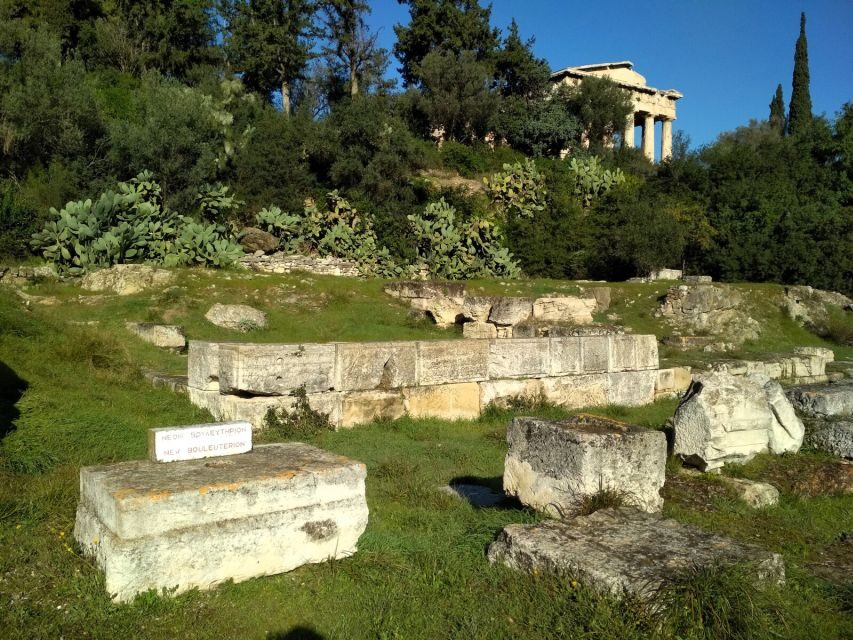
The Ancient Agora wasn’t just a pretty courtyard between ruins. It was the political, administrative, and commercial center of ancient Athens. In this tour, the goal is to help you understand that mix.
When you’re walking through the site, pay attention to how the spaces connect:
- Open areas where public life unfolded
- The surrounding temples and stoas that shaped how people moved and gathered
- The sense that ideas, business, and civic decisions lived close together
The app’s audio and text help you “translate” what you see. Even if you’re only casually reading, the narration gives you enough context to stop seeing a pile of stones and start recognizing patterns: where people gathered, where conversation likely happened, and why certain buildings mattered.
And because it’s self-paced, you can spend longer in the spots that match your interests—politics, philosophy, or everyday life.
You can also read our reviews of more guided tours in Athens






The Birthplace of Democracy: How to Read the Political Spaces
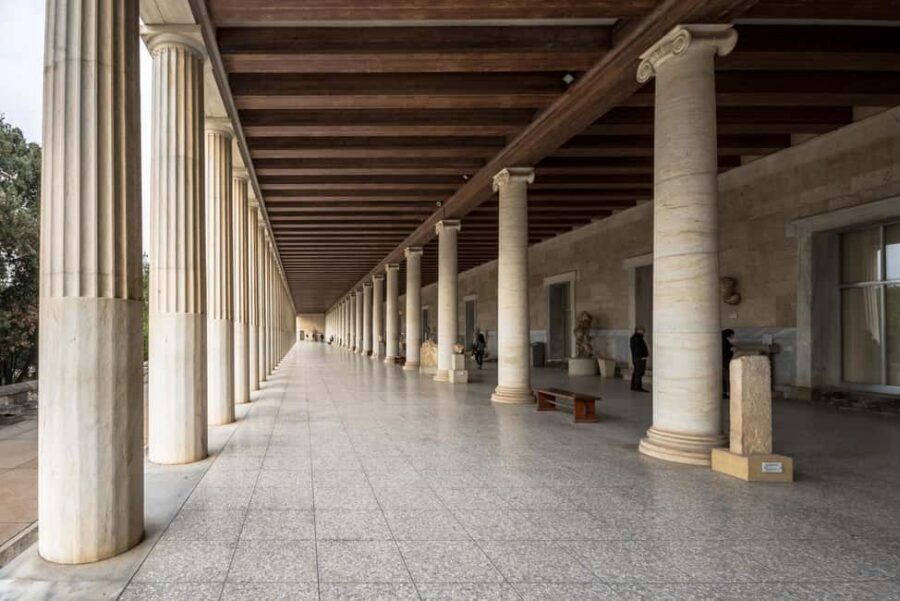
One of the tour’s main draws is its focus on the idea of democracy—specifically, the claim that you’re visiting the place where democracy was first established.
When you’re in the Agora with an app like this, the trick is to listen for the story behind the layout. Democracy here isn’t just an abstract word. It’s tied to where citizens would gather, how public decisions were made, and why speech and debate mattered.
Use the 3D reconstructions when you hit a section that feels confusing. You’ll likely understand the scale and structure faster that way. Then go back to the real stones and compare: What’s still recognizable? What would’ve looked different? That back-and-forth is where the audio tour becomes more than entertainment.
Socrates and the Philosophers: Turning Teaching into a Place You Can Feel

Another major highlight is the connection to Socrates and other philosophers who taught in the area. That’s a powerful theme for the Agora because it makes the space feel human: not just civic machinery, but people thinking out loud.
When the app switches to this philosophical angle, don’t treat it as a lecture. Think of it as a way to guide your attention:
- Listen for what ideas would have been argued
- Watch how the narration frames the role of citizens and thinkers
- Use the visuals to understand what kind of setting learning would have taken place in
A phone tour helps here because you can slow down. If a sentence matters to you, you can replay it. If you’re bored by facts, you can move on. That control is a real advantage in a site this big.
If you’re the type who likes ideas more than architecture, focus on the audio segments tied to philosophy first, then circle back to the structural explanations later.
Temple of Hephaistos: Why This Stop Matters and How to Use the Visuals
The Temple of Hephaistos is singled out as a standout, often described as Greece’s finest preserved monument in the tour’s own messaging. Even if you’ve never studied ancient architecture, this is the kind of building you can recognize quickly as “important” just by how intact it feels.
Here’s how to get more out of it with this tour:
- Use the audio to connect the temple to what the site meant in daily and civic life, not only religion
- When the app offers 3D and 360° views, use them to understand shape, proportions, and orientation
- After listening, step back and look at the building as a whole again
It’s easy to spend too little time in temples when you’re rushing. With a self-guided app, you can choose to give this stop the time it deserves. I’d treat it as your anchor point: once you get your bearings here, the rest of the Agora tends to feel more coherent.
Stoas, Temples, and Daily Life: Making the Agora Feel Lived-In

Not every visitor wants politics and philosophy all day. The tour also aims at the everyday side of things—how people would have used the stoas and temples, and what daily life in Athens may have looked like.
This is where the smaller cues matter. Stoas are all about human scale and movement: shade, gathering spots, and constant foot traffic. A narration track that explains why these spaces were important can change how you see them. Instead of walking through “ruins,” you notice flow.
You’ll also get media support like panoramas and short videos. These help you picture how busy the area would have been, especially when today’s ruins feel open and quiet.
If you’re trying to avoid crowds, self-guided is a win. You’re not waiting for anyone else to finish. You can move to the next section when it feels right, which keeps your momentum and your attention.
The App Experience: What Works, What Can Feel Clunky
This is a digital product, so you’ll be dealing with phone behavior and user interface. The good news: it’s designed to be used fully offline, and it includes audio in multiple languages. That makes it flexible for you if you’re traveling with someone who prefers a different language.
The friction points to watch:
- Some people find it confusing to determine which audio track goes with which monument
- Some areas may have signage in Greek that isn’t matched by an explanation in the app
- Downloads can feel large if you didn’t do the Wi‑Fi step early
If you hit any of that, don’t force it. Pause, check that your location is correct (if GPS tracking is being used), and try reselecting. If a certain stop doesn’t click after one attempt, shift focus to the themes that are working—like the Temple of Hephaistos or the democracy and philosophy audio segments.
Best Fit: Who This Tour Will Please Most
This tour is strongest for you if:
- You want to explore the Ancient Agora at your own pace
- You like history told through a mix of audio plus visuals, not only text
- You want something offline so you’re not stuck hunting for signal
- You’ll use earphones and actually listen while you walk
It may feel less satisfying if:
- You expect a fully detailed, monument-by-monument guide with zero gaps
- You dislike technology that requires setup and media downloads
- You need everything perfectly organized without any on-site adjustment
Also, if you’re someone who learns best from live context and expert storytelling, remember this is not a guide service. It’s a smart way to get structure, but you’re still the one steering.
Should You Book This Ancient Agora Self-Guided Tour?
Book it if you want a flexible, budget-friendly way to understand what you’re looking at in the Ancient Agora of Athens, especially if you’re interested in democracy, philosophers like Socrates, and the Temple of Hephaistos. The offline design is a real practical advantage, and the 3D and 360° materials can save you from feeling lost.
Think twice if you’re the type who gets annoyed by app setup, large downloads, or locating the right audio track on the fly. In that case, you might prefer a traditional guide or a more straightforward audio format.
FAQ
Is the entrance ticket to the Ancient Agora included?
No. The smartphone tour does not include the entrance ticket, which you must buy separately at the site or online.
How much is the Ancient Agora ticket?
The information provided lists prices of 20€ full and 10€ reduced.
Does the app work offline during the visit?
Yes. After you download the content, it works fully offline on site with no internet needed.
What’s the total cost?
The tour price is $8 per person. You still need to purchase the Ancient Agora entrance ticket separately.
How long is the tour valid?
It’s valid for 5 days starting from the first activation.
Which languages are available?
Audio and text are available in English, Greek, German, Spanish, Italian, French, Dutch, and Chinese.
How much storage does my phone need?
You’ll need about 200MB of storage space on your phone.
What phone requirements are needed?
It requires iOS 11.0 or later, or Android 5.1 or later.
Do I need earphones?
You should bring earphones so you can listen to the audio narration.
Is there a live guide or pick-up service?
No. This is a self-guided smartphone tour only, and pick-up and drop-off service is not included.
Can I cancel after booking?
Free cancellation is available up to 24 hours in advance for a full refund. After downloading the content, the paid price is not refundable.