REVIEW · ATHENS
Mercedes Private Tour from Athens to Macedonia Meet Alexander the Great
Book on Viator →Operated by Greece Experience Tours · Bookable on Viator
Alexander the Great’s Macedonia comes alive on this fast-moving private road trip from Athens. You’ll stand at Dion, where Macedonian kings honored the gods, then see the royal tomb of Philip II at Vergina and the first capital at Aigai. It is a strong choice if ancient Macedonia is high on your list.
I like the private Mercedes transport, especially for a long northbound drive, and I like the mix of archaeology, Thessaloniki food, and wine tasting. Driver Manos receives repeated praise for being polite, flexible, informative, and careful. The catch is the pace: two days cover a lot of ground, and an official guide is not included by default.
In This Review
- Key points to know before booking
- Why this two-day Macedonia route works
- Day 1: Dion below Mount Olympus
- Vergina: entering the royal tomb museum
- Aigai and the first Macedonian capital
- Thessaloniki: your evening in northern Greece
- Day 2: Thessaloniki’s archaeological collection
- Amphipolis and the mystery of the Caryatids
- Biblia Chora in Kokkinochori
- Riding in the Mercedes E-Class
- What is included, and what can cost extra
- Who should book this private road trip?
- Should you book the Macedonia tour from Athens?
- FAQ
- Where does the tour begin?
- How long does the experience last?
- Is the tour private?
- Is transportation included?
- Is an official guide included?
- Are meals included?
- Can I cancel for a full refund?
Key points to know before booking
- Dion sits below Mount Olympus, linking Macedonian royal power with worship of Zeus and the Muses.
- Vergina’s underground museum contains the royal tomb of Philip II, father of Alexander the Great.
- Aigai adds the first capital of Macedonia, with palace remains, mosaics, and a digital museum.
- Thessaloniki gives the trip a welcome city break, with a free evening for tavernas and nightlife.
- Amphipolis and its famous Caryatids add one of northern Greece’s most debated archaeological sites.
- Biblia Chora wine tasting rounds out the ancient sites with a modern taste of Greek Macedonia.
Why this two-day Macedonia route works
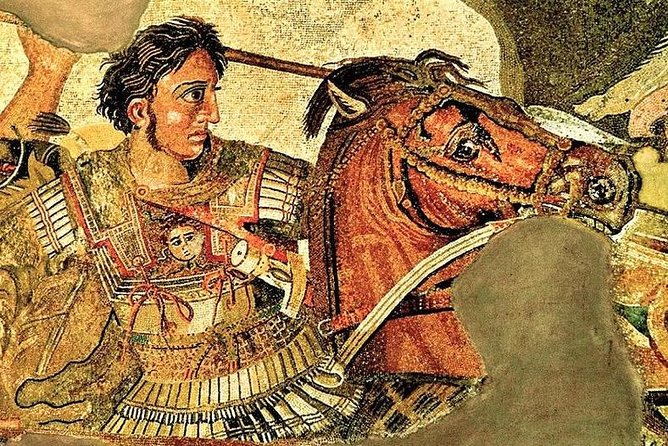
This is not a quick sightseeing transfer. It is a themed journey through the places tied to the rise of the Macedonian kingdom and Alexander’s family. You begin in Athens, travel north in a comfortable car, sleep in Thessaloniki, and return through Amphipolis and Kokkinochori.
The price is listed at $1,321.68 per person, so this is a serious purchase. The value depends on your group size and how much you value private transport. The rate includes fuel, tolls, Wi-Fi, a Mercedes E-Class, and one night in a four-star or five-star hotel. It does not include meals, gratuities, or an official guide unless you add one after booking.
For a couple or family that wants a private route, the cost can make sense because you are not simply paying for seats in a van. You get door-to-door pickup, a flexible private group, and a driver who can adjust the experience to your interests. For a solo visitor, the per-person price is harder to justify.
The route is also useful if you prefer to avoid a domestic flight to Thessaloniki. The road trip takes longer, but it connects several major ancient sites that would be awkward to arrange independently in only two days.
You can also read our reviews of more private tours in Athens

Day 1: Dion below Mount Olympus
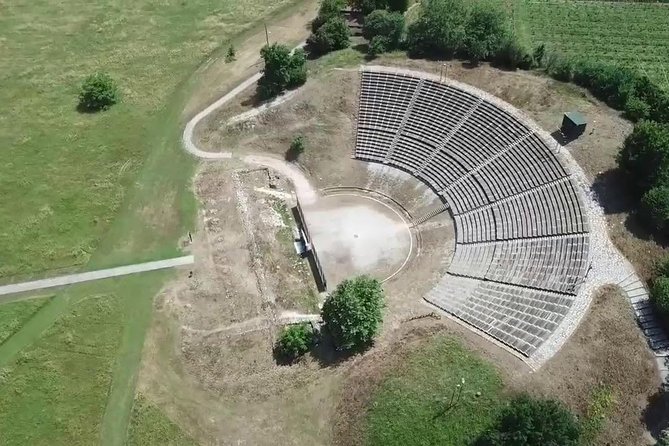
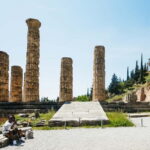
Your first archaeological stop is Dion, on the slopes of Mount Olympus. The setting matters. This was not just a settlement, but a major religious center for the Macedonians, where festivals honored Olympian Zeus and the Pierian Muses.
The games, known as Olympia ta en Dion, included theatrical and gymnastic competitions and continued until roughly 100 B.C. Dion also had a royal connection. Philip II celebrated the capture of Olynthos here, and Alexander sought Zeus’s favor before heading east on his great campaign.
You have about one hour in the archaeological park, with admission listed as included in the tour details. That is enough for a focused visit, but not a slow archaeological study. I would arrive with a little background on Macedonian religion and royal ceremony, since the site becomes far more meaningful when you understand why it mattered to Philip and Alexander.
The stop also gives the day a strong opening image: ancient Macedonia at the foot of the mountain linked to the gods. Do not expect a full-day exploration. This is a compact visit designed to fit into a much larger route.
Vergina: entering the royal tomb museum
The Museum of the Royal Tombs of Aigai at Vergina is the emotional center of the trip. Vergina was the ancient capital associated with Philip II, Alexander’s father, and the museum protects the royal burial area in an underground setting.
You spend about one hour here. The museum connects several sections, including the palace, the royal burial cluster of the Temenid dynasty, Philip II’s tomb, and a gateway area displaying sculptures found in city sanctuaries.
The museum’s design places the tombs at the heart of the visit. You are not merely looking at scattered objects in glass cases. You are moving through a carefully arranged royal burial complex, with the restored upper portion of Philip’s palace façade helping you picture the scale and ceremony of the ancient court.
This is where an official guide could add real value. The driver can provide useful explanations, and the supplied feedback repeatedly praises Manos for his history commentary, but a licensed guide would give you fuller archaeological and historical context. If Philip II, royal succession, and the political world before Alexander are central reasons for booking, ask about adding one.
The tour information is not fully consistent about admission costs. It says attraction tickets are included, but also gives a note that entrance fees may be €10 per attraction per person and are not included. Confirm this point before paying, since it affects the true cost.
Aigai and the first Macedonian capital
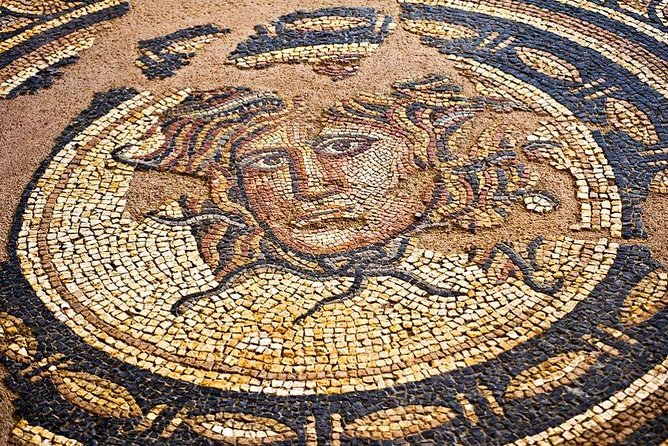
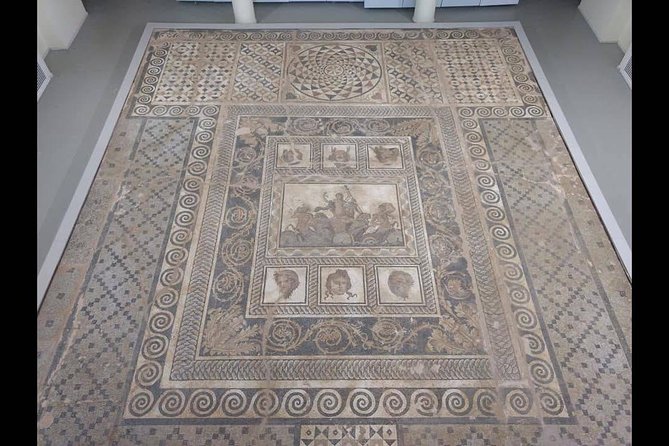
The ancient city of Aigai lies near Vergina and adds a broader view of Macedonia’s beginnings. This was the first capital of the Macedonian kingdom, and the remains include a monumental palace decorated with mosaics and painted stuccoes.
You have another one-hour visit, which keeps the schedule moving but limits the amount of time for close study. The palace is the main draw. It helps you move beyond the familiar story of Alexander himself and see the royal center that shaped the dynasty before his conquests.
A digital museum called Alexander the Great: From Aigai to Oikoumene is also part of the visitor facilities described for the site. Its purpose is to connect Aigai with other archaeological sites around the world and show how the ancient kingdom fits into a wider story.
Aigai and Vergina are close in subject, but they offer different experiences. Vergina focuses on royal burial and Philip’s tomb. Aigai gives you the capital, palace, public setting, and wider political world. Together, they form the strongest historical pair in the tour.
Thessaloniki: your evening in northern Greece
After the ancient sites, you reach Thessaloniki. The schedule gives this stop roughly 12 hours, with the evening arranged around your preferences. That flexibility is useful after a full day in archaeological parks and museums.
You can use the time for local Greek tavernas, nightlife, or a more relaxed city visit. The tour specifically points to Thessaloniki’s neighborhoods, food, and late-night character. This is not a guided city walk with a fixed list of monuments. It is your chance to enjoy the city at your own pace.
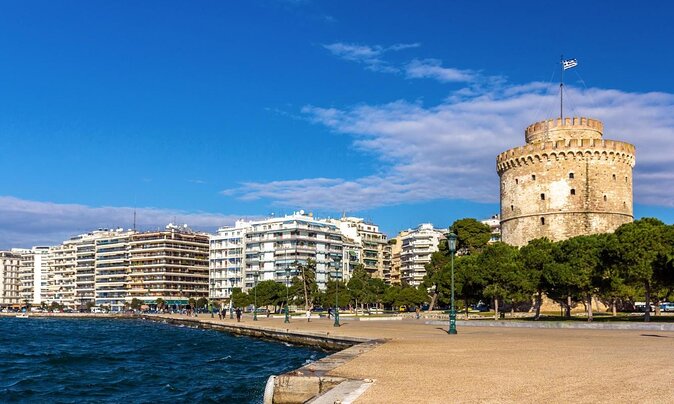
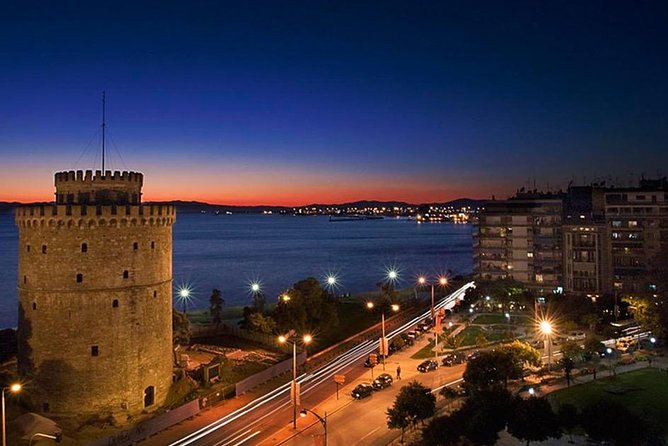
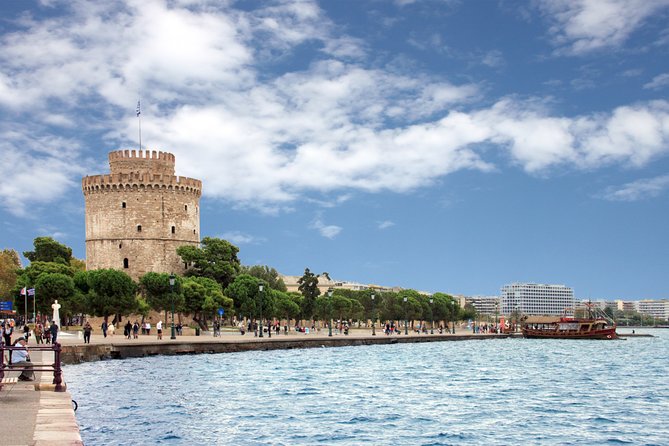
The White Tower receives a short 15-minute stop. It is Thessaloniki’s best-known landmark and offers city views along with a reminder of the city’s long and complicated past. Fifteen minutes is enough for an exterior visit and quick photos, but not enough for a careful visit inside if opening hours and tickets are required.
Your overnight hotel is described as four-star or five-star accommodation. The exact property is not specified, so ask before booking if the hotel location matters to you. A central base would make the evening easier, but the supplied details do not guarantee a particular neighborhood.
- All Day Cruise -3 Islands to Agistri,Moni, Aegina with lunch and drinks included
★ 5.0 · 4,958 reviews


Day 2: Thessaloniki’s archaeological collection
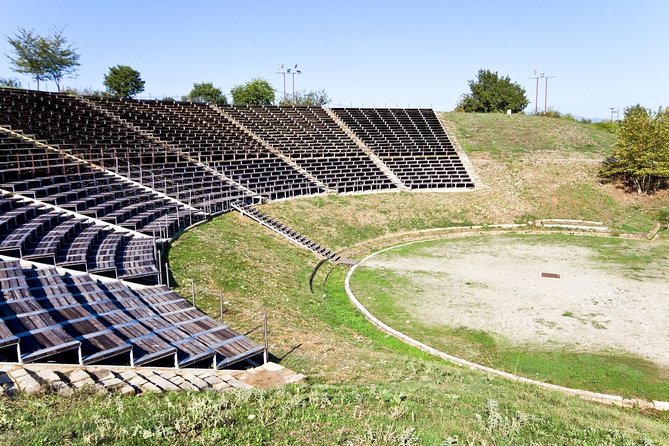
The Archaeological Museum of Thessaloniki is your first stop on the second day, with about 90 minutes allowed. It is one of Greece’s major museums and focuses on ancient objects from northern Greece.
This visit is important because it gives context to the outdoor sites. At Dion, Vergina, and Aigai, you see places. In the museum, you can examine the objects, art, and craftsmanship that explain how those places functioned.
Ninety minutes calls for a plan. If ancient Macedonia is your priority, ask your driver where to focus, or arrange the official guide in advance. The museum also hosts cultural activities, but the tour details do not specify which programs will be available on your date.
The museum stop is a good counterweight to the previous day’s outdoor archaeology. It also gives you a chance to slow down before the final road stretch.
Amphipolis and the mystery of the Caryatids

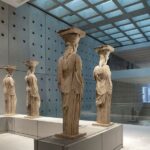
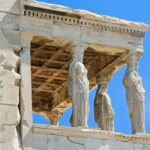
The ancient site of Amphipolis is another major archaeological stop, scheduled for about one hour. It gained international attention after the discovery of a large tomb with two striking Caryatids.
These female figures, each more than seven feet tall, face one another near a marble doorway. Their role is architectural, functioning like pillars, but their scale and placement make the entrance memorable.
The identity of the person buried there remains part of the debate described for the site. Suggestions have included Olympias, the mother of Alexander and wife of Philip II, as well as Roxana, Alexander’s wife. The important point for you is that Amphipolis offers an archaeological question, not a neat answer.
That uncertainty can make the stop more interesting, though it also means you should not arrive expecting a confirmed Alexander tomb. The one-hour visit gives you a clear look at the site and its famous sculptures, but again, a guide would help explain what is established fact and what remains theory.
Biblia Chora in Kokkinochori
The final stop is a wine tasting at Biblia Chora in Kokkinochori. After two days centered on kings, tombs, palaces, and museums, this is a welcome change of rhythm.
The winery is associated with a Greek wine-making tradition said to reach back 4,500 years, and the local humidity is credited with helping make the area suitable for wine production. The tasting lasts about one hour and is described as exclusive, with wine charges included in the tour highlights.
The tasting adds a modern, local dimension to the route. You are not only hearing about Macedonia as an ancient kingdom. You are also sampling a product made in the same broad northern region today.
Wine is not included in the free admission wording for Kokkinochori, but the tour highlights say the wine tasting charges are included. Ask for a clear breakdown of what is covered, especially if additional wines or food pairings are offered.
Riding in the Mercedes E-Class
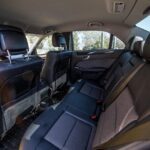
The Mercedes E-Class is one of the practical strengths of this experience. The car has leather seats and Wi-Fi, and fuel and tolls are included. On a route that links Athens with northern Greece, comfort is not a minor detail.
A private vehicle also lets you travel with only your own group. You do not have to match the pace of strangers or wait for a large coach. Pickup is offered, and if you have trouble entering your exact address, you can send the provider your location.
The experience is offered in English. The driver is not automatically an official tour guide, but the available feedback gives Manos particular credit for history explanations, courtesy, humor, flexibility, and professional driving. That makes him more than a silent chauffeur, but you should still arrange a licensed guide if formal archaeological interpretation is important to you.
The car was described as immaculate and luxury-oriented in the available comments. Still, remember that private comfort does not remove the basic reality of the route: you will spend substantial time on the road and visit several sites in tight time blocks.
What is included, and what can cost extra
The listed inclusions are:
- Mercedes E-Class transport
- Fuel and tolls
- Wi-Fi on board
- One night in a four-star or five-star hotel
- Attraction tickets, according to the main tour description
- Wine tasting charges, according to the tour highlights
The listed exclusions are meals, other beverages, tips, gratuities, and an official guide. The separate entrance-fee note says €10 per attraction per person, despite the statement that attraction tickets are included. This is the one detail I would clarify in writing before booking.
Lunch is not included, so plan to pay separately for meals. One piece of direct advice is to ask Manos or the provider about a traditional taverna stop, since that was a memorable part of one couple’s experience. The tour can apparently be adjusted around food preferences, but the exact restaurant is not guaranteed.
Free cancellation is available if you cancel at least 24 hours before the start time. Changes made within 24 hours are not accepted, and poor weather can lead to a new date or full refund.
Who should book this private road trip?
I would choose this tour if you have a strong interest in Alexander the Great, Philip II, ancient Macedonia, or Greek archaeology and want to cover northern Greece without arranging several separate transfers.
It also suits couples celebrating a special occasion. One anniversary itinerary began in Corinth and continued north, showing that the route can be adapted from places other than Athens when arranged with the provider. The private format gives you more control than a fixed group excursion.
This is less suitable if you want a slow holiday with long museum visits. The Dion, Vergina, Aigai, and Amphipolis stops each receive about an hour, and the museum in Thessaloniki gets 90 minutes. You will see the essential sites, but you will not study every room or inscription.
It is also not ideal for anyone focused only on Alexander’s birthplace or battlefield sites. The route is broader, mixing sacred spaces, royal tombs, a capital city, a major museum, urban Thessaloniki, and wine country.
Should you book the Macedonia tour from Athens?
Book it if you value private door-to-door travel, want a strong concentration of Macedonian archaeology, and appreciate having a flexible driver such as Manos rather than joining a large coach group.
The tour’s best features are its route and variety. Dion gives you Mount Olympus and royal ceremony. Vergina gives you Philip’s tomb. Aigai explains the first Macedonian capital. Thessaloniki brings food and nightlife. Amphipolis adds archaeological mystery, and Biblia Chora finishes with wine.
Before booking, confirm three things: the exact hotel, the entrance-fee policy, and whether you want to add an official guide. If you are comfortable with the pace and the high private-tour price, this is an efficient and memorable way to connect Athens with northern Greece.
FAQ
Where does the tour begin?
Pickup is offered in Athens. If you have trouble entering your exact address, you can send the provider a message with your location.
How long does the experience last?
The tour lasts approximately two days and includes one night in a four-star or five-star hotel.
Is the tour private?
Yes. Only your group participates in the activity.
Is transportation included?
Yes. Transportation is provided in a Mercedes E-Class, with fuel, tolls, leather seats, and Wi-Fi on board included.
Is an official guide included?
No. An official tour guide is not included by default, but you can add one after booking.
Are meals included?
No. Lunch, meals, and other beverages are not included.
Can I cancel for a full refund?
Yes, if you cancel at least 24 hours before the experience start time. Cancellations made less than 24 hours in advance are not refunded.