REVIEW · ATHENS
Piraeus Port: Acropolis Museum and Parthenon Mythology Tour
Book on GetYourGuide →Operated by Key Tours · Bookable on GetYourGuide
Cruise day in Athens, minus the stress. This Piraeus Port Acropolis and Parthenon tour is built for cruise schedules: luxury, air-conditioned pickup from the terminal area and a guided walk that hits the big hitters, then rewards you with top-of-hill views over the whole city. I especially like the Acropolis focus—you get guided stops at places most people only photograph—and the fact that the guide uses audio devices so you can follow the story without constantly craning your neck.
One thing to think about: the experience can feel time-tight, especially if you choose the option without museum tickets. The day works best if you stay organized about meeting points and departure time, and if you’re ready to purchase the required Acropolis entry for your group’s window.
In This Review
- Key things that make this Piraeus excursion worth your time
- Price and what you’re actually buying for $100
- Where the day starts: Piraeus Port pickup that affects everything
- The coach-to-Athens warm-up: Arch of Hadrian photo stop
- Theatre of Dionysus: where drama meets the Acropolis myth
- Odeon of Herodes Atticus: an ancient amphitheater still in use
- Propylaea and the approach to the sacred hill
- Temple of Athena Nike, Erechtheion, and the Caryatids: details you’ll want time for
- The Parthenon: the top-of-hill payoff (and why the guide’s story matters)
- Acropolis of Athens photo time: use it smart
- Optional Acropolis Museum: worth it if you like original sculpture
- Free time in Athens and Plaka: where you use the morning wisely
- The itinerary tempo: how the 5.5 hours can feel different day to day
- Transportation back to Piraeus: getting on the ship matters
- What the best guides do well: Aegly and Margarita as examples
- Practical tips so the day goes smoothly (especially on a cruise)
- Should you book the Piraeus Port Acropolis and Parthenon Mythology Tour?
Key things that make this Piraeus excursion worth your time

- Cruise-terminal pickup and return transfer that keeps you from playing Athens logistics roulette
- A real guided route that includes Theatre of Dionysus, Odeon of Herodes Atticus, Propylaea, Temple of Athena Nike, and more
- Audio devices to help you hear the mythology and architecture talk on uneven, windy hill terrain
- Optional Acropolis Museum time with a smart “choose what you want” structure
- Plenty of free time in Athens after the guided part, plus an optional self-guided audio walk in Plaka
Price and what you’re actually buying for $100

At about $100 per person for a 5.5-hour cruise-friendly outing, you’re paying for three things: transport that connects you to the Acropolis on a tight clock, a licensed English-speaking guide, and the guided time itself (not just “show up and wander”).
If you opt for museum tickets, the value is stronger because you’re getting a second major Athens stop without having to line up or re-plan. If you skip museum tickets, you’re buying mostly the Acropolis-guiding portion plus timed access handling. Either way, the “small group” format matters. You move faster than a large bus crowd and you’re less likely to get stranded when the group does its meet-up dance.
Is it a bargain? It depends on your priorities. If you mainly want the Parthenon viewpoint and classic Acropolis highlights, this is usually a solid deal for cruise time. If you want a slower, art-museum-heavy Athens day, you might feel the schedule pinches—especially if you get stuck waiting or if wind makes headsets harder to hear.
You can also read our reviews of more museum experiences in Athens
Where the day starts: Piraeus Port pickup that affects everything
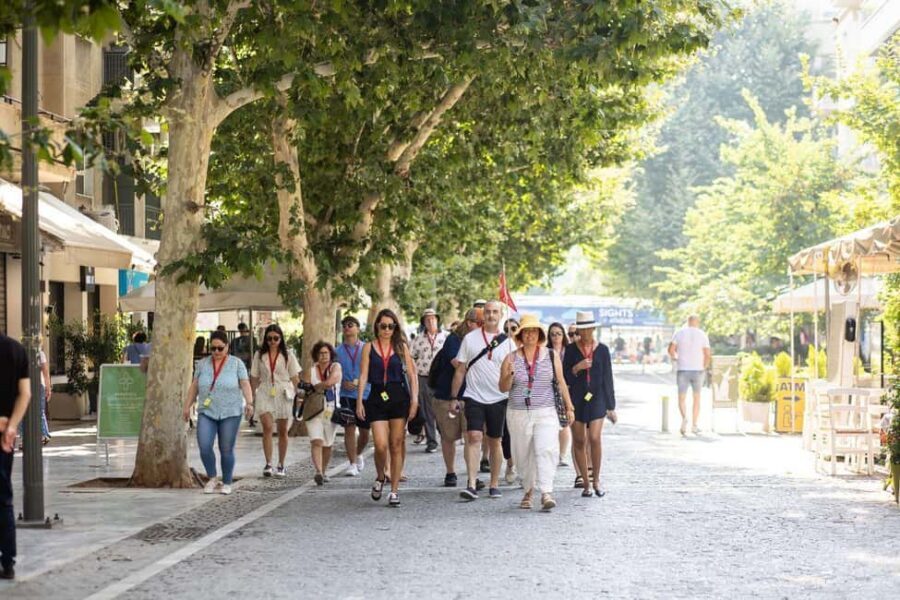
This tour starts at Piraeus Harbour, with a driver waiting at your cruise terminal holding a sign that reads KEY TOURS. You’ll need to provide your cruise ship name at checkout so they can set the correct meeting time and location.
That’s not just paperwork. It determines whether your morning feels smooth or chaotic. In particular, the most important practical move is to confirm your pickup pin-location and meeting instructions in advance, not after you’re already off the ship. If you’re unsure how the port area is labeled, take a screenshot of the meeting details and keep it handy.
Once everyone’s accounted for, you board a comfortable, air-conditioned coach. That first stretch of transit—about 45 minutes—is part of the “cruise protection” you’re paying for. You’re not stressing about public transport, and you’re not gambling on taxi availability.
The coach-to-Athens warm-up: Arch of Hadrian photo stop
Right after you head out, you get a photo stop near the Arch of Hadrian. It’s quick—think of it as a visual handshake with Roman-era Athens before the day turns fully classical.
Why it’s worth doing: this is one of those spots that helps your brain map the city. Even if the Arch isn’t the main event, a quick stop gives context before you start climbing and start seeing monuments that connect Greek myth, civic life, and imperial layers of Athens.
Theatre of Dionysus: where drama meets the Acropolis myth
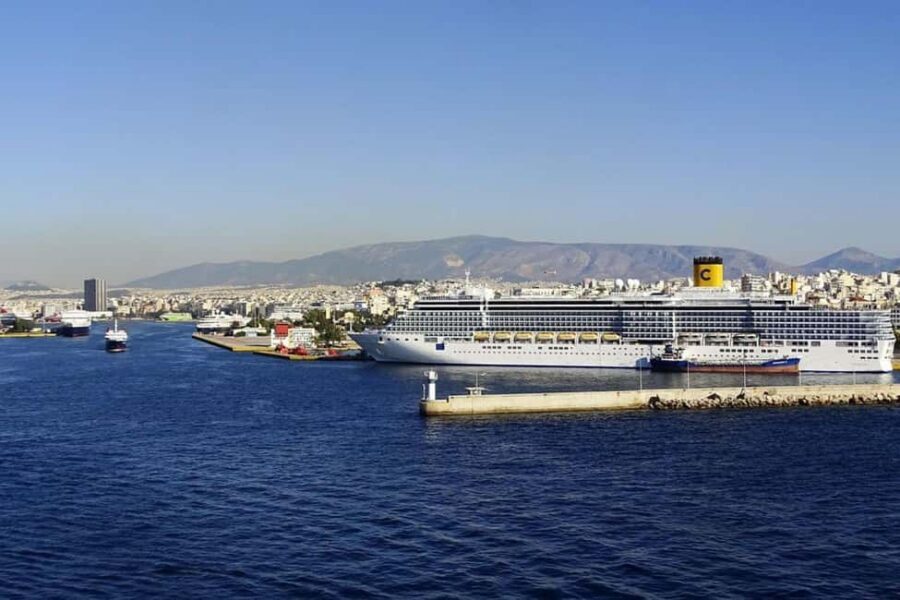
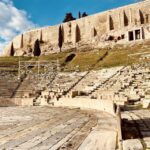
The first big guided moment is at the Theatre of Dionysus. This is described as the birthplace of drama, and your guide uses that to ground the mythology theme of the day.
Even if you’re not a theatre person, you’ll feel the logic. Athens wasn’t just temples and philosophers. It was also crowds gathering to watch stories acted out. If you pay attention here, the Parthenon talk later lands better, because you understand that myth wasn’t “old stories.” It was public entertainment, politics, and identity.
Odeon of Herodes Atticus: an ancient amphitheater still in use
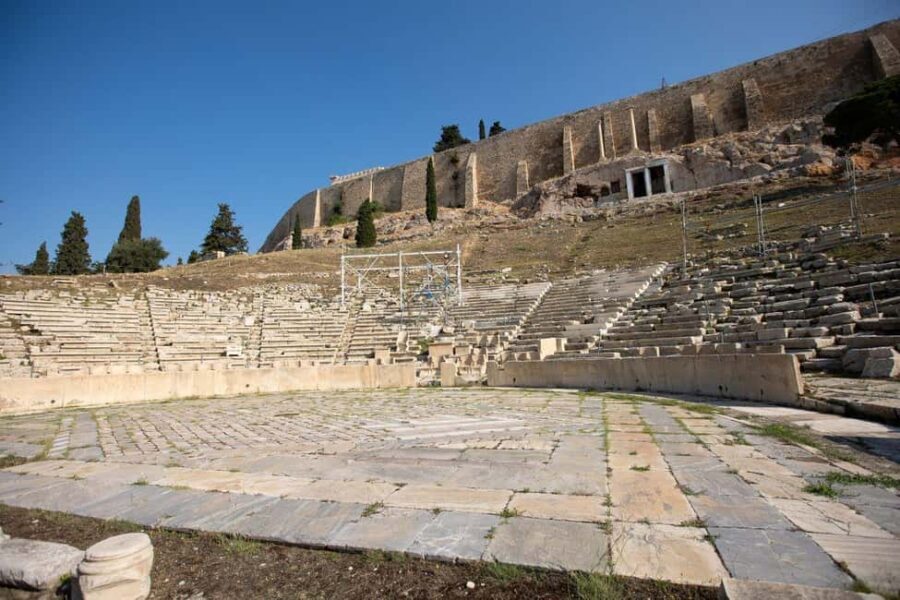
Next up is the Odeon of Herodes Atticus, a Roman-era amphitheater that still hosts performances.
This stop is a great reminder that Athens doesn’t sit still. It’s one thing to see ruins. It’s another to see a space designed for audiences that still functions. It adds that extra layer to the day: architecture as living culture, not just stone.
- All Day Cruise -3 Islands to Agistri,Moni, Aegina with lunch and drinks included
★ 5.0 · 4,958 reviews


Propylaea and the approach to the sacred hill
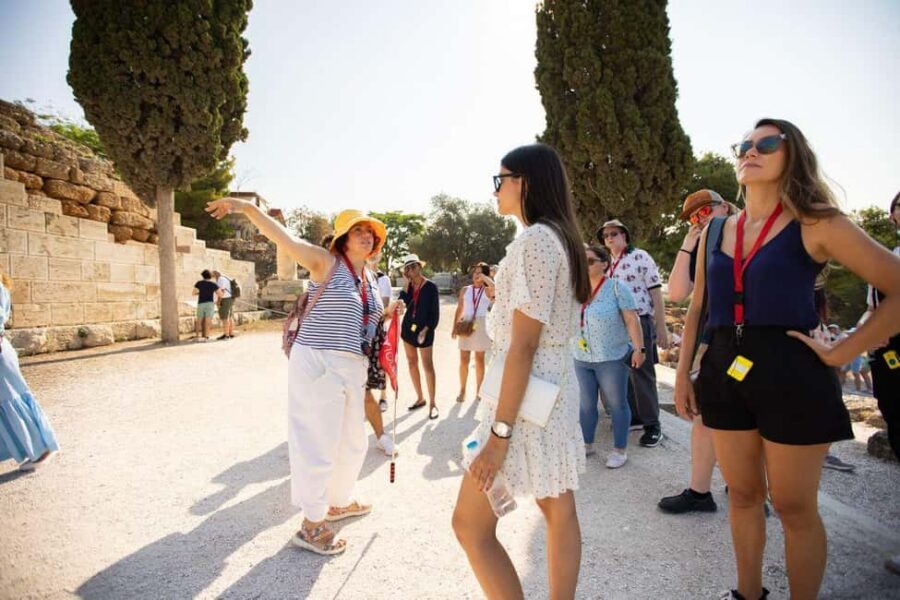
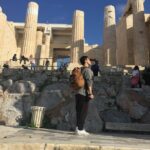
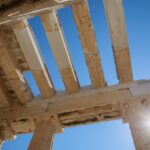
Then comes the dramatic part: the Propylaea, the grand entrance to the ancient citadel. You’ll have a photo stop and guided walk elements here.
Why this matters: the Acropolis isn’t a random collection of buildings. It’s a planned ascent, and Propylaea sets the tempo. You’re not just going uphill—you’re entering a symbolic space. It helps you understand why the Parthenon feels like the final boss of classical Athens.
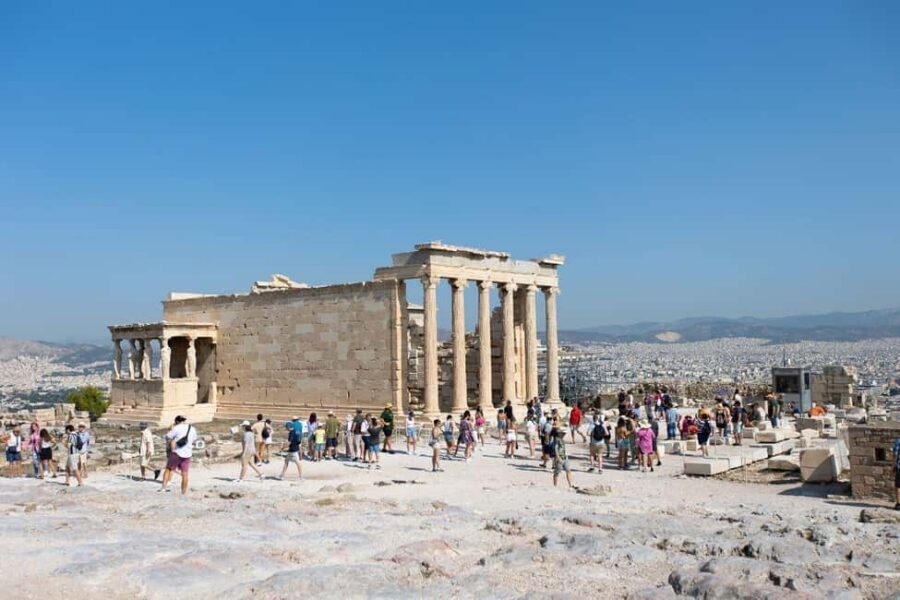
You’ll also stop at Temple of Athena Nike and the Erechtheion area with the famous Caryatids. Even on a short tour day, these are key because they show different architectural personalities: the crisp, ceremonial feeling of Athena’s temple versus the sculpted presence of the Caryatids.
Temple of Athena Nike, Erechtheion, and the Caryatids: details you’ll want time for
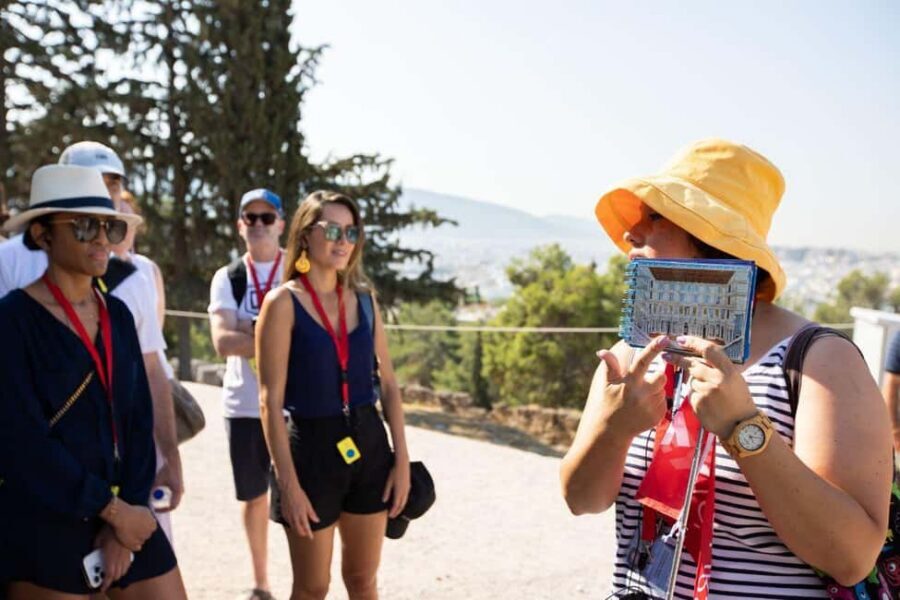
The Temple of Athena Nike is usually one of those “small but important” stops. You only get a few minutes, so treat it like a quick visual checklist: location on the route, relationship to the rest of the Acropolis structures, and how it frames the larger complex.
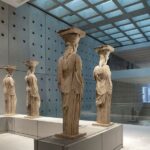
Then you reach the Erechtheion and the Porch of the Caryatids. These sculpted figures are memorable because they’re not just decoration. They’re a whole statement about support, power, and the way art got built into daily religious space.
If wind or sun makes it hard to look up, don’t rush the moment. Even a few good seconds of viewing from the right angle gives you a stronger “I get it” feeling than scanning for the next stop.
The Parthenon: the top-of-hill payoff (and why the guide’s story matters)
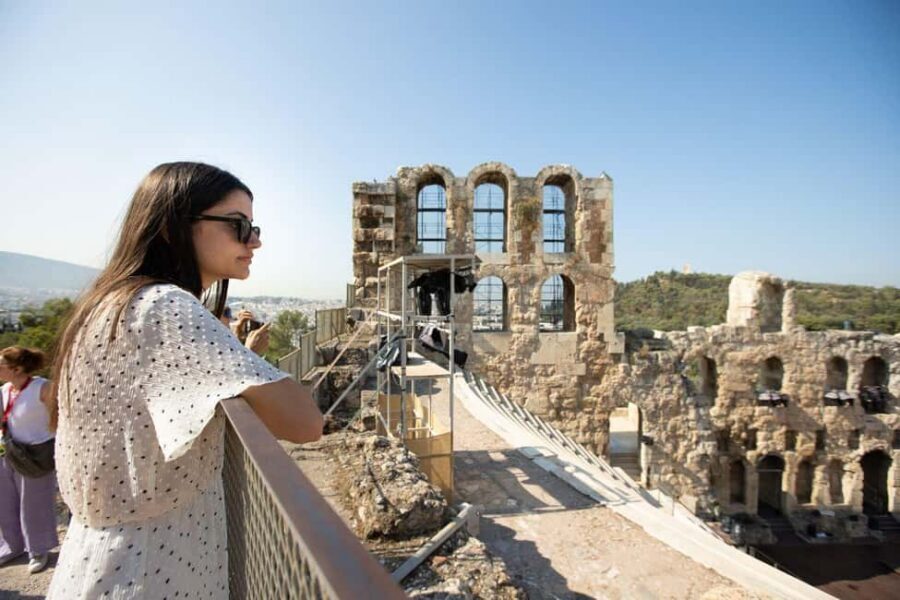
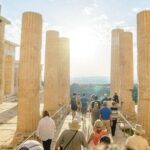
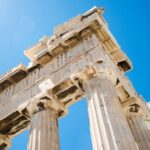
At the top, the Parthenon dominates the skyline. This is the centerpiece: a classical architecture masterpiece dedicated to Athena, and one of the most recognizable views in Greece.
The guide shares stories about mythology, ancient society, and the legacy of Athens’ Golden Age. That narration is more than trivia. On a cruise day, you’re moving fast. The guide’s job is to connect the stones to meaning so you don’t just collect photos.
The viewing payoff is real. You’ll get sweeping panoramas across modern Athens. This is where the tour earns its money—because the Acropolis isn’t just history. It’s also perspective: the city spread, the light, and the sense that you’re standing on a stage that once mattered to everyone.
Acropolis of Athens photo time: use it smart
You’ll also have a general Acropolis of Athens photo stop and sightseeing time. Even though this isn’t always labeled as a separate “site,” it’s where you can slow down just enough to get:
- A wide skyline shot that includes multiple landmarks
- A closer look from your best angle at the Parthenon and nearby structures
- A quick reset before you come back down
Practical move: if you’re photographing, do it in a calm sweep. Don’t wait until the last second. Hill winds and crowded moments can make the “one good picture” window smaller than you think.
Optional Acropolis Museum: worth it if you like original sculpture
After descending, you have an option to continue to the Acropolis Museum, described as one of the most acclaimed museums in the world.
If you choose the museum, you’ll spend time in light-filled galleries showing original sculptures, friezes, and everyday artifacts. One of the big visual features is the transparent glass floors that reveal layers of ancient ruins beneath your feet.
Why this option feels like the best add-on: the Acropolis outside is awe-inspiring, but it’s also far away and exposed. The museum helps you see the “why” behind the craftsmanship—what those figures and friezes actually were, and how the story shifts when you see the originals.
On the other hand, if you skip the museum, you should know you’ll still be part of a timed flow, and you’ll need to be confident about how you’ll get back to the meeting point. The day is built around group timing.
Free time in Athens and Plaka: where you use the morning wisely
After the guided portion, you get about 2 hours of free time in Athens, plus a suggested stop in Plaka. You can walk around and explore at your own pace, and you’ll have the chance to use a self-guided audio experience in Plaka.
This is your chance to:
- Grab water and a quick snack (if food isn’t prohibited for the day you choose; your tour notes say food and drinks aren’t allowed during the activity itself)
- Browse small streets near classic viewpoints
- Find an easy pace that doesn’t depend on navigating cruise-ship crowds
Plaka is a natural fit because it’s close to your route back and it tends to reward short walks. It’s also where the day shifts from “guided monuments” to “actual Athens street life.”
The itinerary tempo: how the 5.5 hours can feel different day to day
On paper, the tour includes multiple stops and guided segments. In real life, the day’s flow depends on wind, group pacing, and how quickly the coach traffic cooperates.
A key consideration: the tour’s structure is intense. The main guided section focuses on the Acropolis complex and nearby ancient landmarks. Then it hands you off to free time before the return transfer.
That works well if you’re okay with:
- Quick glances and short guided explanations
- Constant walking on uneven stone
- A tight structure that protects your cruise departure
If you want long, unhurried museum time and extended sit-down breaks, you may wish you booked a slower Athens day instead.
Transportation back to Piraeus: getting on the ship matters
When your chosen option ends, you return to the meeting point in central Athens. The schedule calls for boarding the dedicated transfer back to Piraeus Harbour at 14:15, then arriving about 30 minutes later.
This is the part of the day you should treat like a hard appointment. Don’t wander too far during free time. If you’re using the museum option, keep a mental note of where your group returns and what time you’re expected back.
This tour is designed to match cruise timing, so the return leg is where you see whether the tour’s “cruise-friendly” promise holds up for you.
What the best guides do well: Aegly and Margarita as examples
You’ll hear a lot of mythology and architecture on this route, and the guide’s clarity changes your entire experience. I saw clear praise for guides who keep a good pace and explain things in a way that’s easy to follow.
For example, one guide named Aegly was highlighted for a didactic, interesting explanation during the Acropolis and Parthenon visit. Another guide named Margarita was praised for staying kind and keeping what sounded like an ideal pace for the group.
So if English is your second language or you’re sensitive to audio quality, your best tactic is simple: keep your headset snug, stand where you can hear clearly, and don’t feel shy about asking for slower repetition when the group moves too fast.
Practical tips so the day goes smoothly (especially on a cruise)
- Wear comfortable shoes with solid grip. You’re walking on ancient surfaces and up/down slopes.
- Bring sunscreen and water. The hill sun adds up fast.
- Skip high heels and anything that makes climbing awkward; the tour notes call out no high-heeled shoes.
- Plan to travel light. Luggage or large bags aren’t allowed.
- If you pick the option without museum entrance tickets, you should expect to buy your Acropolis tickets for your group’s 10:00–11:00 entry slot. Have your timing mindset ready so you don’t lose time.
And one more tactical point: if pickup details ever feel confusing, ask early. The meeting is at the terminal and the driver sign matters, so don’t wait until the last minute to confirm.
Should you book the Piraeus Port Acropolis and Parthenon Mythology Tour?
Book it if you want a guided crash course that prioritizes the Acropolis highlights—Parthenon views, iconic temple stops, and mythology—while avoiding independent planning stress from the cruise.
Consider a different option if you’re the kind of visitor who needs slow, museum-first pacing, or if you’re worried that tight timing won’t match your rhythm. Also think carefully about the museum-ticket choice; if you hate ticket rules or last-minute entry windows, paying for the museum time may reduce your friction.
If you do book, go in with the right mindset: this is a short day built around Acropolis efficiency, good views, and a guide who turns Greek stones into stories you can actually remember.