REVIEW · ATHENS
Private Acropolis Guided Tour
Book on Viator →Operated by Insiders Travel Experiences · Bookable on Viator
The Acropolis is big, hot, and easy to misunderstand. This private tour turns it into a clear, story-driven walk across the sacred rock, with your own guide leading the way.
I like the flexible pacing most—you can linger where you care (or move faster if you have another stop planned). I also like the human details, like guides who help you stay oriented and watch for uneven ground while you’re trying to enjoy the view.
One possible drawback: the time is tight at about 2 hours, and entrance fees are not included—so you’ll want to budget for tickets if you’re trying to plan your day start to finish.
In This Review
- Key things to know before you go
- Private Acropolis Guided Tour: what you’re really buying
- Meet-up point and the “don’t get lost” advantage
- The guided route: Propylaea to the Parthenon, in a smart order
- Stop 1: The Acropolis complex (the sacred approach)
- Propylaea: the grand entrance you can feel
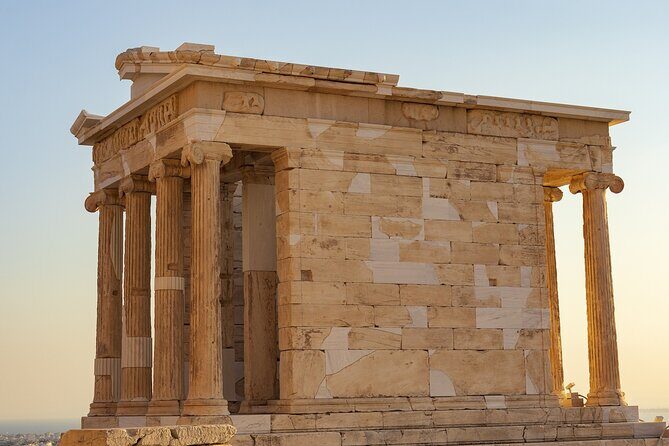
- Temple of Athena Nike: small, but important
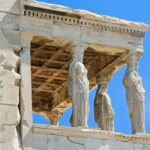
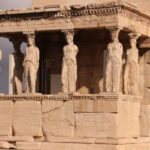
- Erechtheion: where the details start to matter
- Parthenon: the famous one, explained so it lands
- Guides who pay attention to comfort and clarity
- Pace, heat, and crowd math (why timing matters)
- Ending options: back to your day, or keep exploring
- Price and value: is $231.32 a good deal?
- What to do before you go (so the two hours feel worth it)
- Who should book this Acropolis private tour?
- Should you book it?
- FAQ
- How long is the private Acropolis guided tour?
- Is hotel pickup included?
- Where does the tour start and end?
- What monuments will the guide cover?
- Are entrance fees included in the price?
- Is the tour only for my group?
Key things to know before you go
- Private, state-licensed English guide to make the monuments click
- Hotel pickup on foot if you’re within walking distance, so you don’t waste time searching
- Must-see route through Propylaea, Temple of Athena Nike, Erechtheion, and the Parthenon
- Flexible pacing so you can ask questions and slow down for photos
- Early morning style helps with August heat and crowd stress
- Entrance fees not included, so the true total depends on your ticket cost
Private Acropolis Guided Tour: what you’re really buying
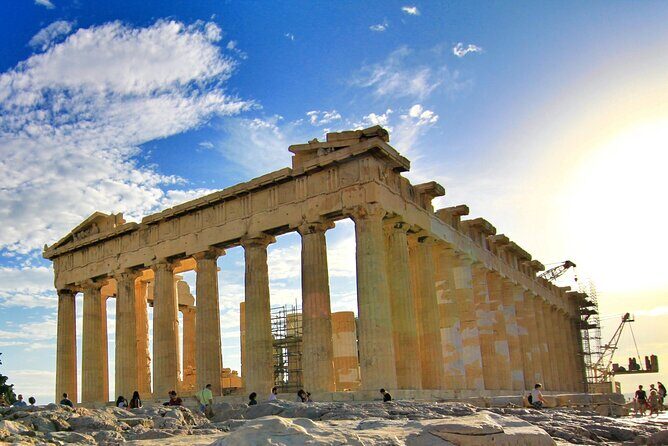
This is the kind of tour that matters when you care about context. The Acropolis isn’t just pretty ruins—it’s a whole layout of power, religion, and architectural choices. A private format helps because you’re not stuck listening through a speaker system while you scan for your place in line.
At about 2 hours, you’re guided through the headline monuments: Propylaea, Temple of Athena Nike, Erechtheion, and the Parthenon. The difference is how you walk it. Instead of wandering and guessing what you’re looking at, you get a guided route that explains what each building meant, and why it influenced later architecture and culture.
The private part is also practical. Your guide can tailor the pacing. If you want more about the Parthenon details, you’ll get them. If you’d rather understand the overall story of the complex, you can steer there. That flexibility is the main value add, especially if you’re traveling with mixed interests or you just want the day to feel less chaotic.
You can also read our reviews of more guided tours in Athens



Meet-up point and the “don’t get lost” advantage
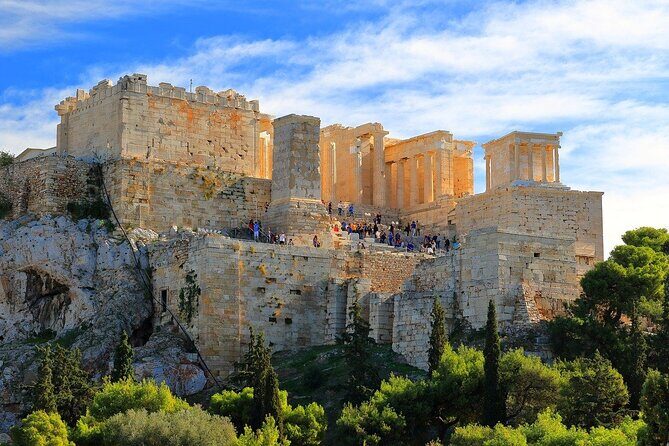
You start at Makrigianni 3, Athina 117 42 around 8:00 am, and you’ll end near Dionysiou Areopagitou, Athina after the guided portion.
The tour includes hotel pickup for hotels within walking distance of the site area. That matters more than it sounds. Athens can be confusing at street level, and the Acropolis area has streets that feel like they were designed by a committee. When your guide helps you get oriented right away, you spend your energy on the monuments, not on logistics.
If your hotel is too far for the walk-on pickup, you should meet the guide at the entrance to the archaeological site. Either way, you’re not trying to figure out where the group starts while also managing sun, bags, and camera batteries.
The guided route: Propylaea to the Parthenon, in a smart order
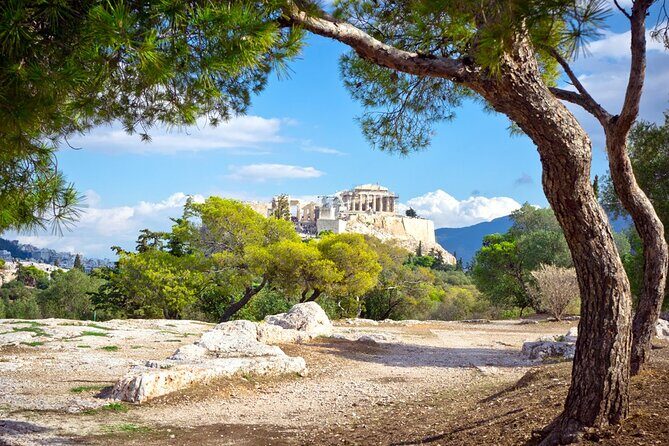
Your visit moves through the core sequence of the Acropolis complex. Here’s what each stop is really good for, and what you should watch for as you go.
Stop 1: The Acropolis complex (the sacred approach)
The tour begins with the big picture: the Acropolis as the landmark that symbolizes ancient Greek civilization. Your guide sets the scene so the monuments don’t feel random.
This matters because the Acropolis is a “many pieces” site. Without an explanation, you can end up with a photo list but no understanding. With a guide, you start connecting:
- the movement up to the sacred area
- the role of each building in that space
- why the layout looks the way it does
A practical tip: bring water and wear shoes you can handle on uneven stone. Even on a short walk like this, surfaces can be tricky, and you’ll want energy for the whole circuit.
Propylaea: the grand entrance you can feel
The Propylaea is your gateway. A good guide doesn’t just label it; they explain how it frames the climb and creates a transition from the outside world to the ceremonial space above.
Why it’s worth your time: it helps you understand that the Acropolis experience is staged. You’re not just walking from point A to point B. You’re moving through a designed sequence.
You can also read our reviews of more private tours in Athens





Temple of Athena Nike: small, but important
The Temple of Athena Nike is a quick stop compared to the Parthenon, but it’s memorable. It’s tied to the worship of Athena and the idea of victory tied to her.
This is the kind of stop where an engaged guide earns their fee. They’ll help you notice proportions and placement, and explain why it mattered to those who used the space.
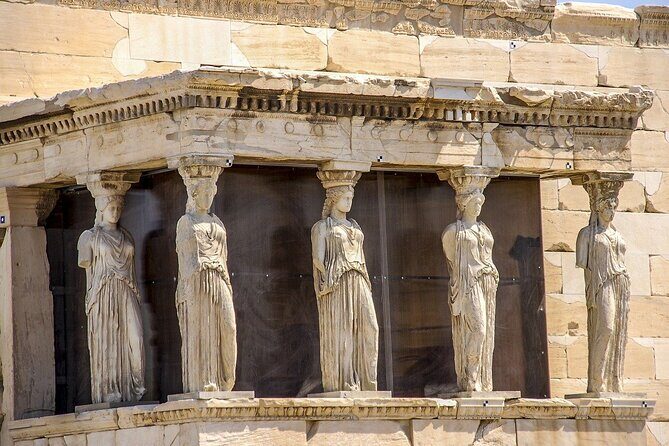
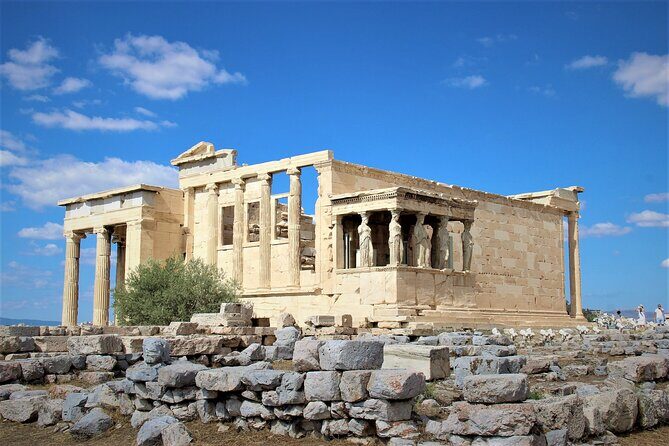
Erechtheion: where the details start to matter
The Erechtheion is all about complexity—multiple functions, layered significance, and a design that feels different from the more straightforward monument shapes.
If you’re the type who loves symbolism and “why this, not that,” this is where your guide can shine. If you’re also fighting heat and crowds, it’s still worth it because it gives your brain something to hold onto besides the big iconic view.
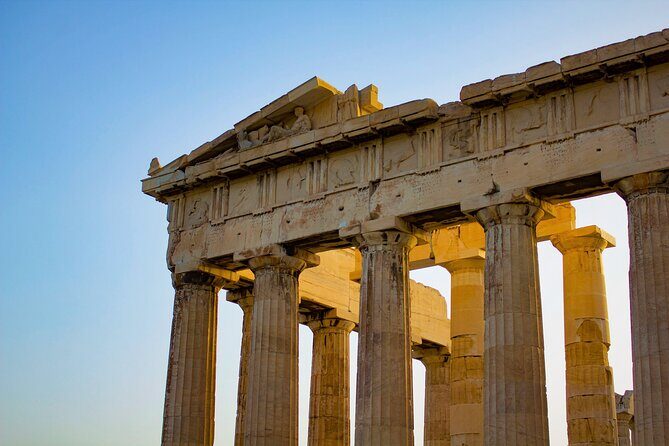
Parthenon: the famous one, explained so it lands
The Parthenon is the star. But it’s easy to think you know it already. A private guide helps you see it as a working statement of ideas: architecture as messaging.
You’ll get context for why it was built, what it represented, and how it shaped later architecture and culture over the centuries. And if you have time for questions, ask about what you’re seeing from your current angle—the site details change as you shift your position.
One neat detail from real guide styles: some guides use 3D visual tools on a phone to show what the Acropolis would have looked like in its earlier form. It’s a simple trick, but it can make the Parthenon feel less like a wreck and more like a design you can understand.
Guides who pay attention to comfort and clarity
This is one of those tours where the guide is the product. The best parts of this experience come through in small moments.
For example, guides have helped people stay shaded, watch footing on uneven ground, and keep everyone oriented while they explain what they’re looking at. That kind of care is huge in August, when the heat can make you move faster than you should.
Several guides also lean into storytelling and practical direction for photo moments. One guide even guided a group toward better photo spots instead of forcing the classic “everyone line up at the same spot” routine. If you care about getting photos that also match the monument story, that’s a real advantage.
If you’re wondering how this could feel with different ages: the tour has worked for groups that ranged from very young adults to much older travelers. The private format helps because your guide can pace for the slowest member without turning the tour into a drag.
Not every experience will match this ideal. One common caution from a less enthusiastic case: if you dislike a guide who pours out tons of details or sounds a bit flat, you might find it less engaging. Since it’s private, you can usually correct this by asking fewer questions or asking the guide to focus on what you care about more.
Pace, heat, and crowd math (why timing matters)
Starting around 8:00 am is a smart move. The Acropolis is at its most enjoyable when you’re not cooked and stressed. In summer, heat can turn a two-hour walk into a test.
This tour is short enough to be doable, especially if you plan the day around it. You’ll see the big monuments in one focused circuit without losing time to group logistics. And because it’s private, you’re less stuck waiting behind other tours at every step.
A practical thought: in 2 hours, you will cover the essentials, but you won’t get the kind of slow museum-style reading you might want if you’re deeply technical. If that’s you, you’ll likely want extra time after the guided portion.
Ending options: back to your day, or keep exploring
You finish at the site exit after the guided 2-hour visit. You can also stay inside the archaeological area and continue exploring on your own.
The tour also gives you a path to the Acropolis Museum after the guided visit. That’s a great pairing if you want the objects and context after seeing the architecture in place. Even if you don’t plan a full museum session, keeping the option open helps you build a smoother day.
If your hotel pickup started from a nearby hotel on foot, you’ll generally return toward your own rhythm afterward, either to recharge or to keep exploring the city.
Price and value: is $231.32 a good deal?
At $231.32 per person for a private 2-hour tour, the price can look high—until you compare what you actually get.
You’re not paying for a general admission ticket. You’re paying for:
- a private, state-licensed guide
- hotel pickup on foot (when eligible)
- a guided route through the major monuments in the complex
- the ability to customize your emphasis and pacing
Also, the pricing varies based on group size. That’s where this can become a better value if you’re traveling as a couple or small group. If you’re solo, you pay more per person, but you still gain privacy and pacing control.
One more important detail: admission tickets are not included. So your real total cost will be your guide price plus site entrance fees. If you’re trying to compare, compare everything, not just the guide fee.
For me, the value case is strongest if you fall into one of these groups:
- You want context, not just photos
- You’re limited on time and want the best sequence
- You don’t want to fight crowds and audio with other groups
- You’d like to ask questions and get answers that fit your interests
If you’re a casual visitor who mainly wants quick views, you might prefer a cheaper, non-private option. But if you want the Acropolis to make sense, this private setup is usually the right tool.
What to do before you go (so the two hours feel worth it)
A two-hour guided monument tour is short. Your “pre-game” matters.
Bring:
- a water bottle
- shoes for uneven stone
- sunscreen and a hat (the tour notes remind you to bring water and energy)
Think about your focus before you arrive. For example:
- Are you most interested in the Parthenon’s role and meaning?
- Do you want the story of the whole complex?
- Do you care more about architectural features or historical significance?
When you do that, you get more out of the guide’s explanations, because you’re steering the conversation.
And if you’re photo-focused, tell your guide you want the best photo angles without wasting time. Some guides are great at directing where to stand for pictures that match the architecture, not just for generic views.
Who should book this Acropolis private tour?
This is a strong match if you want:
- personal attention and a flexible plan
- a clear route that hits the big monuments without confusion
- an English-speaking state-licensed guide with the freedom to answer questions
- early-day timing to reduce heat and crowd friction
It’s also a nice option for mixed-age groups, because a private guide can slow down and adjust pacing to keep everyone comfortable.
If you’re the type who likes to read every sign and wander without structure, you might not need private attention. But if you want the site interpreted for you, this is the kind of tour that makes the Acropolis feel like more than a postcard.
Should you book it?
If your goal is to understand the Acropolis—not just see it—then yes, this is a smart book. The private guide format plus the tight, well-chosen route through Propylaea, Temple of Athena Nike, Erechtheion, and the Parthenon is exactly what you want for a short visit.
I’d book it if you’re paying attention to cost but still want value: once you add up the guide effort, the time saved, and the quality of the explanations (including hands-on tools like 3D reconstruction style visuals), the price starts to make sense.
Skip it only if you truly want a self-guided stroll and don’t care about context. In that case, you’ll likely get more satisfaction with a cheaper option and your own pace.
FAQ
How long is the private Acropolis guided tour?
The tour lasts about 2 hours.
Is hotel pickup included?
Yes, hotel pickup is included for hotels within walking distance of the tour’s location.
Where does the tour start and end?
It starts at Makrigianni 3, Athina 117 42, Greece, and ends near Dionysiou Areopagitou, Athina.
What monuments will the guide cover?
The tour focuses on the Propylaea, Temple of Athena Nike, Erechtheion, and the Parthenon.
Are entrance fees included in the price?
No. Admission tickets to the archaeological site are not included.
Is the tour only for my group?
Yes. It is a private tour/activity, so only your group participates.