REVIEW · ATHENS
Private Biblical Tour of Ancient Corinth & Isthmus Canal
Book on GetYourGuide →Operated by Ancient Greece Tours and Transfers · Bookable on GetYourGuide
The most powerful part of this day is seeing how closely Paul’s story is tied to real places. At the Bema of Corinth, you can picture him brought before Gallio, while the nearby Agora shows where he preached and moved through daily Roman life.
I like the mix of famous sights and quieter stops, especially the Corinth Canal and ancient Diolkos. I also like the private format: drivers such as Peter, Bill, George, and Tas have offered flexible pacing, local stories, photo help, and stops at Greek tavernas with wide views. The catch is important: your driver is not a licensed guide and cannot lead you inside the archaeological site or museum unless you pay for a separate guide.
In This Review
- Key points to know before booking
- The day begins with Corinth’s great cut through Greece
- Diolkos reveals the older route for moving ships
- Acrocorinth rewards you with height and scale
- Ancient Corinth puts Paul in a Roman setting
- The museum adds detail that the ruins cannot
- Lunch is part of the local feel, not part of the price
- Kechries closes the day with Paul’s departure
- Why the private vehicle matters
- Is $273 per person a fair price?
- Who will enjoy this Corinth day trip?
- Should you book this private Corinth tour?
- FAQ
- How long does the tour last?
- Can I be picked up in Athens?
- Is the tour private?
- Is a licensed guide included?
- How much are the entrance fees?
- Is lunch included?
- What should I bring?
Key points to know before booking
- Paul’s Corinth comes to life at the Bema and Agora, not just in a church-history lecture.
- Acrocorinth gives you sweeping views and a strong sense of ancient defense, but comfortable shoes are essential.
- The Canal and Diolkos connect modern engineering with ancient transport, making the first part of the day more than a quick photo stop.
- A private vehicle makes Athens pickup easy, with hotel, Airbnb, port, and Corinth options available.
- The $273 per-person price covers transport and private service, but site admission, lunch, drinks, and a licensed guide cost extra.
- Kechries adds a coastal ending and a direct link to Paul’s departure from Corinth.
The day begins with Corinth’s great cut through Greece
From Athens, you head west toward the Isthmus of Corinth. The drive is short enough to make this a comfortable day trip, though the total schedule is full at eight hours.
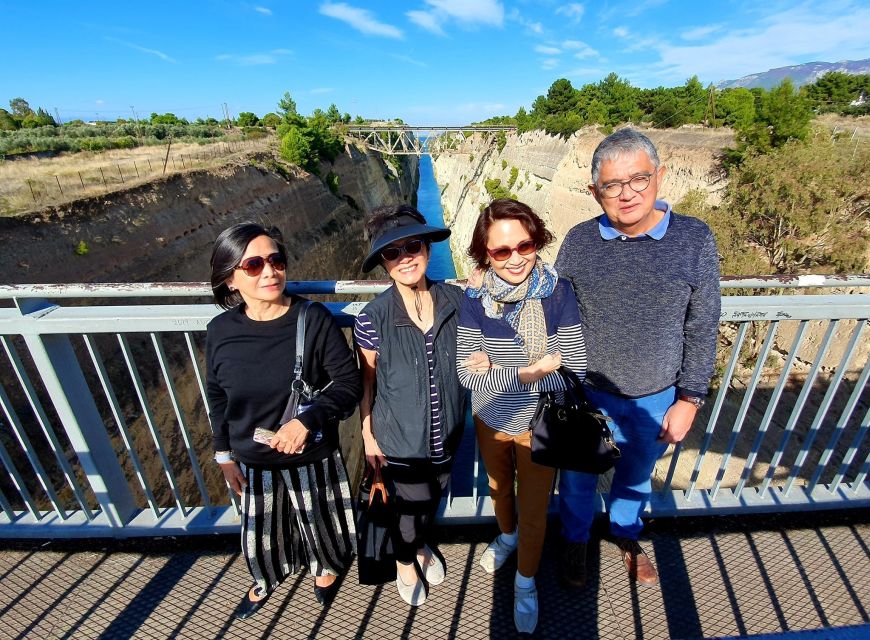
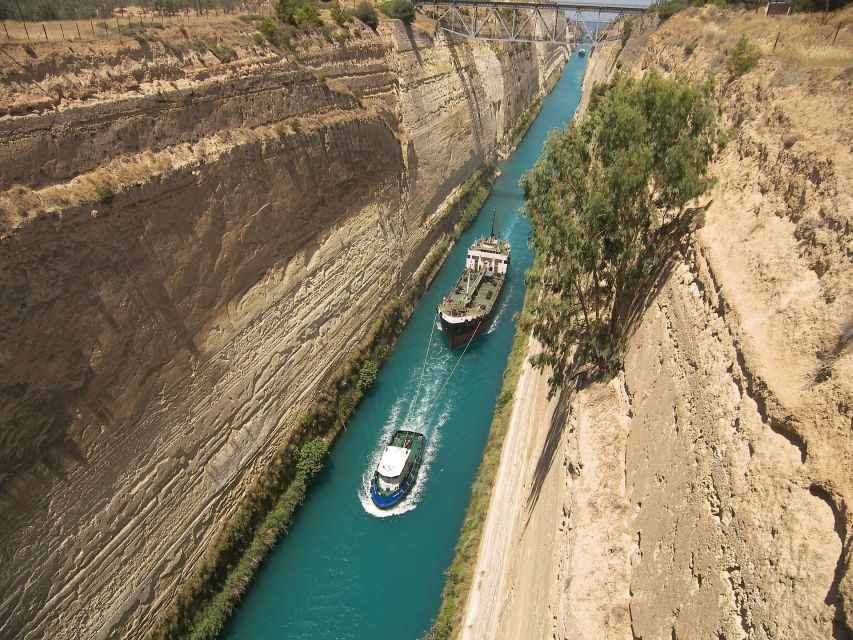
Your first major stop is the Corinth Canal, where the modern channel cuts through the narrow strip of land linking the Corinthian and Saronic Gulfs. You have about 50 minutes here, enough time to watch boats pass and take in the steep walls of the canal from above.
I like this opening because it gives you a clear sense of geography. Corinth was powerful partly because of its position between two seas. The canal makes that advantage easy to see, even before you reach the ancient ruins.
The canal is also a good photo stop, but it is not the main historical visit. If no boat is passing during your time there, you may spend less than the full 50 minutes looking over the waterway. Your driver can add context, but a full engineering presentation is not part of the tour.
You can also read our reviews of more private tours in Athens


Diolkos reveals the older route for moving ships
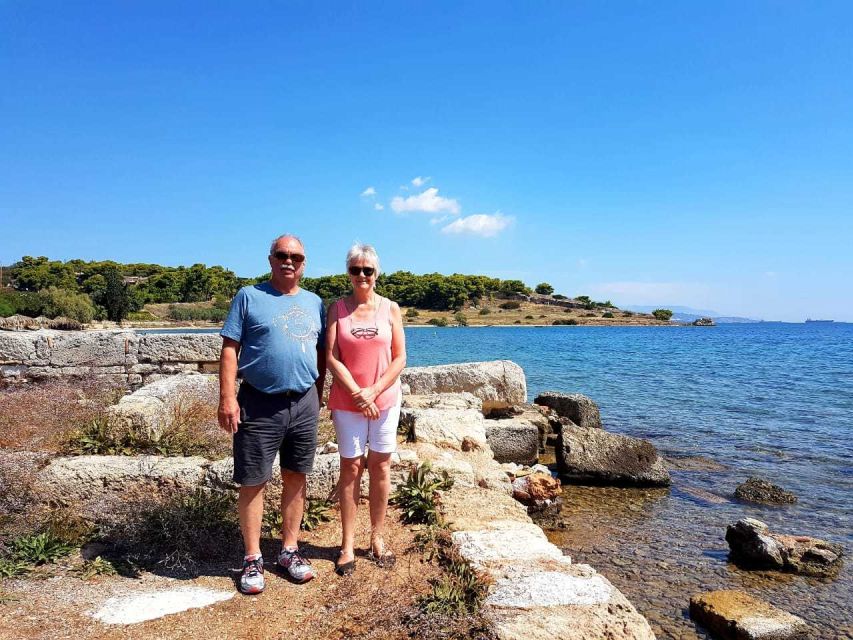
A 30-minute stop at Diolkos takes you back to the age before the modern canal. Here, an ancient paved road was used to move boats overland from the Corinthian Gulf toward the Saronic Sea.
The work was done with boat trailers, slaves, oxen, and other animals. It was a hard and costly answer to the problem of getting ships across the isthmus. The route helped Corinth control movement between the two seas and maintain influence over more than 270 Greek colonies.
I find Diolkos especially useful because it prevents the canal from feeling like an isolated modern sight. You see two very different solutions to the same geographic problem, one built with stone roads and muscle, the other cut through solid ground with modern machinery.
This is a short stop, so do not expect a large museum or a long walk. It works best as a focused look at the surviving road and as preparation for understanding Corinth’s economic power.
Acrocorinth rewards you with height and scale
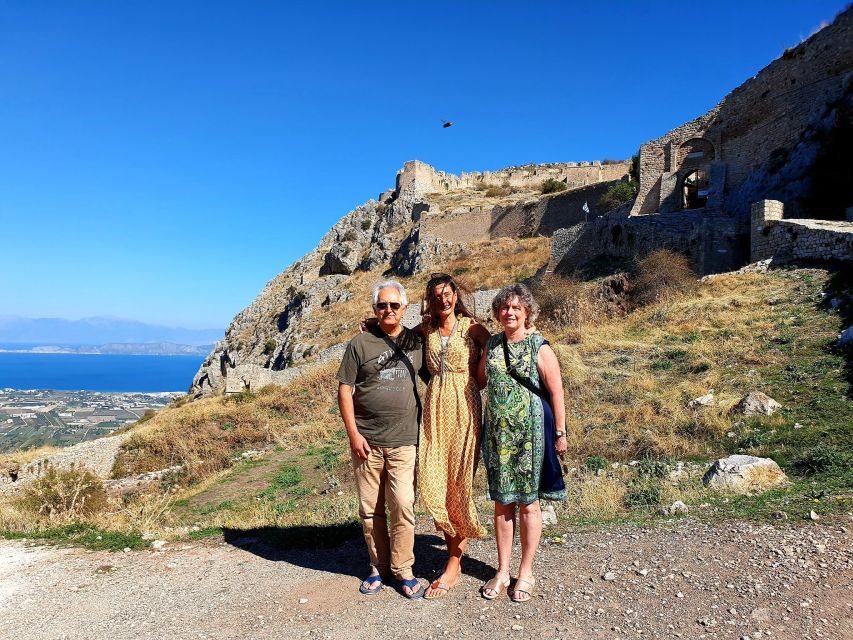
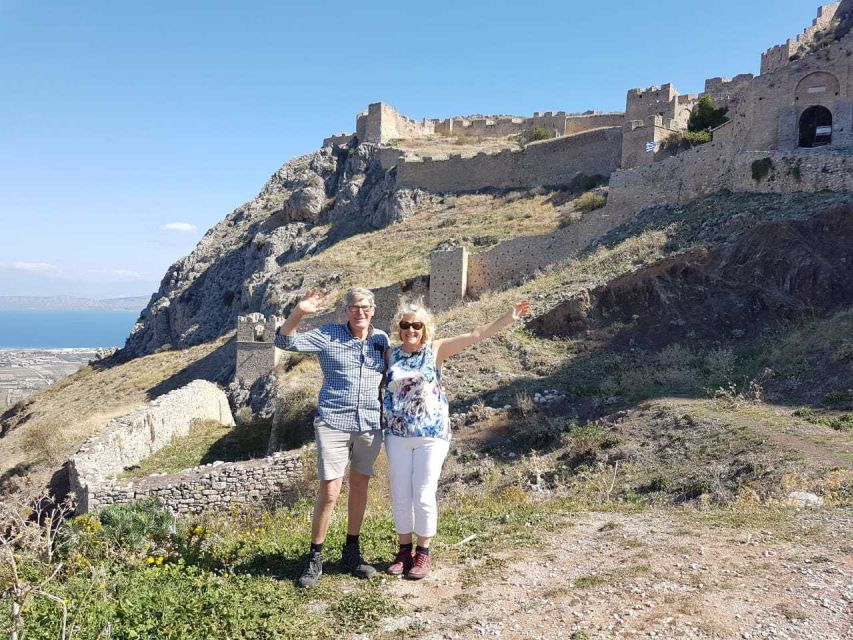
Next comes Acrocorinth, the citadel above ancient Corinth. The rock rises to about 1,886 feet above sea level, and its walls extend for roughly 4.9 miles. Three gates and a fortified keep helped make it one of the strongest defensive sites in Greece.
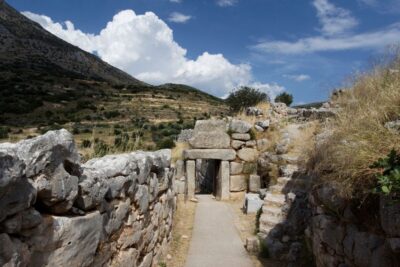
The scale is striking. From the lower archaeological area, Acrocorinth dominates the view. Once you reach the citadel, you get broad views across the surrounding country and toward the gulfs.
You have about an hour here. That is enough to see the principal areas, but it is not a leisurely expedition through every corner of the fortress. The site includes uneven ground, stone surfaces, and slopes, so wear firm walking shoes and bring water.
I would not treat Acrocorinth as a minor add-on. For many people, it will be the most dramatic stop of the day. The height explains why Corinth was so hard to attack, while the walls show how many generations used and rebuilt the site.
The tradeoff is physical. This is not the easiest part of the tour for anyone who struggles with uneven paths or steep ground. The activity is described as wheelchair accessible, but Acrocorinth itself has historic terrain that can limit how much of the citadel you can comfortably reach.
Ancient Corinth puts Paul in a Roman setting
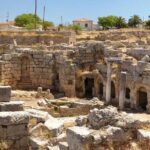
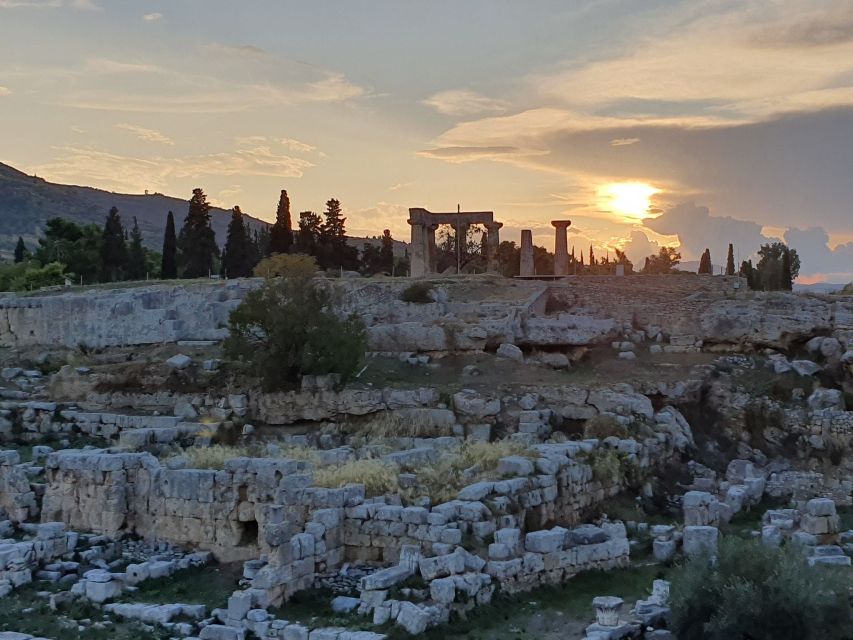
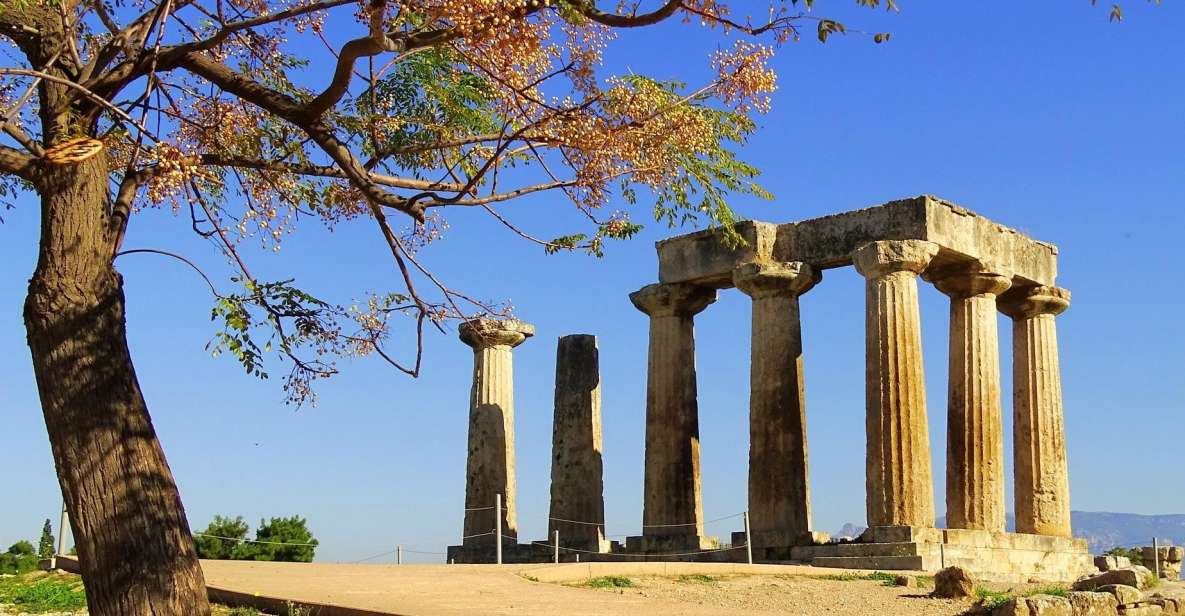
The visit to ancient Corinth brings together the biblical, Roman, and Greek sides of the tour. You see the Temple of Apollo, the Fountain of Glauke, the Sacred Spring, the Peirene Fountain, the Asklepieion, the Odeion, the Bema, and the Agora.
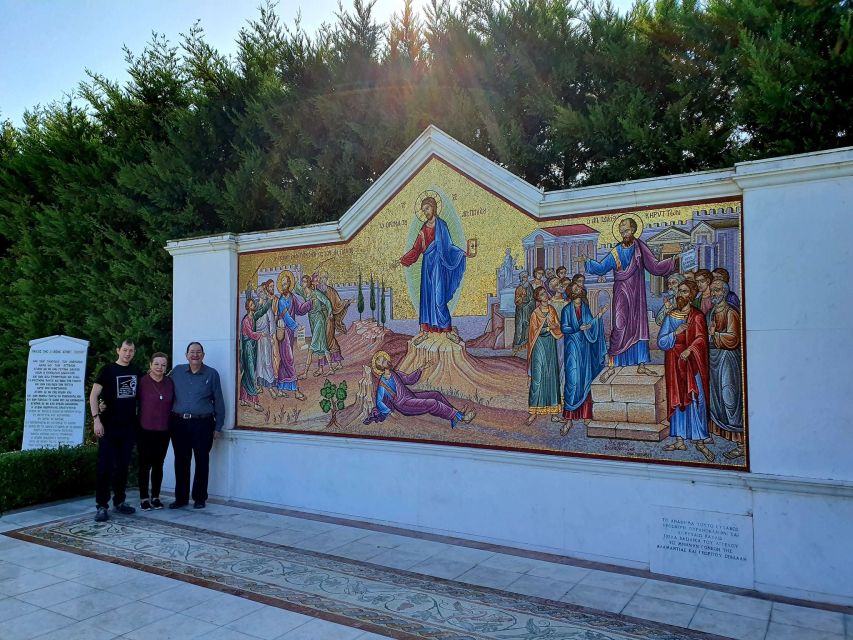
The Bema is the key stop for anyone following Paul. This raised platform served as a judgment seat, and it is connected with the account of Paul being brought before Gallio. Standing near it gives the New Testament story a physical setting rather than leaving it as a distant passage on a page.
The Agora is just as useful. This was the public center of Corinth, and it helps you picture Paul preaching and walking through a city filled with commerce, politics, religion, and ordinary business.
You have about 40 minutes in the archaeological area itself, followed by 100 minutes at the museum. The split gives you time to see the major ruins without rushing through every label, but the site is dense enough that a licensed guide can add real value.
Your English-speaking driver can explain Greek history and point out the major features, but drivers cannot accompany you inside the site or museum as official guides. If you want detailed interpretation of the architecture, inscriptions, Roman rule, and Paul’s time in Corinth, request a licensed local guide for an additional fee.
That extra cost may be worthwhile for first-time visitors, especially if you have a strong biblical interest. Without one, you can still see the remains, but you will need to read the displays and connect the pieces yourself.
The museum adds detail that the ruins cannot
The Archaeological Museum of Ancient Corinth deserves its 100-minute block. The ruins show the city plan and surviving buildings. The museum helps you understand the objects that once filled that setting.
You can expect artifacts from the archaeological site and the wider Corinth area, including material connected with daily life, worship, and public buildings. The supplied details do not provide a room-by-room collection list, so I would plan to use the museum as a companion to the outdoor visit rather than expecting a single famous object to carry the experience.
This is another point where a licensed guide changes the day. A driver can give you a useful overview before you enter, but cannot provide the official indoor explanation. If your group includes children or people who prefer stories to labels, agree on the guide option before booking.
The long museum visit also gives you a break from the sun. Corinth can be exposed, and sunscreen, a hat, and comfortable clothing are sensible choices.






Lunch is part of the local feel, not part of the price
After the ruins, you get about 80 minutes for lunch. Food and drinks are not included, so budget separately.
The meal may be arranged at a traditional Greek restaurant with a view toward the Temple of Apollo, or at a seaside restaurant near the Baths of Helen of Troy. That choice matters. A meal overlooking the ancient site keeps the historical mood going, while the seaside option gives you a cooler, more relaxed pause before the final stop.
The private setup helps here. Drivers have been able to suggest local tavernas and adjust the pace when groups needed more time. One driver, Peter, was especially noted for choosing a traditional restaurant with an excellent view. That does not guarantee the same restaurant or driver, but it shows the type of personal planning this experience is designed to provide.
I like having lunch built into the day rather than squeezing in a hurried snack. Still, ask about the restaurant plan and expected cost if you are watching your budget. The $273 price does not include the meal.
Kechries closes the day with Paul’s departure
The final stop is Kechries, the ancient port on the Saronic Gulf. You spend about 30 minutes here, following the route associated with Paul’s departure from Corinth in AD 53.
The visit connects with his sailing toward Ephesus with Aquila and Priscilla. It also provides the setting for discussion of the Nazarite vow and the cutting of the hair mentioned in Acts 18:18.
Kechries is smaller and quieter than ancient Corinth, which makes it a fitting final stop. Do not expect another major archaeological complex. The appeal is the connection to Paul’s route and the chance to finish beside the sea rather than at another inland ruin.
For visitors focused on biblical places, this stop gives the day a clear narrative arc. You begin with Corinth’s strategic position, see the city where Paul preached, and finish at the port linked with his departure.
Why the private vehicle matters
Pickup and drop-off are available from Athens or Corinth. In Athens, the driver meets you at your hotel lobby or Airbnb entrance. Port pickup is also offered, with the driver waiting in the arrivals area and holding a sign with your name.
The vehicle is described as modern and first-class, with air-conditioning, Wi-Fi, and bottled water. That matters on a long summer day with several outdoor stops. You can leave extra bags in the vehicle and return to a cool cabin between sites.
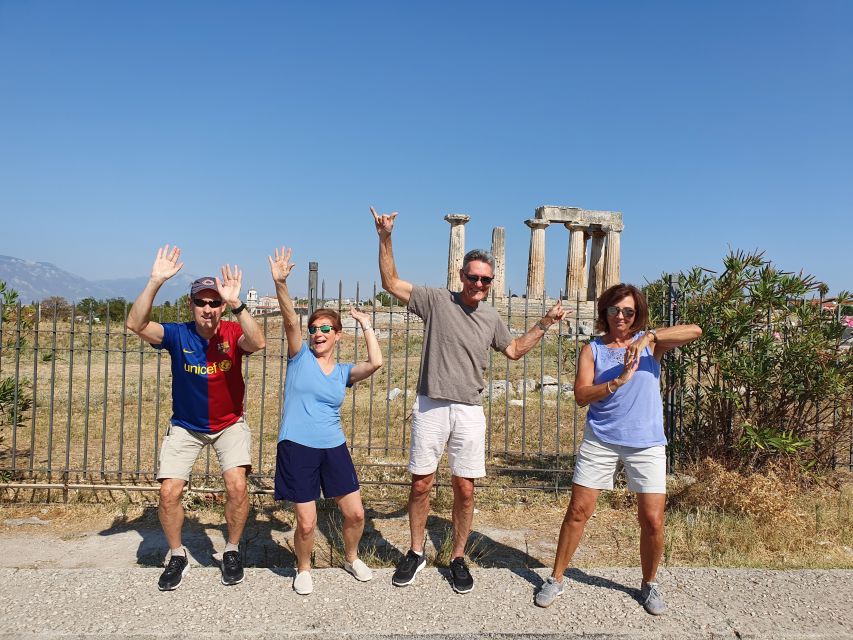
The private format is the strongest practical reason to choose this tour over a large group outing. You can ask for more time at the Bema, shorten a stop that does not interest you, or pause for photographs. The drivers have also taken backroads through villages when time allowed, giving a glimpse of present-day Corinth beyond the formal sites.
That flexibility depends on the driver and the day’s timing. You have a fixed eight-hour window, so adding long detours may mean cutting time elsewhere. Groups should decide in advance which stops matter most.
Drivers named in past bookings include Bill, George, Peter, and Tas, also referred to as Takis in one account. The company is Ancient Greece Tours and Transfers, and English is the listed language. Driver assignments can vary, so do not book on the assumption that a particular person will be available unless the company confirms it.
Is $273 per person a fair price?
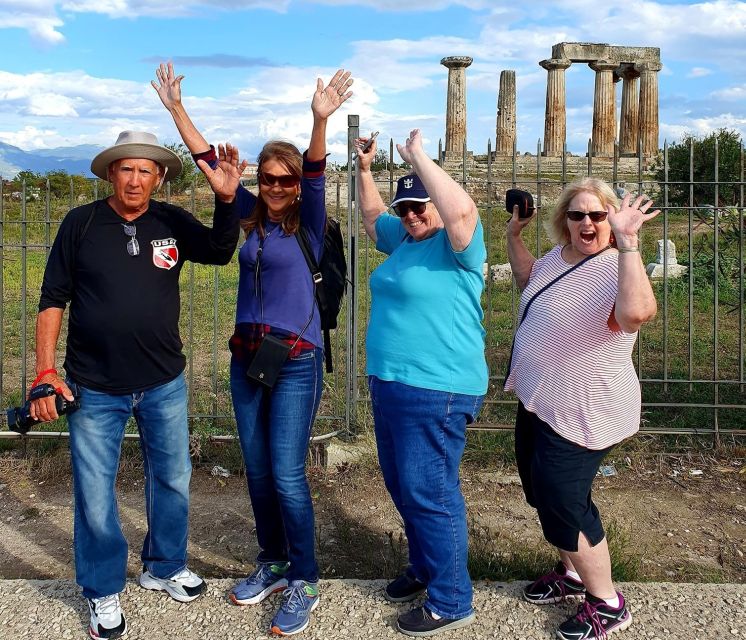
At $273 per person, this is not the cheapest way to see Corinth. The value improves for families or groups that want one vehicle, hotel pickup, and a private schedule instead of joining strangers on a fixed coach route.
The price includes the private full-day experience, English-speaking driver, transport, pickup and drop-off, air-conditioning, Wi-Fi, and bottled water. It does not include the €15-per-person entrance fee for the Ancient Corinth archaeological site and museum, food, drinks, airport transfers, or a licensed guide.
That means your real cost will be higher. The extra guide fee is the biggest decision point. If you want serious archaeological or biblical explanation, I would consider it money well spent. If you mainly want transport, major viewpoints, and a driver who can explain the broad story, you may be satisfied without it.
The tour also offers free cancellation up to 24 hours before departure and reserve-now, pay-later booking. Those terms are useful when your Athens plans are still shifting.
Who will enjoy this Corinth day trip?
I would recommend it most strongly to:
- People interested in Paul, early Christianity, and Acts 18
- Families or friends who want a private vehicle and flexible pacing
- Visitors staying in Athens who want Corinth without arranging several separate transfers
- History lovers who want Acrocorinth, the ruins, museum, and canal in one day
- Groups that appreciate personal help with photographs and restaurant choices
It may be less suitable if you want a slow, highly academic archaeological tour led by a specialist from the start. In that case, add the licensed guide or choose a tour where the guide is included.
It is also worth thinking about walking ability. Ancient Corinth involves outdoor walking, and Acrocorinth has uneven historic surfaces. Bring comfortable shoes, sunscreen, and suitable clothing.
Should you book this private Corinth tour?
Book it if you want the convenience of door-to-door transport and a day built around Paul’s Corinth rather than a quick stop on a large bus tour. The combination of the Canal, Diolkos, Acrocorinth, the Bema, the Agora, and Kechries gives you a fuller picture than visiting the main ruins alone.
For the best version of the day, ask about adding a licensed guide and confirm the restaurant plan. If you are traveling with a group, the private format can make the $273-per-person cost easier to justify. If you are alone and mainly want the ruins, the price may feel high once entrance fees and lunch are added.
My practical verdict: choose this experience for flexibility, personal attention, and a strong biblical focus. Add the official guide if you want the ancient stones explained in detail, not simply pointed out from the vehicle.
FAQ
How long does the tour last?
The experience lasts eight hours, including transportation and visits to the Canal, Diolkos, Acrocorinth, ancient Corinth, the archaeological museum, lunch, and Kechries.
Can I be picked up in Athens?
Yes. Pickup and drop-off are available from an Athens hotel, Airbnb residence, or port. Pickup from Corinth is also available.
Is the tour private?
Yes. It is a private, personalized experience for your group.
Is a licensed guide included?
No. The English-speaking driver is well-versed in Greek history but is not a licensed guide and cannot accompany you inside the archaeological site or museum. A licensed guide can be arranged for an additional cost, subject to availability.
How much are the entrance fees?
Admission to both the Ancient Corinth archaeological site and museum costs €15 per person. This fee is not included in the tour price.
Is lunch included?
No. Food and drinks are not included. You have about 80 minutes for lunch at a Greek restaurant with views of the Temple of Apollo or at a seaside restaurant near the Baths of Helen of Troy.
What should I bring?
Bring comfortable shoes, sunscreen, and comfortable clothing. If you need an infant or child car seat, request it in advance.