REVIEW · ATHENS
Private Tour of Nafplio, Mycenae, Epidaurus & Isthmus Canal From Athens
Book on Viator →Operated by Ancient Greece Tours & Transfers · Bookable on Viator
A day like this makes Athens feel optional. You get a private car and a full sweep of big ancient hitters—Mycenae and Epidaurus—plus the modern charm of Nafplio. I especially like how the drivers (like Peter, Yianni, Tas, George, and Eirini) share clear, funny context as you travel, and how stress-free it feels compared with renting and plotting routes yourself. The main thing to consider: this is a long day with real walking and some climbing, including Palamidi’s 999 steps if you choose to go up.
What makes this tour work is the pacing. You’re not stuck in Athens watching the clock—you’re out on the Peloponnese for most of the day, moving site to site in comfort while your driver keeps the story straight. And even though the driver isn’t a licensed on-site guide, you still get the history talk that helps the ruins make sense fast.
One more practical note: Mycenae and Epidaurus entrance fees are extra. It’s not a deal-breaker, but it’s smart to budget for tickets in advance so the day stays smooth.
In This Review
- Key highlights at a glance
- Leaving Athens Without the Headache: The Private-Car Advantage
- Corinth Canal and Ancient Diolkos: Engineering With Real Backstory
- Mycenae and Its Gold-Heavy Story: From Lions Gate to the Treasury of Atreus
- Lions Gate and Cyclopean Walls
- The royal burial zones: Grave Circles A and B
- Royal Palace rooms (what’s left tells a lot)
- Tholos tombs: Treasury of Atreus and Clytemnestra’s tomb
- Mycenaean Archaeological Museum: the payoff for your eyes
- Nafplio on Foot: Waterfront Beauty, Palamidi’s Views, and the Old Town Layers
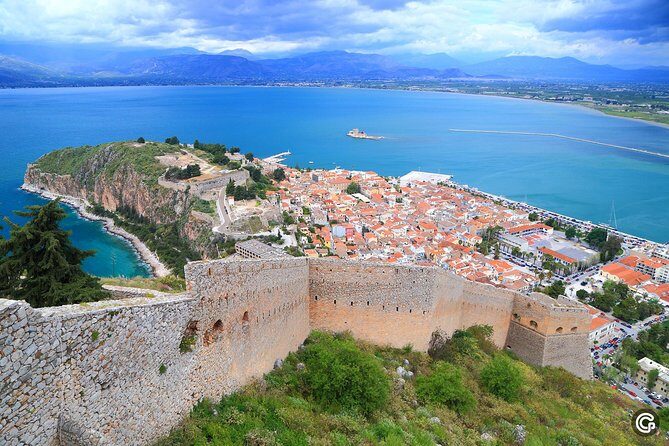
- Palamidi Fortress: optional, but hard to ignore
- Waterfront and Bourtzi: the water castle mood
- Squares and the political story tucked into the city
- Churches with real historical weight
- Food and treats that make Nafplio feel like Nafplio
- Shopping time that doesn’t feel touristy
- Epidaurus: The Amphitheater That Feels Like Magic
- Epidaurus Archaeological Museum
- Asclepius sanctuary: a healing place in stone form
- How Much Walking and Climbing You’ll Face
- Price, Value, and What to Budget for Tickets
- Who This Tour Fits Best (and Who Might Want Another Plan)
- Should You Book This Nafplio–Mycenae–Epidaurus–Corinth Canal Tour?
- FAQ
- How long is the private tour?
- Is this a private tour or a group tour?
- What’s included in the price?
- Do I need to pay entrance fees?
- Which parts of the day include time outside Athens?
- Is there a licensed guide who walks you into museums and sites?
- Does the tour offer pickup from my hotel or apartment?
- Is the tour offered in English?
- Are there accessibility or assistance details I should know?
- Can I cancel for a full refund?
Key highlights at a glance
- Private, first-class vehicle with WiFi, bottled water, and refreshing wipes
- Corinth Canal + Ancient Diolkos: 19th-century engineering meets an older boat-lift concept
- Mycenae’s must-sees: Lions Gate, Cyclopean Walls, and tholos tombs like the Treasury of Atreus
- Nafplio time on foot with waterfront strolls and the option to climb Palamidi (999 steps)
- Epidaurus amphitheater with legendary acoustics and the Asclepius healing sanctuary
Leaving Athens Without the Headache: The Private-Car Advantage
A full-day Peloponnese trip can sound exhausting on paper. In real life, the private-car setup changes the mood. You’re picked up from your hotel or apartment lobby in Athens, then you’re off with no navigation chores, no parking games, and no need to coordinate buses that don’t care if you’re hungry or late.
For me, the best part is the way it turns into one continuous day instead of five separate mini-missions. The sites connect because your driver keeps giving you context as you ride. People like Peter (praised for being humorous and “gold standard”), Tas (great with a family and a heatwave), George (friendly and flexible), and Eirini/Irini (tailoring based on preferences) show that this isn’t just driving—it’s actively helping you understand what you’re seeing.
The trip is about 9 hours total. You’ll spend time outside the city at each stop, with defined blocks for longer sites like Mycenae and Epidaurus. That helps you avoid the common tour problem: arriving somewhere ancient and having to rush through it like you’re catching a train.
You can also read our reviews of more private tours in Athens



Corinth Canal and Ancient Diolkos: Engineering With Real Backstory
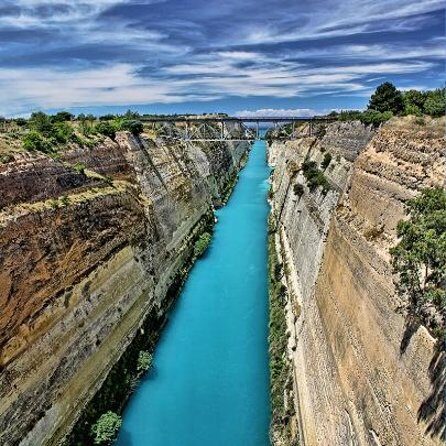
The day’s first big “wow” moment comes quickly: the Corinth Canal. This is where you see how people tried to turn geography into trade. The canal is described as one of the most important projects and a 19th-century engineering masterpiece—built to play a catalytic role for Mediterranean shipping.
Right nearby, you also visit Ancient Diolkos, a paved trackway concept from ancient Greece that enabled boats to be moved overland across the Isthmus of Corinth. The idea is simple but satisfying: instead of sailing around the peninsula and dealing with longer routes, ships could be hauled across.
Even if you’re not an engineering person, you’ll likely appreciate it for one reason: it shows how ancient and modern problem-solving rhyme. You’ll be looking at a canal that funnels modern vessels, while the diolkos explains how people earlier in time tried to do the same job using a totally different method.
Practical tip: bring something to drink before you arrive at the canal area, since the day keeps rolling and you’ll be outdoors for parts of the stop.
Mycenae and Its Gold-Heavy Story: From Lions Gate to the Treasury of Atreus
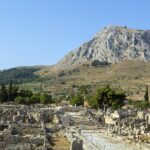
If you’re choosing one ancient site to care about deeply, Mycenae is usually the one. It’s tied to the mythical world of King Agamemnon and Homer’s epics, but it’s also archaeology you can physically walk through—walls, gates, and tombs that made this palace-city powerful.
Lions Gate and Cyclopean Walls
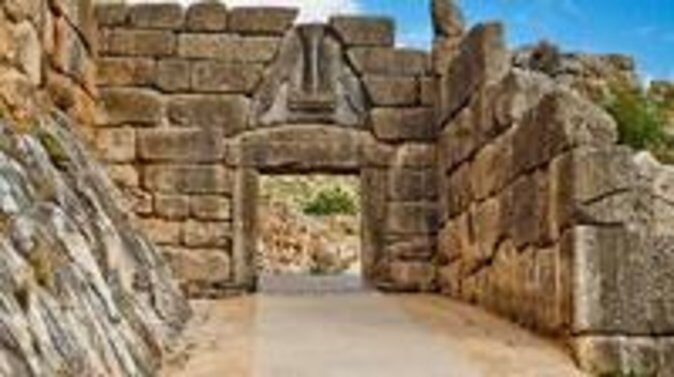
Start with the Lions Gate, the main entrance to the Bronze Age citadel. Then look at the Cyclopean Walls—that famous style built with huge limestone boulders. The point isn’t just that the stones are big. It’s that Mycenae’s power was material and organized enough to move, fit, and hold those blocks in place.
That’s why this stop hits: you can see fortification logic with your own eyes. You’re not just reading about dominance—you’re standing at a threshold where someone would have controlled who entered.
The royal burial zones: Grave Circles A and B
Then you have Grave Circles A and B, royal cemeteries south of the citadel and outside the main walls. Even without turning every corner into a museum label-reading marathon, the layout helps you understand how sacred and political space overlapped.
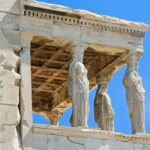




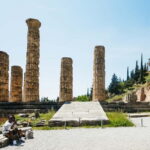
Royal Palace rooms (what’s left tells a lot)
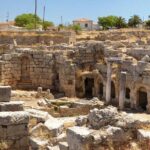
At the Royal Palace, you’ll see how the city’s official life was arranged—domestic apartments, suites like the Throne Room, and areas for officials. The Grand Staircase and forecourt are the kind of features that help you picture movement through the palace rather than imagining it as a static picture.
Tholos tombs: Treasury of Atreus and Clytemnestra’s tomb
Mycenae’s signature tombs are the Treasury of Atreus and the Tomb of Clytemnestra. The Treasury is a large tholos tomb—often described like a beehive—and it dates to around 1250 BC. Clytemnestra’s tomb is also a Mycenean tholos-type tomb built around the same time.
You don’t need a PhD to feel why these matter. A tholos tomb is basically an architectural flex: heavy stonework designed to last and to signal status for generations. Standing near these structures gives scale to the burial practice.
Mycenaean Archaeological Museum: the payoff for your eyes
After the outdoor highlights, you get around 2 hours at the Mycenaean Archaeological Museum. This is where the day stops feeling like just a ruins scavenger hunt and starts turning into objects-with-context.
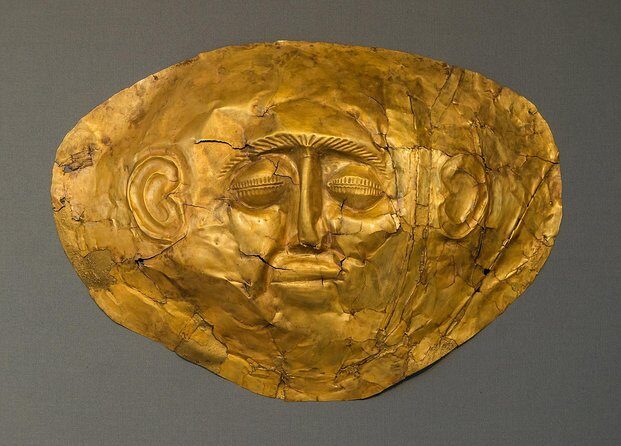
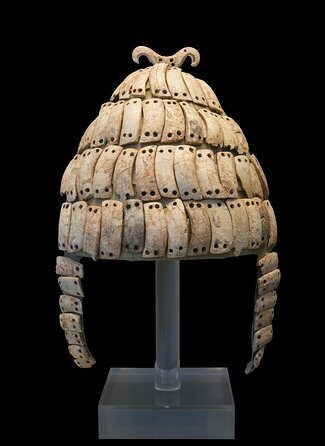
Expect to see gold grave goods, burial masks, jewellery, weapons, worship idols, and even frescoes. The museum is especially useful if you care about the human side of Mycenae—what people wore, used, and believed mattered.
Ticket note: Mycenae entrance fees are not included. The tour includes skip-the-line ticketing service on request, which can save time when you arrive, but you should still plan on paying the site entry ticket.
Nafplio on Foot: Waterfront Beauty, Palamidi’s Views, and the Old Town Layers
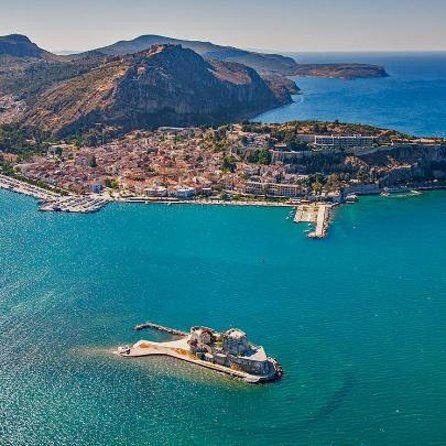
Nafplio is where this tour turns from ancient intensity to an actual day-off vibe. It’s a seaport town in the Peloponnese with a spectacular waterfront, small cobblestone streets, and historic buildings—plus fortresses that make the skyline feel dramatic.
You’ll have about 3 hours in Nafplio, which is long enough to get a feel for the town without turning it into a rushed checklist.
Palamidi Fortress: optional, but hard to ignore
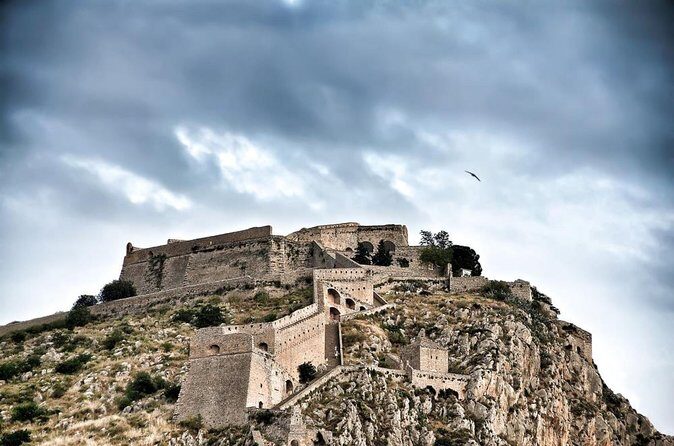
First up is Palamidi Castle, built on a 216 m hill. The view over the Argolic gulf is the whole reason to go. And yes: it’s described as 999 steps to the top.
You don’t have to climb it. But if your legs are decent, it’s one of the fastest ways to understand Nafplio’s geography. If you’re already tired, skip it and spend more time strolling at street level—either choice is valid.
Waterfront and Bourtzi: the water castle mood
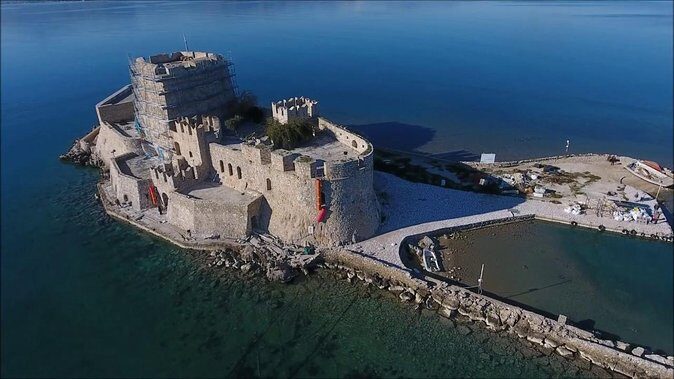
There’s also Bourtzi, the water fortress in the harbor. It’s Venetian and surrounded by water views. Even from the edges, it gives Nafplio that postcard feeling—boats, shadows, and a fortress that looks like it’s guarding the harbor’s rhythm.
Squares and the political story tucked into the city
You’ll pass through Freedom Square, which has an obelisk thanking the French for their contribution in Greece’s War of Independence. Then there’s Constitution Square, tied to the 1843 uprising and the constitution Greece’s first king, Otto, was obliged to grant.
Also look out for the First Hellenic Parliament, an imposing mosque built in 1730 with a large hall and dome—used as the first Hellenic parliament from 1825 until 1826. It’s one of those details that makes Nafplio feel layered rather than frozen in time.
Churches with real historical weight
Two more church stops stand out: Anastasios of Nafplia church, known for its dome and wall paintings, and St. Spyridon church, connected to the assassination of Ioannis Kapodistrias in 1831. That’s modern Greek history living in the middle of old streets.
Food and treats that make Nafplio feel like Nafplio
This is also where you can use your time for a relaxed lunch at a traditional taverna. Afterward, it’s easy to fall into the sweet stuff.
One highlight included in the experience is Antica Gelateria di Roma for gelato and Italian treats, and Pergamonto for Greek loukoumades—puff balls with honey or chocolate and almond nuts. If you’re trying this once, you’ll probably want to try it twice.
Shopping time that doesn’t feel touristy
You’ll also have time to stroll through shops and pick up handmade souvenirs. This is a nice break after archaeological sites, especially if you want something small that isn’t another magnet.
Epidaurus: The Amphitheater That Feels Like Magic
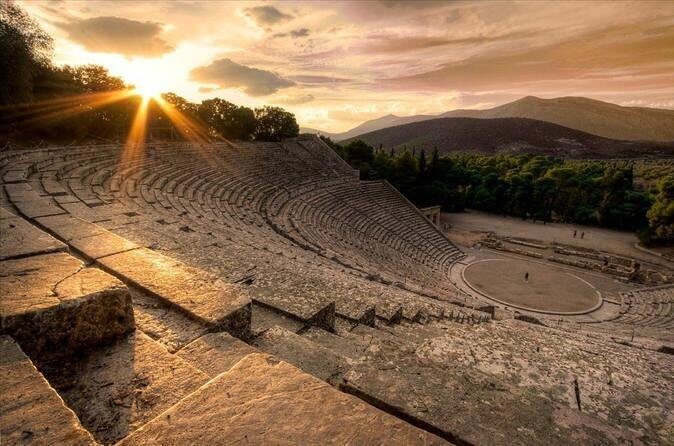
Then you shift gears again to Epidaurus, one of the most popular archaeological sites in Greece. It’s in the region of Argolis, on the northeast side of the Peloponnese.
The big draw is the Epidaurus amphitheater, famous for classic Greek construction and astounding acoustics. The amphitheater is described with a memorable way to test it: if you drop a pin or coin on the stage, it can be heard even from the last seats.
You’ll also be close to the idea of performance—Euripides, Sophocles, Aristophanes, and Aeschylus are connected to the theatrical tradition here. Even if you’re not attending a show, the structure makes the concept feel real.
Epidaurus Archaeological Museum
Next is the Epidaurus Archaeological Museum, noted for reconstructions of temples and columns with inscriptions. This is where the site becomes easier to understand—what you see outdoors gets clearer when you connect it to reconstructions and readable context.
Asclepius sanctuary: a healing place in stone form
Finally, you visit the Asclepius sanctuary, dedicated to Asclepius, the ancient Greek demi-god of medicine. It’s described as a marvelous ancient medical retreat.
The best way to approach this isn’t to treat it like a theme park. Stand back, take in the setting, and think about how people would have experienced the place—ritual, recovery, and the belief that healing was part spiritual, part practical.
Ticket note: Epidaurus entrance fees are not included. Like Mycenae, skip-the-line ticketing is available on request, but you’ll want to pay the site entry ticket when you arrive.
How Much Walking and Climbing You’ll Face
This tour can be a great choice for active travelers, but it’s not a sit-and-ride parade. You should expect walking across uneven ground at ancient sites, plus steps and slopes.
Nafplio has the big one: Palamidi’s 999 steps if you choose to climb. Epidaurus and Mycenae also involve walking through archaeological areas, and you’ll likely move between highlights rather than staying in one flat spot.
The good news: the tour is private, so if you need to slow down, your driver can usually adjust pacing. In reviews, guides like Eirini and George are praised for not rushing and for tailoring time based on preferences. Still, it’s smart to wear comfortable shoes and keep expectations realistic.
If you’re sensitive to heat, plan your clothing and protect yourself. This area can feel intense in warm weather, and the day’s length means you’ll be outdoors more than you might expect.
Price, Value, and What to Budget for Tickets
The price is $328.87 per person for a private tour that runs about 9 hours. For many people, this feels steep until you tally what’s included and what you avoid.
You get:
- A fully private experience in a first-class vehicle
- Hotel/port pickup and drop-off in Athens
- WiFi on board
- Bottled water and refreshing wipes
- Skip-the-line ticketing service on request (helpful when lines are long)
- Professional drivers who know Greek history and can explain what you’re seeing (they are not licensed to enter sites or museums)
What costs extra:
- Mycenae entrance fee (20€ pp)
- Epidaurus entrance fee (20€ pp)
- Lunch and drinks
- Tips
- Any add-on for a licensed tour guide inside sites (available on request)
So is it good value? For me, it works best when you’re traveling as a small group (or couple) and you want the comfort of private transport plus strong interpretation from the car/drive moments. If you’re solo and price-sensitive, the ticket extras plus the private pricing can make alternatives feel more attractive.
But if you care about efficiency—getting multiple Peloponnese highlights in one day—private is often cheaper than you think once you compare it to car rental, fuel, parking, and the time cost of figuring it out.
Who This Tour Fits Best (and Who Might Want Another Plan)
This tour is ideal if you:
- Want a big ancient-site day from Athens without managing driving
- Like mixing ruins with a real town stop (Nafplio’s streets and waterfront matter here)
- Appreciate interpretation from a driver who shares stories and keeps you oriented during the ride
It may be less ideal if you:
- Want a fully licensed guide walking you inside every museum room (the drivers are not licensed to enter sites or museums)
- Prefer a lighter day with minimal stairs and uneven ground
- Expect every ticket to be included in the price (Mycenae and Epidaurus entry fees are extra)
Should You Book This Nafplio–Mycenae–Epidaurus–Corinth Canal Tour?
I’d book it if you’re aiming for one strong Peloponnese day with a mix of Mycenae’s monumental Bronze Age remains, Epidaurus’s amphitheater acoustics, and Nafplio’s easy-to-love old-town vibe. The private car makes it far less stressful than trying to stitch everything together yourself, and the driver-led storytelling—people like Peter, Tas, George, Yianni, and Eirini—sounds like the main reason the reviews feel consistently positive.
Before you commit, just budget for the Mycenae and Epidaurus entrance tickets, and plan for some walking (especially if you decide on Palamidi’s 999 steps). If that fits your comfort level, this is a smart, efficient day trip with real payoff.
FAQ
How long is the private tour?
It runs for about 9 hours.
Is this a private tour or a group tour?
It’s private. Only your group participates.
What’s included in the price?
The tour includes a fully private vehicle, hotel/port pickup and drop-off, WiFi on board, bottled water and refreshing wipes, and skip-the-line ticketing service on request.
Do I need to pay entrance fees?
Yes. Entrance fees paid at the sites are listed as 20€ per person for Mycenae and 20€ per person for Epidaurus.
Which parts of the day include time outside Athens?
Most of the day is spent outside Athens at stops including Corinth Canal/Diolkos, Mycenae, Nafplio, and Epidaurus, before returning to Athens.
Is there a licensed guide who walks you into museums and sites?
The driver is not licensed to enter sites or museums. A licensed tour guide accompaniment is available on request (additional cost).
Does the tour offer pickup from my hotel or apartment?
Yes. Your driver picks you up from your chosen hotel, Airbnb, or apartment lobby in Athens and returns you there afterward.
Is the tour offered in English?
Yes, it’s offered in English.
Are there accessibility or assistance details I should know?
Service animals are allowed, and it notes that most travelers can participate. The day does include walking and climbing, including Palamidi’s 999 steps if you go up.
Can I cancel for a full refund?
Yes. You can cancel up to 24 hours in advance for a full refund.