REVIEW · HERAKLION
The Hunt of the Olympian Gods, scavenger hunt for families, prive
Book on Viator →Operated by Hellas Revival · Bookable on Viator
Heraklion becomes a giant mythology game board as Zeus calls families to find the missing gods of Olympus. I like the story-led puzzles, which give children a reason to look closely at monuments, and the private format, which lets your group work at its own pace. The activity is aimed at children ages 5 to 12, though younger children will need help reading and solving clues.
The main trade-off is that this is a treasure hunt, not a standard city tour. You will learn about Heraklion through riddles and discoveries rather than a long historical talk, and the walk may last close to two hours even though the stated duration is about 90 minutes.
In This Review
- Key points at a glance
- A Greek mythology game in the middle of Heraklion
- How the 12-god route works
- Why the facilitator matters
- The 6 pm start and the walking reality
- What the private format adds
- What makes this good for children
- What it does not provide
- Who should book this Heraklion hunt?
- Booking, cancellation, and practical planning
- Should you book The Hunt of the Olympian Gods?
- FAQ
- Where does The Hunt of the Olympian Gods begin?
- Where does the treasure hunt finish?
- How long does the activity last?
- What ages is the activity suitable for?
- Is this a regular guided tour?
- Can I cancel for a full refund?
Key points at a glance
- Zeus starts the search: The story sends your family across Heraklion to find 12 missing gods from Mount Olympus.
- Twelve city locations: Each god is hidden at a different place, turning monuments and streets into clues.
- Designed for ages 5 to 12: The plain English helps children and families who do not speak English as their first language.
- A private group activity: Only your own group takes part, with a maximum of five people per booking.
- Led by a museum educator: An expert facilitator from Exploration Children’s Museum supplies the guidance, props, and materials.
- A walking activity at 6 pm: You begin at Leof. Ikarou 5 and finish at Plateia 18 Anglon, with roughly 90 minutes to two hours on foot.
A Greek mythology game in the middle of Heraklion
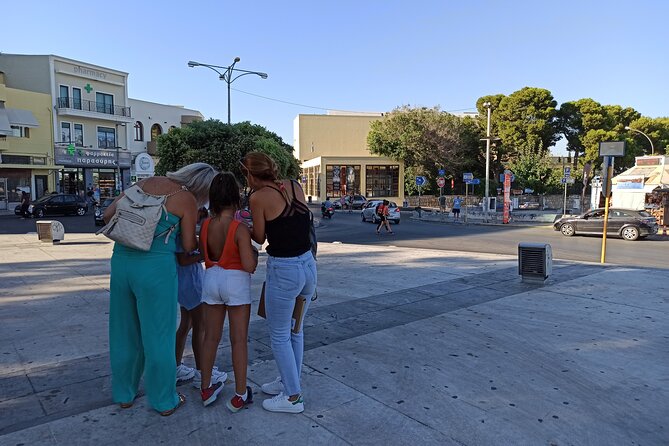
The premise is wonderfully simple. A strong south wind has swept across Mount Olympus, leaving the gods scattered. Zeus comes to Crete to find them, and your family becomes part of the rescue team.
That gives children a clear mission from the start. You are not simply walking from one sight to another. You are looking for Athena, Hephaestus, Poseidon, and the other Olympians, using clues to work out where each one is hiding.
The story also includes Pandora’s box. Its role in the search adds a playful question to the route: can this famous object really help Zeus put the Olympian world back together? You will need to solve the clues to find out.
I like this approach because it gives a child-friendly purpose to a city walk. Heraklion has monuments, squares, streets, and public spaces that can seem less interesting to a five-year-old than a beach or a water park. A mythology hunt changes that. A doorway, statue, or monument becomes part of the game.
The activity is presented in plain English. That matters for families who use English as a second language, since complicated instructions can quickly take the fun out of a puzzle. The language is intended to be accessible to children, while the adult in your group can help with reading, discussion, and problem solving.
You can also read our reviews of more tours and experiences in Heraklion.


How the 12-god route works
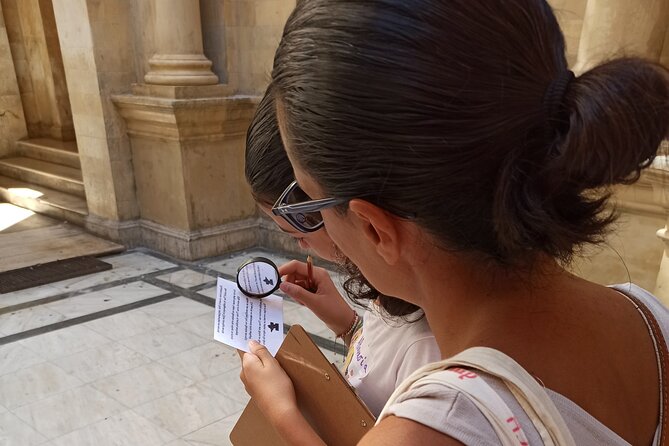
The full activity takes place in Heraklion, with twelve gods hidden in twelve city locations. The supplied details do not name every monument or provide a stop-by-stop list, so you should think of this as a guided puzzle route through the city rather than a fixed sightseeing checklist with twelve formal visits.
At each place, the facilitator helps your group use the clues and props. Your children may spot a detail, answer a riddle, or connect a god with a feature of the location. The adults are not left out. One of the pleasures of this sort of activity is watching the children make guesses while the whole group works toward the answer.
The route is also an informal introduction to Heraklion. You can expect to explore twelve top-rated attractions or notable places in the city, but the purpose is discovery through play, not a detailed lecture at every stop. If you want dates, architecture notes, and a full account of Heraklion’s past, book a separate guided sightseeing tour.
That limitation is not a flaw for the right family. Children ages five to twelve often remember a city better when they have a task to complete. The gods supply a simple framework, and the facilitator can connect the clues with the places you see.
The route ends at Plateia 18 Anglon, also called 18 Anglon Square, at the listed address in Heraklion. Since the starting point is Leof. Ikarou 5, you should expect the activity to move through the city rather than remain in one small area.
Why the facilitator matters
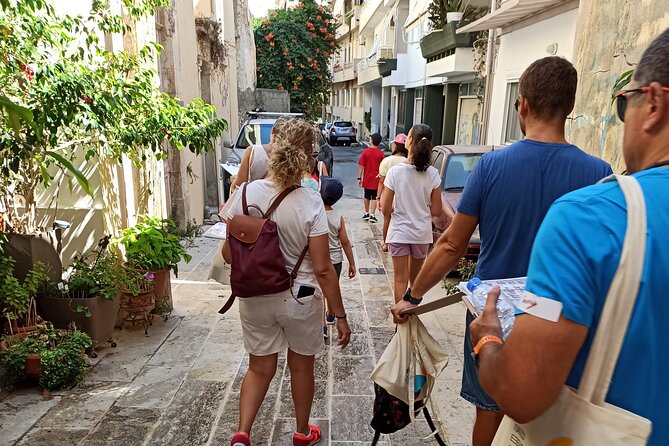
The activity includes an expert facilitator who is identified as a museum educator from Exploration Children’s Museum. No individual guide name is provided, but the role is important: this person is not simply handing you a printed worksheet and sending you off.
A good facilitator keeps the puzzle moving, explains a clue when a child gets stuck, and makes room for different ages to participate. That is especially useful when one child reads confidently and another prefers spotting objects or answering simple questions.
The available feedback describes the staff as specially trained, friendly, and comfortable working with children. One family group with children ages five to seven found that the activity kept both adults and children involved. That age range is worth noting. The hunt is not only for older school-age children who can solve written riddles independently.
Still, you should plan to take an active role. The facilitator leads the search, but parents will probably need to read some clues aloud, encourage shy children, and help the group stay together. The activity works best when you treat it as a shared game rather than childcare.
All materials and props are included. You do not need to prepare a separate mythology lesson or bring puzzle supplies. The mobile ticket also means you can keep booking details on your phone, though confirmation is received at booking.
The 6 pm start and the walking reality
The meeting time is 6 pm. That is a useful slot for families who want to spend the hotter part of the day at the beach, rest at a hotel, or visit a museum before heading into the city.
The start point is Leof. Ikarou 5, Iraklio 713 06, Greece. The finish is Plateia 18 Anglon, Heraklion 712 02. Check both points on a map before leaving your hotel, since the activity does not begin and end at the same place.
The stated duration is about one hour and thirty minutes, while the practical information says the treasure hunt includes about two hours of walking. I would plan for the longer figure. Children may stop to think, ask questions, and examine clues, and city walking rarely runs perfectly to the clock.
Comfortable shoes matter more than special equipment. Bring water, especially in warm weather, and make sure children are ready for a walking activity before you begin. The exact route and the number of stops make this more active than a short square-based game.
The 6 pm start may also affect dinner plans. You finish around 7:30 or possibly 8 pm, depending on the pace of the group and the walking time. Since the end point is in Heraklion, you can arrange dinner afterward, but keep the timing flexible.
What the private format adds
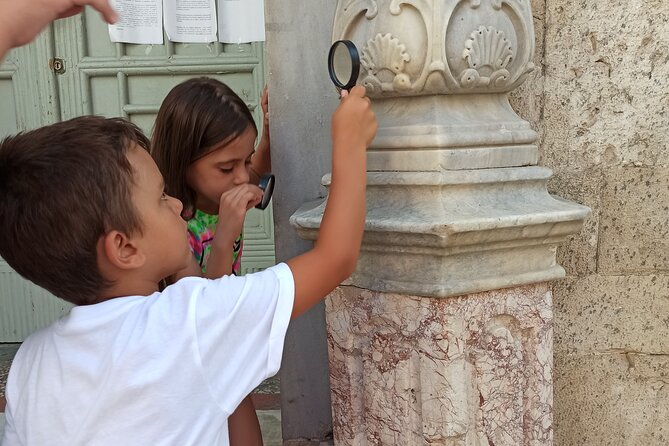
Only your group participates, with a maximum of five people. This is a major advantage for families with different ages or attention spans. You can pause briefly, let a child try an answer, or adjust the pace without worrying about a large public group.
A private booking can also make the mythology story feel more personal. Children often speak up more readily when they are not competing with strangers for a turn. Parents can guide the younger members without holding up a bus full of people.
The group limit is also the key pricing detail. The cost is $289.40 per group, not per person, for up to five people. For a full group of five, that works out to about $57.88 per person. For two people, the per-person cost is much higher, so the value improves when you fill the available places.
You should compare that price with what you want from the evening. It includes a private facilitator, all materials, and a planned route through twelve city locations. It does not include a conventional guided tour, museum admission, food, transport, or any other listed extras.
For a family that wants a structured activity and a guide who knows how to work with children, the private price may make sense. If you mainly want to see Heraklion’s sights quickly or cheaply, a self-guided walk will cost less.



What makes this good for children
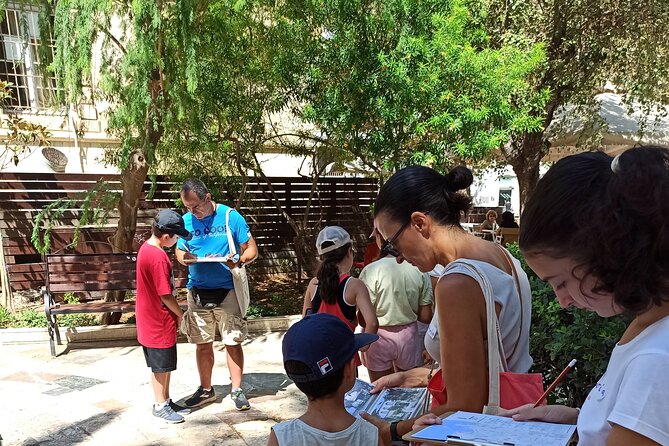
The strongest point is the way the hunt gives children control over part of the visit. They can search, guess, notice, and solve instead of simply following an adult from one sight to the next.
The activity is suited to ages five to twelve, a wide range that includes early readers and older children who can handle more complex clues. The facilitator can help bridge that gap, but siblings may still enjoy the activity in different ways.
Younger children may enjoy finding the gods and handling the props more than understanding every mythology reference. Older children may take greater interest in the riddles and the connection between each god and the clue. Parents can divide tasks so everyone has a role.
The plain English is another practical strength. A family speaking English as a foreign language does not have to deal with dense historical explanations. You can focus on the story and the physical search.
The activity also creates shared family time without requiring parents to invent a game from scratch. That can be valuable during a longer Crete holiday, when children may be tired of churches, museums, and ancient sites. Here, the city itself supplies the setting.
What it does not provide
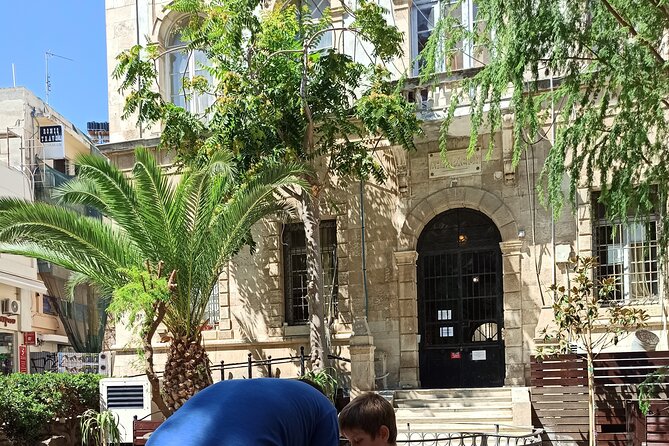
You should not book this expecting a formal guided tour of Heraklion. The activity description clearly separates the treasure hunt from sightseeing tours. The facilitator uses the city and its monuments as part of the game, but the main goal is finding the gods.
That means you may leave without a full explanation of every attraction. You will probably gain memorable impressions and some mythology, but anyone who wants detailed archaeological, architectural, or political history should add another tour or museum visit.
The exact route is not described in enough detail to tell you how much time you spend at each attraction. You also cannot assume that all twelve places involve entry inside a building. The supplied information presents them as city locations where the gods are hidden.
There is a strict no-photo and no-video rule during the activity. That may disappoint parents who want to record every clue or create a family video. It also means you should be ready to put the phone away apart from using the mobile ticket or essential navigation before and after the hunt.
The experience requires good weather. If rain or other poor conditions cause cancellation, you are offered another date or a full refund. That is reassuring, but it also means you should avoid placing the hunt on the one evening when your holiday schedule has no flexibility.
Who should book this Heraklion hunt?
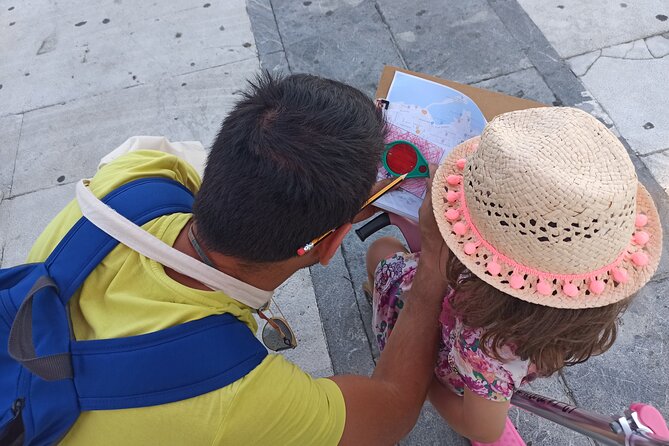
I would recommend it most strongly to families with children from five to twelve who want an activity that mixes city sightseeing with play. It is especially useful if your children resist standard tours or if you want to introduce Greek mythology without a classroom-style lesson.
It also suits families who value a private setting. A group of up to five can include parents and children, but you should check the booking arrangement if your party is larger. The private format does not mean an unlimited number of relatives can join.
The activity may suit children who speak English as a second language because the language is intended to be plain. Parents still need to help, but the format avoids making advanced English the main challenge.
I would be more cautious if your children are very young toddlers, dislike walking, or need frequent breaks. The target age begins at five, and the route covers about two hours on foot. It is also less suitable for anyone hoping for a quiet, detailed history tour.
Service animals are allowed, and the activity is near public transportation. Most people can participate, but the walking requirement remains the main physical point to consider.
Booking, cancellation, and practical planning
You receive confirmation at the time of booking, and the activity uses a mobile ticket. Arrive with enough time to reach Leof. Ikarou 5 for the 6 pm start, particularly if you are staying outside central Heraklion.
Free cancellation is available up to 24 hours before the start time for a full refund. Cancellations or changes made less than 24 hours in advance are not accepted for a refund, and the cut-off follows local time.
Because good weather is required, keep an eye on the forecast. If the provider cancels because of poor weather, you can choose another date or receive a full refund.
I would bring water, comfortable walking shoes, and a light layer for the evening. I would also explain the no-photo rule to children before you arrive. That small bit of preparation helps avoid disappointment once the game begins.
Should you book The Hunt of the Olympian Gods?
Book it if you want your children to experience Heraklion as a puzzle rather than a list of sights. The Zeus story, twelve hidden gods, trained museum educator, private group, and included props give the evening a clear shape. The strongest praise centers on the creative format, the way it keeps children interested, and the fact that adults learn while the children play.
Think twice if you want a traditional sightseeing tour, a low-cost activity for only one or two people, or a short walk with little physical effort. The $289.40 group price offers better value for five people than for a smaller party, and the route may take closer to two hours than the advertised 90 minutes.
For the right family, this is a smart way to add mythology and local exploration to a Crete holiday. Bring curiosity, patience, and walking shoes, then let the children take the lead.
FAQ
Where does The Hunt of the Olympian Gods begin?
The activity begins at Leof. Ikarou 5, Iraklio 713 06, Greece, at 6 pm.
Where does the treasure hunt finish?
The hunt ends at Plateia 18 Anglon, Heraklion 712 02, Greece.
How long does the activity last?
The stated duration is about one hour and thirty minutes. The practical information says it includes about two hours of walking, so you should allow extra time.
What ages is the activity suitable for?
It is designed for families with children from five to twelve years old.
Is this a regular guided tour?
No. It is a private treasure hunt, not a standard guided tour. You solve riddles, explore monuments, and search for twelve Olympian gods with help from the facilitator.
Can I cancel for a full refund?
Yes. You can cancel at least 24 hours before the local start time for a full refund. Cancellations or changes made less than 24 hours before the start are not refunded or accepted.