REVIEW · THESSALONIKI
Thessaloniki: Greek Cooking Class, Market Visit and Lunch
Book on GetYourGuide →Operated by Active Thess Holidays · Bookable on GetYourGuide
Thessaloniki’s best cooking lesson starts before anyone picks up a knife. You meet in Aristotelous Square, taste Greek olives, then shop for vegetables at Kapani Market, where local residents buy ingredients for their own kitchens. That market stop gives the meal a real sense of place.
I like the combination of market shopping and hands-on cooking, and I like that your reward is lunch made from the food you helped prepare. Guide Maria has earned especially warm praise for her kindness and for explaining the origins of ingredients and recipes. The main consideration is that the cooking may feel more guided than fully practical, and one participant wanted more hands-on work and a more advanced menu.
In This Review
- Key points to know
- Start in Aristotelous Square with a taste of Greece
- Kapani Market is the heart of the outing
- Modiano Market adds cheese and local flavor
- Learn Greek dishes with a professional cook
- What you actually get to do in the kitchen
- Lunch at a traditional tavern completes the lesson
- The guide makes a major difference
- Is $108 per person good value?
- Who will enjoy this Thessaloniki cooking class?
- Timing, meeting point, and cancellation
- Final call: book it for food, not kitchen thrills
- FAQ
- How long does the Greek cooking experience last?
- Where do I meet the guide?
- What language is the tour conducted in?
- Which markets are included?
- Which dishes will I prepare?
- How much does the experience cost, and can I cancel?
Key points to know
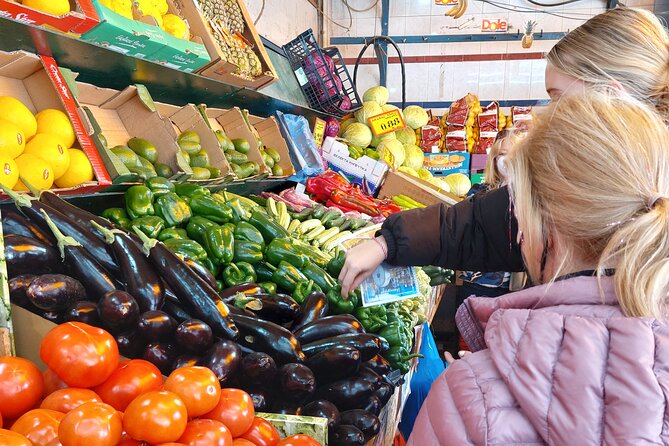
- Kapani comes first: Choose vegetables with your guide and see where Thessaloniki residents shop for daily groceries.
- Classic Greek dishes: Prepare tzatziki, dolmadakia, Greek salad, stuffed peppers and tomatoes, and chocolate salami.
- Two market tastes: Try fresh Greek olives at the start and local cheese at Modiano Market.
- Lunch is part of the lesson: Eat your handmade appetizers, salad, main dishes, and dessert at a traditional tavern.
- Maria may be your guide: She is praised for her friendly manner, clear explanations, and insight into Greek food and daily life.
- A compact half-day: The full program takes 3.5 hours and costs $108 per person.
Start in Aristotelous Square with a taste of Greece
The meeting point is easy to find: in front of the Electra Palace Hotel on Aristotelous Square. From there, the experience moves into Thessaloniki’s food quarters rather than keeping you in a classroom from the start.
That order matters. Greek cooking makes more sense when you first see the raw materials. A quick tasting of Greek olives sets the tone, introducing you to one of the country’s basic table foods before you begin choosing vegetables for the meal.
You are not simply shown a market and sent on your own. A professional cook and facilitator leads the shopping, helping select the produce that will go into the dishes later. The precise vegetables can vary, but the stated menu includes stuffed peppers and tomatoes, salad, and other familiar Greek preparations.
I like this beginning because it links the city to the plate. You see ingredients in their everyday setting, then use them a short time later. It is a small but useful lesson in how Greek meals are built around fresh produce, yogurt, herbs, vegetables, cheese, and olive-based flavors.
You can also read our reviews of more shopping tours in Thessaloniki


Kapani Market is the heart of the outing
Kapani is Thessaloniki’s Central Market, and it is the most distinctive part of the route. Numerous local residents shop there for daily groceries, so this is not just a decorative market stop arranged for sightseeing. You are entering a working food market where the focus is on buying and selling ingredients.
Your guide helps you choose vegetables for the class and explains what you are seeing along the way. That is particularly useful if you do not know Greek produce well or are unsure which ingredients work best in traditional recipes.
The market visit also gives you a chance to engage with local traders. The experience is not described as a long food tour with many tastings, so you should expect the market to serve mainly as a shopping stop, with the olive tasting and a later cheese taste providing the main sampling.
The practical advantage is that the market visit keeps the cooking lesson grounded. You are not learning a generic recipe in a hotel kitchen. You are buying food in central Thessaloniki, then carrying those ingredients into the next stage of the program.
If you prefer a quiet, highly organized start, keep in mind that a central market can feel active and crowded at times. The schedule allows only 3.5 hours for the full experience, so the market portion is likely focused rather than leisurely. I would treat it as an introduction to Thessaloniki’s food trade, not a full market exploration.
Modiano Market adds cheese and local flavor
The program also includes a visit to Modiano Market, where you taste local cheese. This gives you a second look at Thessaloniki’s food culture and adds a dairy element to the olive and vegetable focus at Kapani.
The available details do not specify which cheese you will taste, so do not book this expecting a formal cheese seminar. Think of it as a short local food stop that helps round out the market experience.
Modiano and Kapani serve different purposes here. Kapani is tied directly to the vegetables used for cooking, while Modiano provides a taste of another important Greek food category. Together, they make the lesson feel connected to the city’s markets rather than limited to the tavern.
Learn Greek dishes with a professional cook
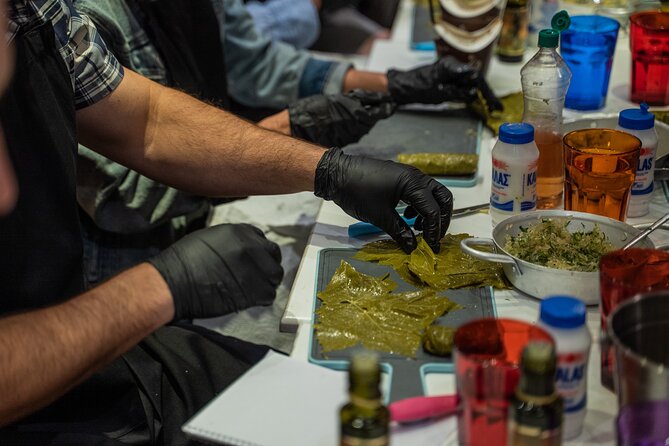
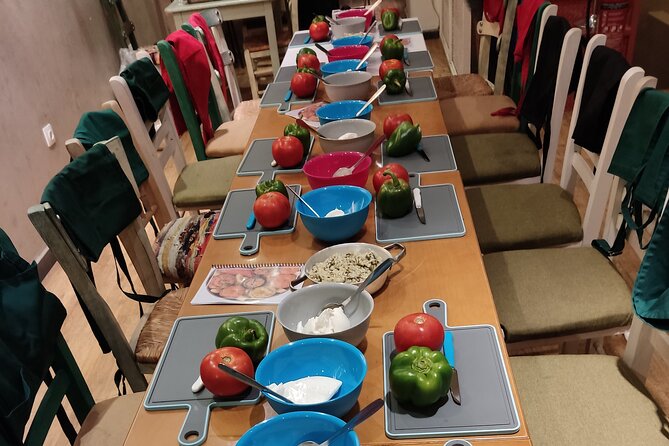
After shopping, you work with a professional and experienced cook to prepare traditional Greek recipes. The class is designed for people who want to take part, but the amount of physical cooking may vary depending on the group and the guide.
The menu listed for the experience includes:
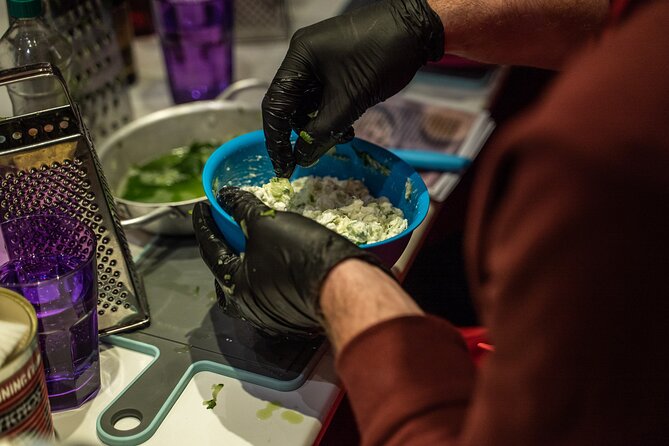
- Tzatziki, made with yogurt, cucumber, and garlic
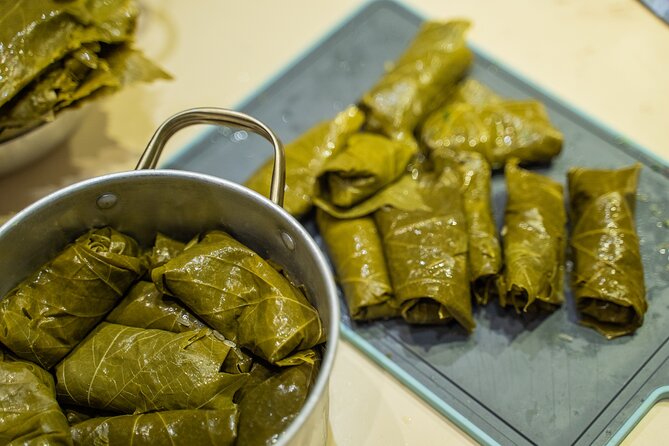
- Stuffed vine leaves, known as dolmadakia
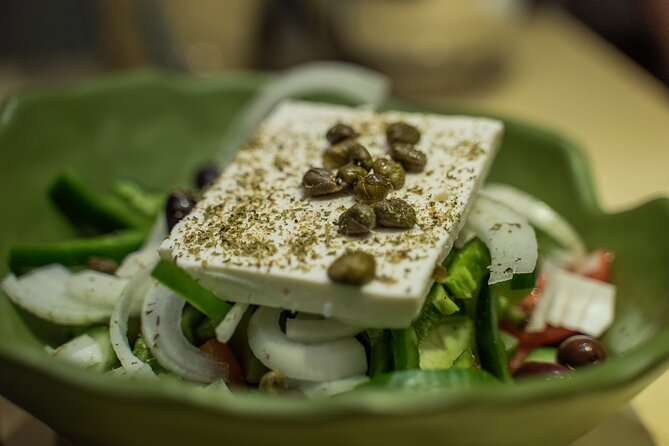
- Greek salad
- Stuffed vegetables, including peppers and tomatoes
- Chocolate salami for dessert
This is a useful menu for a first Greek cooking class because it covers several familiar styles. Tzatziki teaches you how a few simple ingredients can make a strong dip. Dolmadakia introduce a classic stuffed preparation. Stuffed vegetables show how Greek cooking turns produce into a full main course.
The menu also gives you a good balance between dishes you may already know and dishes that can be less familiar. Greek salad and tzatziki are easy to recognize, while vine leaves and stuffed vegetables offer more of a cooking lesson.
The guide explains traditional methods and recipes as you work. Maria has been especially well received for sharing the origins of ingredients and recipes, as well as for making people feel comfortable. If she is leading your session, you can expect an approachable style rather than a stern professional kitchen atmosphere.
The class is also a chance to learn food traditions, not just instructions. You hear how ingredients fit into Greek meals and why certain preparations are common. That cultural context is valuable because it helps you remember the recipe once you return home.
What you actually get to do in the kitchen
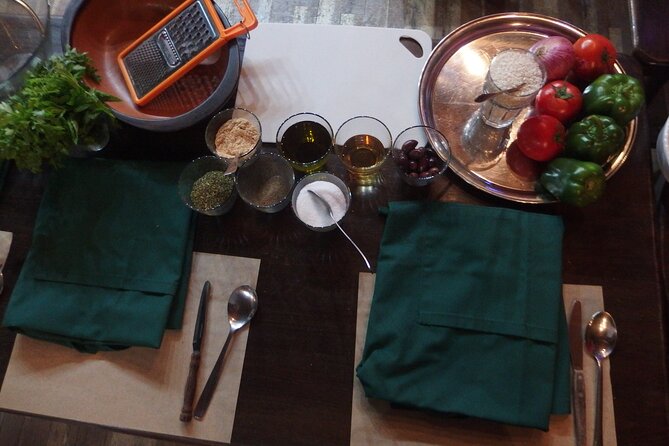
The experience promises a hands-on cooking session, but you should set your expectations carefully. You will prepare the listed dishes with guidance, yet one participant specifically wanted more direct time handling the food and a menu with greater complexity, perhaps involving filo dough.
That is the main limitation for serious home cooks. If you want a demanding technical class covering pastry work, knife skills, or several difficult sauces, this may feel basic. The recipes are traditional and useful, but they are also approachable.
For most people, that simplicity is a benefit. You can focus on learning the ingredients and methods without being overwhelmed. Tzatziki, Greek salad, stuffed vegetables, dolmadakia, and chocolate salami are the sort of recipes you could reasonably try again at home.
I would describe the cooking as guided participation rather than an advanced chef’s workshop. You should have meaningful involvement, but the professional cook will likely organize the workflow and keep the meal on schedule. That matters because the class must move from market to kitchen to lunch within 3.5 hours.






Lunch at a traditional tavern completes the lesson
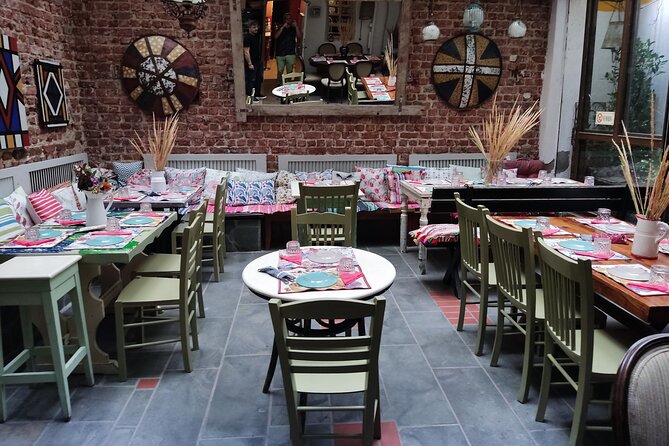
The best part of the schedule may be the meal at the end. Your appetizers, salad, main courses, and dessert are prepared by you and served in a traditional tavern in central Thessaloniki.
This is more satisfying than sampling a few bites while standing in a market. You sit down to a proper lunch and see the whole meal together. The food has a story you can follow: olives at the start, market ingredients in the middle, shared preparation in the kitchen, and finished dishes at the table.
The listed meal includes tzatziki, dolmadakia, Greek salad, stuffed peppers and tomatoes, and chocolate salami. The exact serving arrangement is not described, so you should not assume a particular number of portions or additional drinks.
The tavern setting also helps connect the lesson to everyday Greek dining. You are not just taking food out of a cooking school oven. You are eating in a traditional restaurant setting in the center of the city, with restaurant staff helping make the meal comfortable.
The strongest praise has focused on the food and the care from the restaurant team. One participant described the meal as excellent and found the staff attentive and friendly. That suggests the lunch is not an afterthought, but it is still wise to remember that the value comes from the full chain of activities, not lunch alone.
The guide makes a major difference
A cooking class can succeed or fail on the person leading it. Here, Maria is the guide most often identified with the experience. She is described as friendly, kind, helpful, and good at putting people at ease.
That matters in a group cooking setting. You may have different skill levels, and some people may be unsure about handling unfamiliar ingredients. A guide who explains clearly and keeps the mood relaxed can make a simple recipe feel rewarding.
Maria also adds local context beyond the food. Her explanations have included the origins of ingredients and recipes, along with insights into Greek life. That turns the outing into more than a sequence of tasks.
Another guide named Ellie has also led the experience. She was praised for her outgoing manner and for pointing out places of interest while guiding the market visit. Since guides can change, you should not assume Maria will lead every departure, but the available feedback points to a friendly, engaged style from the named guides.
The tour is conducted in English. If food vocabulary and cooking instructions matter to you, that is an important practical point when comparing this with a class offered in another language.
Is $108 per person good value?
At $108 per person, this is not the cheapest way to eat Greek food in Thessaloniki. You can certainly buy a meal for less. The real question is how much you value the combination of market access, instruction, food tasting, and a prepared lunch.
The price covers a 3.5-hour experience with a local guide, market shopping, olive tasting, Modiano cheese tasting, cooking instruction, ingredients, and the meal you prepare. For someone who wants a structured introduction to Greek food, that is a fair package.
I see the value in three areas. First, the market visit gives you context you would not get from ordering a plate in a restaurant. Second, the recipes are practical enough to use again. Third, the lunch means you are not leaving with a few samples and an empty stomach.
The value is less convincing if your main goal is a high-level cooking course. The menu is traditional, but it is not presented as advanced. One participant wanted more hands-on work and a more challenging dish such as filo pastry, so experienced cooks may find the class too gentle.
For a first visit to Thessaloniki, I think the price makes more sense. You receive a food-focused city introduction, a meal, and recipes in one half-day. If you are already planning a separate market tour and a long restaurant lunch, compare the combined cost before booking.
Who will enjoy this Thessaloniki cooking class?
This experience suits you if you want food to be your way into the city. It works especially well for couples, families, and small groups who enjoy eating together and do not need a demanding culinary curriculum.
It is also a good fit for people who like meeting local guides. The named guides have been praised for their warmth and for explaining Greek customs and ingredients in a personal way. That human contact can be more memorable than a standard food walk.
You should consider it if you want recipes you can repeat at home. Tzatziki, Greek salad, stuffed vegetables, dolmadakia, and chocolate salami are recognizable dishes with clear links to Greek home cooking.
I would hesitate if you dislike group activities, have very strict dietary needs, or want complete control over the kitchen. The supplied details do not state that dietary adjustments are available, so ask before booking if that affects your decision.
Serious cooks should also weigh the class level. You will learn traditional dishes, but the program may not satisfy someone looking for technical challenges, pastry work, or a long period of independent cooking.
Timing, meeting point, and cancellation
The activity lasts 3.5 hours, with starting times available according to the selected date. You meet at Aristotelous Square in front of the Electra Palace Hotel, a clear central location.
Because the program includes two market areas, cooking, and lunch, arrive ready to keep moving. Comfortable footwear makes sense for a market-and-kitchen outing, although the available details do not set out a formal dress code.
The tour is conducted in English with a live guide. You can reserve now and pay later, which helps if you are still arranging your Thessaloniki schedule. Free cancellation is available up to 24 hours before the activity for a full refund.
Final call: book it for food, not kitchen thrills
I would book this cooking class if you want a friendly, practical introduction to Thessaloniki through its markets and traditional dishes. The market-to-table format is its real strength, and the finished lunch gives the outing a satisfying ending.
I would skip it if you want an advanced cooking course with extensive independent work. The menu is appealing and useful, but the class appears designed for shared enjoyment and cultural context rather than serious culinary training.
For most food-focused visitors, the balance is good: Kapani Market, Modiano cheese, Greek olives, a local guide such as Maria, several classic recipes, and lunch in a traditional tavern. At $108, it earns its price when you take part in the whole experience rather than treating it as a simple meal.
FAQ
How long does the Greek cooking experience last?
The experience lasts 3.5 hours.
Where do I meet the guide?
The meeting point is in Aristotelous Square, in front of the Electra Palace Hotel.
What language is the tour conducted in?
The live tour guide conducts the activity in English.
Which markets are included?
You visit Kapani Market, Thessaloniki’s Central Market, to choose vegetables and explore the local food trade. You also visit Modiano Market, where you taste local cheese.
Which dishes will I prepare?
The listed dishes include tzatziki, stuffed vine leaves called dolmadakia, Greek salad, stuffed peppers and tomatoes, and chocolate salami for dessert.
How much does the experience cost, and can I cancel?
The price is $108 per person. You can cancel up to 24 hours in advance for a full refund, and you can reserve now and pay later.