Thessaloniki reveals its past one layer at a time on this private walk, from Roman imperial monuments to Byzantine churches and an Ottoman-era prison. I like that the route covers the city’s essential sights while leaving room to shape the conversation around your interests. I also like the private format, which lets you set the pace and ask questions without a group holding you back. The main concern is guide quality: one recent guide was friendly and generous with extra time, but spoke so softly that much of the explanation was hard to hear.
The three-hour route begins near Hagios Demetrios and ends back in the same area after a circuit through central Thessaloniki. You’ll get the most from it if you want an overview on your first day and plan to use the guide for restaurant, museum, and sightseeing suggestions afterward.
In This Review
- Key points to know before booking
- Why this walk is a useful introduction to Thessaloniki
- Starting at Hagios Demetrios
- The White Tower and Thessaloniki’s waterfront story
- Saint Demetrios, the city’s patron church
- The Rotunda and the Arch of Galerius
- The Ancient Agora and daily Roman life
- What the private format really gives you
- Timing, transport, and physical demands
- Who will get the most from this tour
- Booking advice and final verdict
- FAQ
- Where does the tour begin?
- How long does the tour last?
- Which places are included?
- Is this a private tour?
- Can the tour be customized?
- Which languages are available?
- Is food or drink included?
- Is the tour wheelchair accessible?
Key points to know before booking
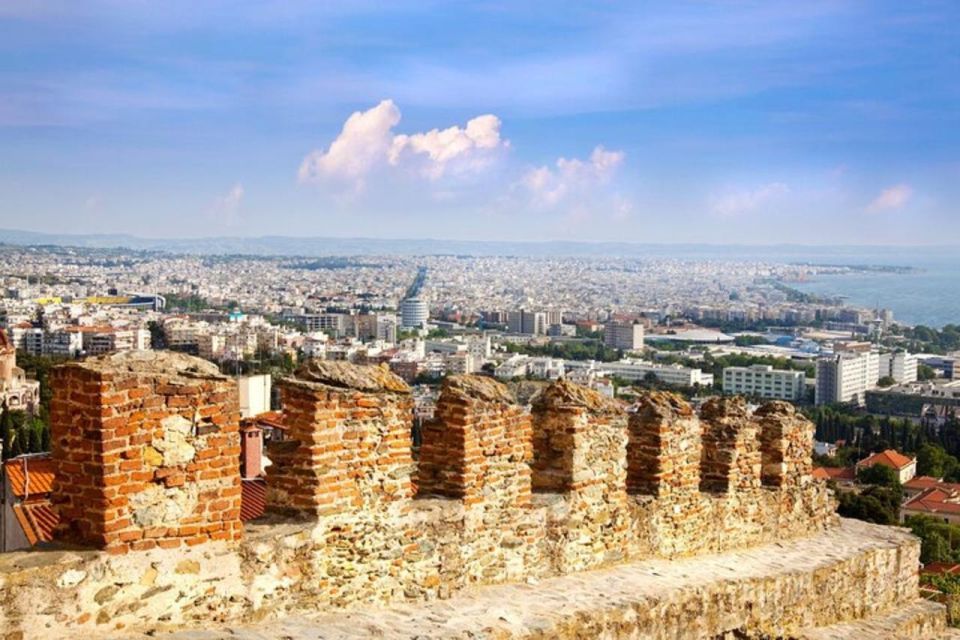
- Five major historic stops: The route includes the White Tower, Saint Demetrios, Rotunda, Arch of Galerius, and Ancient Agora.
- Private and adjustable: You are not placed with another group, and the walk can be customized around your interests.
- A local guide leads the history: Guides are available in English, French, Spanish, and Italian.
- A useful first-day orientation: The route links sights from several periods, helping you understand Thessaloniki’s unusual mix of Roman, Byzantine, and Ottoman remains.
- Allow for uneven guiding quality: A recent guide arrived early and added 20 minutes, but had a quiet speaking voice and offered only brief explanations at some sites.
- Good booking flexibility: You can cancel up to 24 hours before the start for a full refund and reserve without paying immediately.
Why this walk is a useful introduction to Thessaloniki
Thessaloniki can feel confusing at first. Its central streets hold Roman ruins, Byzantine churches, Ottoman traces, waterfront monuments, and modern shops, often within a short walk of one another. This tour gives you a historical framework before you begin exploring alone.
I like the way the route moves across several centuries rather than focusing on just one period. The White Tower recalls Ottoman Thessaloniki, the Church of Saint Demetrios represents the city’s Christian identity, and the Rotunda and Arch of Galerius take you back to the Roman Empire. The Ancient Agora adds an everyday civic setting to the grand monuments.
Because the tour is private, you can ask for more detail on the period that interests you most. If Roman architecture is your priority, say so at the start. If you care more about Orthodox worship, local customs, or later city history, tell your guide before the walk gets underway.
The price is $47 per person. That is a reasonable rate for a private three-hour experience if you are traveling with another person or a small party, since the guide’s attention is reserved for your group. For one person, the cost is less attractive than a standard group walk, but the ability to ask questions and adjust the route can make the difference worthwhile.
Keep your expectations in check. This is not presented as a long specialist lecture at every monument. The quality depends heavily on the individual guide. One guide was described as young, pleasant, and helpful, while another struggled to project her voice and gave simple explanations. That makes your first conversation important: ask how the route will be handled and what subjects you want covered.
You can also read our reviews of more walking tours in Thessaloniki


Starting at Hagios Demetrios
The meeting point is in front of Hagios Demetrios, the church dedicated to Thessaloniki’s patron saint. This is a sensible place to begin because the church is both a major sight and a strong introduction to the city’s religious past.
Your guide will meet you there and set out on foot. The walk uses public transport when needed, unless you select an option that changes the arrangements, but the experience is primarily a walking tour. Wear comfortable shoes and expect a steady three-hour outing rather than a short series of photo stops.
The private format matters here. If the church is especially important to you, you can ask for extra time and explanation. If you prefer to keep moving, you can avoid spending too long inside one location. The supplied information confirms wheelchair accessibility, though the route’s suitability can still depend on the specific path and any transport used, so raise access needs when booking.
The White Tower and Thessaloniki’s waterfront story
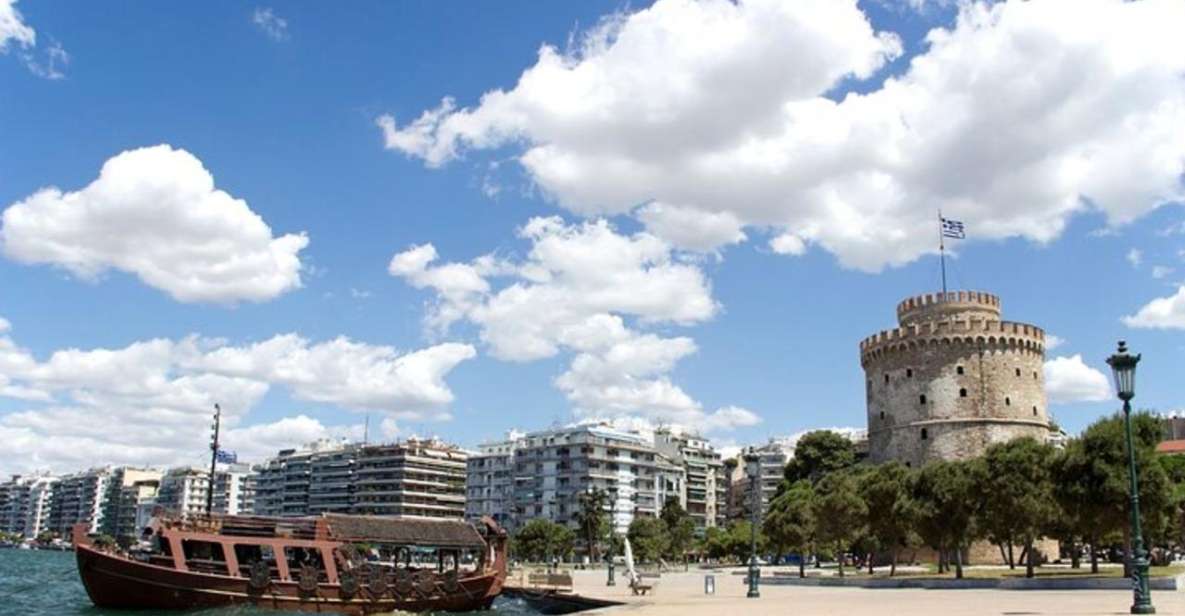
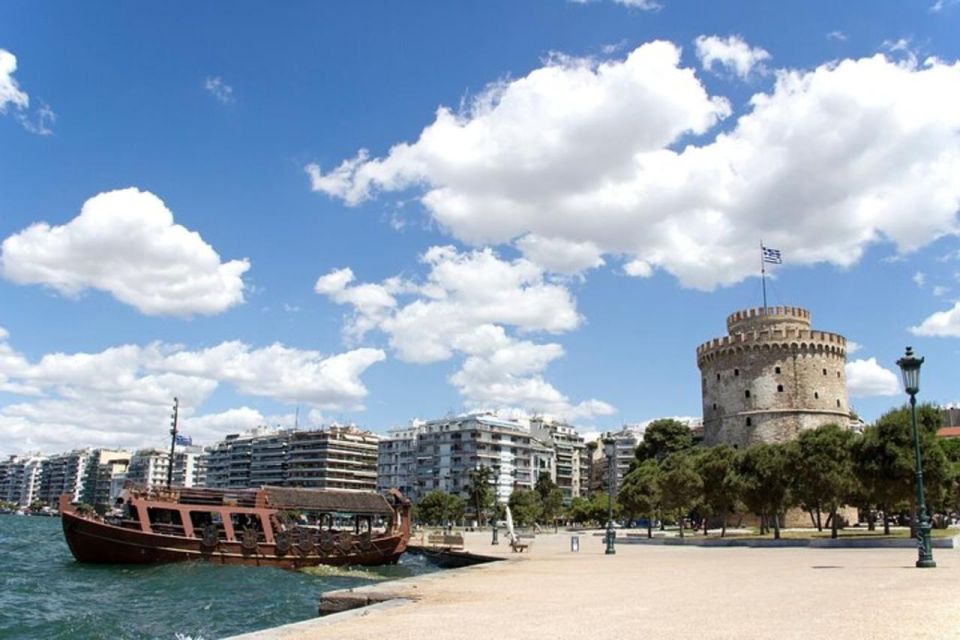
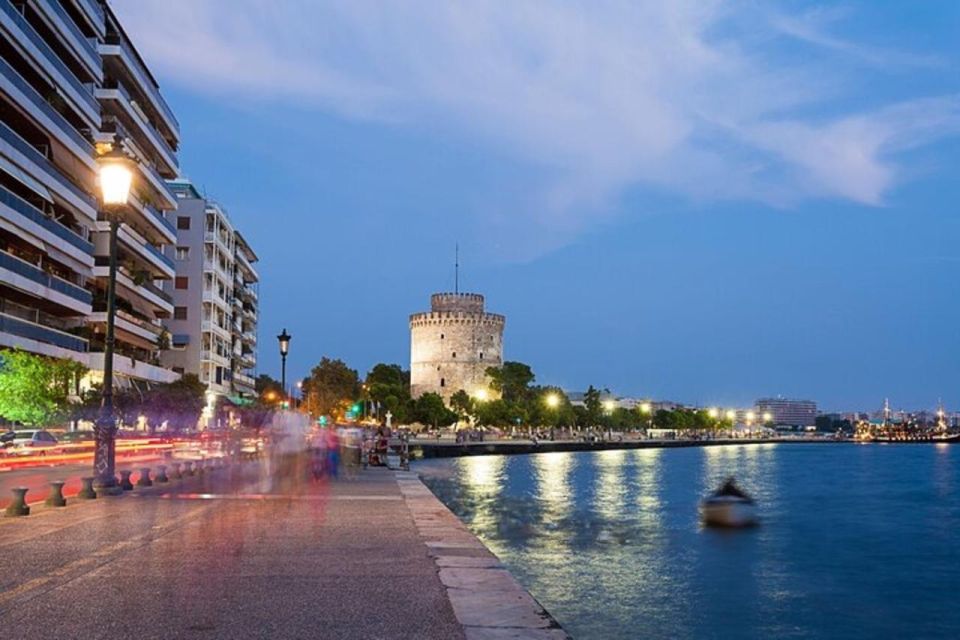
The White Tower is one of Thessaloniki’s best-known landmarks. It began as part of a defensive system and replaced an older Byzantine fortification. Under Ottoman rule, it became a notorious prison, giving the monument a darker past than its bright name suggests.
The guide’s role here is to connect the building’s appearance with its changing use. You’ll look at a monument that has served military, defensive, and prison functions, then learn how it became a museum and a symbol of the city.
This stop is valuable even if you have already seen photographs of the tower. A photograph gives you the round structure and waterfront setting, but not the long change from Byzantine defenses to Ottoman prison. Ask your guide how the tower fit into the city’s fortifications and what parts of the structure reflect its earlier purpose.
The available information does not promise a full museum visit or a separate ticket included in the tour price. The guide’s team can help book tickets for desired visits, but admission fees are not listed among the inclusions. Clarify this if entering the White Tower is important to you.
Saint Demetrios, the city’s patron church
The next major stop is the Church of Saint Demetrios, the main sanctuary dedicated to Thessaloniki’s patron saint. This is more than another historic building. It helps explain the city’s religious identity and gives the route a human focus after the military story of the White Tower.
A guided visit can help you notice why the church matters, rather than simply stepping inside, taking a photograph, and leaving. Ask about Saint Demetrios, the church’s role in the city, and how it fits within Thessaloniki’s Byzantine heritage.
The quality of the explanation will matter greatly here. One recent guide was kind and tried hard but sometimes remained silent for long stretches, leaving the group to start the conversation. If you want more than a basic introduction, ask direct questions and tell the guide you would like fuller explanations inside the church.
You should also remember that this is an active religious site. The supplied details do not specify service schedules or clothing rules, so do not assume that every area will always be available for a long visit. Your guide can help you understand what is possible on the day.
The Rotunda and the Arch of Galerius
The Rotunda is one of the oldest religious sites in Thessaloniki. It was built in 306 AD by the Romans, and its original purpose remains uncertain in the tour description. It may have been connected with a mausoleum or a temple, which gives your guide a chance to explain how Roman buildings could change meaning over time.
I like this stop because it puts the city’s age into clear perspective. The Rotunda predates many of the buildings most closely associated with Byzantine Thessaloniki, yet it later became part of the city’s religious story. You are looking at a structure that has crossed political and religious boundaries.
Nearby, the Arch of Galerius belonged to a larger palatial complex. It may have served as part of a mausoleum or temple setting, but the exact use is not presented as certain. That uncertainty is useful rather than disappointing. It reminds you that ancient monuments are often reconstructed from fragments, location, and comparison with other Roman sites.
The guide should explain how the Rotunda and arch fit together. They are not isolated ruins scattered around town. They belonged to a wider imperial complex, and seeing them in sequence makes Roman Thessaloniki easier to picture.
Do not expect every detail to be delivered in a long formal presentation. A recent experience included only simple talks at the Roman Agora and a Byzantine church. If you want architectural detail, ask about the dome, construction, decoration, original purpose, and later use of the Rotunda.





The Ancient Agora and daily Roman life
The final major stop is the Ancient Agora, also called the Roman Forum of Thessaloniki. Excavated in the 1960s, the site includes two-storey stoas and offers a different view of Roman life from the ceremonial monuments near the Rotunda.
The forum was a civic center, so it helps shift your attention from emperors and saints to the ordinary workings of a city. Ask your guide how the stoas were used and what the forum tells you about public life in Roman Thessaloniki.
This is also where a short explanation can feel too thin. Ruins do not always explain themselves, and a few stones or walls can be hard to read without context. If your guide gives only a basic description, ask what you are looking at, how the buildings were arranged, and why the site was important.
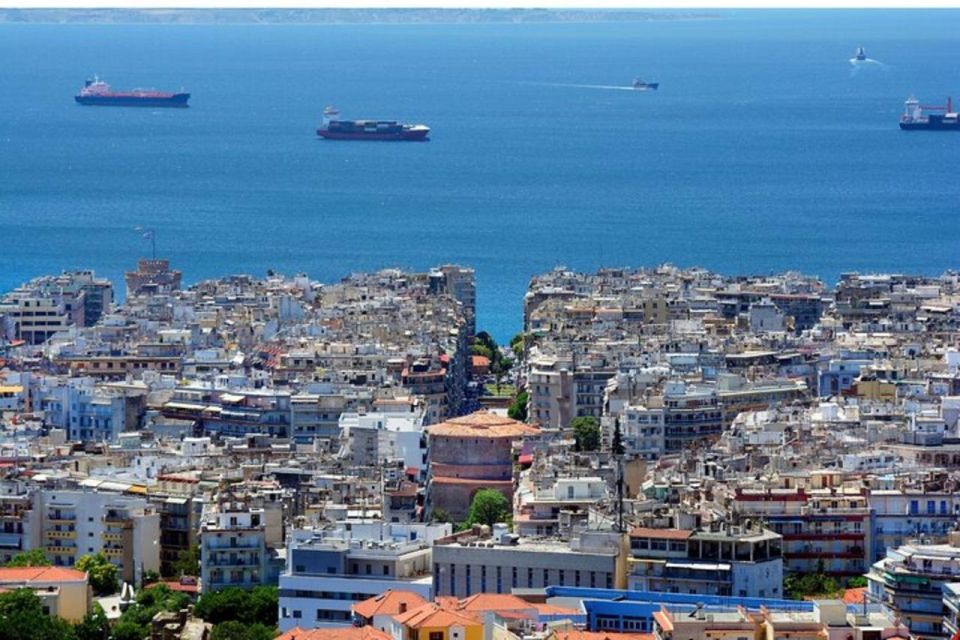
The walk returns to the Agiou Dimitriou area after the Ancient Agora. That makes the route practical if you want to continue independently from central Thessaloniki, though the exact timing at each stop will depend on your pace and how much discussion you request.
What the private format really gives you
Private does not automatically mean better, but it changes how you can use the tour. You can pause for questions, ask to spend more time at one monument, and request advice about what to do later in the city. The tour also offers customization, so tell the guide what matters before the first stop.
The strongest reason to choose this format is conversation. A group tour often moves according to a fixed script. Here, you can ask about Roman architecture, Byzantine worship, Ottoman rule, museums, or places to visit after the walk.
The private arrangement also makes guide communication especially important. One recent guide arrived early and gave an extra 20 minutes, which is a thoughtful touch. At the same time, that guide’s quiet voice made it difficult to follow the history, and long silent stretches meant the group had to start many conversations.
I would take a few practical steps at the beginning:
- Tell the guide which period interests you most.
- Ask for a clear explanation at every main stop.
- Confirm which monuments you will enter and which you will view from outside.
- Ask for advice on other city sights before the tour ends.
- If hearing the guide is difficult, say so right away rather than waiting.
The listed guide languages are English, French, Spanish, and Italian. No individual guide names are provided, so you should not book this expecting a particular person.
Timing, transport, and physical demands
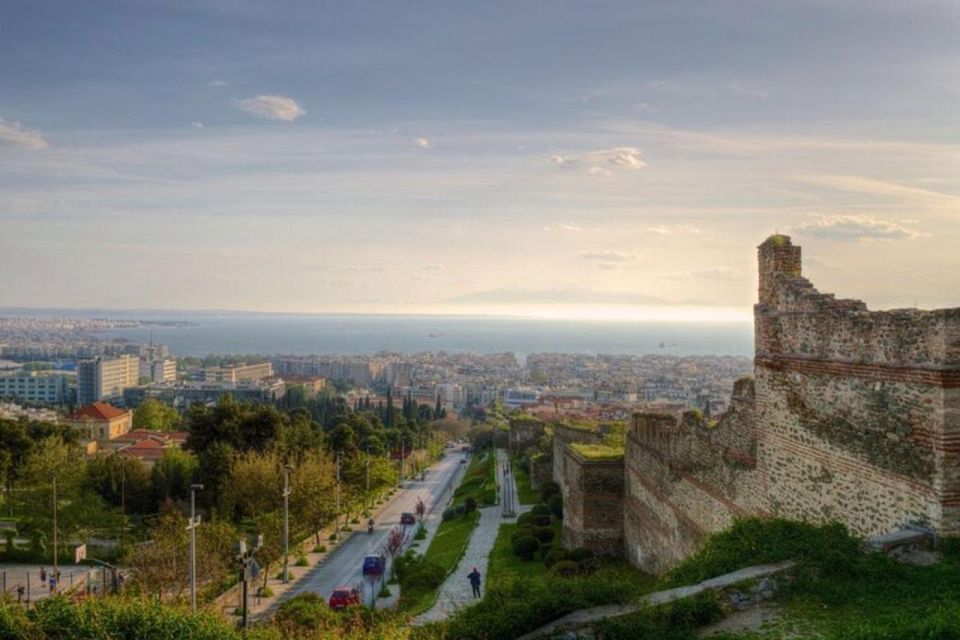
Three hours is enough for a useful orientation, but not enough for a slow museum day at every stop. The route includes several major monuments, and your guide must balance walking time, explanations, and possible entries. If you want detailed archaeological discussion, you may need to focus on fewer sites.
The experience is described as a walking tour with public transport, except for certain selected options. That means you should be ready for movement between locations rather than a vehicle-based sightseeing tour. Comfortable footwear is a sensible choice, although the information does not give a precise distance or state how much public transport will be used.
Wheelchair accessibility is listed. Even so, ask the provider about your exact route, since access can vary between historic buildings, streets, and archaeological sites. The information does not provide detailed accessibility notes for each monument.
Food and drinks are not included. Carry what you need for a three-hour walk, since no refreshment stop is promised. You can also ask the guide for local suggestions, one of the useful extras specifically offered by the experience.
Who will get the most from this tour
I would choose this walk if you are visiting Thessaloniki for the first time and want the main historic sights put into order. It is also a good match if you prefer a private guide to a large group, need one of the four listed languages, or want to adjust the emphasis toward Roman or Byzantine sites.
It suits couples, families, and small groups who enjoy asking questions. The $47 price makes more sense when divided among several people, because you are paying for private attention rather than a seat in a standard group.
I would be more cautious if you want expert-level archaeological detail at every stop. The tour is led by a local archaeologist according to the description, but the actual guiding can vary. The quiet speaking voice and simple presentations reported in one experience are meaningful concerns, especially at open ruins where sound carries poorly.
It may also be less suitable if you want extensive museum time. The planned stops focus on major outdoor and religious monuments. A separate museum visit may need its own planning, and one recent guide even tried to include the Byzantine Museum only to find it closed on arrival. That points to a need for clearer planning if museums are central to your day.
Booking advice and final verdict
This is a promising private introduction to Thessaloniki with a smart route through Roman, Byzantine, and Ottoman history. I especially like the combination of the White Tower, Saint Demetrios, Rotunda, Arch of Galerius, and Ancient Agora. Together, they give you a useful first picture of the city.
The experience is not risk-free. The overall rating supplied for the activity is 3.3 from four reviews, and the specific feedback shows a real split: one guide was pleasant and generous with time, while another was too soft-spoken and offered limited detail. That makes communication and expectations important.
Book it if you value privacy, flexibility, and a quick historical orientation. Before starting, clearly request a strong speaking voice, fuller explanations, and advice tailored to your interests. If you want a highly structured specialist lecture or guaranteed museum access, choose a more tightly defined archaeology tour instead.
FAQ
Where does the tour begin?
The meeting point is in front of Hagios Demetrios on Agiou Dimitriou.
How long does the tour last?
The walking tour lasts three hours.
Which places are included?
The route includes the White Tower of Thessaloniki, Church of Saint Demetrios, Rotunda, Arch of Galerius, and Ancient Agora, also called the Roman Forum.
Is this a private tour?
Yes. The tour is private and exclusive, with no one else added to your group.
Can the tour be customized?
Yes. Customization is included, and the guide can focus more closely on the areas that interest you.
Which languages are available?
Live guiding is available in English, French, Spanish, and Italian.
Is food or drink included?
No. Food and drinks are not included in the price.
Is the tour wheelchair accessible?
The activity is listed as wheelchair accessible. For detailed information about access at each historic site, confirm the route with the provider before booking.