REVIEW · ATHENS
2-Day Private Tour to Delphi & Meteora with Great Lunch included
Book on Viator →Bookable on Viator
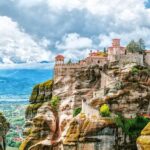
Meteora is the star here: towering rock pillars crowned by Orthodox monasteries, reached after a scenic private drive from Athens through Delphi. You get two very different sides of Greece in one trip, the sacred center of ancient Apollo worship and a living monastic world high above Kalampaka.
I like the private vehicle and flexible service, especially for a route that covers a lot of ground. I also like the included local lunches and overnight hotel, which remove much of the planning work. The tradeoff is the price, $1,295.85 per person, plus admission fees and the optional cost of a licensed guide.
In This Review
- Key points to know before booking
- Why this two-day route works
- Delphi Museum and the Charioteer
- Walking through Apollo’s sanctuary
- The Tholos of Athena Pronaia
- Lunch in Amfissa, away from the usual stops
- First glimpse of Meteora in late light
- Overnight near Meteora
- Great Meteoron, Varlaam, and Holy Trinity
- Thermopylae and the return to Athens
- What the $1,295.85 price buys you
- How Theodore’s service may shape the day
- Who should book this experience
- Should you book the Delphi and Meteora tour?
- FAQ
- What is the price of the private Delphi and Meteora tour?
- How long does the tour last?
- Where can pickup take place?
- Is the tour private?
- Is accommodation included?
- Are meals included?
- Are entrance tickets included?
- Is a professional guide included?
- How much luggage can each person bring?
- What happens if I need to cancel?
Key points to know before booking
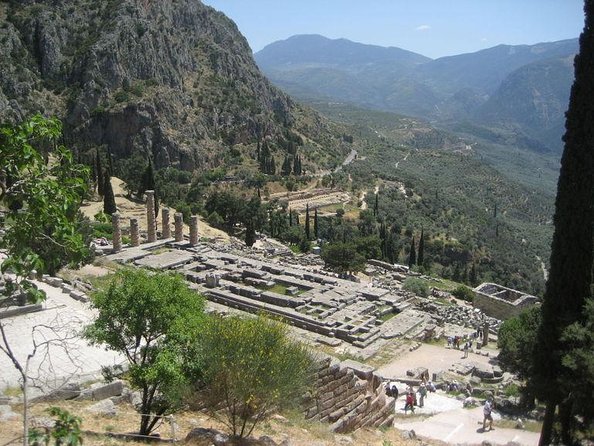
- Two UNESCO World Heritage settings in one trip: Delphi and Meteora give you ancient Greek religion, Byzantine monastic life, and striking mountain scenery.
- Theodore may be your driver and tour leader: His service includes careful attention to comfort, timing, and personal preferences.
- Two lunches are included: The route avoids the most touristy lunch stops and aims for local food in Amfissa.
- You visit three Meteora monasteries: The exact two open monasteries can vary by day, with a possible extra stop at St. Stephen’s.
- The route is long but efficient: You leave Athens at 8:00 am and expect to return around 5:00 pm on the second day.
- Admission tickets are extra: Budget separately for Delphi and the monasteries, and consider adding a professional licensed guide if you want fuller interpretation.
Why this two-day route works
I like this trip because it joins two major Greek sights that are awkward to visit independently in a short stay. Delphi is about the ancient Greek world and the oracle of Apollo. Meteora shifts the story to Orthodox monks, remote religious communities, and buildings perched on enormous stone towers.
A private tour also changes the feel of the journey. You are not tied to a large group’s pace, and you can be picked up at an Athens hotel, Airbnb, the airport, Piraeus, or Nafplio port. Some pickup points may cost extra, so confirm that before paying.
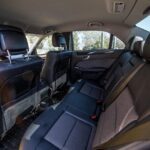
The vehicle is a newer, nonsmoking model from 2021 to 2023. Each person may bring one normal-size suitcase and one small carry-on bag. That matters on an overnight trip, since you can pack properly instead of trying to manage everything with a day bag.
The schedule is ambitious. Delphi and Meteora are not quick side trips from Athens, so expect substantial time on the road. The benefit is that you reach remote places without arranging trains, taxis, hotel transfers, or separate excursions. The cost is less free time and a fairly packed two days.
You can also read our reviews of more private tours in Athens

Delphi Museum and the Charioteer
Your first major stop is the Archaeological Museum of Delphi. Allow about 30 minutes here, though I would happily spend longer if the schedule permits. The museum holds sculpture, architectural pieces, statues, and smaller offerings from the sanctuary.
The Charioteer of Delphi is the prize. This calm bronze figure once formed part of a larger chariot group with four horses and another male figure. Its controlled expression and precise details make it one of the ancient works you will remember long after the visit.
The Sphinx of the Naxians is another important piece. Dating to about 560 BC, it combines a lion’s body, bird’s wings, and a woman’s head. It shows how ancient Greek art handled mythical creatures before the classical period reached its familiar form.
Admission is not included, so plan for an extra ticket cost. The museum visit is short on paper, and that may feel rushed if you enjoy archaeology. Still, seeing the key objects before walking through the sanctuary helps you understand what Delphi once looked like.
Walking through Apollo’s sanctuary
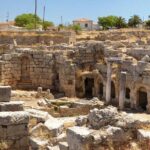
The archaeological site of Delphi follows the museum. You have about an hour and a half to see the remains, which is a more useful amount of time for the steep, sacred complex.
Ancient Greeks regarded Delphi as the omphalos, or navel of the world. The oracle of Apollo spoke here, and city-states brought offerings, monuments, and questions to the sanctuary. Delphi was not only a religious center. It also helped create a shared Greek identity among independent communities.
I find the setting as important as the ruins. The sanctuary sits among mountain slopes with broad views, and the site’s power comes from the way stone buildings and natural surroundings work together. You are not simply checking off columns. You are seeing why this place carried such weight in the ancient imagination.
The terrain calls for a moderate level of physical fitness, as specified for the tour. Wear sensible shoes and keep water close. Bottled water is supplied in the vehicle, which is useful on a warm day.
The Tholos of Athena Pronaia
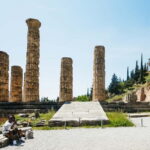
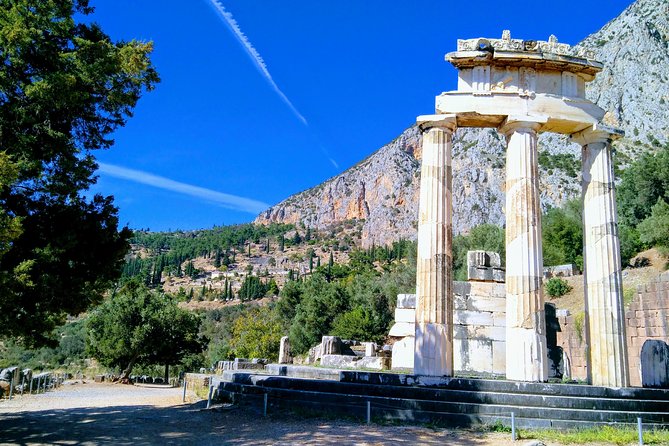
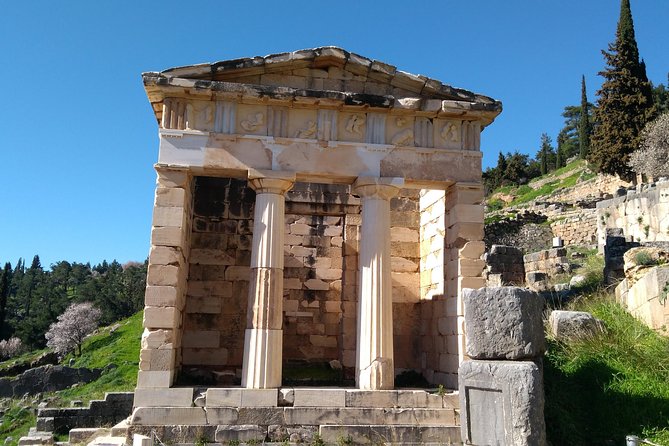
The Tholos of Athena Pronaia is a short stop, usually about 30 minutes, and admission is free. This is the round temple often used in photographs of Delphi, yet it is easy to miss when attention stays on the main sanctuary.
The surviving structure is incomplete, but its circular form is instantly recognizable. I like this stop because it gives you a clean photo opportunity without turning the day into a shopping break or a string of commercial stops.
The visit is brief, so think of it as an important extra rather than a full second archaeological site. It also gives your driver a chance to keep the day moving toward Meteora.
Lunch in Amfissa, away from the usual stops
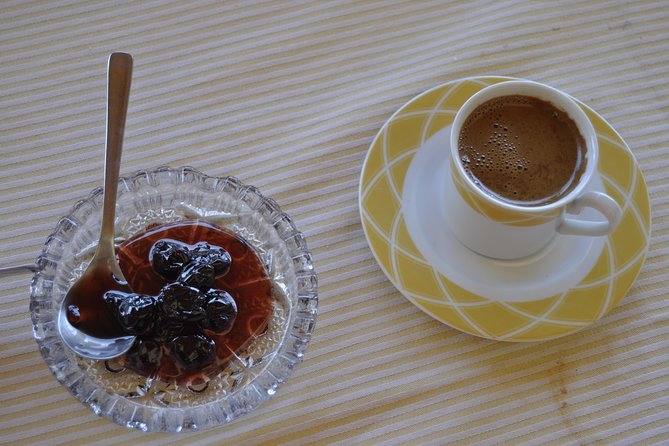
The route continues toward Meteora with lunch in Amfissa rather than in the more tourist-focused areas of Delphi or Arachova. This is one of the tour’s most appealing choices.
Two lunches are included in the package, and the food is described as generous and abundant. The precise restaurant and menu are not specified, so you should not expect to select from a fixed published menu in advance. Instead, the point is a local meal chosen by the driver or tour leader.
That arrangement suits me. A private route is most useful when it helps you avoid the predictable stops that serve every passing bus. If you have dietary needs, tell the operator before departure so there is a chance to plan.
A few more Athens tours and experiences worth a look




First glimpse of Meteora in late light
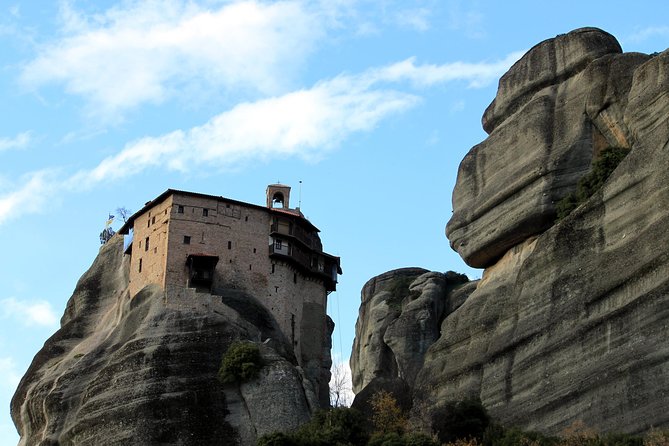
Meteora may be visited briefly on the first afternoon if timing allows. This is not guaranteed as part of the normal schedule, but the plan is to reach the monastery area for a first look at the rock formations and, possibly, St. Stephen’s Monastery.
This optional visit has real value. The late afternoon light can give you a first sense of how the monasteries sit above Kalampaka. Even if you do not enter a monastery that day, seeing the setting before the main visit helps you understand the scale of the place.
Do not count on this stop if Delphi runs late or the road takes longer than expected. The main Meteora visits happen the next morning, so the first afternoon should be treated as a bonus.
Overnight near Meteora
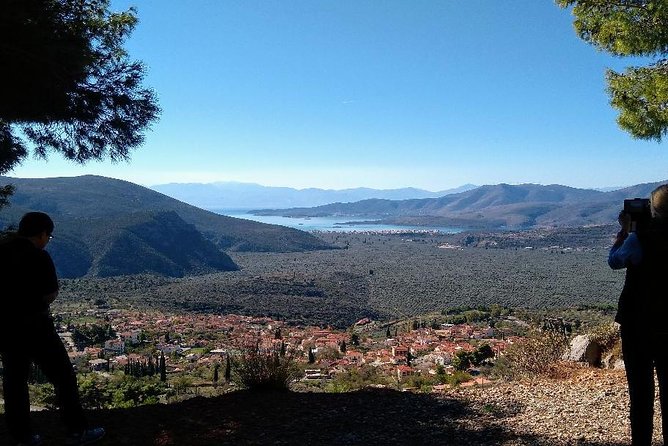
The tour includes one night in a four or five-star hotel, along with breakfast. The hotel is not named in the supplied details, but a reported stay included fine views toward Meteora and a generous morning meal.
That overnight break is central to the tour’s value. A same-day Athens to Meteora trip would be exhausting and would leave little time for the monasteries. Sleeping nearby lets you begin the second day closer to the rocks and return to Athens without adding another hotel night.
The accommodation also makes the trip easier for people arriving in Athens with limited time. You still need to pack carefully because the vehicle allowance is one normal suitcase and one small carry-on per person.
Great Meteoron, Varlaam, and Holy Trinity
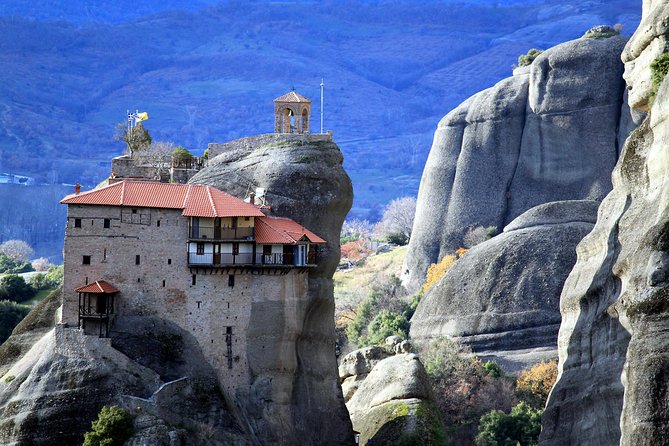
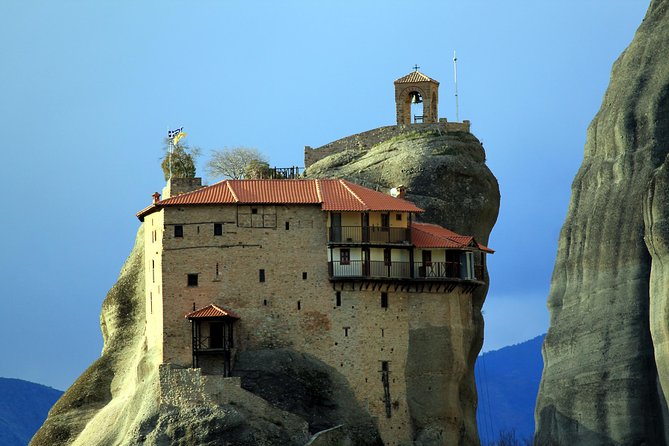
The second day focuses on Meteora’s monasteries. The exact two monasteries open for your visit can depend on the day, so the plan may change. The usual major stops described for this route are Great Meteoron, Varlaam, and Holy Trinity, with visits lasting from 45 minutes to one hour.
Great Meteoron is the oldest, largest, and most important of the surviving monasteries. Built on a huge rock, it gives you the clearest sense of how difficult monastic life once was here. The monastery is dedicated to the Transfiguration of the Saviour and is the biggest name on the route.
Varlaam has a different story. An ascetic named Varlaam reached the rock in 1350 and built churches, a cell, and a water tank. The site later sat unused for about two centuries before Theophanes and Nektarios Apsarades began construction again in 1517.
Holy Trinity is probably the most photographed of the group. Historical sources place its construction between 1458 and 1476. Its position and shape make it a favorite for photographs, but the best reason to visit is the sense of a working religious place set far above ordinary town life.
Monastery admission is not included. Opening schedules matter, which is why the operator selects the two that are open on your particular day. You should dress appropriately for Orthodox monasteries and confirm current entrance rules before departure, since the supplied details do not spell them out.
Thermopylae and the return to Athens
After Meteora, the route stops at Thermopylae for about 15 minutes. The battlefield is linked to King Leonidas of Sparta and the Greek alliance that fought Xerxes I in 480 BC.
The stop centers on Leonidas’ statue. It is short, but it breaks up the long return drive and connects the modern road with one of ancient Greece’s best-known battles. Do not expect a full museum visit or an extended archaeological tour here. This is a quick historical pause.
The tour aims to return to Athens around 5:00 pm. Drop-off can be arranged at your hotel, cruise ship, or possibly the airport. Since traffic and road conditions can affect timing, an airport drop-off deserves extra caution if you have a tightly scheduled flight.
What the $1,295.85 price buys you
At $1,295.85 per person, this is not a budget excursion. The price makes more sense if you value privacy, direct pickup, a newer vehicle, an overnight stay, breakfast, two lunches, bottled water, and a driver who can adjust the pace for your group.
The private format is especially useful for families, couples, and small groups who would rather not spend two days following a large coach. It also removes the need to coordinate several difficult connections between Athens, Delphi, Meteora, and the return route.
Still, read the inclusions carefully. Delphi admission and monastery admission are extra. A professional licensed guide is optional, so the driver may provide information without offering the same depth as a specialist guide at each archaeological site.
The cost also depends on group size. A private tour priced per person can look steep for one or two people, but group discounts may improve the value. Ask for the current group rate before deciding.
How Theodore’s service may shape the day
The named driver and tour leader associated with this experience is Theodore. His role is described as polite, attentive, and focused on comfort, with an effort to keep the journey personal rather than mechanical.
That matters on a long road trip. A good driver can help with timing, water, hotel coordination, meal choices, and the small adjustments that make a packed route less tiring. Theodore’s approach appears suited to people who want conversation and practical help without being pushed into shopping stops.
No guide can remove the distance between Athens and Meteora. What a strong tour leader can do is make the road time useful and keep the day from feeling like a series of hurried transfers.
Who should book this experience
I would choose this tour if you have two days available and want Delphi and Meteora without renting a car or arranging separate transport. It suits first-time visitors to mainland Greece who want major sights with hotel and meals handled.
It is also a good match for cruise passengers, since pickup and drop-off can be arranged at Piraeus. Nafplio port pickup is listed as possible too, though some locations may involve an extra charge.
You should think twice if you prefer slow mornings, long museum visits, or several nights in each place. The route covers a lot of ground, and the Delphi museum time is only about 30 minutes. You may also prefer a smaller independent plan if the price feels too high for your budget.
A moderate fitness level is required. If you have mobility concerns, ask exactly what parts of the monasteries and archaeological sites you can comfortably reach before booking.
Should you book the Delphi and Meteora tour?
Book it if your priority is efficient private transport and a well-supported two-day route. The combination of Delphi, Meteora, Thermopylae, hotel, breakfast, and two lunches is hard to arrange on your own in such a short window.
The strongest reasons to choose it are the private service, the scenic first look at Meteora, the local lunch stop in Amfissa, and the chance to have Theodore as your driver and tour leader. The main cautions are the high price, extra entrance fees, long driving days, and the limited time at some stops.
For the best value, travel with enough people to benefit from the group discount, confirm the hotel location, ask which monasteries are open on your dates, and decide in advance if you want a licensed guide. Cancel at least six full days before departure for a full refund. A cancellation two to six days ahead allows a 50 percent refund, while cancellation less than two days before departure is nonrefundable.
FAQ
What is the price of the private Delphi and Meteora tour?
The listed price is $1,295.85 per person. Group discounts are available, so ask for the current rate for your party.
How long does the tour last?
The experience lasts approximately two days. Departure is at 8:00 am, and return to Athens is expected around 5:00 pm on the second day.
Where can pickup take place?
Pickup is offered from Athens hotels and Airbnbs, Athens airport, Piraeus, and Nafplio port. Some locations may require an extra charge.
Is the tour private?
Yes. Only your group participates in the private tour or activity.
Is accommodation included?
Yes. One night in a four or five-star hotel is included, along with breakfast.
Are meals included?
Yes. The package includes breakfast and two lunches. The route includes a lunch stop in Amfissa.
Are entrance tickets included?
No. Admission tickets for the Delphi Archaeological Museum, Delphi Ancient Town, and the Meteora monasteries are not included.
Is a professional guide included?
No. A professional licensed guide is optional. The tour includes a driver and tour leader, with Theodore named as one guide associated with the experience.
How much luggage can each person bring?
Each person may bring one normal-size suitcase and one small carry-on bag.
What happens if I need to cancel?
You can receive a full refund if you cancel at least six full days before the start time. Cancellation two to six full days ahead allows a 50 percent refund, while cancellation less than two full days ahead receives no refund.