REVIEW · ATHENS
A powerful Athens Segway tour. Semi-private Historical and Contemporary Tour
Book on Viator →Operated by SegYourWay Athens · Bookable on Viator
Athens reveals itself quickly on this three-hour Segway ride, which links the Acropolis, Roman ruins, old neighborhoods, and lively squares without making you climb every hill on foot. You cover a surprising amount of ground, including small streets that are easy to miss on your own.
I like the six-person limit, which keeps the tour personal, and the headsets, which let you hear the guide while moving through city traffic. I also like the practical touches: water, soft drinks, helmets, and a welcome lounge are included.
The main drawback is that most stops are brief, often just five minutes. This is an overview tour, not a substitute for entering the Acropolis Museum or exploring each archaeological site at length. You should also know that children aged 11 and under are not recommended.
In This Review
- Key points to know before you book
- Why this Segway tour works well as an Athens introduction
- Starting near the Acropolis Museum
- The Odeon of Herodes Atticus and Mars Hill
- Ancient Agora and the Roman center
- Kerameikos and the Tower of the Winds
- Plaka brings ancient Athens into the present
- Monastiraki closes the loop
- What the guides add to the experience
- Is $81.88 a fair price?
- Who should book this Athens ride?
- My verdict on the semi-private Segway tour
- FAQ
- How long does the Athens Segway tour last?
- Where does the tour start and finish?
- How many people can join the tour?
- Is the tour offered in English?
- Are children allowed on the tour?
- What happens if bad weather cancels the tour?
Key points to know before you book

- A fast route through ancient and modern Athens: See ten major areas in about three hours, from the Acropolis Museum to Monastiraki.
- A genuinely small group: Bookings are limited to six people, so your guide can keep the ride manageable and personal.
- Headsets make the history easier to follow: You can hear the guide instead of trying to keep up in noisy streets.
- Guides add personality to the route: Antonios is praised for his command of Athens, while John is described as a patient, passionate storyteller.
- Refreshments add real value: Water, sodas, helmets, and a traditional coffee stop are included.
- Best for an orientation, not detailed sightseeing: Short stops give you context and photo opportunities, while longer visits require a separate trip.
Why this Segway tour works well as an Athens introduction
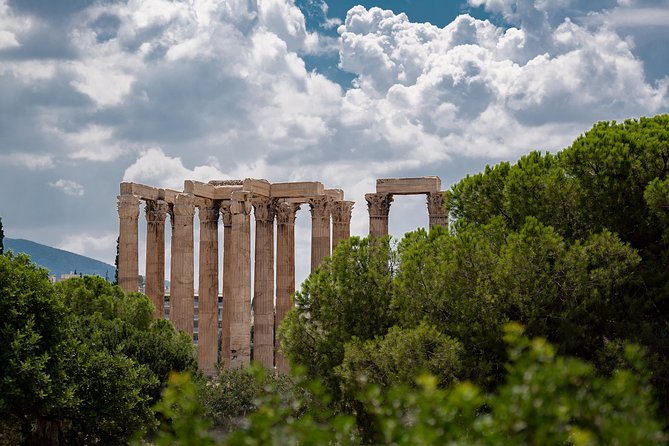
Athens can feel scattered at first. The Acropolis rises above the center, Roman remains sit beside busy shopping streets, and neighborhoods such as Plaka and Monastiraki can turn a simple walk into a maze of lanes and squares.
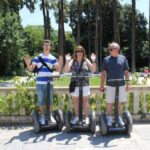
A Segway helps connect these pieces. Instead of spending the morning figuring out the best route between ruins, you move from one part of central Athens to the next with a guide explaining what you are seeing. The ride is described as beginner-friendly, so you do not need previous Segway experience.
The route combines familiar landmarks with less obvious corners. You see the main archaeological areas, but you also pass through contemporary Athens and its older neighborhoods. That mix matters. Athens is not only a collection of classical monuments. It is a working city where ancient stones share space with cafés, shops, apartment buildings, and busy public squares.
The tour runs for about three hours and returns to the starting point at Lempesi 9. Since it is semi-private and capped at six people, it should feel easier to manage than a large group moving through narrow streets. The small size is especially useful if you want to ask questions or need the guide to slow down.
You can also read our reviews of more private tours in Athens



Starting near the Acropolis Museum
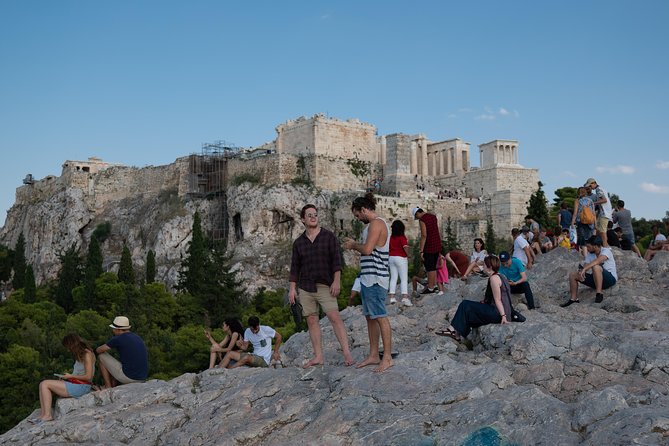
The meeting point is at Lempesi 9, in the Acropolis area. The first listed stop is the New Acropolis Museum, one of the clearest places to begin an Athens orientation.
You should not expect a full museum visit during this tour. The stop is listed as five minutes with no admission ticket included, so the value here is the setting and the guide’s explanation rather than time among the museum’s galleries. If you want to see the sculptures and archaeological displays inside, plan a separate visit.
Starting here gives the tour a useful frame. You are close to the Acropolis, but the route does not simply focus on the hilltop monument. It uses the museum area as a springboard into the wider city.
That is one reason I would take this ride early in an Athens stay. You get a map in your head before returning to the museum, Acropolis, or Plaka on foot. A guide can also point out how the ancient center relates to the modern streets around it.
The Odeon of Herodes Atticus and Mars Hill
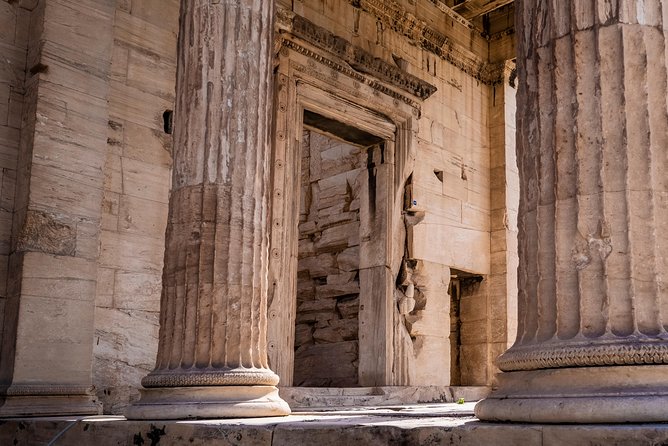
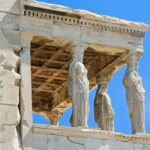
From the museum area, the route reaches the Odeon of Herodes Atticus, the dramatic ancient theater built into the southern slope of the Acropolis. The stop is again short, about five minutes, so think of it as a close look and a quick explanation rather than a performance venue visit.
The setting is memorable because the theater is part of the Acropolis hillside itself. Your guide can help you understand how this large structure fits into the wider complex, rather than leaving you to see it as an isolated stone façade.
The next stop, Areopagus, or Mars Hill, receives about 15 minutes. This is one of the better pauses on the route. The rocky outcrop gives you a strong view across parts of Athens and creates more time for the guide to explain the place.
The surface is uneven, so you should pay attention when walking beside the Segway. The information provided does not promise a formal hike or extended climb, but the stop is longer than most others. That makes it a useful point for photographs and questions.
If you want a sweeping sense of how the Acropolis sits within central Athens, this is likely one of the most rewarding parts of the ride. It also breaks up the quick rhythm of the shorter stops.
Ancient Agora and the Roman center
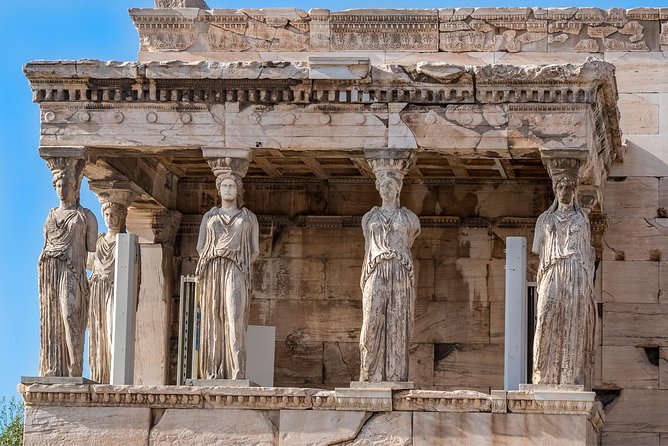
The Ancient Agora of Athens receives about five minutes. That is enough to place the site in context, but not enough to explore the grounds properly. The Agora was a central part of ancient civic life, so it helps explain how Athens functioned beyond temples and monuments.
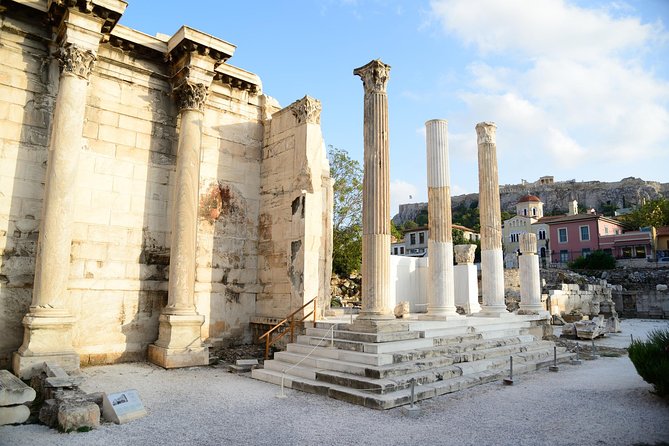
The same point applies to Hadrian’s Library, another five-minute stop. Its name tells you that Athens continued to matter long after its classical golden age. A short explanation here helps you see the city as a place that changed under Roman rule rather than remaining frozen in the fifth century BC.
The Roman Agora follows, with another five-minute pause. The cluster of ancient sites in this part of town shows how close different periods of Athens are to one another. On foot, you could spend much longer moving among them. On a Segway, you get a compact introduction and a list of places to revisit.
This is where the tour’s strengths and limits are clearest. You save time and avoid the uncertainty of choosing which ruin to visit first. But if you enjoy reading inscriptions, studying columns, or wandering archaeological grounds, you will want extra time after the ride.
Kerameikos and the Tower of the Winds

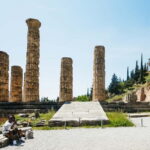
Kerameikos is one of the more distinctive stops because it was an ancient cemetery and an important area outside the city’s old walls. The tour allows about five minutes here.
That is not enough for a careful visit to the cemetery grounds, but it gives you a useful reminder that ancient Athens was more than temples and public squares. Burial areas, roads, workshops, and city boundaries all formed part of daily life.
The Tower of the Winds is another quick stop. This well-preserved structure in the Roman Agora area is easy to recognize, but its purpose is more interesting than its compact size suggests. The guide can add the practical story behind the monument, making it more than another ancient façade on a busy Athens route.
A guide’s storytelling is important on these brief pauses. The schedule does not leave time for long signs or detailed self-guided reading. You are depending on clear explanations delivered while the group moves from site to site.
The provided headsets are a major help here. Athens can be noisy, and a moving group can quickly spread out. With an earpiece, you can keep your attention on the ride and still hear the guide’s comments.
You can also read our reviews of more historical tours in Athens





Plaka brings ancient Athens into the present
The route then reaches Plaka for about ten minutes. This neighborhood is one of the easiest places to feel the contrast between old and new Athens. Its lanes, shops, cafés, and older buildings sit directly below the Acropolis, making it a natural place to connect the archaeological center with modern city life.
A Segway is useful in Plaka because you can cover more of its edges than you would during a quick walk from the Acropolis. At the same time, narrow streets and foot traffic mean you should expect a measured pace, not a fast ride.
The tour is not presented as a shopping trip or food tour. You get a short orientation to the neighborhood, then continue. If you want time for browsing, a long meal, or quiet photographs, return later on foot.
I like Plaka as part of the route because it keeps the experience from becoming a parade of ruins. Athens feels more understandable when you see the archaeological sites alongside the streets where people eat, shop, and meet friends today.
Monastiraki closes the loop

Monastiraki receives the longest stop, about 20 minutes. That gives you more time to absorb the character of the area, which is known for its central square, market streets, food spots, and views toward the Acropolis.
The longer pause makes sense. Monastiraki is not one monument you can explain in a minute. It is a meeting point where old Athens, Roman remains, shopping lanes, and modern city life come together.
One particularly useful touch is the reported stop at a traditional coffee place. You can order a drink, with the cost included in the tour price. This is a small feature, but it changes the rhythm of the morning. Instead of moving constantly from monument to monument, you get a chance to sit, cool down, and talk with the guide.
Refreshments at the welcome lounge, including water and soft drinks, are also included. Athens can be hot, and these practical details matter more than they might on paper. The helmets and headsets are provided as well.
After Monastiraki, the activity returns to the original meeting point. That makes planning simpler if you have a later reservation nearby, though you should leave some spare time because the tour lasts approximately three hours.
What the guides add to the experience

The guide makes or breaks a fast city tour. You are not getting long visits at each site, so the explanation needs to be concise and memorable.
The guide team may be multilingual, and the experience is offered in English. Specific guides praised in the available feedback include Antonios and John. Antonios is described as having an exceptional command of the city, while John is praised for patience and passion, especially when explaining Athens to families with children.
One guide is also described as a history teacher, and another as a certified archaeologist. Those details point to the kind of experience this tour aims to provide: not just directions through the streets, but stories that explain why each place matters.
The headsets support that style. You do not need to stop in a tight circle every time the guide speaks. You can hear the commentary while keeping an eye on the road and the rest of the group.
The small group limit is just as important. With no more than six people, the guide can respond to questions and keep the route together. It also makes the experience a better fit for families with older children or teenagers, who may lose interest during a long walking tour but enjoy the movement and variety here.
Children must be accompanied by an adult, and the tour is not recommended for children aged 11 and under. That age guidance should be taken seriously. The activity is beginner-friendly, but it still involves operating a Segway around a busy city.
Is $81.88 a fair price?
At $81.88 per person, this is not the cheapest way to see Athens. You could walk through several central neighborhoods for free, and many archaeological locations can be visited separately.
The price makes more sense when you consider what is bundled into the three hours. You get a small group, a guide, a Segway, a helmet, a headset, drinks, and a traditional coffee stop. You also avoid spending time planning a route between ten areas.
For a first visit, that can be good value. The tour works as a city overview, helping you decide where to spend more time later. If you arrive in Athens with only a short stay, the time saved may matter more than the cost difference between this and a self-guided walk.
The calculation changes if you mainly want detailed access to ancient sites. Admission tickets are not included, and the short stops do not allow much time inside or around the monuments. In that case, use this experience for orientation, then budget separately for the Acropolis Museum and archaeological sites you most want to explore.
The average booking lead time is six days, so I would reserve ahead if your schedule is fixed. Free cancellation is available up to 24 hours before the start time. Changes or cancellations inside that window are not refunded, and poor weather can lead to a rescheduled date or a full refund.
Who should book this Athens ride?
I would choose this tour if you are visiting Athens for the first time and want a quick sense of how the center fits together. It is also a smart choice if you have limited time, dislike long walks, or want a guide to handle the route.
Families with teenagers may find the moving format easier to sell than a slow archaeological walk. The small group and built-in drinks also make the outing less tiring in hot weather.
It suits curious visitors who want stories and context, but it is less suitable for anyone who wants to linger. You will not have enough time at most stops to study every ruin, browse every street, or take a relaxed meal.
I would also avoid booking it as your only Acropolis experience. The route includes the museum area and Acropolis surroundings, but the schedule is designed to show you many parts of Athens, not provide a full museum or hilltop visit.
My verdict on the semi-private Segway tour
Book it if you want to get your bearings fast and see how Athens’s ancient center connects with Plaka and Monastiraki. The six-person limit, headsets, drinks, coffee stop, and strong guide focus make it more than a simple ride through town.
Skip it if you prefer slow museum visits or want to spend most of your day inside archaeological sites. For everyone else, especially first-time visitors with only a few days, this is a lively and efficient first look at Athens. Use it early in your stay, note the places that deserve a second visit, then return on foot with a better sense of direction.
FAQ
How long does the Athens Segway tour last?
The tour lasts approximately three hours.
Where does the tour start and finish?
It starts at Lempesi 9, Athina 117 42, Greece, and ends back at the same meeting point.
How many people can join the tour?
A booking can include a maximum of six people, and the activity also has a maximum group size of six participants.
Is the tour offered in English?
Yes. The experience is offered in English, and it may be operated by a multilingual guide.
Are children allowed on the tour?
Children must be accompanied by an adult. The activity is not recommended for children aged 11 and under.
What happens if bad weather cancels the tour?
The experience requires good weather. If it is canceled because of poor weather, you will be offered another date or a full refund. You can also cancel up to 24 hours before the start time for a full refund.