REVIEW · ATHENS
Acropolis Museum E-Ticket and Multilingual Audio Guide
Book on Viator →Operated by Clio Muse Tours · Bookable on Viator
The Acropolis Museum puts the story of ancient Athens in a clear, modern setting, with the Parthenon Gallery as its main event. I like the pre-booked entry and the freedom to skip audio stops, pause, or move at your own speed. I also like the underground archaeological site, which adds a surprising layer before you even reach the galleries.
The main catch is the technology. You must download the ticket, Clio Muse app, and audio before you arrive, and some people have found the instructions or app access confusing. At $40.32, this works best if you value a ready-made explanation and easy entry, not if you plan to read only a few display labels.
In This Review
- Key points to know before you book
- What the Acropolis Museum experience actually includes
- Getting to the museum and entering with a phone ticket
- The underground archaeological site comes first
- The Archaic Gallery connects art with democracy
- The Parthenon Gallery is the main reason to come
- Videos on the third floor can improve the whole visit
- Is 90 minutes enough?
- How good is the Clio Muse audio guide?
- What $40.32 buys you
- Who should choose this self-guided visit?
- My practical booking advice
- Should you book the Acropolis Museum audio guide?
- FAQ
- Where does the Acropolis Museum audio guide experience start?
- Is museum admission included?
- Is there a live guide?
- Do I need my own smartphone?
- Do I need headphones?
- Can I use the audio tour without mobile data?
- How much storage space should I have?
- How long does the visit take?
- Can children receive reduced or free admission?
- Will I avoid every queue?
Key points to know before you book

- See the Parthenon frieze up close: The third-floor gallery helps you follow the Panathenaic Procession and understand the temple’s sculptural program.
- Use your own phone: The ticket and audio arrive digitally, but a smartphone, headphones, storage space, and a full battery are your responsibility.
- Download everything before leaving Wi-Fi: The audio, interactive map, and ticket can work offline, which helps avoid roaming charges.
- Visit the Archaic Gallery for the big story: Statues of gods, heroes, monsters, and human figures trace the changing style of ancient Greek art.
- Allow more than 90 minutes if you care about detail: Ninety minutes is a brisk visit. Two or three hours gives the museum room to breathe.
- Expect security and possible queues: The expedited line helps, but it does not promise instant entry, especially at busy times.
What the Acropolis Museum experience actually includes

This is a museum visit with digital support, not a guided group tour. You receive an adult admission ticket for the Acropolis Museum, a pre-booked e-ticket, and a code for the Clio Muse app. The audio tour runs on Android and iOS smartphones and includes an offline map.
You do not meet a guide named at the entrance, and no live guide accompanies you. There is no headset supplied, no smartphone provided, and no AR or VR feature. You bring the hardware and manage the app yourself.
The audio content is designed around selected points rather than every object in the building. The supplied information describes 36 points of interest, while other tour instructions refer to 37 stops and about 100 stories. In practical terms, you get a substantial route with optional material, not a spoken label for every case.
That setup suits an independent visit. You can listen to a story about Athena, pause it while looking at a statue, skip a section that does not interest you, or move ahead when the room gets crowded. It also means the experience depends on your patience with a phone app.
A few more Athens tours and experiences worth a look



Getting to the museum and entering with a phone ticket
The meeting point is the Acropolis Museum at Dionysiou Areopagitou 15 in Athens. It is near public transportation, and you go directly to the museum rather than searching for a ticket office, tour representative, or headset pickup point.
Before you set out, download three things:
- Your museum ticket
- The Clio Muse app
- The audio tour and offline map
Keep the ticket either printed or saved on your phone. The instructions say to proceed to the expedited line for scanning, but you should still expect a security check. Large bags and luggage can slow you down, so pack light.
The phrase skip the line needs a little care. Pre-booking can remove the need to buy a ticket on site and may direct you to a faster admission line, but it cannot erase security screening or every queue. One family found the process quick even with a crowd, while other experiences involved waiting before entry.
The digital delivery can also be late by normal booking standards. Instructions and tickets may arrive close to the visit date, and booking requests made between 5 p.m. and 8:59 a.m. are handled the next morning from 9 a.m. Check your spam folder. If you arrive without the ticket email or access code, you may need customer support before the museum can admit you.
My practical advice is simple: do not wait until you are standing outside the museum. Download everything at your hotel or another strong Wi-Fi connection, open the ticket, launch the audio, and test the map. The app requires about 100 to 150 MB of storage. Charge your phone fully and carry headphones.
The underground archaeological site comes first
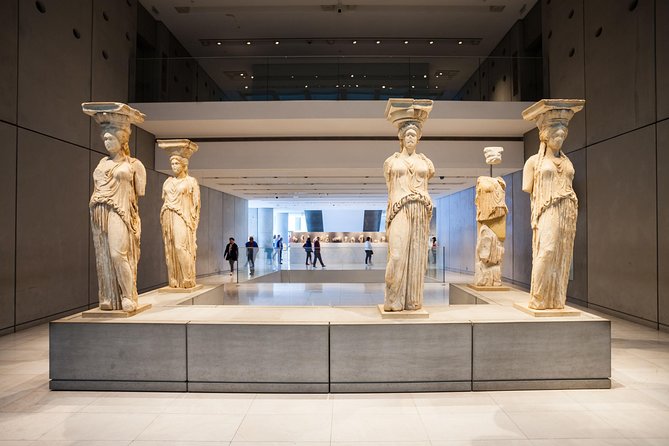
The museum’s glass and concrete building is designed around the remains beneath it. An open-air area below the museum reveals an archaeological site linked to earlier housing and city life. The site is included with the museum visit according to the available information.
This is an important stop because it gives you a glimpse of ordinary Athens beneath the grand temples. The Acropolis is often presented through monuments, marble, and mythology. The excavated remains remind you that people also lived, worked, and moved through this hilltop city.
You can visit this area before or after the main galleries. If you are using the audio tour, follow its directions carefully, since the route may send you between specific objects and floors. The museum is large enough that it is possible to lose your place, though the interactive map helps you recover.
The Archaic Gallery connects art with democracy

The Archaic Gallery is where the museum’s broad historical story begins to take shape. Here you follow Athens as its political and artistic culture changes, including the city’s movement toward democracy.
The displays include figures tied to Greek myth and religion: monsters, heroes, gods, and idealized human bodies. The audio uses these objects to explain how ancient Greek art developed. That wider context is useful because a statue can otherwise become just another pale figure in a glass case.
Pay attention to the changing treatment of the human form. The collection shows artists moving toward more natural poses and stronger attention to anatomy. You do not need to remember every date to see the shift. The sequence of sculptures does much of the work.
This is also a good place to use the audio selectively. The stories go beyond a short description of the object in front of you. An explanation of Athena, for example, may continue with her role, her temples, and what she represented to Greek society. That extra material helps connect one statue to the larger religious and civic world.
The drawback is that audio explanations can feel uneven if you expect every exhibit to receive equal attention. Some stops are short and focused. Others add several minutes of myth or historical background. I would listen to the highlighted objects, then read the labels for pieces that catch your eye.
The Parthenon Gallery is the main reason to come

The Parthenon Gallery occupies the top floor and is arranged to echo the shape and orientation of the temple on the Acropolis. This is the place where the museum’s collection makes its strongest argument.
The centerpiece is the Parthenon sculpture program. The frieze presents the Panathenaic Procession, the great civic and religious ceremony held in honor of Athena. With the pieces arranged in sequence, you can follow the procession instead of seeing isolated fragments with no clear connection.
The metopes and pediments add the mythic side of the temple’s story. Look for scenes such as the battle between the Lapiths and Centaurs, along with the birth of Athena. These images were not random decoration. They presented order triumphing over disorder and linked the city’s identity to the goddess who protected it.
The audio guide helps here by telling you where to look and explaining what a scene represents. That navigation is one of the best reasons to pay for the audio rather than rely only on labels. A museum visitor can easily miss the visual logic of a long frieze without some direction.
You should not rush this floor. One person can spend the suggested 90 minutes moving through the main route, but the Parthenon Gallery alone rewards a slower pace. Sit or pause when you can, compare the figures, and look for traces of movement in the carved clothing and bodies.
The room can become crowded. When that happens, the self-guided format is useful because you can step aside, pause the audio, and return later. A live group may keep moving even when you want another minute with a particular sculpture.
You can also read our reviews of more guided tours in Athens





Videos on the third floor can improve the whole visit

Two video presentations on the third floor are worth seeing early in your visit. They provide background that can make the galleries easier to follow, especially if you are visiting the Acropolis and museum on the same day.
I would watch these before settling into the detailed audio route. The videos can give you a basic framework for the temple, the sculpture program, and the wider purpose of the Acropolis. After that, the Archaic Gallery and Parthenon Gallery have more meaning.
This is a useful tip for families and first-time visitors. Children around 12 and 13 have found the phone-based guidance easy to follow, and the numbered route can give them a reason to keep moving through a large museum. Younger children may not want every audio story, so use the skip function freely.
Is 90 minutes enough?
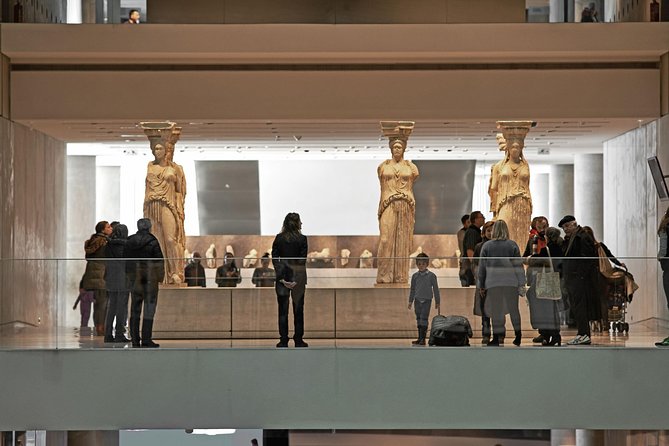
The stated duration is about one hour and 30 minutes. Treat that as a brisk route, not a complete museum day.
You can cover the main galleries in 90 minutes if you move steadily, listen to selected stops, and avoid long pauses. That may suit you if the museum is one part of a packed Athens day and you also plan to climb to the Acropolis.
Allow two or three hours if you want to watch the videos, visit the underground site, study the Parthenon sculpture, and stop for labels. The museum contains more than the audio route covers. The guide gives you a path, but it does not replace looking around.
A longer visit is not automatically better for every person. If you are not keen on archaeological collections, the number of statues, fragments, and architectural pieces can become tiring. In that case, use the audio as a highlights route and skip freely rather than trying to finish every story.
How good is the Clio Muse audio guide?
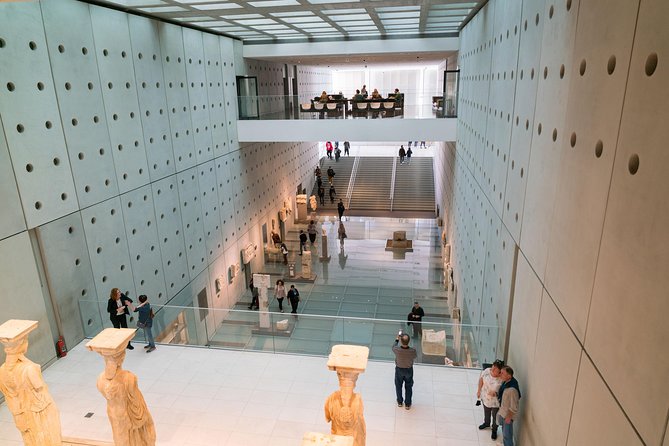
The strongest feature is control. You are not tied to a group schedule or a guide’s pace. You can listen in your preferred language, stop for photographs, move around a crowded display, or leave a section for later.
The audio also adds useful connections. Instead of simply saying what an object is, it may explain the figure’s place in Greek mythology or the meaning of a temple. That makes the museum more approachable when the labels feel brief or technical.
The weaker point is style. Audio is personal: some people find the narration clear and well timed, while others find it irritating or less engaging than a human guide. If you prefer conversation, questions, and a guide responding to your interests, this product will feel limited.
Navigation can take a moment to learn. The map is helpful, but one person had trouble finding the next area. I suggest checking the object number and map before pressing play. Do not assume the audio will always guide you perfectly through a busy room.
The content is also not a full scholarly catalog. It selects important stops and uses stories to keep you moving. That is good for orientation, but you may still want to read the museum labels for objects that interest you most.
What $40.32 buys you
At $40.32 per person, the price pays for both admission and the digital service. The value depends on how you would otherwise visit.
If you want an explanation but do not want a private guide or fixed group tour, the combination can be sensible. You receive the ticket ahead of time, a prepared route, and commentary that you can use at your own speed. A family can also share the planning benefits, though each person who wants to listen needs a compatible phone and headphones.
If you intend to spend only an hour looking at a few famous pieces, a standard museum ticket and the wall labels may be better value. One visitor felt the audio did not add enough and preferred reading selected labels. That is a fair objection, especially when the extra app setup causes stress.
The price is easier to justify when you plan a serious museum visit. If you give the building two or three hours, use the Parthenon Gallery route, watch the videos, and explore the underground site, the audio has more time to earn its keep.
Who should choose this self-guided visit?
I would choose this option if you:
- Want to enter with a ticket already arranged
- Prefer exploring independently
- Like history explained through short stories and mythology
- Need an offline map and audio for a phone
- Are visiting the Acropolis Museum before or after the Acropolis itself
- Are traveling with older children who can follow a phone-based route
I would think twice if you:
- Want a live guide who can answer questions
- Dislike listening to recorded narration
- Have an older or incompatible device
- Do not want to manage downloads and app access
- Plan to spend only a short time in the building
- Qualify for a reduced or free ticket
The reduced-admission rules matter. EU citizens aged 0 to 18 may enter free, and EU citizens aged 65 or older may qualify for a reduced ticket. Young people under 18 from non-EU countries may also receive reduced admission, and children under five from non-EU countries may enter free. These visitors must wait in line and show current identification, so this pre-booked product may not be the best fit for them.
My practical booking advice
Book only after checking your phone. The audio is not compatible with Windows Phones, iPhone 5 or 5C and older models, iPod Touch fifth generation or older, iPad fourth generation or older, or iPad Mini first generation.
Once booked, watch your email closely. The confirmation arrives at booking, but access instructions and tickets may be sent later. Check spam and save the support email or instructions before your sightseeing day.
Download on reliable Wi-Fi, then open the files in offline mode. Do not rely on a signal inside or around the museum. Bring your own headphones, reduce your screen brightness if the battery is low, and keep the ticket easy to display at security.
Try to arrive early in the opening window if your schedule allows. The museum can become crowded, and an early start gives you a quieter first hour. The supplied opening information lists Monday hours of 9 a.m. to 4 p.m. for the period from April 1 through October 31, 2025, so check the exact date and hours before you go.
Should you book the Acropolis Museum audio guide?
Book it if you want a flexible, self-guided visit with the ticket and commentary handled in one purchase. The Archaic Gallery, Parthenon Gallery, underground site, and third-floor videos make the museum worth serious time, and the audio adds useful mythology and directions without forcing you into a group.
Skip it if you are happy with labels, want a live human guide, or qualify for a cheaper admission category. The technology is the weak link, and the $40.32 cost is hard to defend for a quick look.
For most independent visitors who prepare the downloads in advance and plan at least two hours, this is a practical way to make sense of the Acropolis Museum. Just treat the 90-minute duration as the fast version, not the full story.
FAQ
Where does the Acropolis Museum audio guide experience start?
It starts at the Acropolis Museum, Dionysiou Areopagitou 15, Athina 117 42, Greece. The activity ends back at the museum.
Is museum admission included?
Yes. The adult Acropolis Museum entrance fee is included, along with the pre-booked e-ticket service.
Is there a live guide?
No. This is a self-guided audio tour, and no live guide accompanies you.
Do I need my own smartphone?
Yes. You need a compatible Android or iOS smartphone to access the audio tour and digital materials.
Do I need headphones?
Yes. Headphones are not included, so bring your own if you want to listen privately and clearly.
Can I use the audio tour without mobile data?
Yes. The audio tour and interactive map can be downloaded for offline use. Download them before arrival to avoid roaming charges.
How much storage space should I have?
Allow about 100 to 150 MB of available storage for the app and audio materials.
How long does the visit take?
The stated duration is approximately one hour and 30 minutes. You can spend longer if you want to study the galleries, watch the videos, and visit the underground archaeological site.
Can children receive reduced or free admission?
EU citizens aged 0 to 18 may receive free admission. Non-EU visitors under 18 may qualify for reduced admission, and children under five from non-EU countries may enter free. Identification is required, and eligible visitors must wait in line.
Will I avoid every queue?
No. The pre-booked ticket directs you to an expedited line, but all visitors must pass through security, and queues may still occur at the entrance. Large bags and luggage can cause delays.