REVIEW · ATHENS
Athens: Acropolis Entry Ticket & VR Audio Guided Tour
Book on GetYourGuide →Operated by SIGHTS OF ATHENS-GRAY LINE · Bookable on GetYourGuide
The Acropolis feels closer with VR audio. This is a pre-booked, timed entry ticket paired with a phone-based VR audio guide in multiple languages, so you can understand what you’re looking at without waiting in line forever. Two things I really like: the chance to skip the crowd bottleneck and start on your schedule, and the way the audio helps you notice specific structures as you move. One thing to consider: you’ll be relying on your smartphone (battery and screen visibility), and the tour is self-guided rather than a live guide.
What makes it work for your day is the order of the walking route. You start at the Theater of Dionysus, then make your way through major landmarks like the Parthenon, Propylaea, Temple of Athena Nike, Erechtheion, and the Odeon of Herodes Atticus—with VR set in the mix for how the hill may have looked in ancient times. Plan to bring your own headphones and show a PDF ticket at the Main or South entrance (printed or on your mobile).
In This Review
- Key things to know before you go
- A Timed Acropolis Entry That Lets You Choose Your Pace
- Your VR Audio Guide: What You Actually Need to Make It Smooth
- Headphones are not optional (not included)
- VR is a bonus layer, not a replacement for walking
- Audio follows a sequence, not a magic moment
- Languages you can choose
- Start at the Theater of Dionysus: A Smart First Move
- Parthenon Time: How Audio Helps You See More Than Stone
- The Parthenon viewpoint matters
- A drawback if you’re phone-dependent
- Propylaea, Temple of Athena Nike, and the Erechtheion
- Propylaea: the monumental gateway idea
- Temple of Athena Nike: smaller than you expect, still important
- Erechtheion: where details pull you in
- Odeon of Herodes Atticus: Closing With a Cultural Anchor
- Price and Value: Is $53 Worth It?
- Who This Acropolis VR Audio Tour Fits Best
- Should You Book This Acropolis VR Audio Tour?
- FAQ
- How do I enter the Acropolis with this ticket?
- Do I need a live guide to use this experience?
- What’s the duration of the tour?
- Which languages are available for the audio guide?
- What should I bring to make the audio work well?
- Is there free cancellation?
Key things to know before you go

- Timed entry slot so you can avoid the worst line pressure
- VR app + multilingual audio to guide your eyes, not just your feet
- Self-guided pacing starting at the Theater of Dionysus
- A fixed route that hits the Parthenon and the surrounding “must-sees”
- Phone-dependent experience (battery + screen brightness matter)
- No live guide means you’ll get answers through audio only
A Timed Acropolis Entry That Lets You Choose Your Pace
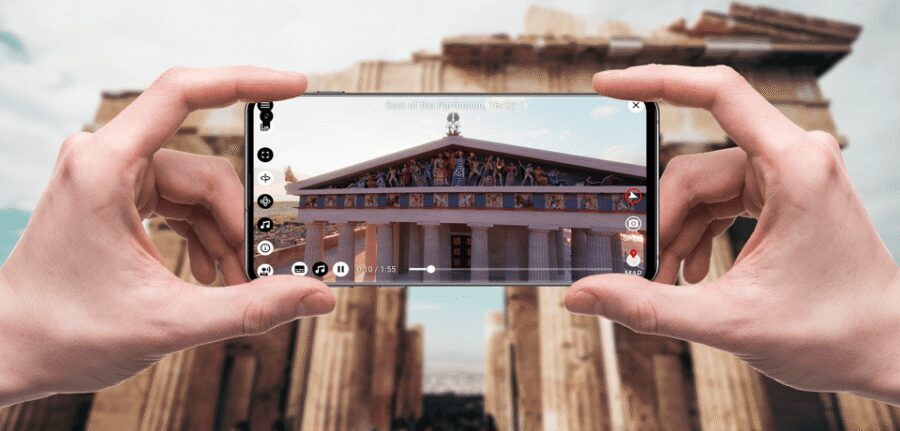
If you’ve ever done the Acropolis in peak season, you know the pattern: you arrive excited, you hit the line, and suddenly your best energy goes to standing still. This ticket swaps that for a date-and-time slot. You still do the famous walk, but you’re less at the mercy of crowd waves.
The value here is the pairing: entry plus a guided experience you control. You’re not paying just to get inside early. You’re paying for a smoother start so you can spend your energy on the monuments themselves—especially important because the Acropolis is a “look up, look close, look again” kind of place.
Your timed entry also comes with a practical limitation. Entrance is allowed only in the selected time slot or within a 15-minute window before or after. That’s fair, but it means you should build in extra buffer for metro/bus timing and getting to the entrance.
A few more Athens tours and experiences worth a look



Your VR Audio Guide: What You Actually Need to Make It Smooth

This tour’s “guide” lives on your smartphone. After booking, you receive your ticket and instructions by email or WhatsApp (and yes, it can land in spam). You download the VR audio guide so you can proceed straight to the Acropolis entrance with your PDF ticket.
Here’s the big, practical point: you’ll want your phone ready before you reach the entry lines. The experience depends on the app working, and battery life matters on sunny stone. One helpful habit is to start your setup at a place with shade or indoors, not while you’re already climbing in direct sun.
Headphones are not optional (not included)
The instructions clearly ask you to bring headphones, and the listing notes earphones aren’t included. If you show up with loudspeaker audio, the Acropolis crowd noise will make it harder to follow. Pack small, bring what you like, and you’ll hear the narration cleanly.
VR is a bonus layer, not a replacement for walking
The VR component is designed to give you a glimpse of how the Acropolis Hill and surrounding areas might have looked in ancient times. That’s useful because so much of what you see now is stone and fragments. Even if you don’t remember every detail later, your brain tends to “snap” into place when you can connect ruins to a former scene.
Audio follows a sequence, not a magic moment
The audio guide is multilingual and self-guided, so it helps to treat the visit like a walk-through with an order: it’s there to guide you through the named stops, not to react instantly the second you turn your head.
A key caution from real-world use: in bright sun, you may struggle to read your phone screen, and the audio app can use a lot of battery. Plan for that. Bring a charged smartphone, and if your battery is always on the edge at home, consider a small power bank. Also, don’t let your tour become a full-time phone-watcher—use the audio as your cue, but keep your eyes on the monuments.
You can also read our reviews of more guided tours in Athens





Languages you can choose
Audio is available in a wide set of languages: English, Spanish, German, Italian, Polish, Russian, Chinese, French, Portuguese, Arabic, and Japanese. That’s a lot of options, and it means you’re more likely to get narration that fits your language comfort, not a “close enough” alternative.
Start at the Theater of Dionysus: A Smart First Move

The route begins at the Theater of Dionysus. This is one of the best opening points on the Acropolis because it frames the area as more than temples and statues. The theater ties into Greek culture in a way that makes the rest of the hill feel like part of a living civic world.
From the first stop, you’re set up to understand what you’re seeing as you climb: the complex includes dramatic and religious spaces. Even if you’re not a theatre buff, it’s easier to connect the dots when you start with a place built for performance and public life.
A practical tip: take a moment here and let the audio get you oriented. Theater spaces teach scale. You’ll better judge how the Parthenon and other buildings relate when you’ve already seen how people gathered for major events.
Parthenon Time: How Audio Helps You See More Than Stone

Of course, the headline is the Parthenon, the UNESCO World Heritage Site dedicated to Athena—the goddess of wisdom and warfare. You’ll reach it as part of a guided walk, with audio narration helping you interpret what you’re looking at.
What I like about using audio at the Parthenon is that it nudges your attention toward details most people miss when they’re just hunting for photos. Stonework has “logic,” and the narration can give you a way to recognize that logic rather than just admiring size.
The Parthenon viewpoint matters
This route is designed to move you through multiple points with different sightlines. That matters because the Acropolis doesn’t read the same way from every angle. You’ll catch different perspectives as you move from one stop to the next, especially with the views back toward Athens and out toward the mountains and the Aegean Sea on clear days.
A drawback if you’re phone-dependent
If your phone screen is hard to read in strong sunlight, the Parthenon stop can turn into a half-phone, half-stare-at-stone strategy. Keep your brightness up, and if the app’s behavior ever feels confusing, don’t panic—use the general sequence and follow the named landmarks rather than trying to troubleshoot every cue in the moment.
Propylaea, Temple of Athena Nike, and the Erechtheion
After the Parthenon, you continue to the Propylaea, then the Temple of Athena Nike, and onward to the Erechtheion. This stretch is where the audio shines most, because each stop has its own “role” on the hill.
Propylaea: the monumental gateway idea
The Propylaea is a key transition. It helps you understand the Acropolis as a structured approach, not a random cluster of buildings. When you hit the gateway area, the space feels more ceremonial, and the route makes more sense as a walk through designed places.
Temple of Athena Nike: smaller than you expect, still important
The Temple of Athena Nike is easy to underestimate when you’re imagining only the biggest, most famous structures. Audio helps correct that mindset. Small doesn’t mean insignificant—it can mean targeted, symbolic architecture. This stop also helps with scale. You’ll better understand how the Acropolis balances grand statement and focused religious space.
Erechtheion: where details pull you in
The Erechtheion is one of those places where your eyes want something to “hook” onto, and the narration gives you a reason to slow down. The stop is valuable because it keeps you from treating the Acropolis as a single monument. Instead, you feel like you’re moving through a set of connected meanings.
Odeon of Herodes Atticus: Closing With a Cultural Anchor
The route finishes by going past the Odeon of Herodes Atticus. This is a strong end point because it brings you back to the idea of public life—again reinforcing that the Acropolis wasn’t only religious theater. It was also performance, gathering, and civic identity.
You also get a chance to breathe and take in the big-picture views. As you wander, you may notice sweeping sightlines toward Athens, the surrounding mountains, and sometimes the Aegean Sea far off. When you reach the end of the main walking loop, those views can make the whole visit feel like more than a checklist.
Price and Value: Is $53 Worth It?
At $53 per person, you’re paying for more than an entrance ticket. You’re paying for three things bundled together: timed access, the VR application, and a multilingual self-guided audio tour.
Is it “cheap” compared to buying a basic ticket? Probably not. But value depends on how you like to travel. If you want autonomy—walk at your pace, stop when something catches your eye, and not wait for a group—then the price starts to make more sense. You’re essentially buying time saved at entry plus a structured explanation so your visit doesn’t become random wandering.
Where it may feel less worth it is if you really want a live guide’s back-and-forth answers, or if you know you hate relying on a phone during intense sun and walking. In that case, you might prefer a guided tour with a person speaking on-site. Here, the “guide” is your app.
Who This Acropolis VR Audio Tour Fits Best
This experience works especially well if you:
- Like self-guided museums and monuments
- Want timed entry so your schedule matters
- Appreciate explanations in your language from an audio track
- Are curious about how ancient Athens may have looked via VR
It’s less ideal if you:
- Dislike phone-based tours or worry about battery life
- Want a live guide to answer questions on the spot
- Prefer a guided group pacing through crowded spaces
If you’re traveling solo or as a couple and want a smoother, more controllable visit, this setup is built for you. The route makes the main highlights happen in a logical order, without forcing you to match anyone else’s stride.
Should You Book This Acropolis VR Audio Tour?
I’d book it if you’re aiming for a calmer entry, strong audio support, and a VR layer that helps the stones feel connected to what came before. The biggest strength is the combination of skip-the-line timed entry with a self-guided tour you can take at your own speed.
I’d pause before booking if you know your phone struggles in direct sun or your battery usually runs down fast, because this experience depends on your device. Also, since there’s no live guide, you’ll need to be comfortable learning through narration rather than conversation.
If you do book, pack like this: bring headphones, start charging earlier than you think you need, and keep a power plan in mind. Done right, you’ll leave feeling like you saw the Acropolis with your eyes opened, not just your camera ready.
FAQ
How do I enter the Acropolis with this ticket?
You’ll go to the Main or South entrance and present your PDF ticket (printed or on your mobile device).
Do I need a live guide to use this experience?
No. It includes a virtual reality application and a multilingual self-guided audio tour. A live guide is not included.
What’s the duration of the tour?
The experience is listed as 2 hours.
Which languages are available for the audio guide?
Audio is available in English, Spanish, German, Italian, Polish, Russian, Chinese, French, Portuguese, Arabic, and Japanese.
What should I bring to make the audio work well?
Bring headphones and a charged smartphone.
Is there free cancellation?
Yes. You can cancel up to 24 hours in advance for a full refund.
If you want, tell me your travel month and whether you prefer museums with quiet focus or faster, photo-first stops—I can suggest the best mindset and pacing for a 2-hour Acropolis visit.