REVIEW · ATHENS
Athens: Ancient Corinth Tour with Official Guide & Tickets
Book on GetYourGuide →Operated by CHAT TOURS · Bookable on GetYourGuide
Corinth has a way of turning reading into real footing. This Ancient Corinth tour is built for one thing: getting you from Athens to major ruins and key St. Paul locations without the headache of planning. You’ll pause at the Corinth Canal, then walk through the Agora and Apollo’s sanctuary, plus visit the museum that explains how this city worked in its golden age.
I like the tight focus on the right stops. The Corinth Canal viewpoint gives you that wow moment fast, and the guided walk through the Agora helps you understand what you’re actually looking at instead of just wandering between stones.
One thing to keep in mind: the schedule is efficient, so you may feel a bit rushed—especially if you want extra wandering time in the museum or more time at the canal.
In This Review
- Quick hits before you go
- Ancient Corinth in Six Hours: Why This Day Trip Works
- Corinth Canal Viewpoint: The Engineering Moment You’ll Remember
- Entering Ancient Corinth’s Agora and Apollo’s Temple Ruins
- St. Paul in Corinth: Turning Bible Geography into Real Space
- The Museum Stop: Mosaics, Pottery, and What You Might Miss
- Price and What You Get for $89: Value Check
- Bus Ride Reality: Timing, Wi‑Fi, and Staying Comfortable
- Who Should Book This Ancient Corinth Tour (and Who Should Skip It)
- Should You Book? My Take
- FAQ
- How long is the Ancient Corinth tour from Athens?
- What’s included in the price?
- Are meals included?
- Where are pickup and drop-off offered?
- Is the guide available in English?
- Do you skip the ticket line?
- Is Wi‑Fi available on the bus?
- What should I bring for the day?
- Is this tour suitable for wheelchair users or mobility impairments?
Quick hits before you go
- Corinth Canal: watch ships slip through a cut with limestone cliffs about 90 meters high
- Ancient Agora: walk the commercial and cultural crossroads where ideas met from East and West
- Apollo’s Temple area: see ruins tied to the 6th century BC
- St. Paul connections: you’ll visit sites linked to preaching and influence in Corinth
- Included museum entry: mosaics, pottery, and marble sculpture help you connect ruins to daily life
- Hotel pickup/drop-off: air-conditioned bus with Wi‑Fi on board
Ancient Corinth in Six Hours: Why This Day Trip Works
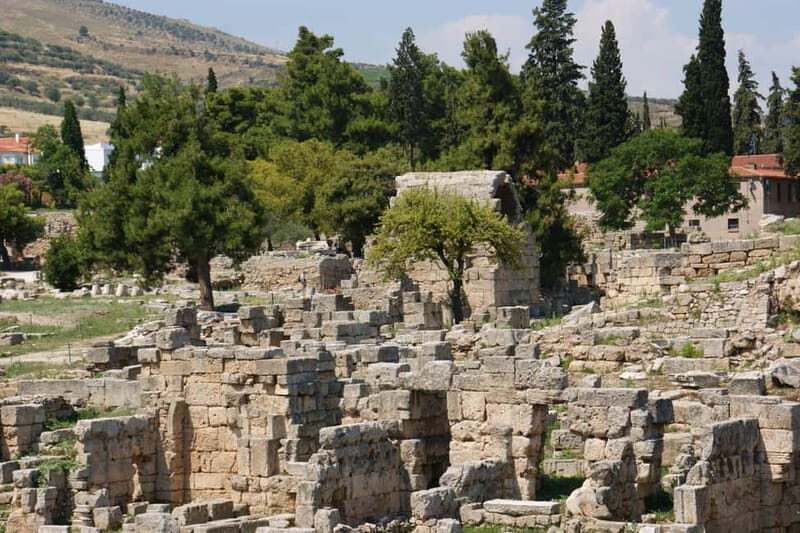
If you want the big names of Greece’s ancient world, Corinth is one of the best adds-on from Athens. It’s not just a site—it’s a story about trade, politics, religion, and movement. This tour keeps that story moving. In about 6 hours, you hit the canal, the main archaeological area, and the museum—so you can leave Athens behind and still get back with time for dinner.
I also like that it’s structured around what matters visually. Corinth Canal gives you the dramatic engineering moment first. Then Ancient Corinth gives you the built environment—columns, temple ruins, and the broad open space of the Agora—so your brain can line up myth, history, and faith references as you go.
The tour is run with an official English-speaking guide, and the group moves by bus between stops. That’s a real advantage here, because Corinth is not hard to reach, but doing it smoothly on your own takes more decisions (and time) than most people expect.
A few more Athens tours and experiences worth a look


Corinth Canal Viewpoint: The Engineering Moment You’ll Remember
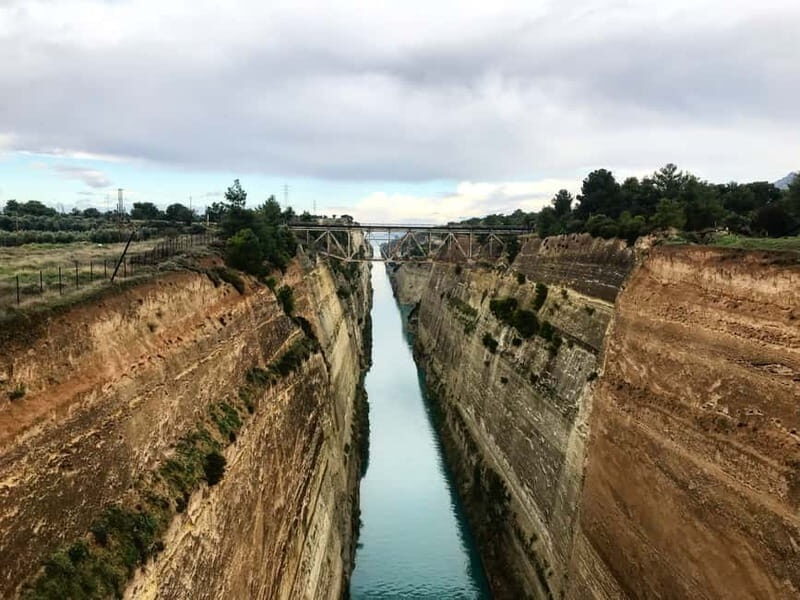
Your day starts with the Corinth Canal, a narrow waterway connecting two seas. You’ll stand at the edge where the cliffs fall roughly 90 meters down to the channel. The effect is immediate: this is one of those places where you look at the scale and think, how did they even do that?
You’ll also get moving context while you’re there. The guide frames the canal as more than scenery—it’s part of why Corinth mattered as a hub, because routes shaped power. Then you’re free to take photos and absorb the scene, even though the stop can feel short if you want more time for coffee or a longer look around.
A practical note: some people found the canal stop brief, so if canal watching is your priority, plan to treat it as a quick, high-impact stop rather than a long break.
Entering Ancient Corinth’s Agora and Apollo’s Temple Ruins
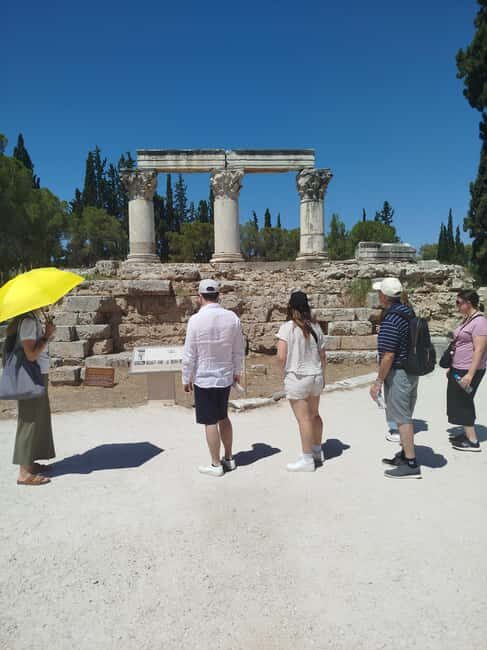
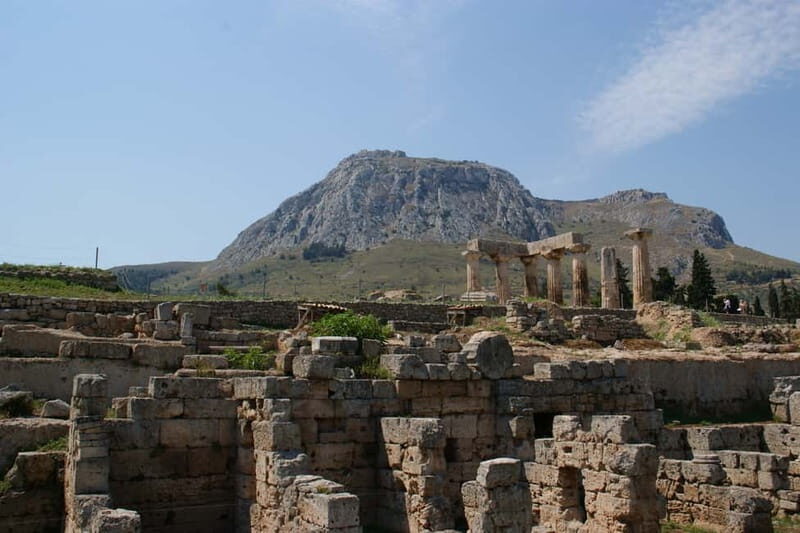
Then you shift from modern engineering to ancient city life. At Ancient Corinth, the guide leads you through the Agora, the broad marketplace area that once drew merchants from across the Mediterranean. This is where the city’s “network” becomes visible. You can see why ideas, languages, and religions mixed here—because trade was built into the space.
What I like about the guided approach is that it helps you read the ground. The Agora can look like scattered remains if you don’t know what to look for. With a guide, you learn where commercial activity happened, and why Corinth’s wealth showed up in architecture and public life.
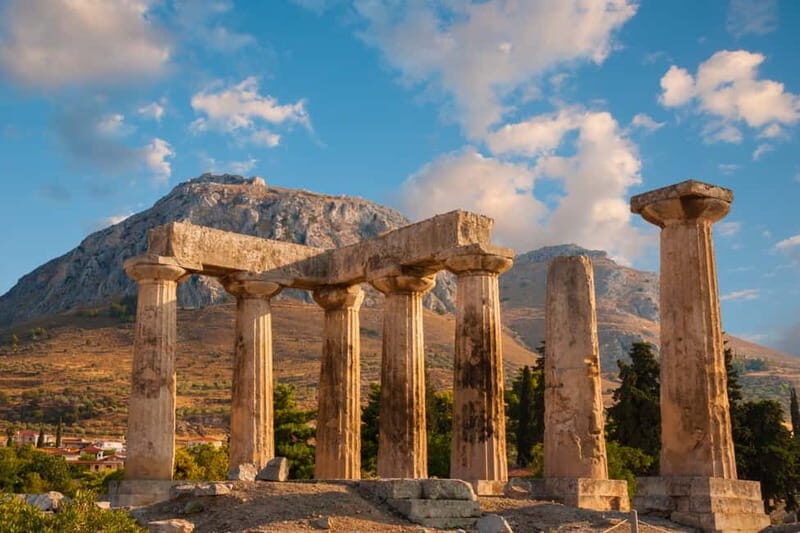
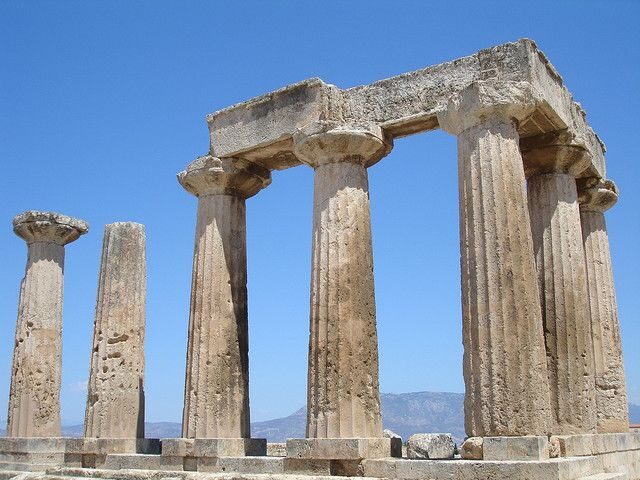
After the Agora, you spend time around Apollo’s sanctuary, including ruins associated with Apollo’s 6th-century BC temple area. Running your hands along weathered stone may sound like a tourist cliché, but here it actually helps you appreciate scale and age. The columns and remnants communicate wealth in a way text alone can’t.
This part of the day is often where you get your best “I get it now” moments. You’ll connect the physical site to the kind of society that could produce major philosophers, debate, and religious communities.
St. Paul in Corinth: Turning Bible Geography into Real Space
One of the main reasons people book this trip is the religious geography. The tour focuses on the idea that Corinth was a cosmopolitan center where faith could spread through real communities and established infrastructure.
You’ll hear how St. Paul chose Corinth and spent time there—often described as living and preaching in the city for about two years. The guide also points to the setting where Paul stood before a Roman proconsul, framed as a turning point. It’s not just a spiritual storyline; it’s tied to how civic life worked in a place with serious public institutions.
You’ll also pass by the ancient port of Kechreai, linked to the moment St. Paul first set foot in Corinth. Even if you’re not doing a full faith pilgrimage, this stop helps you imagine how people arrived—by sea—and how quickly a message could travel once communities formed.
Tip: if you care about these connections, wear comfortable shoes and don’t rush. The religious “map” makes more sense when you’re moving at a walking pace, not hopping between isolated photo spots.
The Museum Stop: Mosaics, Pottery, and What You Might Miss
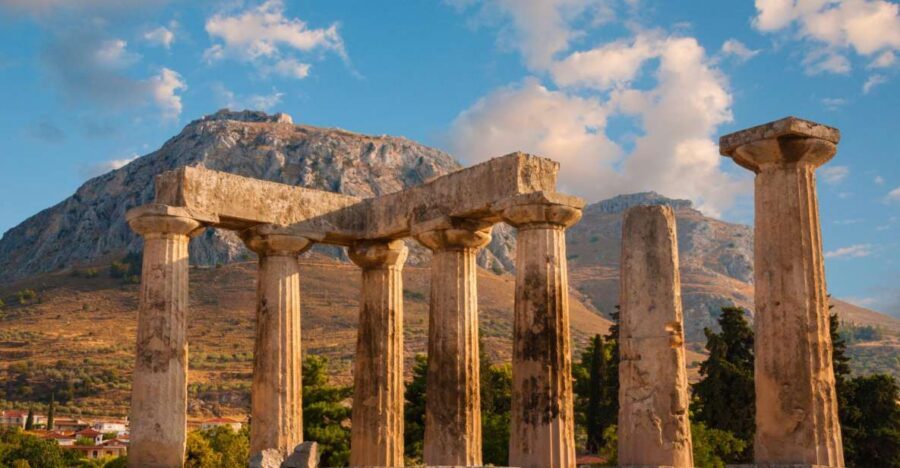
Corinth’s museum is the bridge between the ruins outdoors and the daily life inside a thriving port city. You’ll see artifacts that explain why Corinth mattered: intricate mosaics, ancient pottery, and marble sculpture connected to the city’s golden age.
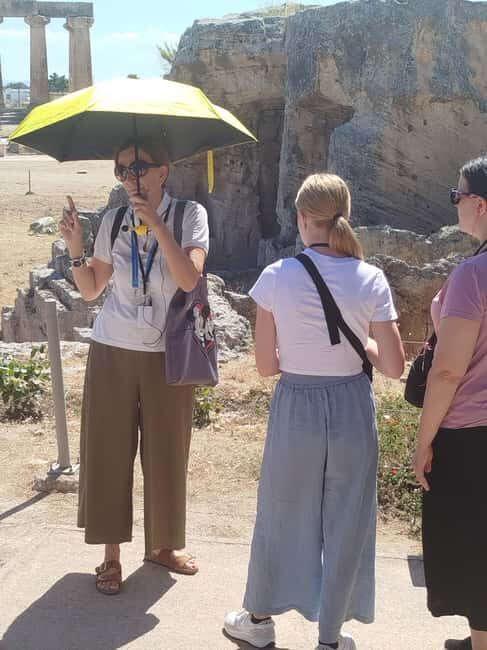
A guided museum visit is especially useful because the artifacts can be hard to interpret at a glance. The guide helps you spot patterns—what an object suggests about trade, status, and ordinary routines. This is where you start thinking less like a tourist and more like an archaeologist.
That said, timing can make or break this stop. Some visitors felt they didn’t get enough time to linger, especially compared with the quality of what’s on display. If you’re the type who likes to read labels and re-visit objects, consider arriving with a mindset of “priority viewing” rather than expecting long wandering.
Also watch for facilities. At least a few people noted the museum (and the canal stop) could feel tight on toilets during peak times, so plan around that and don’t wait until you’re desperate.
You can also read our reviews of more guided tours in Athens




Price and What You Get for $89: Value Check
At $89 per person, this is in the “mid-range” tier for an Athens day trip. The value comes from what’s actually included, not just the headline price.
Included highlights:
- Air-conditioned bus transportation
- Guide in English
- Museum and archaeological site entry for Ancient Corinth
- Hotel pickup and drop-off
- Wi‑Fi on board
- Skip the ticket line (for the included site ticket)
Not included:
- Meals and drinks
For many people, hotel pickup alone is worth the cost. Getting to Corinth independently means planning transport, managing ticket timing, and likely sacrificing some time to logistics. This tour compresses those steps into one organized flow.
One caution on value: if you’re expecting a leisurely day with lots of breathing room, the format can feel more “see and learn” than “slow travel.” People who want extra free time at the museum or canal may wish they had more minutes to roam. Still, for a single-day snapshot of Corinth and its most iconic links, this is a fair setup.
Bus Ride Reality: Timing, Wi‑Fi, and Staying Comfortable
This tour is designed around a morning pickup window. Pickup starts around 07:30 and runs until 08:15, with the standard morning departure at 08:30 from Hotel Amalia Athens (Syntagma square). If you’re not staying at one of the listed pickup hotels, you’ll be directed to a meeting point with bus access. Last-minute bookings may require a confirmation call by the morning cutoff.
On board, you get Wi‑Fi, but at least one guest noted it can be limited. So don’t count on it for video calls or constant browsing.
The bus ride itself can be a highlight if you enjoy hearing city-to-city context. Many people enjoyed how the guide explained Greek mythology, history, and the Bible references while you travel out of Athens. Also, the driver’s job here is not just driving—it’s navigating narrow lanes safely. That part matters because you’ll spend a lot of time in transit getting to the major stops.
Practical comfort ideas:
- Bring a sun hat and comfortable shoes.
- Plan to stand and walk on uneven ground at ancient sites.
- Since food and drinks aren’t allowed on the bus, plan snacks around departure and return times.
Who Should Book This Ancient Corinth Tour (and Who Should Skip It)
This tour suits you if:
- You want an efficient Ancient Corinth day trip with official guide support
- You care about St. Paul’s connections and want them placed in physical context
- You prefer included tickets and hotel pickup over self-planning
It may frustrate you if:
- You need lots of unstructured time for slow museum browsing
- You’re sensitive to bathroom availability at busy times
- You have mobility needs that don’t match the tour’s accessibility limits
The tour is listed as not suitable for mobility impairments and wheelchair users, so plan accordingly.
Also keep in mind: meals aren’t included. If you’re sensitive to getting hungry during long mornings, pack a plan (outside the bus) so you don’t end up rushing late.
Should You Book? My Take
If you’re spending a short time in Athens and want one strong ancient-city day, I think this is an easy yes. You get Corinth Canal, Ancient Corinth’s Agora and Apollo’s area, plus the museum—and the official guide ties it together with history and St. Paul references. For $89, the included transport, pickup/drop-off, and site ticket value make sense, especially compared with piecing everything together on your own.
Book it if your priority is: see the highlights, learn what you’re looking at, and return to Athens without the stress of logistics.
Skip or rethink it if you’re the type who needs extra time to wander slowly at each stop. This tour is efficient by design, and some people felt the museum or canal moments could have used more minutes.
FAQ
How long is the Ancient Corinth tour from Athens?
The duration is about 6 hours.
What’s included in the price?
You get air-conditioned bus transportation, Wi‑Fi on board, an English-speaking guide, entry ticket to the museum and the archaeological site of Ancient Corinth, and hotel pickup and drop-off.
Are meals included?
No. Meals and drinks are not included.
Where are pickup and drop-off offered?
Pickup and drop-off are offered from selected hotels in Athens. Pickup runs from about 07:30 to 08:15, and the tour departs at 08:30 from Hotel Amalia Athens at Syntagma square. Drop-off is also to selected hotels.
Is the guide available in English?
Yes. The live tour guide is English-speaking.
Do you skip the ticket line?
Yes, skip-the-ticket-line access is included for the museum and archaeological site entry.
Is Wi‑Fi available on the bus?
Wi‑Fi is included on board.
What should I bring for the day?
Wear comfortable shoes and bring a sun hat. Children also need a passport or ID card (as required for discounted pricing rules).
Is this tour suitable for wheelchair users or mobility impairments?
No. It is not suitable for people with mobility impairments or wheelchair users.