REVIEW · ATHENS
Athens Highlights: Myths & Philosophers Private Walking Tour
Book on GetYourGuide →Operated by Be a Greek · Bookable on GetYourGuide
Greek ideas walk right up to you in Athens. This private philosophy-and-myth walking tour ties Socrates, Plato, Epicurus, and gods like Apollo and Athena to real streets and monuments, guided by people who make the ideas sound human.
I love how it turns big names into small moments. Greek coffee break time in Thissio is built in, and guides like Bianca or John keep the conversation going. The only catch: it’s a lot of walking, so it isn’t a fit if you have mobility limits.
In This Review
- Key things I’d circle before you book
- A Philosopher-and-Myth Tour That Feels Like Walking With a Smart Friend
- Where the Tour Starts: Panepistimio Metro or the University Option
- Academy of Athens to the Numismatic Museum: Setting the Study Mood
- The Trilogy of Athens and 19th-Century Sculptures: Where Socrates and Plato Take Shape
- Hellenic Parliament and the National Garden: Epicurus’ Garden Comes Alive
- Ermou Street to Monastiraki: Hermes, Street Life, and Myth as a Map
- Kapnikarea and Aristotle’s Lyceum: History You Can Feel in Your Feet
- The Thissio Coffee Stop: A Built-In Reason to Slow Down
- Ancient Agora and the Poikile Stoa: When Stoicism Was Born
- Plaka and Anafiotika: Cynics Near the Acropolis Footsteps
- The Tower of the Winds and Aiolos: Myth as City Wayfinding
- Areopagus Hill Finish: Acropolis Views and Olympian Myths
- Price and Value: Is $100 a Fair Deal for 4 Hours?
- Who This Tour Fits Best (and Who Should Skip It)
- Should You Book Athens Highlights: Myths & Philosophers Private Walking Tour?
Key things I’d circle before you book
- Socrates, Plato, Aristotle, Epicurus, and Stoicism mapped onto Athens landmarks you can actually point to
- The Trilogy of Athens by Theofilus Hansen, plus 19th-century statuary along the route
- Myth pairings with meaning: Apollo vs Athena, and Aiolos as the keeper of the winds
- Epicurus’ Garden brought to life at Athens’ National Garden area
- One included Greek coffee or traditional refreshment, designed as a real pause for talk
- A high Acropolis view finish from Areopagus Hill with Olympian myths to wrap it up
A Philosopher-and-Myth Tour That Feels Like Walking With a Smart Friend
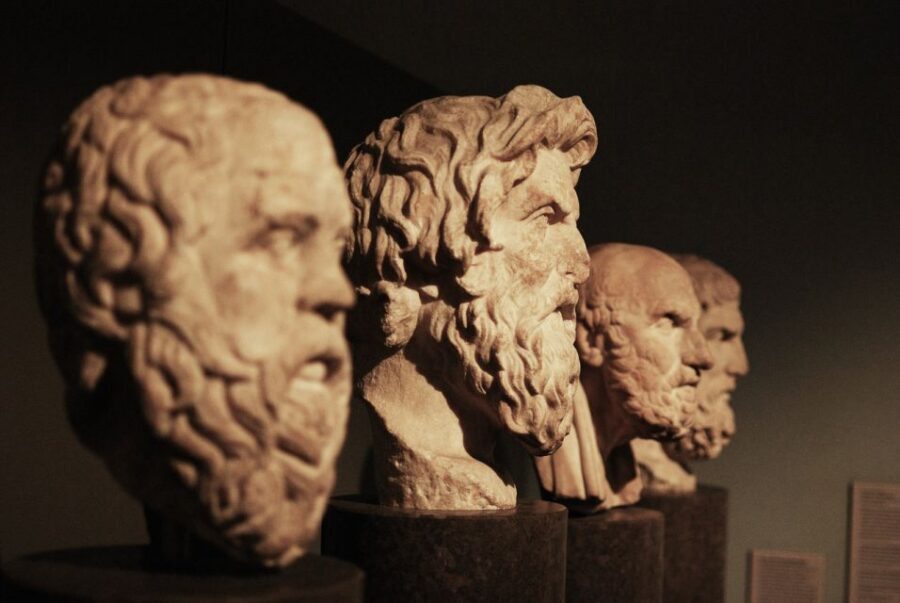
If you’ve ever read a name like Socrates or Epicurus and thought, okay, but where do they fit in real life, this Athens walk helps. The whole point is to use streets and monuments as anchors for the ideas—so philosophy stops being a textbook exercise and starts feeling like a lens for daily choices.
This is also a private setup, which matters. You get a live guide with room to adjust the pace and answer questions, and in the same 4 hours you can move from myth to schools of thought without the usual “lecture-only” vibe. I especially like how guides such as Bianca and John tend to steer the tour toward what you care about, whether you’re learning for class or just curious.
The walking pace is steady, though. You should plan on comfy shoes, sun protection, and breaks being part of the plan—not optional extras.
You can also read our reviews of more walking tours in Athens



Where the Tour Starts: Panepistimio Metro or the University Option
You’ll meet your guide outside Panepistimio Metro Station, with the exact pickup point varying depending on which start option you book (there’s also a University option). The practical win here is that you can anchor your morning around a well-known transit area and avoid complicated navigation.
Right away, the guide frames the route as a timeline: not just a list of monuments, but a story of how philosophical thinking grew in Greece over centuries. You’ll also get a sense of how myths and philosophy were never fully separate topics in ancient Greek life.
Bring comfortable shoes, sunglasses, and sunscreen. This route is mostly outdoors, and you’ll want to stay pleasant enough to focus.
Academy of Athens to the Numismatic Museum: Setting the Study Mood

One of the smartest parts of the tour is that it starts with an atmosphere for ideas. The Academy of Athens area is an apt launchpad because the word “academy” immediately connects to organized learning, and that’s where many people first understand how Greek philosophy developed as a “school” culture rather than a random debate.
As you move toward the Numismatic Museum zone, the guide keeps you moving but not rushed. Expect walking segments that feel like a gentle transition between big themes—myth, philosophy, and how people in Athens lived with both.
This portion isn’t about ticking off museums. It’s about getting your brain oriented so the later stops make sense: you’ll recognize why the guide pairs certain philosophers with certain places.
The Trilogy of Athens and 19th-Century Sculptures: Where Socrates and Plato Take Shape
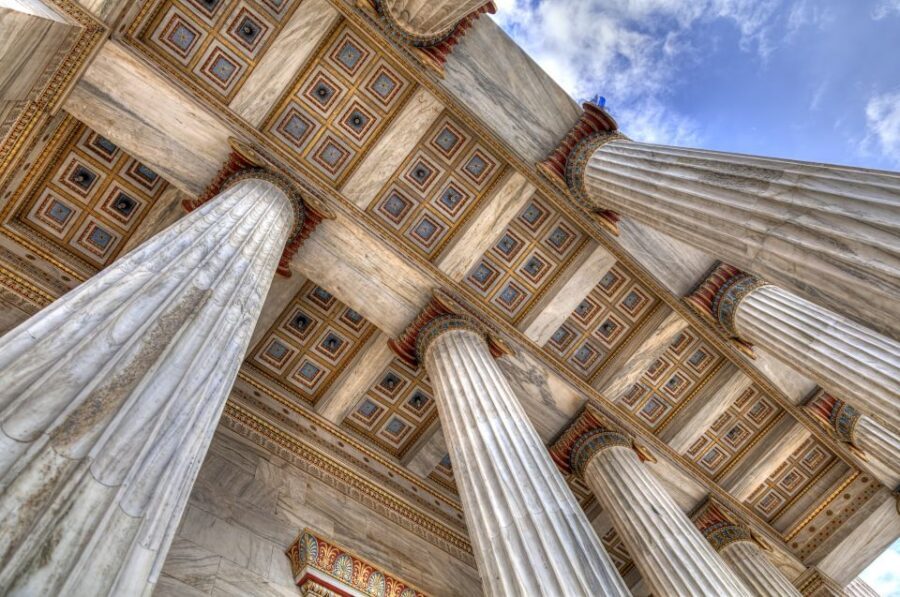
Next comes a highlight for the eyes and the mind. You’ll see the Trilogy of Athens by architect Theofilus Hansen, a set of landmark buildings that looks built for grand ideas. While you admire the statues by famous 19th-century sculptors, your guide ties the setting to the “why” behind philosophy—how people used reason to explain the world and their place in it.
This is also where the conversation starts to sharpen around Socrates and Plato. The tour doesn’t treat them like museum pieces. Instead, you’ll talk about the questions that powered their thinking and why the city’s symbolic spaces work so well for that kind of talk.
Tip: take a moment here to slow down and look around. The buildings are visually loud, and the guide’s stories land better when you’re not just walking past them.
Hellenic Parliament and the National Garden: Epicurus’ Garden Comes Alive
The route then shifts toward the Hellenic Parliament area and the National Gardens. This is a clever move because it links political power and public life with a philosophy that wasn’t obsessed with status.
At the National Garden, the guide brings you into the world of Epicurus and his philosophical school, known as the Garden. What makes this stop work is that Epicurean ideas are often taught in abstract terms, but here you experience them as a way to live: talk, companionship, and a calmer relationship with fear and desire.
So while the city remains modern and busy nearby, your guide turns the moment into a practical reflection. It’s not just theory—it’s how people might’ve approached everyday happiness.
And yes, you’ll keep moving, but this is one of the moments where the tour feels slightly slower on purpose.
You can also read our reviews of more private tours in Athens




Ermou Street to Monastiraki: Hermes, Street Life, and Myth as a Map
From there, you walk down Ermou Street, Athens’ most commercial street, named after Hermes, the god tied to messengers and merchants. This part is genuinely useful if you want more than sightseeing. A guide who understands the myths can make the city’s naming system feel like a living map.
As you pass through the Monastiraki area and onward toward Plaka, the tour starts connecting mythology with where people shop, stroll, and gather. That’s the key: ancient Greek ideas were part of culture, not trapped in academia.
The pacing here also helps. You’ll get frequent “you can breathe” stretches, which keeps the tour from turning into one long grind.
Kapnikarea and Aristotle’s Lyceum: History You Can Feel in Your Feet
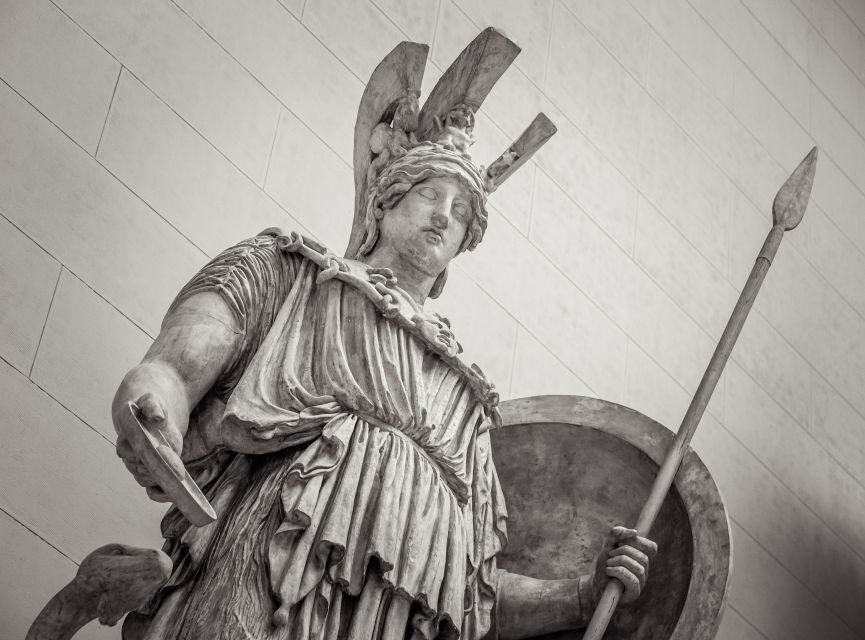
You’ll have a chance to admire Kapnikarea, an 11th-century temple, while the guide connects you to Aristotle and his philosophical school, the Lyceum. Even if you know Aristotle mainly from famous phrases, this kind of walking route changes the vibe. It’s less like memorizing a list and more like seeing how ideas grew around places where people gathered to argue, teach, and observe.
What I like about pairing Aristotle with a stop like Kapnikarea is the contrast. The tour keeps reminding you that philosophy didn’t live in a sealed room. It sat in the middle of real city life—religion, architecture, and public conversations all sharing the same sidewalks.
You’ll also get a sense of how Greek thinkers related to observation and systems of thought, not just big “question-answer” exchanges.
The Thissio Coffee Stop: A Built-In Reason to Slow Down
At some point, the tour makes time for a Greek coffee at a cozy cafe in the Thissio area, and it includes one Greek coffee or other traditional refreshment per person. This pause is more than a snack break. It’s when the guide turns the earlier myths and philosophers into conversation you can actually use.
If you’re the type who learns best by talking, this stop is where it clicks. I’ve seen guides turn coffee time into quick comparisons—how Pre-Socratic ideas set up later philosophers, or how a myth story might reflect a human problem.
You’ll come out of the coffee stop feeling like you can translate the ideas into modern life, not just repeat dates and names. And in some cases, guides also add a short terrace view moment when the route and timing allow—exactly the kind of calm pause that makes the walk feel worth every step.
Ancient Agora and the Poikile Stoa: When Stoicism Was Born
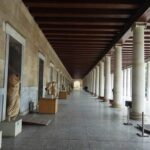
Near the Ancient Agora, you’ll reach the Poikile Stoa, described as the place where Stoic philosophy was born. This is one of the most meaningful “anchored ideas” stops on the whole route because it connects the Stoics to a specific kind of public space.
The Stoa wasn’t a private study room. It was a place where people likely saw arguments happen in public, around daily movement and real events. That context matters. Stoicism is often taught as discipline and control, but standing near the space where it took shape makes it feel like a mindset meant to handle everyday uncertainty.
This stop is also great if you enjoy practical philosophy—ideas that sound useful in real situations, not just clever.
Plaka and Anafiotika: Cynics Near the Acropolis Footsteps
As the tour moves into Plaka and Anafiotika, you’re on the foot of the Acropolis, and the vibe shifts to the myth-and-streets overlap. The guide connects this area to Cynic philosophers, who are famous for challenging social rules and values.
This is the part of the tour where you can really feel Athens as layers. The streets are old, the city is alive, and the guide’s storytelling helps you understand why a Cynic would see the city itself as a classroom.
Take your time here for photos, but also listen for how the guide frames the “provocation” side of philosophy. That angle can be surprising, especially if you think of philosophy as polite.
The Tower of the Winds and Aiolos: Myth as City Wayfinding
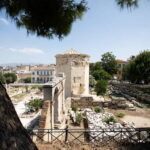
Another standout is the Tower of the Winds. You’ll learn about Aiolos, the keeper of the winds, and how the myths shaped the way people thought about nature and daily weather.
What makes this stop feel good is the technique: the guide uses the myth to teach you to notice patterns. When the city tells stories about winds, time, and seasons, your brain starts reading the environment differently.
It’s a reminder that myth wasn’t only entertainment. It also served as a way to explain the world before scientific language was widespread.
Areopagus Hill Finish: Acropolis Views and Olympian Myths
The tour ends on Areopagus Hill, with a breathtaking view of the Acropolis and more myth stories about the Olympian gods. This finish matters because it gives you a “shape” to the whole walk. You spent hours moving through ideas; now you can step back and see the city as one big stage.
The view also helps your memory stick. Later, when you recall Socrates, Epicurus, or Stoicism, you’re not only remembering facts—you’re remembering a place.
If you time it right, this is also a great moment to grab a few extra photos, because the angle makes the Acropolis look instantly iconic.
Price and Value: Is $100 a Fair Deal for 4 Hours?
At $100 per person for a 4-hour private walking tour, you’re paying for a few things at once: a live English-speaking expert guide, a built-in traditional refreshment, and the time to create a discussion-friendly route across major Athens landmarks. Entrance fees are not included, so think of the price as covering the guiding and experience design—not museum tickets.
So what’s the value? It’s the combination of:
- A private guide who can answer your questions in real time
- Philosophy and mythology tied to the places you’re actually walking through
- A planned break (Greek coffee in Thissio) that turns sightseeing into conversation
If you’d rather do Athens solo with an audio guide, this won’t feel “worth it.” But if you want your time to feel like a guided education with story and pace, it’s a strong choice—especially for first-time visitors who want a smart orientation and for students who care about clarity.
Budget note: because entrance fees aren’t included, you may spend extra if you decide to go in anywhere. Also, souvenirs and personal expenses are on you.
Who This Tour Fits Best (and Who Should Skip It)
This tour is a great fit if you enjoy:
- Greek philosophy and want it connected to real locations
- Mythology as a way to understand culture and symbolism
- Walking tours that include built-in conversation, not just “look and go” stops
You might also love it if you’re the type who asks questions. Guides like Bianca and John are described as warm, story-driven, and happy to tailor the tour when someone has specific interests.
Skip it if you have mobility impairments, because it is not suitable for people with mobility impairments and it’s built around walking.
Should You Book Athens Highlights: Myths & Philosophers Private Walking Tour?
I think you should book it if you want Athens in a way that feels more human than typical museum-hopping. This is one of those rare tour concepts where Socrates, Plato, Epicurus, Stoicism, and Greek myth all show up as part of a single story tied to the city.
Don’t book it if you hate walking or if you expect entrance tickets to be included. But if you can handle steady steps and you want a guide who can turn big names into practical understanding, this tour is a strong way to spend your first (or most philosophy-leaning) afternoon in Athens.