REVIEW · ATHENS
Athens Highlights: Private Tour, Acropolis & Museum tickets Incl.
Book on Viator →Operated by Ancient Greece Tours & Transfers · Bookable on Viator
The best part of this Athens tour is how much ground you can cover without wrestling with city traffic or public transportation. In roughly five hours, you visit the Acropolis and Acropolis Museum, then roll past major sights such as the Panathenaic Stadium, Parliament, and the Temple of Olympian Zeus.
I like the front-door pickup and private vehicle, especially if you have only one day in Athens or are arriving by cruise ship. I also like the hilltop finish at Mount Lycabettus, where you can look across the city toward the Aegean Sea.
The main consideration is that your driver is not a licensed guide and cannot accompany you inside the archaeological sites or museum. You receive historical background during the drive, but a licensed guide inside the Acropolis costs an additional 200 euros or more.
In This Review
- Key points to know before booking
- Why this tour works well for a short Athens visit
- The Acropolis: begin with Athens at its greatest height
- Acropolis Museum: the essential second half
- Temple of Olympian Zeus and Hadrian’s Arch
- Panathenaic Stadium and Athens’ Olympic past
- Parliament, Syntagma Square, and the changing guard
- Mount Lycabettus: the wide view at the end
- What the private vehicle adds
- Is the price good value?
- Who should book this Athens tour?
- FAQ
- Is this a private Athens tour?
- What tickets are included?
- Is a licensed guide included?
- Where can pickup take place?
- Is transportation private?
- Is the driver fluent in English?
- Are Wi-Fi and water included?
- Are meals included?
- Can I cancel for free?
- Should you book it?
Key points to know before booking
- Acropolis and museum admission included: Fast-track tickets cover the Acropolis, Parthenon area, and Acropolis Museum.
- Private from door to door: Pickup and return are offered at Athens hotels, Airbnb apartments, and the port.
- A driver, not a licensed site guide: Your English-speaking driver explains Greek history during the ride but cannot tour the sites with you.
- A strong short-stay plan: The route covers ancient monuments, Olympic history, modern government, and city views in one outing.
- Comfort extras included: You get an air-conditioned vehicle, onboard Wi-Fi, and bottled water.
- Flexible private format: Only your group participates, and group discounts may help larger parties.
Why this tour works well for a short Athens visit
Athens can feel spread out when you are trying to fit ancient ruins, museums, modern streets, and hilltop views into a single day. This private tour handles the driving while you concentrate on the sights.
The route begins with the Acropolis, which is exactly right. You see Athens’ most important ancient site while your energy is still high, then visit the museum while the sculptures and buildings are fresh in your mind. The remaining stops are mostly short visits or drive-by views, so the day keeps moving.
You also avoid spending time finding taxis, checking bus routes, or returning to the same neighborhood. A private car can drop you close to the planned stops and collect you afterward. That matters in Athens, where traffic can be slow and summer heat can make unnecessary walking tiring.
The tour is especially useful if you are staying near the center, arriving from a cruise port, or trying to see Athens between hotel checkout and a later departure. Airport pickup is not included, so airport transfers require an extra charge.
The stated duration is about five hours, but the actual length can vary with traffic, walking pace, and the time you spend inside the Acropolis Museum. One couple reported completing a very full version in about six and a half hours, including port pickup, photo stops, and a walk up Lycabettus. Plan your day with some breathing room.
A few more Athens tours and experiences worth a look


The Acropolis: begin with Athens at its greatest height
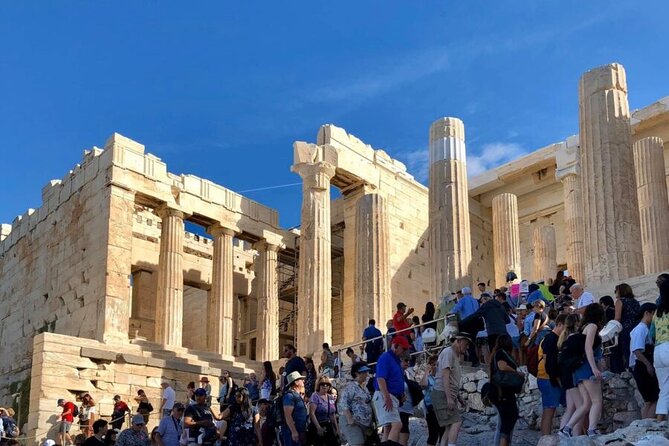
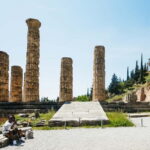
The Acropolis is the heart of the tour. Admission is included, and you spend about an hour and a half exploring the hill and its monuments.
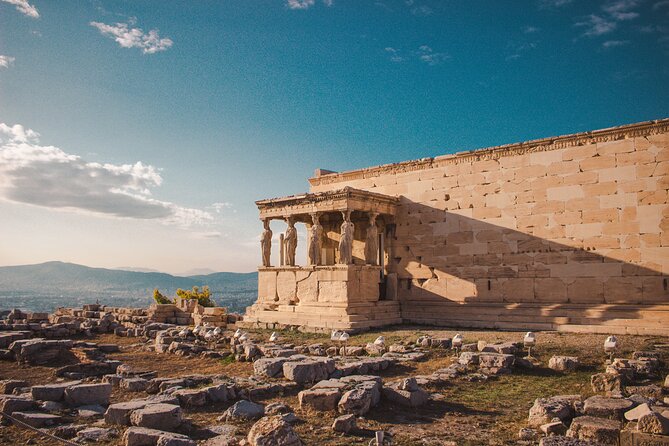
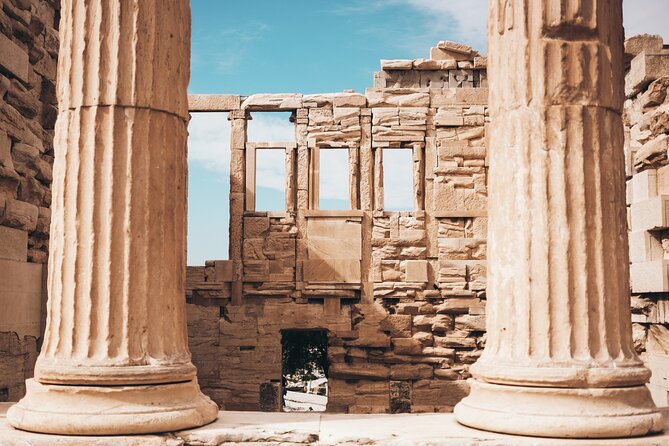
Your route takes in the Parthenon, the Propylaea, the Erechtheion, the Temple of Athena Nike, the Theatre of Dionysus, and views of the Odeon of Herodes Atticus. These are not separate attractions scattered across the city. They form one powerful ancient complex, so the visit feels focused rather than rushed between unrelated stops.
The climb and uneven stone surfaces are worth taking seriously. The information provided does not promise a particular mobility arrangement, so ask the operator about your needs before booking. Most people can participate, but the Acropolis requires walking on historic ground, often under strong sun.
The Propylaea is the monumental gateway to the sacred hill. Built with Pentelic marble under the architect Mnesicles, it was designed to make arrival feel grand. Just beyond it, the Temple of Athena Nike is a small Ionic temple with a big setting, positioned near the entrance above the city.
The Parthenon needs little introduction, but it rewards close attention. Dedicated to Athena, it became a lasting symbol of Athenian democracy and Western civilization. You have around 20 minutes specifically allocated to this monument, though your wider Acropolis visit provides additional time to see it from different angles.
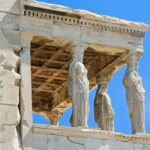
The Erechtheion is known for its unusual design and sacred associations. Its north side once held some of the Acropolis’ most important religious spaces. The famous Caryatid Porch is a highlight, though the tour information does not guarantee that every feature will be open or viewed at close range on the day.
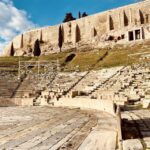
At the foot of the hill, the Theatre of Dionysus connects the Acropolis to the birth of Western theater. It is often easy to overlook when your eyes are fixed on the Parthenon, but this is where ancient drama took shape.
The Odeon of Herodes Atticus is another memorable sight on the southern slope. Built in 161 CE as a memorial, the Roman-era theater once held about 5,000 people. It remains a performance venue during the Athens Festival, with the Acropolis rising behind the stage.
Because the driver cannot accompany you into the archaeological site, you should expect to explore this section independently unless you pay for a licensed guide. Your driver can provide context before drop-off and again when you return to the vehicle, but this is not the same as having an expert explain each building beside you.
Acropolis Museum: the essential second half

After the hill, the Acropolis Museum puts the ancient stones into clearer focus. Your museum ticket is included, and the visit lasts about an hour.
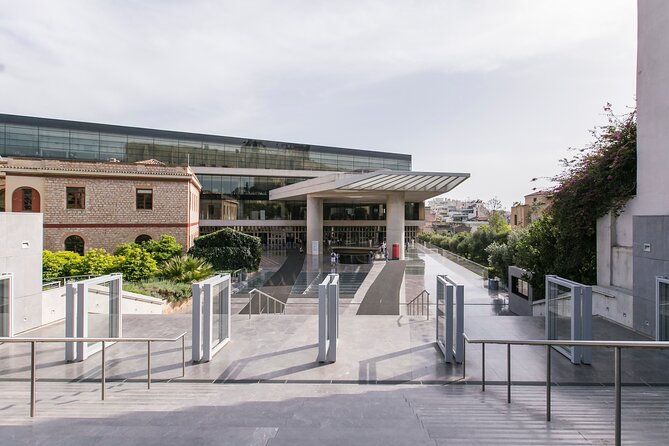
The building is modern, bright, and carefully arranged beneath the Acropolis. Its collection centers on objects from the Archaic and Classical periods, with particular attention to the fifth-century BCE Acropolis.
The Parthenon Gallery is the main draw. It helps you understand the temple’s sculptural program in a way that is difficult to grasp while looking at the monument from outside. Ancient sculptures and architectural pieces fill in the story of a site that has been damaged, altered, and reused over many centuries.
One of the museum’s clever features is the excavated Athenian neighborhood visible beneath glass floors. You can look down at remains of everyday urban life while moving through a carefully designed modern building. That contrast makes the visit more than a storage room for statues.
An hour gives you a useful introduction, but it is not enough for every display. If ancient art is your main interest, ask about adding a licensed museum guide. Without one, use your time for the Parthenon Gallery and the key Acropolis sculptures rather than trying to see every case.
Temple of Olympian Zeus and Hadrian’s Arch

The next stop shifts from the Acropolis to the enormous Temple of Olympian Zeus. The temple was devoted to the king of the gods and was once the largest temple in antiquity.
You spend about 15 minutes here, and admission is not included. That makes this a photo and orientation stop rather than a long archaeological visit. From outside, you can still appreciate the scale of the surviving Corinthian columns.
The route also passes Hadrian’s Arch, which marked a boundary between the old Greek city and the Roman-era city associated with Emperor Hadrian. You may find this stop most useful as part of the larger story of Athens, a city shaped by both classical Greece and Roman rule.
Since the entry fee is extra, confirm the current cost if you want to go inside. If your priority is the Acropolis and museum, viewing the temple from outside may be enough.
Panathenaic Stadium and Athens’ Olympic past
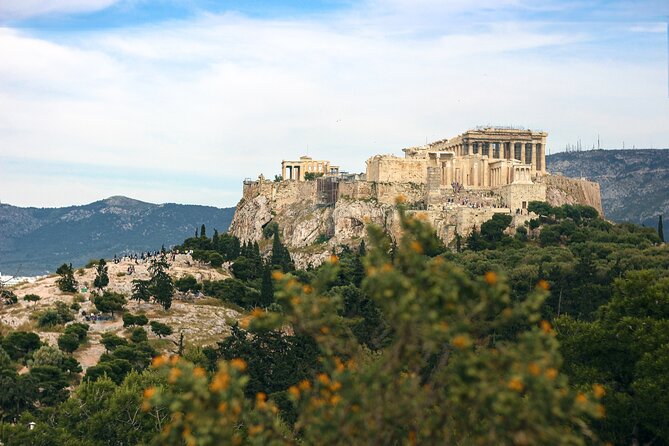
The Panathenaic Stadium is a quick but worthwhile stop. About 20 minutes are set aside, and admission is not included.
The stadium hosted the first modern Olympic Games in 1896. Its white marble seating and long, enclosed shape make it easy to picture the connection between ancient athletic traditions and the modern international games.
You can visit the stadium if you want a closer look, but the schedule may favor photos and a short explanation from your driver. This is one of the stops that makes the tour broader than a standard Acropolis outing. You are not seeing only temples. You are also tracing Athens’ role in modern Greece.
You can also read our reviews of more private tours in Athens





Parliament, Syntagma Square, and the changing guard
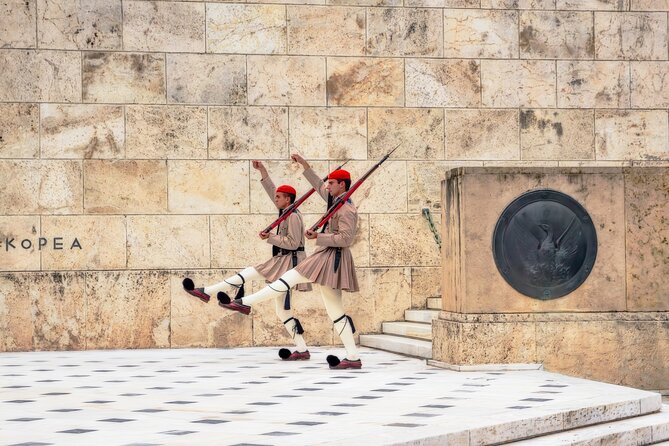
At the Monument to the Unknown Soldier, you have about 10 minutes to watch the changing of the guard. The ceremony takes place in front of the former royal palace, now the Hellenic Parliament, above Syntagma Square.
The guards, known as Euzones, wear a distinctive traditional uniform. Timing matters here because the changing of the guard is a scheduled event, while a private vehicle gives the driver some ability to shape the route around the city’s traffic.
Syntagma Square takes its name from the constitution granted after a popular and military uprising in 1843. The square remains central to Greek public life, and the Parliament building offers a useful link between the country’s monarchy, constitutional past, and present democratic government.
The route also includes views of the Academy and the National Library, two parts of Athens’ neoclassical architectural trilogy. These are drive-by or brief sightseeing moments rather than interior visits. Still, they help you see the city beyond ancient ruins.
Mount Lycabettus: the wide view at the end
The final stop is Mount Lycabettus, the highest hill in Athens. From the top, you can look across the city toward the Acropolis and the Aegean Sea.
This is an excellent way to finish. After seeing Athens close up, you get a clear sense of its size and setting. The Acropolis no longer feels like an isolated monument. It becomes one hill among the city’s many districts, with the sea extending beyond.
The planned stop is about 15 minutes, but one account of the tour included a hike to the top. Ask your driver how much walking is expected on your date, especially if you are managing a tight schedule or prefer a brief viewpoint stop.
What the private vehicle adds
The vehicle is air-conditioned, private, and equipped with Wi-Fi and bottled water. Those details may sound modest, but they matter on a warm day when you have already walked the Acropolis.
Your driver picks you up from an Athens hotel lobby and returns you there. At an Airbnb, the driver contacts you on arrival at the building entrance. Port pickup takes place in the arrivals area, with the driver holding a sign bearing your name.
The private format means only your group participates. A group of nine used the arrangement to keep the day comfortable and simple, and larger parties may qualify for a discount. You also avoid the awkwardness of joining strangers at several different hotels.
Drivers named in the feedback include Dimitri, George, and Giannis. Dimitri was praised for prompt port pickup, photo stops, and helping a couple fit the Acropolis, museum, and Lycabettus into one packed day. George was noted for handling Athens traffic with skill, while Giannis paired historical explanations with a local restaurant suggestion.
Keep the job description clear. These are English-speaking professional drivers who know Greek history and culture well, but they are not certified guides. They can explain the city during the ride and help organize the day. They cannot legally accompany you inside the Acropolis or museum unless you add a licensed guide.
Is the price good value?
At $312.40 per person, this is not a budget sightseeing option. The price makes more sense when you consider what it combines: private transportation, hotel or port pickup, fast-track Acropolis and museum tickets, Wi-Fi, water, and a tailored route through central Athens.
For one or two people, a standard taxi-based day with separate admissions may cost less, but it would require more planning and may cover fewer sights. The private car is most useful when time is short, comfort matters, or you are traveling with family or a larger group.
The price does not include food, drinks, entry to the Temple of Olympian Zeus, or entry to the Panathenaic Stadium. It also excludes airport pickup. If you want a licensed guide inside the sites, budget at least another 200 euros.
I see the strongest value for cruise passengers, first-time visitors, and groups that want a private schedule. If you already know Athens well and mainly want to visit the Acropolis at your own pace, buying tickets and taking public transportation may be cheaper.
Who should book this Athens tour?
I would choose this tour if you have one busy day and want a broad introduction to Athens without arranging each transfer yourself. It suits couples, families, and groups that value a private car and door-to-door service.
It is also a practical choice for cruise port arrivals. A prompt pickup, luggage assistance, major sights, and hotel drop-off can turn an awkward transit day into a useful visit.
You should think twice if your main goal is detailed archaeology. The included driver cannot guide you inside the monuments, and five hours is short for serious study. Adding a licensed guide would improve the Acropolis and museum portions, but it also raises the total cost.
The tour requires good weather. Cancellation is free up to 24 hours before the start time, with a full refund. Late cancellations are not refunded, and weather-related cancellations offer a new date or full refund.
FAQ
Is this a private Athens tour?
Yes. Only your group participates in the activity.
What tickets are included?
Fast-track admission tickets for the Acropolis and the Acropolis Museum are included.
Is a licensed guide included?
No. The tour includes an English-speaking professional driver who provides historical context but is not licensed to accompany you inside archaeological sites or museums. A licensed guide can be arranged for an additional cost of 200 euros or more.
Where can pickup take place?
Pickup and drop-off are available at an Athens hotel, Airbnb apartment, or port. Airport pickup and drop-off cost extra.
Is transportation private?
Yes. Transportation is provided in a private first-class, air-conditioned vehicle.
Is the driver fluent in English?
The drivers are fluent in English and well versed in Greek history and culture.
Are Wi-Fi and water included?
Yes. Wi-Fi is available onboard, and complimentary bottled mineral water is provided.
Are meals included?
No. Food and drinks are not included.
Can I cancel for free?
You can cancel at least 24 hours before the experience start time for a full refund. Cancellations or changes made less than 24 hours ahead are not accepted for a refund. Poor weather may result in a different date or a full refund.
Should you book it?
Book this tour if you want maximum Athens coverage with minimum transport hassle. The Acropolis, museum, Olympic stadium, Parliament, neoclassical center, Temple of Olympian Zeus, and Mount Lycabettus give you a strong first look at the city.
Before paying, decide if driver-led sightseeing is enough or if you want a licensed guide inside the sites. For most short visits, the private vehicle and included tickets make the tour a useful time-saver. For serious history fans, add the licensed guide and allow more than five hours.