REVIEW · ATHENS
Athens: Kotsanas Ancient Greek Technology Museum Guided Tour
Book on GetYourGuide →Operated by Kotsanas Museum · Bookable on GetYourGuide
The Kotsanas Museum makes ancient Greek technology feel surprisingly close to home. In one small Athens museum, you can see working models of the Antikythera mechanism, hydraulic clocks, robots, automata, and even a form of ancient cinema. The exhibits are built to operate, so this is more than a room of dusty objects and labels.
I like the private format, since a guide can explain how each mechanism works instead of leaving you to guess. I also like the price: $54 for a group of up to four makes this a sensible choice for a family or small party. The main consideration is time. One hour goes quickly, and the museum is not suitable for people with mobility impairments.
In This Review
- Key Points at a Glance
- Why Ancient Greek Technology Feels So Modern
- Entering the 700-Square-Meter Art Nouveau Museum
- What Happens During the Private One-Hour Tour
- The Antikythera Mechanism and Ancient Calculation
- Robots, Clocks, and Mechanical Theater
- Interactive Displays Make the Difference
- Why the Private Format Is Worth the Price
- A Good Choice for Families and Curious Minds
- How to Plan the Visit in Athens
- My Take on the Museum Experience
- Should You Book the Kotsanas Museum Tour?
- FAQ
- Where does the tour begin?
- How far is the museum from Syntagma Metro Station?
- How long does the activity last?
- How much does the private tour cost?
- Is the tour private?
- What language is the guided tour in?
- Who leads the tour?
- What is included in the price?
- Are hotel transfers or food included?
- Can I cancel the booking?
- Is the museum suitable for people with mobility impairments?
Key Points at a Glance
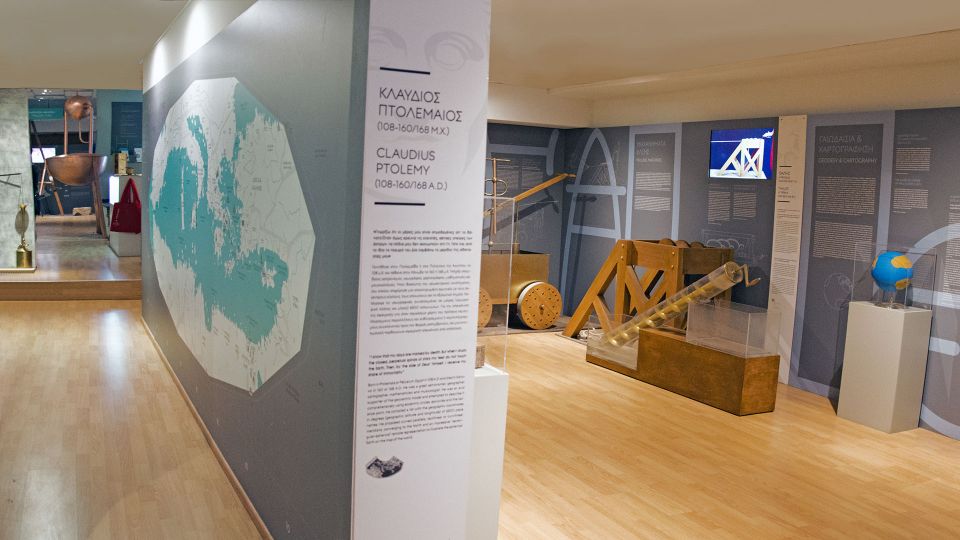
- See the Antikythera mechanism in operation: Explore a model of the ancient Greek calculating device often described as the world’s oldest analog computer.
- Watch technology work: Interactive models include clocks, robots, automata, and mechanical displays that demonstrate their original principles.
- Get a private English-language guide: Your guide may be an engineer, archaeologist, historian, or museologist, with past tours led by guides including Vasilis, Irina, and Maria.
- Visit an Art Nouveau museum near Syntagma: The Pindarou Street location is about a five-minute walk from Syntagma Metro Station.
- Allow time after the tour: Entry, the one-hour private tour, and free time for further exploration are included.
- Bring curiosity, not snacks: Food and drinks are not allowed inside, and hotel transfers are not provided.
Why Ancient Greek Technology Feels So Modern
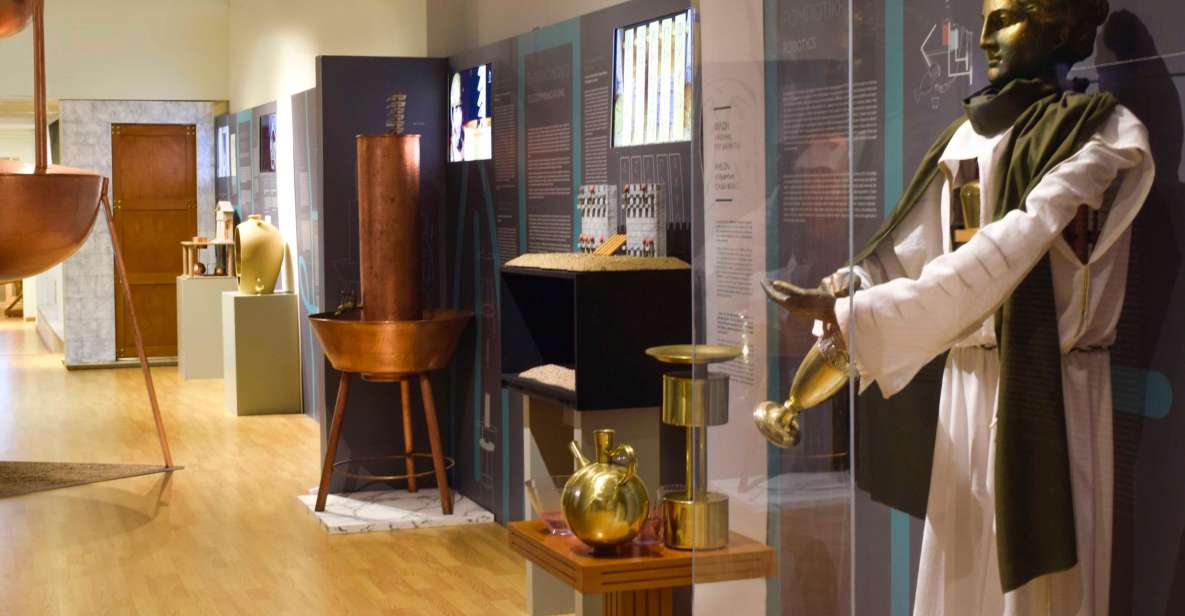
The most striking part of this museum is not simply the age of the ideas. It is the way the mechanisms solve problems that still concern us: measuring time, predicting cycles, moving objects, creating automatic displays, and representing information through gears.
You are not just looking at a label that says an ancient inventor understood hydraulics or astronomy. You can see a model operate. That small difference changes the visit. A diagram can tell you how a device worked, but a moving mechanism lets you follow the chain of cause and effect.
The main exhibition, The Hi-Tech Inventions of Ancient Greeks, presents about 100 selected exhibits from a collection of roughly 300 artifacts and models. The displays cover mechanical, hydraulic, astronomical, theatrical, and automatic devices. You might move from a robot-servant attributed to Philon to a hydraulic clock linked with Ktesibios, then on to the mechanical displays of Heron.
This is a useful stop for anyone who enjoys science, engineering, ancient history, or practical problem-solving. You do not need an engineering background. The tour is designed to explain the mechanisms through labels, diagrams, videos, animation, and live demonstrations.
You can also read our reviews of more guided tours in Athens



Entering the 700-Square-Meter Art Nouveau Museum
The museum is located at Pindarou 6, in central Athens, inside a historic Art Nouveau building. Its location is convenient for a day in the city, since it is about five minutes on foot from Syntagma Metro Station.
That central position makes the museum easy to fit between other sights. You can visit before or after time around Syntagma Square, or use it as a change of pace after the major archaeological sites. The museum itself covers about 700 square meters, giving the collection room to present machines, explanatory material, and video stations without feeling like a single display case.
The building adds some character, but the technology remains the main event. You are here to understand mechanisms, not to admire rooms. Still, the historic setting helps distinguish the visit from a modern science center.
The address is worth saving carefully: Pindarou 6, Athina 106 71. There is no hotel pickup, so you make your own way there. Since the meeting point and the end point are the same, you can continue into central Athens immediately after the tour.
What Happens During the Private One-Hour Tour
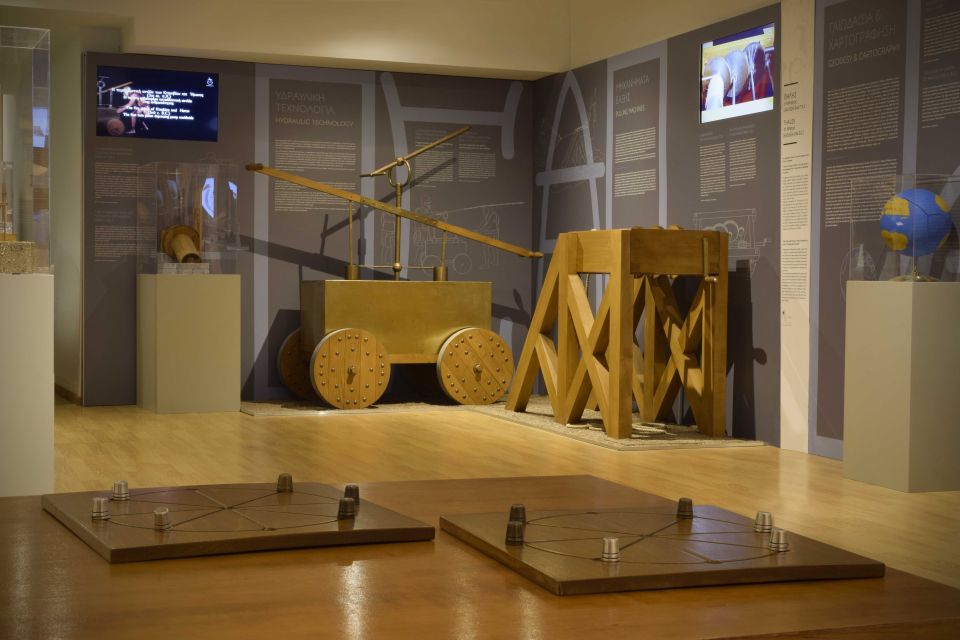
Your visit begins with entry to the museum and a private guided tour lasting one hour. The guide speaks English and may be an engineer, archaeologist, historian, or museologist. That range matters because the tour can connect technical design with ancient culture rather than treating each object as an isolated gadget.
Expect an explanation of how the displays work, supported by interactive models and audiovisual material. Many of the exhibits can be operated or viewed in motion. The goal is not to rush you past every object, but to make the key mechanisms understandable.
A private group is especially useful here. In a large public tour, you might have to stand behind others while a device is demonstrated. With a private group of up to four, you have more room to ask why a mechanism was built, what problem it solved, and how its moving parts fit together.
The hour is structured, but the exact order and depth will depend on your guide. That is one reason to arrive ready to focus. You will get more from the tour if you ask questions rather than treating it as a quick photo stop.
The time limit is also the main weakness. The museum contains about 300 artifacts and models, while the main exhibition alone includes around 100 selected exhibits. A one-hour explanation cannot give equal attention to all of them. Use the guided hour for the devices that need interpretation, then take advantage of the included free time to look at the rest.
The Antikythera Mechanism and Ancient Calculation
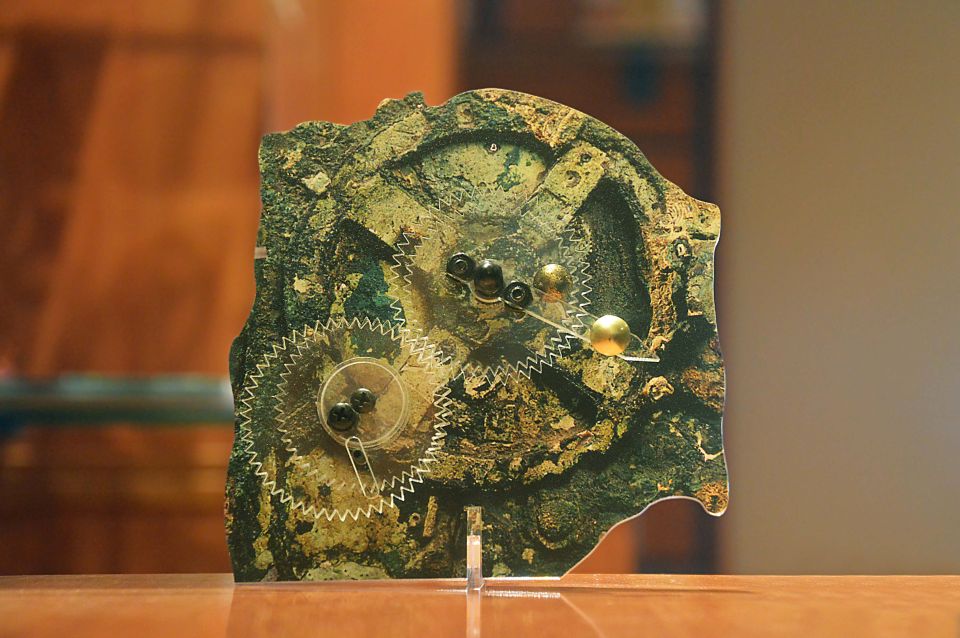
The Antikythera mechanism is likely to be the star for many visitors. The museum presents a model of this calculating mechanism, an early device built around gears and astronomical cycles.
It is often described as the oldest analog computer in the world. That description helps you understand its importance, but the museum’s display gives you something more useful than a grand label. You can see how a geared device could represent information and track repeating patterns.
You do not need to understand every technical detail to appreciate the achievement. The important point is that ancient Greek inventors were developing machines that translated observations of the sky into a mechanical system. The exhibit connects ancient astronomy with the basic idea behind later calculating machines.
For children, this can be more engaging than a static archaeological object because the mechanism has a clear visual logic. For adults, it offers a fresh angle on ancient Greece. The familiar picture of temples, sculpture, and philosophy is only part of the story. Here, the focus is on practical experimentation and complex design.
Robots, Clocks, and Mechanical Theater
The museum also presents inventions that feel almost playful. The robot-servant associated with Philon and the automotive-puppet show of Heron show how mechanical movement could be used for service, entertainment, and spectacle.
These displays are valuable because they make ancient technology easier to picture. A machine that pours or moves, a puppet display that changes position, or an automated figure creates an immediate link between engineering and daily life. You can see why a device would have impressed its original audience.
The hydraulic clock of Ktesibios offers a different kind of experience. It shows how water could regulate movement and measure time. A clock is easy to understand as an idea, but watching a model work helps you recognize the precision needed to keep a steady cycle.
The exhibition also includes what is described as the cinema of Philon. This is not cinema in the modern film-theater sense, but an ancient mechanical presentation that uses movement and changing images to create an effect for the viewer. The comparison is useful because it shows how inventors used mechanical sequences to tell or display something visually.
You may find these theatrical and automatic machines more immediately enjoyable than the purely technical pieces. They have a touch of showmanship, but they also demonstrate careful control of motion. The museum does a good job of showing that ancient technology was not limited to tools for war, farming, or construction.
You can also read our reviews of more museum experiences in Athens



Interactive Displays Make the Difference
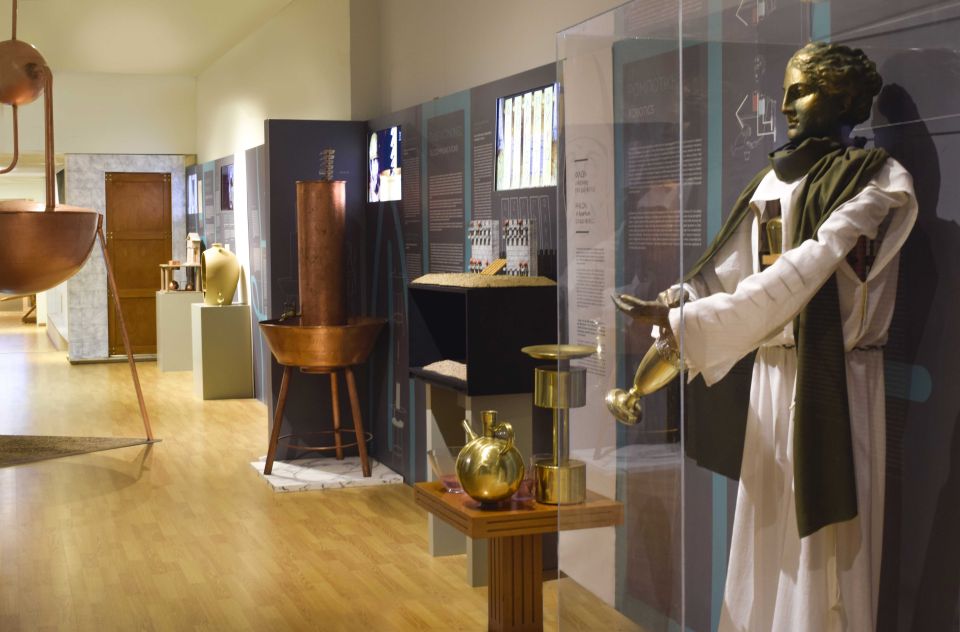
The hands-on aspect is the strongest reason to choose the guided visit instead of simply walking through the museum alone. Many exhibits are interactive, and the guide can show you how to use them without losing the point of the demonstration.
The museum also uses large posters, detailed diagrams, photographs, and explanatory labels in Greek and English. Bibliographical references are included for visitors who want to follow the subject further. Video and animation stations explain the mechanisms, while documentaries show the exhibitor discussing their function and use.
This mix of physical models and audiovisual material helps different kinds of learners. You can watch a device move, study a diagram, read a short explanation, and then ask a question. That layered approach is particularly helpful when a mechanism is too complex to grasp at first glance.
I would not try to read every poster during the guided hour. Instead, listen to the guide first and return to the diagrams during your free time. The museum has enough written material to reward a slower second look, but too much reading can make a one-hour tour feel hurried.
Why the Private Format Is Worth the Price
The listed cost is $54 per group of up to four people, not $54 per person. For four people, that works out to $13.50 each before any currency changes or booking details. For two people, the per-person cost is higher, but you still receive a private tour rather than joining a large group.
That makes the experience strongest for families, couples, or a small group that wants direct access to a guide. A family can ask basic questions without feeling out of place, while an engineer or history enthusiast can spend more time on the mechanisms that interest them.
The value also comes from the guide’s role. The museum is full of machines that may look obvious until you try to understand the sequence behind them. A guide can point out what to watch, explain the purpose of a device, and connect it to the broader development of technology.
The price is less compelling if you only have time for a quick look or prefer to read independently. The tour lasts one hour, and the museum offers visual explanations for self-guided visitors. In that case, the private tour is still useful, but you should plan to stay afterward and make full use of the included free time.
A Good Choice for Families and Curious Minds
This is one of the better Athens stops for children who are tired of looking at objects behind glass. The operating models give younger visitors something to follow with their eyes and hands. One guide, Vasilis, was singled out for making the experience particularly good for children, and the private setup gives a family room to ask simple questions.
Adults will find plenty to enjoy too. The museum presents technology as part of ancient Greek culture, not as a separate subject reserved for specialists. You can come for the robots and leave thinking about measurement, astronomy, hydraulics, and the role of mechanical entertainment.
The tour suits you best if you like explanations and demonstrations. It is less suitable if you want a quiet art museum or a broad survey of Greek sculpture and archaeology. The collection is focused, and the focus is on machines and inventions.
The mobility note is important. The activity is not suitable for people with mobility impairments, so check your own needs before booking. Food and drinks are not allowed inside, which is easy to manage given the short duration.
How to Plan the Visit in Athens
The museum’s central address makes planning simple. From Syntagma Metro Station, allow about five minutes to walk to Pindarou 6. You do not need a hotel transfer, and the activity ends at the same meeting point.
The tour takes one hour, but I would reserve additional time for the exhibits you do not cover in depth. The entry, private tour, and free exploration time are included, so there is no reason to rush out as soon as the guide finishes.
Check the available starting times when you book. The experience is offered at set times based on availability, and the one-hour length makes it easy to place into a busy Athens schedule. Arrive ready to begin at the meeting point rather than assuming the guide will collect you elsewhere.
The museum is best treated as a focused indoor visit. That makes it useful during a hot afternoon or when you want a break from outdoor sightseeing, though the provided information does not specify climate or seating conditions. Plan around the museum’s rules: no food or drinks inside, and no hotel pickup.
You can cancel up to 24 hours in advance for a full refund. The reserve-now, pay-later option also lets you keep your schedule flexible and pay nothing at the time of booking.
My Take on the Museum Experience
I like this tour because it gives ancient Greece a less familiar face. You still get the pleasure of seeing clever inventions, but the visit also asks you to think about how people measured time, represented the heavens, controlled water, and created automatic movement.
The strongest elements are the working models and the private explanation. Guides named Vasilis, Irina, and Maria have been praised for making the exhibits clear and enjoyable, and that personal guidance is exactly what the museum needs. The displays are unusual enough to attract attention, but their value becomes clearer when someone explains the mechanism in front of you.
The main limitation is the short length. An hour is enough for a guided introduction, not a full examination of all 300 artifacts. If you want to read the diagrams, watch the documentaries, and study the models carefully, stay on after the tour.
Should You Book the Kotsanas Museum Tour?
Book it if you want an unusual Athens activity that combines ancient history with working machines. It is especially good for families, small groups, engineers, science fans, and anyone who has already seen the major archaeological sites and wants a different view of Greek culture.
The private price is fair for up to four people, and the central location keeps transport simple. Just remember that the tour is short, food and drinks are not allowed, and the museum is not suitable for people with mobility impairments.
If your idea of ancient Greece begins and ends with statues and temples, this museum may be a welcome surprise. If you want a large archaeological collection, choose another stop. For a compact, interactive look at Greek invention, I would make room for it.
FAQ
Where does the tour begin?
The tour begins at the Kotsanas Museum of Ancient Greek Technology, Pindarou 6, Athina 106 71, Greece.
How far is the museum from Syntagma Metro Station?
The museum is about a five-minute walk from Syntagma Metro Station.
How long does the activity last?
The guided tour lasts one hour. Free time to explore the museum further is also included.
How much does the private tour cost?
The price is $54 per private group of up to four people.
Is the tour private?
Yes. The activity is for a private group.
What language is the guided tour in?
The live guided tour is in English.
Who leads the tour?
The tour is led by qualified staff who may be an engineer, archaeologist, historian, or museologist. Guides named in connection with the experience include Vasilis, Irina, and Maria.
What is included in the price?
Entry to the museum, the one-hour private guided tour, and free time to explore further are included.
Are hotel transfers or food included?
Hotel transfers, food, and drinks are not included. Food and drinks are not allowed inside the museum.
Can I cancel the booking?
You can cancel up to 24 hours in advance for a full refund. A reserve-now, pay-later option is also available.
Is the museum suitable for people with mobility impairments?
The activity is listed as not suitable for people with mobility impairments.