REVIEW · ATHENS
Athens Loom Weaving Workshop: Create Your Own Masterpiece
Book on Viator →Operated by Truevoyagers · Bookable on Viator
The most memorable part of this Athens workshop is that you do not just look at Greek folk art. You sit at a loom and make something with your own hands. The session traces wool from fiber to thread, then puts you to work creating a useful or decorative piece of your own.
I like the small, personal scale of the craft and the fact that coffee, tea, and Greek delicacies are part of the experience. I also like that you can choose your project, from a set of four coasters to a small rug or pouch. The main consideration is price: at $129 for about two hours, this is not a budget activity, especially since transportation is not included.
In This Review
- Key points to know
- From Greek wool to your own cloth
- What happens during the two-hour workshop
- Choose the project that fits your trip
- Why the hands-on part is worth doing
- A good choice for families and first-time crafters
- The studio setting and central Athens location
- Is $129 a fair price?
- Strengths and limitations to keep in mind
- Practical advice before you book
- Should you book this Athens weaving workshop?
- FAQ
- How long does the Athens loom weaving workshop last?
- Where does the workshop begin and end?
- What can I make during the workshop?
- Are coffee and food included?
- Is the workshop suitable for children?
- What is the cancellation policy?
Key points to know
- You make and take home one finished piece, with six project choices available.
- Chrysa is a patient, encouraging instructor, with a warm teaching style noted by participants.
- The workshop begins with Greek wool traditions, including an exhibition and a short film.
- Coffee, tea, and Greek delicacies are included, adding a relaxed social touch.
- Children and adults can participate, making this a good family or small-group activity.
- The studio is at Propileon 15, near public transportation in central Athens.
From Greek wool to your own cloth
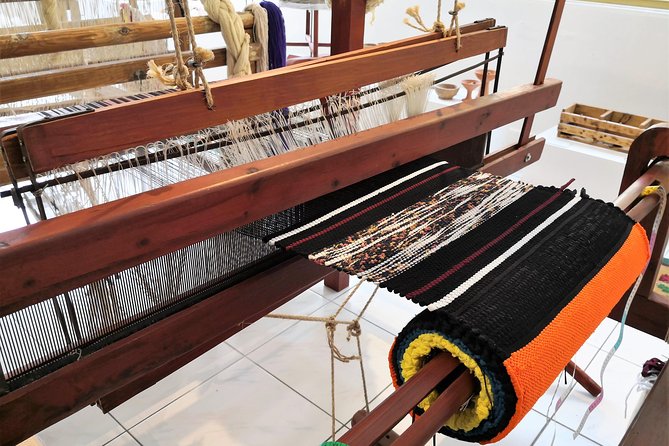
This workshop gives you a clear look at the full weaving process. You begin with the raw material, wool, and learn how it becomes thread before it is placed on a loom. That opening matters because it turns a finished textile into something easier to understand.
Greek weaving has long been tied to household life, regional customs, clothing, and decoration. Here, the emphasis is not on a formal lecture. You learn through the objects around you, the exhibition, the short film, and the work you do yourself.
I find this approach more useful than simply walking through a museum display. Once you have tried to guide thread through a warp, you look at handmade cloth differently. You notice the pattern, the spacing, and the amount of care needed to keep the edges even.
The studio draws on woven objects from across Greece, so your design is connected to local folk culture without requiring you to sit through a long history lesson. The experience is practical and creative, with enough cultural background to give meaning to the activity.
A few more Athens tours and experiences worth a look



What happens during the two-hour workshop
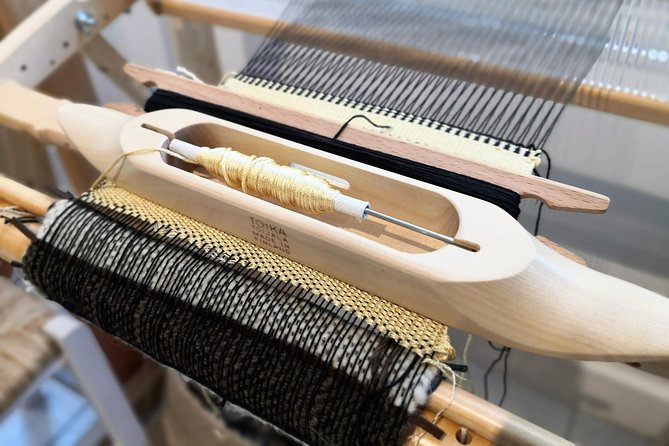
The session lasts about two hours, which makes it easy to fit into a day of sightseeing. You will not lose an entire morning or afternoon, but you should still arrive ready to focus. Weaving is calm work, yet it requires attention, especially when you are learning how the loom moves.
The first stage is a guided look at the permanent exhibition. You see examples of woven objects and learn how wool changes form before becoming fabric. This is the best time to ask questions about materials, tools, and the relationship between traditional methods and the piece you will make.
Next comes coffee, tea, and Greek delicacies while you watch a short film about local wool work. This break gives the workshop a friendly rhythm. It also keeps the experience from feeling like a craft class where you are rushed from one instruction to the next.
The main section begins when you choose your project and sit at the loom. Your instructor explains how to work the equipment and helps you build the fabric row by row. You bring your own ideas, but you are not left to figure out the process alone.
Chrysa receives especially warm praise for her patience, kindness, and encouraging manner. That is important in a craft workshop. A loom can look simple until you try to control the threads, so good instruction makes the difference between frustration and a satisfying result.
At the end, you leave with the item you created. It will be a personal souvenir rather than a mass-produced object, and its small imperfections are part of the charm.
Choose the project that fits your trip
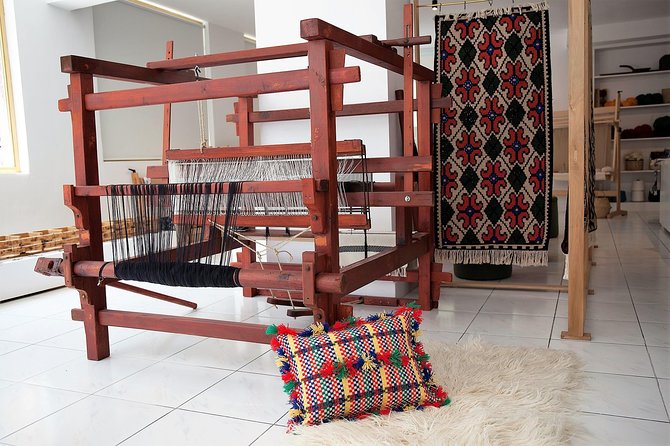
You can select one of six projects. The choices cover both practical items and small works for display:
- A set of four drink coasters
- One placemat measuring 45 by 30 centimeters
- One clutch or pouch measuring 15 by 17 centimeters
- One scatter rug measuring 50 by 30 centimeters
- One hand-woven bracelet
- One wall hanging made on a portable frame
The coaster set is a sensible choice if you want several small souvenirs or a useful gift. It also gives you four related pieces instead of one single object.
The placemat offers a larger working area and a practical result. Choose it if you like the idea of using your finished item at home rather than storing it as a keepsake.
The clutch or pouch has more of a gift-shop feel, but you still make the textile yourself. Its compact size may suit you if you want something easy to pack.
The scatter rug is the largest option listed, measuring 50 by 30 centimeters. It provides more room for your design, though its size may make it less convenient to carry during a longer trip.
The bracelet is the smallest and simplest-looking choice, which may appeal to children or anyone who wants a wearable reminder of Athens.
The final option is a small framed textile made on a portable frame. It gives you a decorative piece rather than a household item. Since the exact time needed for each choice is not specified, ask the instructor which projects best fit your pace before you begin.
Why the hands-on part is worth doing
A craft class can be a pleasant break from monuments, churches, and archaeological sites. This one adds a different side of Athens, the working traditions that sit behind everyday objects and regional design.
I like that you make a choice rather than receive a standard souvenir. The item becomes linked to the time you spent learning the loom, not only to the city where you bought it. Even a modest coaster or bracelet can carry more meaning when you know how it was made.
The activity also gives you a chance to slow down. Athens can be demanding on the feet and the senses, with busy streets and a long list of major sights. A quiet period of repeated, careful movements offers a useful change of pace.
Do not expect a professional-quality textile after one short class. You are learning a traditional technique, not completing an apprenticeship. The value comes from the process, the instruction, and the connection to Greek folk art.
A good choice for families and first-time crafters

The workshop is designed for children and adults, families, small groups, and individuals. That makes it more flexible than a class aimed only at experienced artists.
Children can take part in a real cultural activity rather than simply watching an adult demonstration. Still, younger children may need steady help with the loom, so parents should expect to participate rather than sit back.
Adults who have never woven before should feel comfortable asking for help. Chrysa is praised for being patient and supportive, which is exactly what you want when the first rows do not look quite right.
People who already sew, knit, or work with textiles may enjoy the chance to try a different method. The workshop is not presented as an advanced technical course, though, so experienced weavers may find the instruction fairly introductory.
It also works well for a couple or a small group of friends. Each person can make a different item, then compare the results at the end. The maximum group size is 20, so the session may not always feel private or intimate. If personal attention is your top concern, ask about the expected group size when your booking is confirmed.






The studio setting and central Athens location

The meeting point is Propileon 15, Athina 117 42, Greece. The activity begins and ends there, and the location is near public transportation.
That makes this an easy add-on to a day in central Athens, provided you allow time to reach the studio. Transfers are not included, so you are responsible for getting to the meeting point and returning to your hotel or next stop.
A mobile ticket is provided, which is convenient if you do not want to print booking papers. Confirmation is sent within 48 hours of booking, subject to availability, so do not leave the reservation until the last minute if your schedule is tight.
The workshop does not include anything beyond the stated coffee, tea, delicacies, instruction, and the item you make. Plan for your own transport and any extra food or drinks you may want before or after the class.
Is $129 a fair price?
The $129 cost is high when measured only against the two-hour duration. You are not paying for a full-day course, a meal, or transportation.
The price makes more sense if you value personal instruction, cultural context, and a handmade souvenir. It includes the instructor, the materials needed for your project, refreshments, the exhibition experience, the film, and the finished item you take home.
The value also depends on what you normally spend on souvenirs. A shop-bought Greek textile may cost less, but it will not come with the memory of making it. If you are looking for the cheapest way to fill an afternoon, this is not the right choice. If you want an activity with a lasting object attached to it, the cost is easier to justify.
Families should also calculate the total carefully, since the price applies to the workshop experience and transport is separate. Couples, solo visitors, and people who especially enjoy arts and crafts may find the personal nature of the session more worthwhile.
Strengths and limitations to keep in mind

The strongest part of the experience is the teaching. Chrysa is repeatedly described as warm, patient, enthusiastic, and kind. Those qualities are not minor extras in a loom class. They shape how comfortable you feel when learning a new skill.
The studio is also praised for its welcoming atmosphere. The coffee, tea, and Greek treats help make the session feel social rather than strictly instructional.
Another strength is the choice of projects. You can make something small and easy to pack, or choose a larger piece with more visual impact. That freedom is useful for families with different interests.
The main limitation is the short duration. Two hours is enough to learn the basics and finish one listed project, but not enough to explore every type of loom or gain advanced control of the craft.
The group limit of 20 is another point to consider. A class of that size may work well, but the amount of one-on-one help can depend on the final attendance and on how quickly each person works.
Finally, the cost is substantial for a short activity. I would book it for the cultural and creative experience, not simply for the retail value of the object.
Practical advice before you book
Choose your project with packing in mind. The bracelet, pouch, and coasters are easier to carry than the larger rug or placemat. If you are near the end of a long trip, a compact item may be the better choice.
Leave room in your schedule around the two-hour session. The stated duration is approximate, and you will enjoy the class more if you are not watching the clock because of a museum entry or restaurant reservation.
Wear something comfortable for sitting and working with your hands. No special skill is required, but you should be ready to follow instructions and repeat the weaving motion carefully.
If you are traveling with children, explain that this is a making activity, not a quick demonstration. The reward comes after patient work at the loom.
You can cancel for a full refund if you do so at least 24 hours before the local start time. Cancellations or changes made within 24 hours are not refunded or accepted, so keep that rule in mind when arranging a sightseeing day.
Should you book this Athens weaving workshop?
Book it if you want a hands-on connection to Greek folk culture, enjoy learning traditional crafts, or prefer a personal souvenir to another shop purchase. It is particularly well suited to families, couples, solo visitors, and small groups who like quiet creative activities.
Skip it if your Athens schedule is packed, your budget is tight, or you want a longer and more advanced weaving course. The session is short and introductory, and the price is not low.
For the right person, the appeal is clear. You spend two hours learning from Chrysa, seeing how wool becomes thread and cloth, enjoying simple Greek refreshments, and leaving with something you made yourself. That is a good way to give your Athens visit a personal touch.
FAQ
How long does the Athens loom weaving workshop last?
The workshop lasts approximately two hours. This includes the exhibition visit, the short film, refreshments, instruction, and time to make your chosen woven item.
Where does the workshop begin and end?
The meeting point is Propileon 15, Athina 117 42, Greece. The activity ends back at the same meeting point.
What can I make during the workshop?
You can choose one of six projects: four drink coasters, a placemat, a clutch or pouch, a scatter rug, a hand-woven bracelet, or a wall hanging on a portable frame.
Are coffee and food included?
Yes. Coffee and tea, along with Greek delicacies, are included in the experience.
Is the workshop suitable for children?
Yes. The activity is suitable for children and adults, as well as families, individuals, and small groups.
What is the cancellation policy?
You can receive a full refund if you cancel at least 24 hours before the experience start time. Cancellations or changes made less than 24 hours before the start time are not accepted, and the amount paid is not refunded.