REVIEW · ATHENS
Athens: Temple of Olympian Zeus Entrance Ticket
Book on GetYourGuide →Operated by Key Tours · Bookable on GetYourGuide
Fifteen columns, and a lot to picture. The Temple of Olympian Zeus is one of those Athens ruins where scale does the talking, and a timed ticket helps you actually see what matters instead of waiting around. I especially like the selected-time entry and the included self-guided audio tour of Plaka, which gives you a second lens on the neighborhood right after the main site.
Here’s what feels most satisfying: you get to focus on a temple that was once the biggest game in Greece, and you can do it on your schedule thanks to the time slot. The site itself is packed with clear visual clues, from the surviving columns to the less-famous remains just north of the main area.
One consideration: this is not a long, multi-stop guided experience, so if you want to read every panel and take it slow, you may crave more time. And because parts of the view can be blocked by temporary setups, you might not see the full sweep of columns in every direction, making the ticket feel pricier if you rush.
In This Review
- Key things to know before you go
- Temple of Olympian Zeus: what you’re really seeing
- The entry slot and why it shapes your whole hour
- Inside the archaeological site: where to focus
- The main columns: the scale lesson
- The Hadrian story, in built form
- The north-side remnants most people miss
- Plaka on your own: using the included audio tour well
- Price and value: when $30 feels fair and when it doesn’t
- Value is strong if you want a tight, efficient visit
- Value is shaky if you expected a long, full sightseeing package
- Logistics that matter on foot in central Athens
- Who this ticket suits best
- Booking angle: should you go for it?
- FAQ
- How long does the Temple of Olympian Zeus ticket take?
- What time can I enter the site?
- Is there a live guided tour included?
- What audio tour is included?
- Is it wheelchair accessible?
- What should I bring, and what is not allowed?
- Are there any free admission discounts for certain visitors?
Key things to know before you go
- Timed entry window matters: you can enter only during your slot, plus or minus 15 minutes.
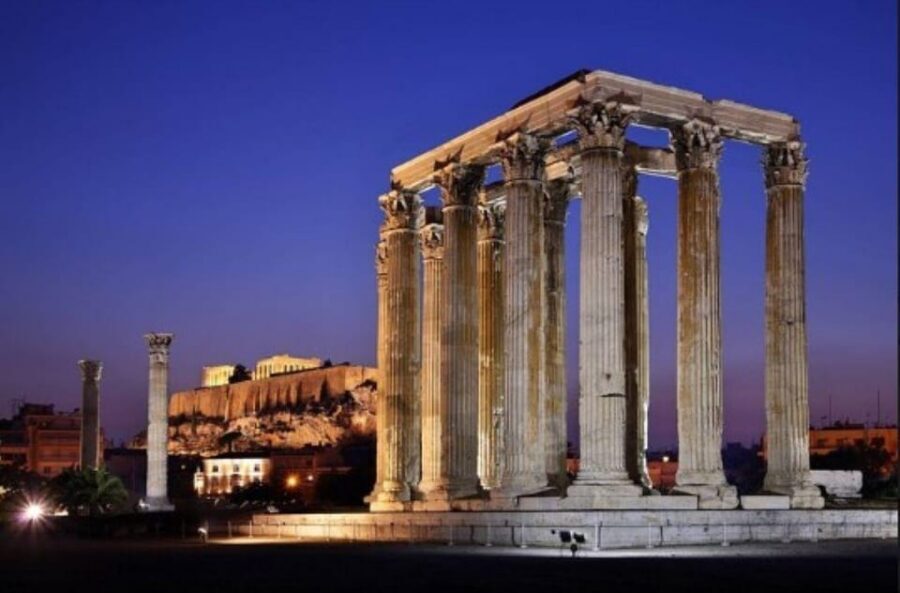
- Hadrian’s scale is the point: the Hadrianic temple aimed for 104 columns around the colonnade.
- Only 15 columns survive: that’s why you’ll be doing a lot of mental reconstruction.
- Look beyond the main columns: north-side remnants include a gate from the Themistoclean Wall and a Roman bathhouse.
- Audio helps you connect the dots: the Plaka audio tour is included for when you’re done at the monument.
- It’s walkable from prime Athens landmarks: it sits about a quarter mile southeast of the Acropolis and within a quarter mile south of Syntagma Square.
Temple of Olympian Zeus: what you’re really seeing
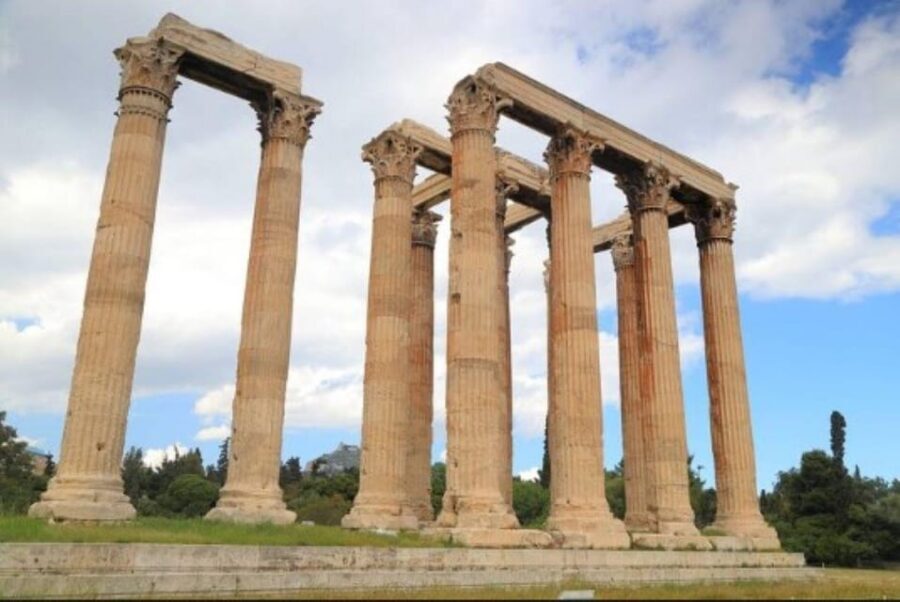
The Temple of Olympian Zeus wasn’t a quick build. Work likely began around 515 BC, but the version you’re looking at is mainly the Hadrianic temple, completed in 131/132 AD. That long timeline matters because it explains why the ruins feel both grand and unfinished. You’re not just seeing random stones—you’re seeing the remains of a massive political and religious statement built over generations.
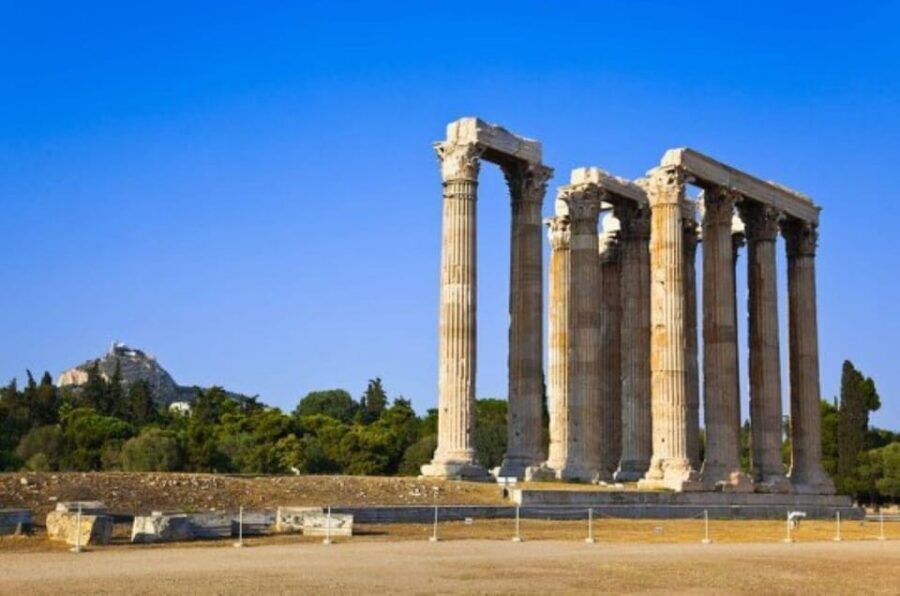
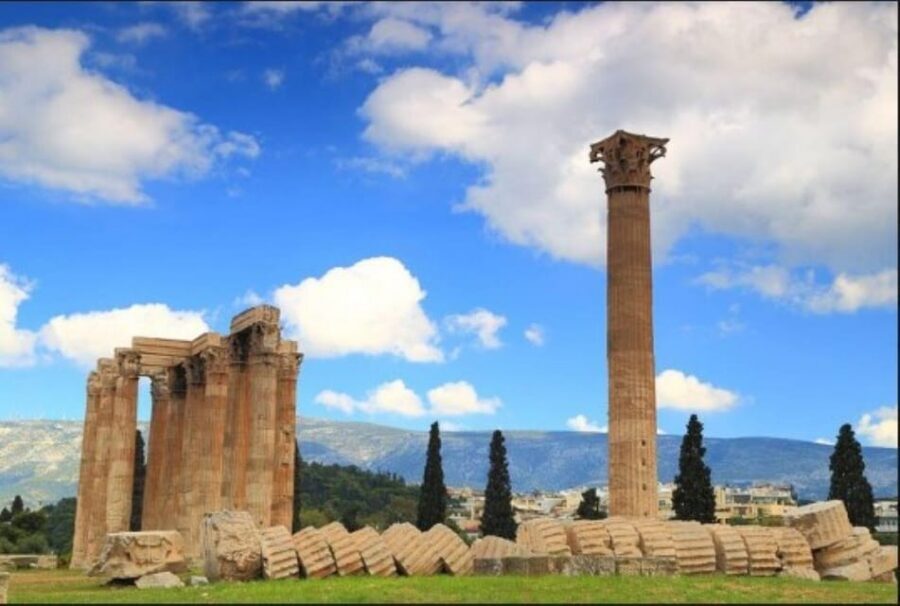
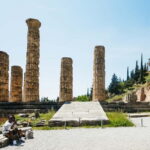
The Hadrianic temple used Pentelic marble and the Corinthian style—the fancy column look that reads as wealth and power. The layout is the real jaw-drop moment: two rows of twenty columns along the long sides, and three rows of eight columns across the front and rear. Add it up and you’re at 104 columns total around the colonnade. Today, only 15 original columns stand. One even collapsed in a storm in 1852, so the site’s current shape is partly history, partly weather.
When I visit places like this, I try to treat the ruins like a puzzle. With only a handful of columns left, you’ll want to pause, scan for the surviving line of the colonnade, and then mentally extend it. That’s where the temple becomes more than a photo stop. You start to feel how a forest of columns would have framed the space, guided movement, and made the whole area look huge—even if you had no idea what to expect.
A few more Athens tours and experiences worth a look

The entry slot and why it shapes your whole hour
Your ticket is tied to a specific date and time slot, and entry is allowed only at that selected time, plus or minus 15 minutes. That sounds strict, but it’s actually a gift. It means you can plan a tight route around Athens without guessing how long you’ll wait.
This also affects how you should pace the visit. Since the duration is about 1 hour, you’ll likely get the best experience if you commit to a realistic rhythm:
- spend enough time looking at the columns and imagining the original colonnade
- then decide whether you want to read more panels or head out to Plaka for the audio portion
If you’re the type who likes to stop at every sign and photograph every angle, you may finish the main site feeling like you could use another 30 minutes. If you’re okay with a quicker walkthrough and a couple of key details, you’ll likely feel perfectly matched to the time.
Inside the archaeological site: where to focus
The site is close to central Athens—about a quarter mile southeast of the Acropolis and within a quarter mile south of Syntagma Square—so it’s easy to pair with other landmarks. Once you enter, the trick is choosing what to look at first so the hour doesn’t slip away.
The main columns: the scale lesson
Start with the surviving columns. Even when the site feels broken up, the lines are still visible. Those 15 standing columns are what anchor the imagination. Remember the original plan—104 columns—because it’s the best way to judge distance and perspective. If you ignore the original count, the ruin can feel like a small scatter of stones. If you keep it in mind, it feels like a big structure hiding in plain sight.
Also, watch for any temporary coverings or setups. One practical thing I’d plan around: parts of the view can be partially obscured at certain times. That means you might not get the full, clean photo angle from every side, and you might end up seeing fewer columns than you expected. It doesn’t ruin the experience, but it changes how you should judge value. Think of the ticket as seeing the site and its key remains, not as guaranteeing a perfect postcard panorama.
The Hadrian story, in built form
The temple’s story is encoded in how it was built. It was completed by Hadrian in 131/132 AD, and it’s built with Pentelic marble in a Corinthian style. Even if you’re not a classical-architecture nerd, you can still read that the Corinthians are about height and decoration: the columns were meant to look impressive up close.
This is a great spot to slow down just for a minute and notice the textures and column proportions. The ruins won’t give you the full original surface detail, but they still show the intent. You’re basically studying what the ancient builders wanted people to feel.



The north-side remnants most people miss
Don’t skip the area to the north of the main archaeological space. There you can see remnants tied to earlier and later Athens layers:
- a gate from the Themistoclean Wall (built 479/8 BC)
- ancient dwellings dating from the 5th/4th BC to the 2nd c. AD
- a Roman bathhouse remnant
This matters because it shifts the site from temple-only to a multi-era snapshot. Athens kept changing what it built, how it used space, and who lived where. The north-side remains help you see that the temple wasn’t an isolated monument—it sat inside a living, evolving city.
Plaka on your own: using the included audio tour well
The ticket includes a self-guided audio tour of Athens Old Town (Plaka). You don’t get a live guide here, but you do get structure. That’s useful because Plaka is scenic, and without some guidance you can wander around charming streets and realize you didn’t learn much.
Use the audio in a smart order:
- Visit the temple first so you have the big-scale context.
- Then head toward Plaka and use the audio to connect the dots between ancient Athens and the neighborhood that surrounds it today.
The audio format is also perfect for a one-hour ticket because it doesn’t pull you into a long timeline. You can move at your pace, pause when you want, and skip sections that aren’t your style. If your main goal is the temple and you still want a bit of Athens flavor after, the audio tour is the main “extra” that makes the ticket more than just ruins and photos.
A small tip: since your monument entry is time-slot driven, make sure you don’t treat the audio as a replacement for the main visit. Do the temple focus first, then let Plaka be the bonus.
Price and value: when $30 feels fair and when it doesn’t
At $30 per person, this ticket sits in the “pay for convenience and focus” category. It’s not cheap, and it’s not trying to be. Here’s the honest way to judge value based on what the experience actually offers:
Value is strong if you want a tight, efficient visit
If you like:
- a timed entry so your day runs on rails
- a self-guided approach
- a short, high-impact look at a major ancient monument
…then $30 can feel reasonable. The temple’s scale is the headline, and the included audio tour adds another layer without extra booking steps.
Value is shaky if you expected a long, full sightseeing package
If you’re the kind of visitor who expects a deep, narrated walkthrough with lots of time inside and behind-the-scenes explanations, this may feel thin. Also, if views are limited by temporary setups, and you end up spending less time than you planned (especially if you don’t read the panels), the ticket can feel expensive for the number of things you can clearly see.
So I’d frame it like this: pay for focused access, not for an all-day experience. If you want an all-day Athens plan, build it as a combination day—this ticket for the temple, then add neighborhoods and viewpoints around it.
Logistics that matter on foot in central Athens
This site is very walk-friendly because of where it sits. You’re close enough to big landmarks that you don’t need a complicated transit plan. The meeting point is simply the entrance, where you should enter on your own.
Because your entry is tied to a time slot, show up with breathing room. Think of it like catching a flight gate: you want to be calm enough to enjoy the first minute, not rushed enough to cut your visit short.
A few practical notes that affect comfort:
- Wear comfortable shoes. The terrain at archaeological sites can be uneven.
- Use comfortable clothes, especially if you’re visiting in warmer months.
- Don’t bring luggage or large bags, and note that baby strollers are not allowed.
- Alcohol and drugs are not allowed on site.
If you’re planning photos, give yourself a minute to find the best angles early. Later, you may feel pressed by the time window. The temple doesn’t need perfect conditions to be impressive, but your best photos come when you’re not worrying about your schedule.
Who this ticket suits best
This is a good fit if you:
- want a focused ancient Athens stop without a guided group
- prefer self-paced touring with an audio layer
- are building a route around Acropolis and Syntagma and want something walkable nearby
- like to learn at a moderate pace and then keep moving
It’s less ideal if you:
- want a long, in-depth guided experience with lots of interaction
- expect to spend several hours inside the site grounds
- strongly need unobstructed views from every angle every time
Booking angle: should you go for it?
I’d book this ticket if you want the Temple of Olympian Zeus as a high-impact anchor for your Athens day, and if the included Plaka audio tour appeals to you. The timed entry is the main convenience, and Hadrian’s scale is the main payoff.
I would hesitate only if you’re price-sensitive and your ideal visit is a slow, reading-heavy, full-motion museum-style experience. In that case, you might prefer spending your money elsewhere or pairing a shorter visit with free walking time in Plaka so you feel like you’re getting more out of the day.
Either way, treat the hour as a focused sprint: look for the surviving lines of the colonnade, notice the north-side remnants, then let the Plaka audio guide finish the story.
FAQ
How long does the Temple of Olympian Zeus ticket take?
The experience duration is listed as 1 hour.
What time can I enter the site?
You can enter only at your selected time slot, and you’re allowed entry up to 15 minutes before or after that slot.
Is there a live guided tour included?
No. This experience is self-guided, with an included self-guided audio tour.
What audio tour is included?
You get a self-guided audio tour for Athens Old Town (Plaka).
Is it wheelchair accessible?
Yes, the activity is wheelchair accessible.
What should I bring, and what is not allowed?
Bring comfortable shoes and comfortable clothes. Baby strollers are not allowed, and luggage or large bags are not allowed. Alcohol and drugs are also not allowed.
Are there any free admission discounts for certain visitors?
For free admission: EU citizens under 25 and non-EU citizens under 18 can receive free entry by showing their ID at the ticket booth (starting April 1, 2025). People with disabilities can receive free admission with a Disability Certificate at the ticket booth.