REVIEW · ATHENS
Classical Greece 3-Day Tour: Epidaurus, Mycenae, Olympia and Delphi from Athens
Book on Viator →Operated by Keytours - Greece · Bookable on Viator
The great appeal here is the sheer sweep of it: in three days, you move from the acoustics of Epidaurus and the Lion Gate at Mycenae to Olympia’s stadium and Delphi’s oracle. I like that entrance fees, two breakfasts, two dinners, transport, and selected-hotel pickup are bundled into the $517.77 price. I also like the strong guiding, with Anna, Sophia, and Dozia Dermatidou singled out for clear, lively teaching.
The catch is the pace. You cover a lot of ground by bus, and the final return to Athens may end at a central drop-off point rather than your hotel. Ask about the exact drop-off before you book, especially if you have large bags or limited walking ability.
In This Review
- Key details to know before you go
- Why this route works for classical Greece
- Day 1: Corinth Canal, Epidaurus, and Mycenae
- Day 2: Olympia and the bridge to Delphi
- Day 3: Delphi and the oracle of Apollo
- Guides, buses, and the feel of the group
- What the $517.77 price really covers
- Who should book this three-day journey
- Final verdict: a strong overview with a few sharp edges
- FAQ
- How long is the Classical Greece tour?
- What sites are included?
- Are entrance fees included?
- Are hotels included?
- Are meals included?
- Is hotel pickup available in Athens?
- Is the tour offered in English?
- What is the cancellation policy?
Key details to know before you go
- Four major archaeological sites in three days: Epidaurus, Mycenae, Olympia, and Delphi form the core of the route.
- A full package price: Hotels, entrance fees, air-conditioned bus transport, breakfasts, and dinners are included.
- Guiding is a major strength: Guides named Anna, Sophia, and Dozia Dermatidou have been praised for teaching skill, warmth, and detailed commentary.
- Two nights away from Athens: You sleep in Olympia and Delphi at a centrally located 3-star or 4-star hotel.
- The route is physically active: Expect several hours at archaeological sites, uneven ground, steps, and plenty of walking.
- Return arrangements need care: Selected central Athens drop-off points are used, and the exact hotel service may not match your preferred destination.
Why this route works for classical Greece
This is a sightseeing-heavy trip, not a slow village holiday. You leave Athens early, cross the Peloponnese, continue west to Olympia, then turn north toward Delphi before returning to the capital.
That route makes sense if you want the major classical highlights without arranging several hotels, rental-car legs, entrance tickets, and road directions yourself. You get a guide to explain what you are seeing, and the long drives become part of the experience as the road passes through towns, hills, and coastal country.
The tour is offered in English and can include up to 42 people. That is a substantial group, so you should expect a coach tour rather than a private archaeological walk. The upside is a clear, organized structure. The downside is less freedom to linger, take a side trip, or set your own lunch schedule.
I would choose this trip for a first visit focused on ancient Greece. If you already know these sites well, or if you prefer quiet mornings and long museum visits, the schedule may feel too tight.
A few more Athens tours and experiences worth a look


Day 1: Corinth Canal, Epidaurus, and Mycenae
The bus departs from Athanasiou Diakou 26 in Athens at 8:15 am. Pickup is available from selected centrally located hotels, usually about an hour before departure, but the exact time and place are sent before the tour. Do not assume every Athens hotel qualifies.
The first stop is the Corinth Canal, where you have about 15 minutes. This is a quick photo break, not a guided visit. The canal cuts through the narrow Isthmus of Corinth and gives you an early sense of how the journey is moving from Athens toward the Peloponnese.
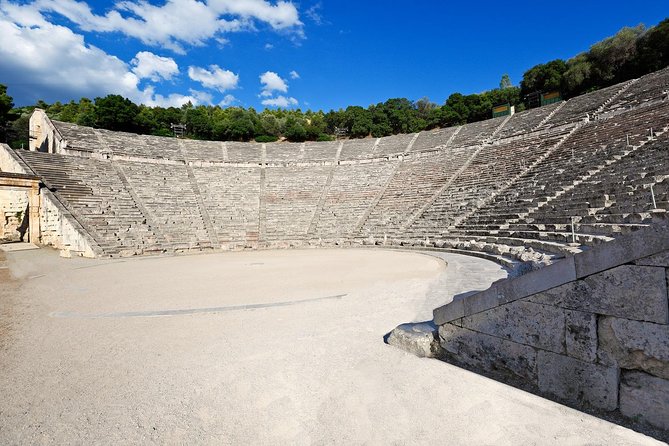
Next comes Epidaurus, home to one of the ancient world’s best-known theaters. You have about an hour at the site, with admission included. The theater is famous for its acoustics, and your guide should help you understand why this particular building mattered beyond its impressive stone seating.
Epidaurus was connected with healing and drama, so this stop adds a different note to the itinerary. You are not simply looking at ruins. You are seeing a place designed for performance within a wider religious setting.
One practical point: an hour passes quickly. You will have time to see the theater and hear the main explanation, but you will not have unlimited time to explore every corner of the archaeological area. Stay close to the guide at the start, then use any remaining minutes for photographs.
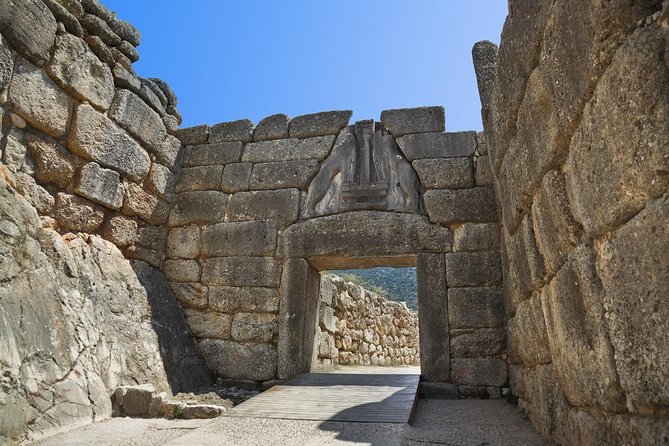
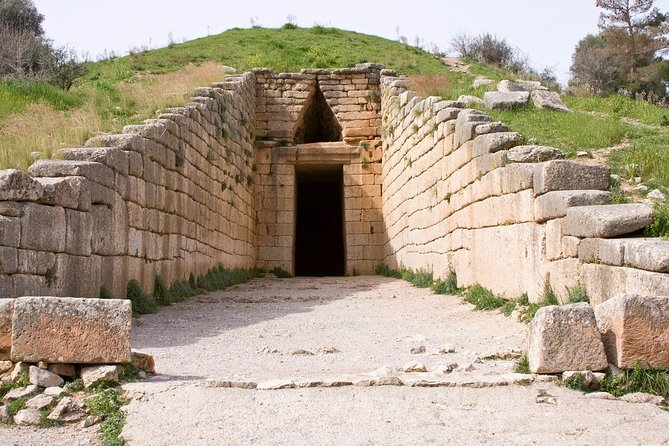
Mycenae follows, with about one hour and 20 minutes at the archaeological site. This is one of the most memorable stops because the setting and the surviving stonework work together. You see the Cyclopean walls, the Lion Gate, royal tombs linked with Agamemnon and Clytemnestra, and the Treasury of Atreus.
Mycenae is tied to Homer’s stories and the world of the Aegean Bronze Age. The site helps connect Greek legend with a real fortified center, though the guide’s explanation is important because the stones alone cannot tell the full story.
The Lion Gate is the obvious visual prize, but give yourself time for the tombs as well. The Treasury of Atreus is especially striking for its scale and carefully built beehive-shaped interior. The ground is uneven, and the visit includes walking between separate points, so good shoes matter.
After Mycenae, the bus continues toward Olympia. There may be an optional souvenir stop, and lunch is not included. You then pass through Tripolis and Megalopolis before reaching Olympia for the night.
Your Olympia hotel is described as a centrally located 3-star or 4-star property. The accommodation class is chosen by the tour arrangement, and the supplied details also refer to A class and T class hotels. Breakfast and dinner are included during the stay, but drinks and lunch are extra.
The first day is long. You see two major sites, spend hours on the road, and still need energy for dinner. I would keep the evening simple and treat Olympia as a place to rest before the next morning’s visit.
Day 2: Olympia and the bridge to Delphi
Olympia receives a longer visit, about two and a half hours. That is welcome because the site includes both open-air ruins and the archaeological museum.
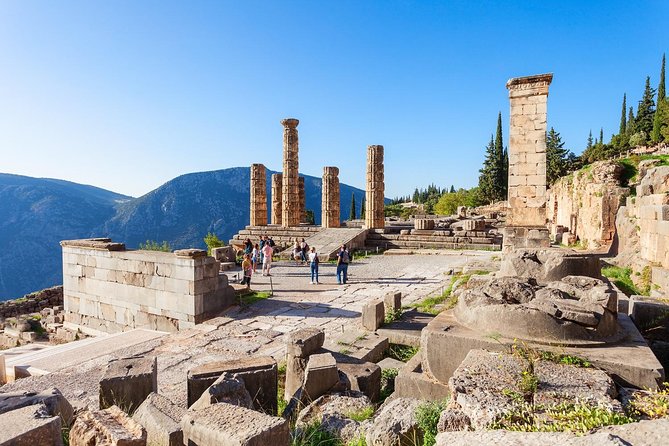
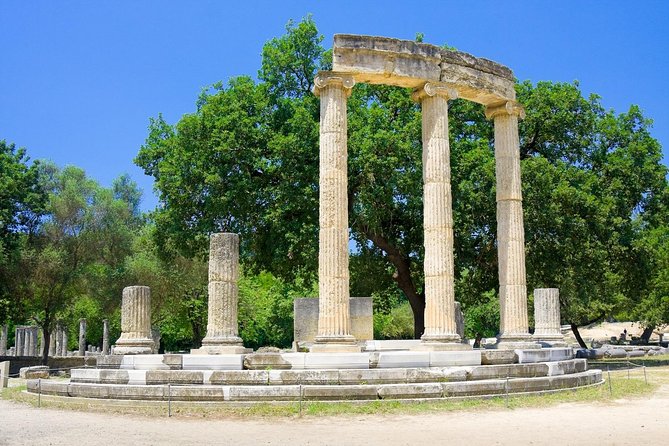
You see the Temple of Zeus, the Temple of Hera, the altar connected with the Olympic flame, and the stadium. The stadium is particularly useful for understanding the scale of the ancient games. It is not an abstract idea once you are standing along the track and looking toward the earth banks that held spectators.
The museum fills in details that are easy to miss outdoors. Sculptural pieces and architectural fragments give form to buildings that now survive only in parts. A guide can save you from wandering among fallen stones without knowing which pieces belong together.
The visit is also a good reminder that Olympia was not only about athletic contests. It was a major religious center, and the temples and votive objects matter as much as the stadium. Your two and a half hours should allow a proper introduction to both the site and museum, though a serious museum enthusiast may still want more time.
After Olympia, the route heads toward Patras. There is a short stop there before crossing the Gulf of Corinth on the Rio to Antirrio bridge. The bridge crossing is a striking change from the morning’s ancient ruins and gives the bus route a clear geographic rhythm.
The road then passes Nafpaktos and follows the coast toward Delphi. This is one of the longer transit sections, so bring water and something to occupy you between guide commentary and views from the bus.
In the afternoon, you stop in Arachova, a mountain village associated with the Delphi area. The visit offers a change of pace before the second overnight stay. It is not a substitute for a full village tour, but it breaks up the drive and lets you see a settlement in the mountain setting around Delphi.
You spend the night in Delphi at a centrally located 3-star or 4-star hotel. Dinner is included, though one reported problem concerned a poor dinner at the Apollonia hotel, with a limited chicken-and-rice meal and no menu choice. That may not describe every departure or property, but it is a useful reminder that included meals are convenient rather than a guarantee of memorable dining.
One operational issue deserves special attention. On at least one departure, the group changed buses in Delphi and waited about three hours at a restaurant before continuing. The supplied schedule does not promise that this will happen, but bus combinations can affect the third day. If you dislike uncertain transfer time, ask the operator about the current arrangement before departure.
Day 3: Delphi and the oracle of Apollo
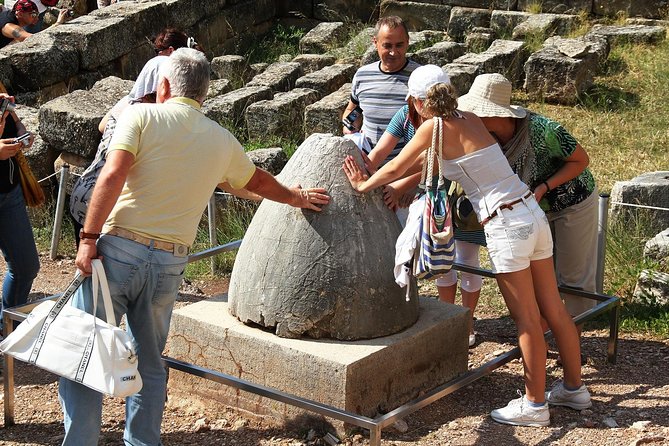
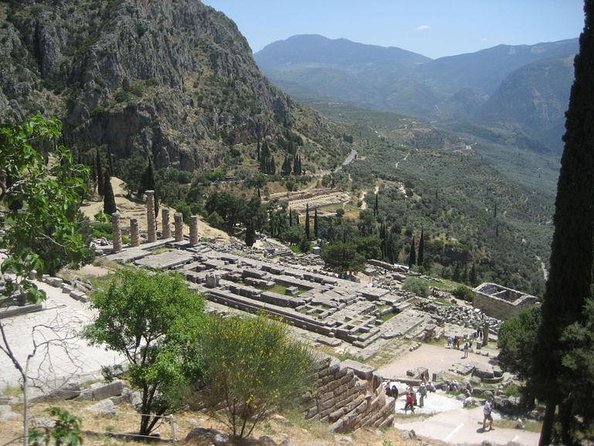
Delphi is the emotional high point for many people on this route. The site sits on a mountainside, and the ancient sanctuary unfolds uphill rather than across a flat field. You pass the Castalia Spring and then follow the archaeological area toward monuments tied to Greek cities and the sanctuary of Apollo.
The three-hour visit gives the guide room to explain the monument of the Argive kings, the Temple of Pronaia, the Athenian Treasury, the Stoa of the Athenians, the Polygonal Wall, and the monument of Plataea. You also see the Temple of Apollo, associated with the famous oracle.
The Athenian Treasury is small compared with the theater or temple, but it is one of the places where a guide’s explanation adds real value. The monuments were connected with competing Greek communities, offerings, victories, and public identity. Without context, the site can look like a long uphill sequence of stones. With context, the route becomes a record of rivalry and devotion.
The Temple of Pronaia is another important stop, though the major sanctuary and museum often command more attention. Keep your camera ready, but do not let photography replace the guide’s explanation. Delphi rewards looking closely at foundations, walls, and the way the sanctuary was arranged on the slope.
This is the most demanding walking period of the tour. You should be in reasonably good physical condition to see everything comfortably. If you walk less easily, you can still see much of the area, but you may not reach every point or keep pace with the group.
The Delphi Archaeological Museum follows, with about an hour. Its collection includes the frieze of the Siphnian Treasury, the Naxian Sphinx, the Statue of Antinous, metopes from the Athenian Treasury, and the famous bronze Charioteer.
The museum is not filler between bus rides. It supplies the details that make the sanctuary easier to understand. The Charioteer, in particular, gives you a chance to see a complete ancient bronze figure rather than only architectural remains.
An hour is enough for the main objects with a guide, but it is short if you want to read every label. If museums are your priority, stay focused on the named highlights and accept that you will not see every display at leisure.
After Delphi, there is an optional lunch at your own expense before the return to Athens. The trip ends back in central Athens, but the exact final point matters. One person expected a hotel drop-off and instead had luggage left at a central location several blocks from the hotel. Another complaint involved a couple with limited walking ability and large bags.
The practical fix is simple: confirm the final drop-off point and keep enough money for a short taxi ride if needed. Do not plan a tight connection immediately after the scheduled return.
Guides, buses, and the feel of the group
The guide can make or break a classical-site tour, and this one has a particularly strong record in that area. Dozia Dermatidou was praised for passion, detailed explanations, and care for the group. Sophia was described as enthusiastic and well informed, while Anna was praised as a strong teacher.
Those names do not guarantee who will lead your departure. Still, they show the kind of guide the operator is capable of assigning. You should expect commentary during the visits and along parts of the route, rather than simply being delivered to each ruin with a map.
The bus is air-conditioned and described as a luxury coach. With up to 42 people, boarding and regrouping take time. Keep your phone, water, medication, and sun protection in a small day bag rather than buried in the luggage compartment.
The tour is organized around fixed site times. Some departures are timed to reach sites when they are less crowded, which can help at Epidaurus and Delphi. May can offer comfortable temperatures, but local school groups may still be present.
- All Day Cruise -3 Islands to Agistri,Moni, Aegina with lunch and drinks included
★ 5.0 · 4,958 reviews


What the $517.77 price really covers
At $517.77 per person, this is not a cheap bus ride, but it is also not simply four entrance tickets. The price includes two hotel nights, two breakfasts, two dinners, transport, a professional guide, hotel pickup from selected locations, hotel drop-off arrangements, and entrance fees.
That package has real value if you want a simple booking with few moving parts. Independent planning would require comparing hotels in Olympia and Delphi, arranging transport across several regions, paying admission at each site, and finding your way back to Athens.
The tradeoff is control. Lunches, drinks, accommodation tax, and some optional stops cost extra. The hotel accommodation tax is paid directly to the hotel at €10 per room per night for 4-star hotels or €5 per room per night for 3-star hotels.
Hotel quality can vary within the stated class. One stay was described as very good, while the tourist-class hotels were considered only acceptable. I would treat the hotels as comfortable bases for a busy route, not as a reason to choose the tour.
Who should book this three-day journey
I would recommend it if you want the major classical sites and have limited time in Greece. It suits first-time visitors who prefer a guide, do not want to drive unfamiliar roads, and value having hotels and admission fees arranged in advance.
It also suits people who want context. Epidaurus, Mycenae, Olympia, and Delphi are far more rewarding when someone explains what you are seeing, especially at Mycenae and Delphi.
You should think twice if you want a relaxed holiday. The first day is long, the third day includes substantial walking, and the route involves several extended bus rides. It is also a poor fit if you need guaranteed door-to-door hotel drop-off or have difficulty handling stairs, uneven ground, and luggage.
The maximum group size of 42 means you should expect a standard large-coach format. The guides may be excellent, but the experience will not feel like a private tour.
Final verdict: a strong overview with a few sharp edges
I like this tour because it gives you a coherent introduction to classical Greece in only three days. The archaeological sites are the real prize, and the best guides turn the ruins into understandable stories rather than disconnected monuments.
I would book it if convenience and coverage matter more to you than independence. Before paying, confirm your hotel category, the current dinner arrangements, the possibility of a bus change, and the exact Athens drop-off point.
If those details are acceptable, $517.77 is a fair package price for this much ground, guiding, accommodation, and admission. If you need slow pacing, polished meals, or a guaranteed hotel-door return, arrange the route independently or choose a smaller private trip.
FAQ
How long is the Classical Greece tour?
The experience lasts approximately three days, beginning in Athens and returning to Athens after the Delphi visit.
What sites are included?
The route includes the Corinth Canal, the ancient theater of Epidaurus, the archaeological site of Mycenae, Olympia, Arachova, the Delphi archaeological site, and the Delphi Archaeological Museum.
Are entrance fees included?
Yes. Entrance fees for the included archaeological sites and museums are included in the tour price.
Are hotels included?
Yes. Two nights of hotel accommodation are included, with stays in Olympia and Delphi at centrally located 3-star or 4-star hotels.
Are meals included?
Two breakfasts and two dinners are included. Lunches, drinks, and optional lunch stops are not included.
Is hotel pickup available in Athens?
Complimentary pickup is offered from selected centrally located Athens hotels. The supplier sends the pickup location and time before the tour, and pickup is generally about one hour before the 8:15 am departure.
Is the tour offered in English?
Yes. The tour is offered in English.
What is the cancellation policy?
You can cancel for a full refund if you do so at least 24 hours before the experience start time. Cancellations or changes made less than 24 hours before the start are not accepted for a refund.