REVIEW · ATHENS
Combo Ticket: Acropolis & 6 Sites with optional self-guided tours
Book on Viator →Operated by Keytours - Greece · Bookable on Viator
The best thing about this Athens combo pass is the freedom to spread seven major archaeological sites across five days instead of cramming them into one exhausting march. You choose your route, but the Acropolis requires a specific date and time, so that one appointment controls the rest of your planning.
I like the flexible entry at the Ancient Agora, Roman Agora, Hadrian’s Library, Olympieion, Kerameikos, and Aristotle’s Lyceum. I also like the chance to add self-guided audio tours, especially for the Acropolis and Parthenon, where a bit of context makes the stones come alive.
The catch is the ticket delivery and timing. Your actual e-ticket may arrive only 24 hours before the visit, and arriving late at the Acropolis can mean refusal at the gate. The pass can save money, but only if you have enough time to use several of the included sites.
In This Review
- Key points to know before booking
- How the five-day pass works in Athens
- The Acropolis: make the fixed appointment your priority
- Ancient Agora: the best place to understand daily Athenian life
- Roman Agora: a smaller stop with a different story
- Hadrian’s Library: more than shelves and scrolls
- Olympieion: the unfinished giant completed by Hadrian
- Kerameikos: Athens’ ancient cemetery and pottery quarter
- Aristotle’s Lyceum: philosophy in a walking school
- Plaka audio tour and exploring between the ruins
- What the price really means
- Audio tours, phones, and the self-guided tradeoff
- Timing, transport, and the five-day strategy
- Who should buy this pass?
- Should you book the Athens combo ticket?
- FAQ
- How long is the combo pass valid?
- Does the Acropolis ticket have a fixed entry time?
- Which attractions are included?
- Is the Acropolis Museum included?
- Are audio tours included with every option?
- What happens if I cancel?
Key points to know before booking
- The Acropolis is the only timed entry: Your selected time applies only to the Acropolis, not the other six sites.
- The pass lasts five days after first use: Once scanned, the flexible site entries can be used during the five-day validity period.
- You skip ticket-buying queues, not every queue: The pass generally lets you scan in without buying a ticket on site, but it does not promise a completely empty entrance.
- The Acropolis Museum is not included: You need a separate ticket if you want to visit the modern museum below the hill.
- Audio tours depend on the option you choose: Plaka is included with all options, while Acropolis, Ancient Agora, and Kerameikos audio tours are available only in selected versions.
- You need your own phone and earphones: There is no physical audio device or earphones, and this is not an escorted tour.
How the five-day pass works in Athens
At $129, this is not a cheap ticket for a quick look at the Acropolis. Its value comes from combining seven archaeological sites, reducing time spent at ticket counters, and letting you return to the historic center over several days.
You can begin at any included site, but the Acropolis remains tied to your chosen time slot. That makes the smartest plan simple: build your day around the Acropolis, then place the nearby sites before or after it, or spread them over the next few days.
Once your pass is scanned, it is valid for five days. This is useful if you want to avoid the common Athens mistake of treating every ancient site as a single marathon day. You can visit the Acropolis when the light and temperature suit you, then return to the Agora or Kerameikos on a different morning.
The pass is digital. Confirmation arrives at booking, but the actual e-ticket is sent by email 24 hours before the travel date. Some people have found the ticket in the Viator app rather than their regular inbox, while others have needed customer service to resend it through WhatsApp.
I would not wait until you are standing at the Acropolis entrance to solve this. Check your email, junk folder, and booking app before leaving your hotel. Save the ticket where you can open it without searching through a long chain of messages.
A few more Athens tours and experiences worth a look


The Acropolis: make the fixed appointment your priority
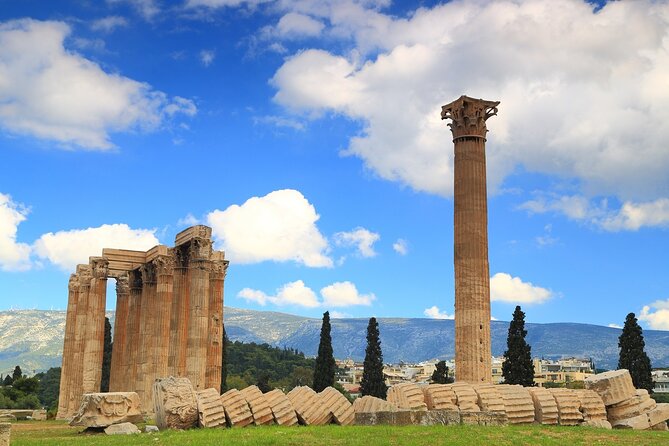
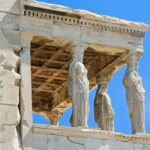
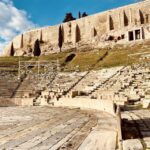
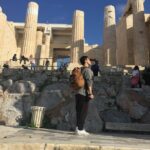
The Acropolis is the reason most people consider this pass. From the summit, you can see the Parthenon, Propylaia, the Temple of Athena Nike, the Erechtheion, and the Odeon of Herodes Atticus.
The Parthenon is the headline sight, but do not rush straight to it. The entrance structures, the small Temple of Athena Nike, and the irregular Erechtheion help you understand that this was not one simple building, but a sacred hill filled with monuments from different periods.
Allow about two hours here. That gives you time to walk through the main monuments, pause for the views, and use the optional audio tour without racing from one stop to the next.
Arrive early for your time slot. The entry time is strict, and even a delay of a few minutes has caused problems when transportation ran late. The pass does not protect you from the Acropolis’ timed-entry rules.
The phrase skip-the-line needs a little care. You can avoid the ordinary ticket-purchase line because admission is already arranged, but you may still encounter security checks, crowd control, or a line for timed entry. One useful advantage remains: you are not standing at the booth trying to buy a ticket when the hill is busiest.
The Acropolis is exposed, crowded, and physically demanding. The experience requires a moderate fitness level, and you will spend much of your visit walking over uneven ancient surfaces and uphill paths. Good shoes and a charged phone matter more here than fancy travel gear.
The optional multilingual audio tour covers the Acropolis and Parthenon. It is a useful choice if you want explanation without joining a group, but treat it as a reference rather than a live guide. One practical tip is to stop before pressing play, since some audio apps move automatically to the next point while you are still walking.
Ancient Agora: the best place to understand daily Athenian life
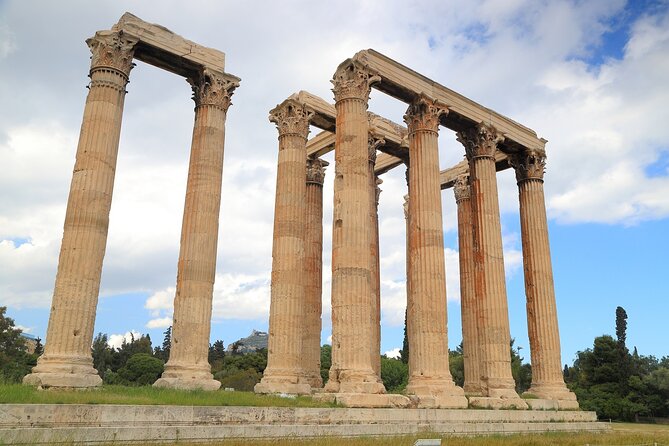
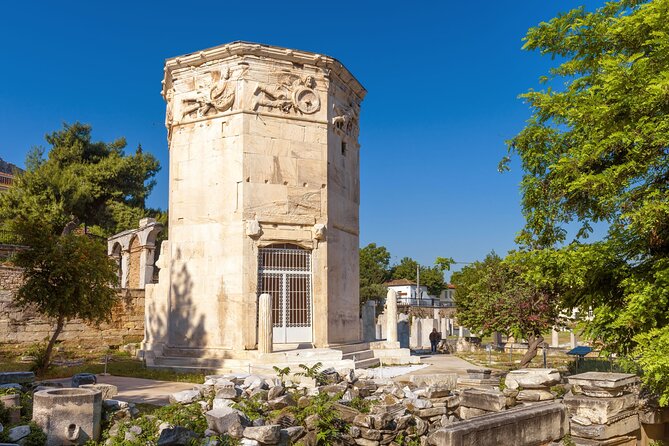
The Ancient Agora sits northwest of the Acropolis and deserves at least 90 minutes. This was Athens’ meeting place, commercial center, and setting for public, artistic, and spiritual life.
The Acropolis shows you the city’s sacred high point. The Agora helps you picture the city at ground level, where people met, argued, traded, and handled public business. That contrast gives the combo pass much of its educational value.
Your admission includes the Ancient Agora and its museum. The museum helps organize what you see outside, while the open site gives you space to walk through the remains at your own pace.
The Ancient Agora is also one of the strongest places to use the optional English audio tour. You can pause at the buildings and ruins instead of keeping up with a group, which is especially helpful if your interests lean toward history, architecture, or philosophy.
Allow time for the site itself, not just the most obvious ruins. The area is large enough that a quick walk can leave you feeling as if you saw only a collection of stones. I would schedule it on a separate half-day if you want to read signs, use the audio guide, and visit the museum properly.
Roman Agora: a smaller stop with a different story
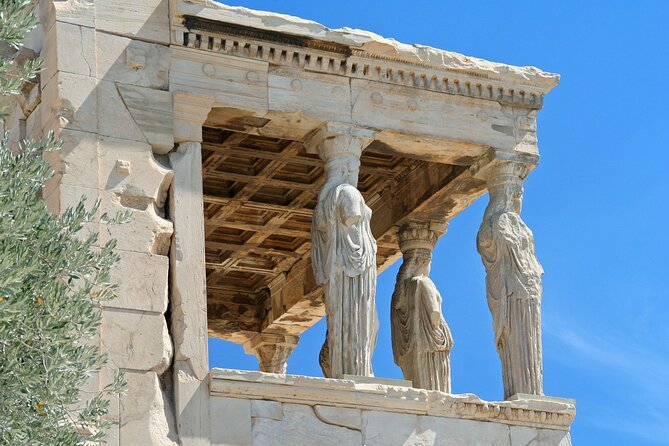
The Roman Agora lies just north of the Acropolis and usually takes about an hour. It served as a public center during the Roman period, with merchants, public speakers, and philosophers using the surrounding space.
Do not expect the same scale as the Acropolis or Ancient Agora. Its value is in showing how Athens continued to function and change after the classical period most people picture first.
This is an easy site to combine with Hadrian’s Library and Plaka because the stops are close to one another in the central historic area. You can use the pass for a short visit, then continue through the old streets instead of arranging a special trip across the city.
The Roman Agora is a good example of why the five-day validity matters. You can visit it when you are already nearby, rather than forcing it into the hottest part of your Acropolis day.
Hadrian’s Library: more than shelves and scrolls
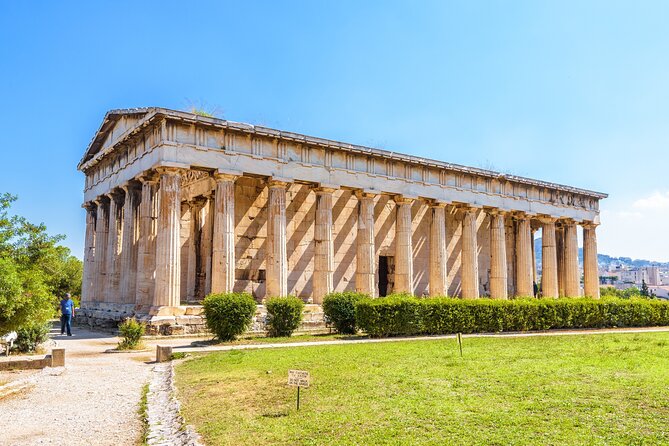
Hadrian’s Library is known for its marble construction and high surrounding walls. Despite its name, it was not simply a quiet place filled with books. It also served as a civic center.
Plan on about an hour. The remains are easier to appreciate when you understand that the site had a public role as well as a literary one.
This stop works well after the Roman Agora. The two sites are close, and both help you follow Athens through its Roman period. If you enjoy seeing how later rulers reused and reshaped an older city, this pairing is more rewarding than treating Hadrian’s Library as a standalone photo stop.
The site is also a practical place to use one of the flexible admissions. You do not need to spend your valuable Acropolis time here, and you can return on a quieter day during the pass period.
You can also read our reviews of more guided tours in Athens



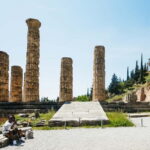

Olympieion: the unfinished giant completed by Hadrian
The Temple of Olympian Zeus, also called Olympieion, was planned as one of the greatest temples in the ancient world. Construction began in the sixth century BC, but the project was not completed until the second century AD under the Roman emperor Hadrian.
The temple had effectively been a ruin for much of its existence. That unfinished quality is part of what makes the site interesting: you can see the huge ambition of the project without pretending the monument survived intact.
Allow about an hour. The columns and open setting give the visit a different feel from the tighter ruins in the central historic district.
I would not place Olympieion immediately after two long archaeological visits unless you are comfortable with heat and walking. It is better used as a deliberate stop, perhaps before or after another central Athens plan, because the pass lets you choose your timing.
Kerameikos: Athens’ ancient cemetery and pottery quarter

Kerameikos is one of the more distinctive entries in this pass. It was an ancient cemetery extending toward the Eridanos River, and its name comes from the pottery workshops that once occupied the area.
The site combines two stories that are easy to miss elsewhere: the practical work of making ceramics and the rituals surrounding death. That makes Kerameikos feel less like a monument checklist and more like a glimpse of how the city was organized.
Allow about an hour, with extra time if you want to visit the museum. The included English audio tour, when selected, can help connect the remains outside with objects and explanations indoors.
Kerameikos may suit you if you prefer a quieter, more reflective site. It is also a sensible stop for repeat visitors to Athens who have already seen the Parthenon and want a less familiar part of the ancient city.
The pass can be particularly useful here because a separate ticket for one smaller site may feel hard to justify. When it is already included with six others, Kerameikos becomes an easy addition rather than a special purchase.
Aristotle’s Lyceum: philosophy in a walking school

The Lyceum became famous as the Peripatetic School of Philosophy, founded by Aristotle. Aristotle was known for walking among the trees while discussing philosophy with his students, which is the source of the term peripatetic.
The site requires about an hour and provides a change of pace from monumental temples. You are not coming for a towering building. You are coming to connect a physical place with the habits of teaching, discussion, and movement associated with Aristotle’s school.
That makes this stop especially worthwhile if you enjoy ancient philosophy or want to understand Athens beyond its most photographed ruins. It may feel less immediately dramatic than the Acropolis, so set your expectations accordingly.
The Lyceum also shows the advantage of self-paced admission. You can give it the time it deserves if philosophy interests you, or make it a brief stop if your main goal is to see the remains and continue elsewhere.
Plaka audio tour and exploring between the ruins
All options include a self-guided English audio tour for Athens Old Town and Plaka. This adds a useful layer to the pass because the experience is not limited to fenced archaeological sites.
Use the Plaka tour between major admissions. The old neighborhood gives you a break from formal ruins, while the audio stops can help turn your walk into a planned route rather than a series of random turns.
The audio material is delivered through your phone. You do not receive a physical device or earphones, so bring your own and download or open the material before you begin if possible.
The audio tours are not equally available in every version of the product. The Acropolis and Parthenon tour requires the appropriate option, as do the English tours for the Ancient Agora and Kerameikos. Check exactly what your selected version includes before paying the $129 price.
What the price really means
The pass makes financial sense when you plan to visit most of the seven sites. If you only have a few hours in Athens and will see the Acropolis alone, the package is likely poor value.
It is especially risky for a one-day cruise stop. The Acropolis appointment, security procedures, transport delays, and the size of the archaeological sites can consume most of your available time. A pass built for five days is not automatically a good buy for a single rushed day.
For a multi-day stay, the calculation improves. You get the Acropolis plus six flexible admissions, and you avoid repeated stops at ticket counters. The value is not only the possible saving on individual admission fees. It is also the freedom to decide site by site based on weather, energy, and interest.
Still, do not assume every entrance will be completely queue-free. The main advantage is prearranged admission, not a private escort through every gate. The Acropolis can remain crowded even with a prepaid ticket.
Audio tours, phones, and the self-guided tradeoff
A self-guided tour gives you control. You can pause for photographs, skip a section, replay an explanation, or move on when your attention fades.
It also puts the work on you. There is no guide to answer a question, redirect you when an area is closed, or explain why one unmarked wall matters. The quality of your visit depends on your phone battery, internet access, headphones, and ability to keep track of the audio sequence.
Bring a charged phone and earphones for each person who wants to listen. Several people sharing one set of wireless headphones can become awkward if one person’s app stops or the audio does not play correctly.
A printed backup can be useful. A map would make the pass easier to manage, especially since the sites are spread across central Athens rather than arranged in one contained complex. One audio-app issue reported in practice is that the narration can become confusing if you walk while listening and miss the transition between stops.
Timing, transport, and the five-day strategy
There is no hotel pickup, drop-off, food, drink, guide, or escort. You make your own way to the Acropolis meeting point at Athens 105 58, Greece, and the activity ends back there after the opening visit.
The sites are near public transportation, but the pass does not include transport. Since the Acropolis time is fixed, allow extra time for your route and do not cut it close because a bus or train is delayed.
A sensible five-day approach could look like this:
- Day one: Acropolis, then a light walk through Plaka.
- Day two: Ancient Agora and its museum, followed by the Roman Agora.
- Day three: Hadrian’s Library and Olympieion.
- Day four: Kerameikos and its museum.
- Day five: Aristotle’s Lyceum, with any missed site added if needed.
You do not have to follow this plan. Its point is to show how the pass works best when you use the flexible entries as building blocks, not as a race.
Who should buy this pass?
I would recommend it to you if you are staying in Athens for several days, want to visit ancient sites without joining a group, and like planning your own route. It also suits repeat visitors who want the Acropolis plus less familiar places such as Kerameikos and the Lyceum.
It is less suitable if you want a live guide, require hotel transportation, or have only a few hours in the city. It is also a poor match if you dislike phone-based tickets and audio tours.
Before booking, confirm three things: your Acropolis time, the exact audio option, and the five-day validity after scanning. Then check your email and app as soon as the ticket should arrive, not at the entrance gate.
Should you book the Athens combo ticket?
Book it when you can use several of the seven admissions over five days. The Ancient Agora, Roman Agora, Hadrian’s Library, Olympieion, Kerameikos, and Lyceum give the Acropolis visit useful context, and flexible entry makes it easy to divide the sightseeing into manageable pieces.
Skip it when your Athens visit is a single hurried stop or when you mainly want the Acropolis Museum, which is not included. At $129, the pass rewards time and planning. Used that way, it is a practical sightseeing tool. Used only for the Parthenon, it becomes an expensive shortcut to one ticket line.
You can cancel for a full refund up to 24 hours before the experience start time. Changes or cancellations inside that 24-hour window are not refunded, so double-check the Acropolis appointment before that deadline.
FAQ
How long is the combo pass valid?
The tickets are valid for five days once they are scanned. The five-day period applies to the flexible site admissions, while the Acropolis is tied to the selected date and time slot.
Does the Acropolis ticket have a fixed entry time?
Yes. You must choose a date and time for the Acropolis. The selected time applies only to the Acropolis visit, not to the other six sites.
Which attractions are included?
The pass includes the Acropolis, Ancient Agora and museum, Roman Agora, Hadrian’s Library, Temple of Olympian Zeus, Kerameikos and museum, and Aristotle’s Lyceum.
Is the Acropolis Museum included?
No. Admission to the Acropolis Museum is not included in this pass.
Are audio tours included with every option?
The English self-guided audio tour for Athens Old Town and Plaka is included with all options. The multilingual Acropolis and Parthenon tour, plus the English Ancient Agora and Kerameikos tours, are included only when you select the appropriate option.
What happens if I cancel?
You receive a full refund if you cancel at least 24 hours before the experience start time. Cancellations or changes made less than 24 hours before the start time are not refunded.