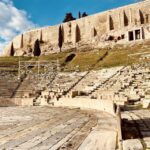
REVIEW · ATHENS
Philosophy Experiential Workshop at Aristotle’s Lyceum, Athens
Book on Viator →Operated by Hellas Revival · Bookable on Viator
On a walk in Athens, you learn how to think. This Philosophy Experiential Workshop ties Socrates, Plato, and Aristotle to real-life ethics right where Aristotle taught, with an easy English flow and lots of discussion. I like that the setting is outdoors and close to the action, so your brain stays engaged instead of getting stuck in lecture mode.
Two things I especially like: you get a guided, step-by-step philosophy timeline under the trees at Rizari Park, and then you practice the ideas by talking through virtue and ethical dilemmas while you walk toward Aristotle’s Lyceum. The other big plus is the interactive format—discussion plus a virtue-choice game—so even if you know zero philosophy, you still have something to do and something to say.
One drawback to consider: because it happens at a historical outdoor site, it depends on good weather. If rain or poor conditions hit, expect the operator to shift dates or offer a refund, rather than pushing ahead.
In This Review
- Key highlights you’ll feel right away
- Philosophy in the Shade of Rizari Park
- The Walk to Aristotle’s Lyceum: Ethics Gets Real
- The Virtue-Choice Game: A Practical Way to Think
- Open-Air Quotes at the Amphitheater Over the Ruins
- Optional Extra Hour: Plato’s Ethics Debate
- Price and Value: What $54.01 Actually Buys
- Who This Workshop Fits Best (and Who Might Not)
- Smart Planning Tips for a Smooth Session
- Should You Book This Philosophy Workshop?
- FAQ
- FAQ
- How long is the Philsophy Experiential Workshop at Aristotle’s Lyceum?
- Is this workshop offered in English?
- Is Aristotle’s Lyceum entrance ticket included?
- What does the workshop cover if I have no philosophy background?
- Where do I meet for the experience?
- How many people are in the group?
- What happens if the weather is bad?
- Can I upgrade to a private experience?
- Is it okay to bring a service animal?
Key highlights you’ll feel right away

- Rizari Park start: a calm beginning that sets the tone before you hit the ruins
- Walking discussion: philosophy isn’t trapped in one spot; you talk as you move
- Virtue-choice game: ethical dilemmas turned into a simple, fun decision exercise
- Small group size: capped at 10 travelers for real conversation time
- Read Aristotle aloud: selected quotes are presented in an open-air amphitheater setting
- Optional Plato add-on: an extra hour focused on an interactive ethical dilemma debate
Philosophy in the Shade of Rizari Park
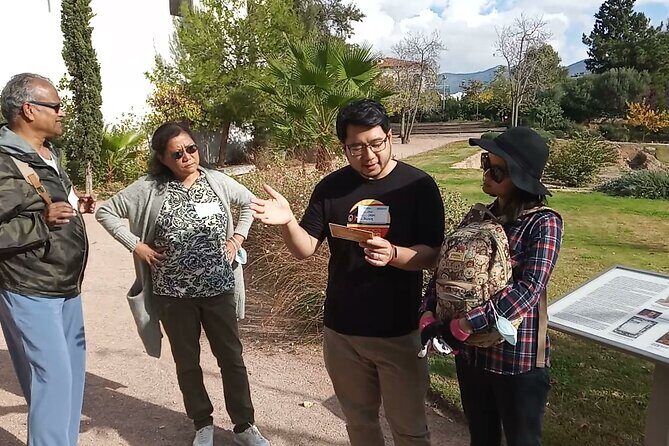
The workshop begins in Rizari Park, steps from central Athens. That matters more than you might think. A park start keeps the vibe relaxed, and it gives you a mental runway before you enter an archaeological setting.
Your facilitator brings you into a short timeline of ancient Greek philosophy, connecting the dots between Socrates, Plato, and Aristotle. This is not a museum style “stand and stare” introduction. It’s meant to help you understand who taught what, and why those ideas still matter when you’re deciding how to live.
English is used throughout, and the style is plain. Terms get explained in simple words and backed with examples. If you’re the kind of person who worries you’ll be lost in philosophy, this approach is a big deal. It reduces intimidation fast, so you can actually join the discussion.
A few more Athens tours and experiences worth a look



The Walk to Aristotle’s Lyceum: Ethics Gets Real
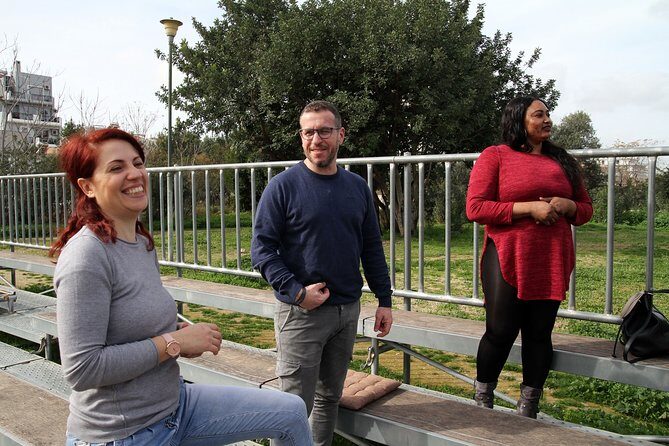
After Rizari Park, you head to the nearby Archaeological Site of Lyceum. Entrance is not included, so you’ll want to plan for an additional €5 per person admission. The good news is that the workshop doesn’t just dump you at a gate. The walking part is part of the lesson.
Walking while you philosophize sounds like a gimmick until you experience the logic of it. Aristotle’s ideas are about how habits shape a good life. So the workshop frames ethics as something you apply in real life, not something you memorize. As you go, you discuss Aristotle’s moral theory and the goal of eudaimonia—a life well-lived.
That’s also where the discussion format earns its keep. You’re not only listening; you’re weighing ideas out loud. You’ll be asked to consider what virtue looks like in practice, and the conversation rhythm makes it easier to remember the key concepts.
Practical note: since this is outdoors and involves a historical site, wear shoes you’re comfortable walking in, and be ready for uneven ground.
The Virtue-Choice Game: A Practical Way to Think
One of the most praised parts is the interactive element—specifically a virtue-choice game. This is where the workshop moves from theory into decision-making.
The idea is simple: you’re presented with ethical dilemmas, then you choose what you would do and talk through why. That turns vague values into concrete reasoning. You start seeing how Aristotle’s virtue concept works as a “middle” between extremes—what many people understand as the golden mean between virtues and vices.
What I like about this is that it lowers the barrier for participation. If you don’t know Aristotle’s vocabulary, you can still understand the scenario and your own reasoning. If you do know some philosophy, you can test your assumptions and refine how you explain your choices.
And because the group is limited to a maximum of 10 travelers, the game doesn’t feel like a performance for a crowd. You get enough time for your perspective to matter.
Open-Air Quotes at the Amphitheater Over the Ruins
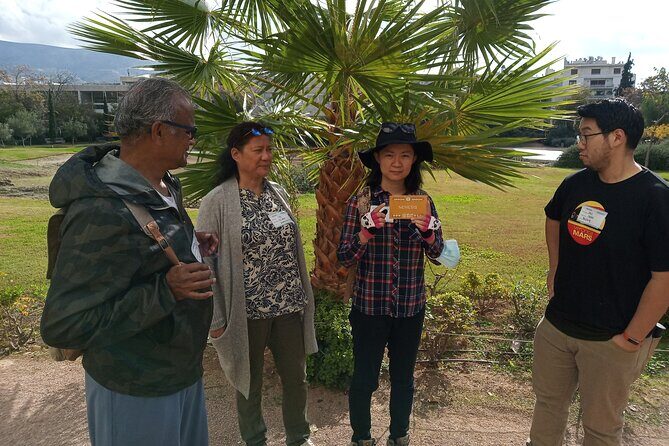
To finish, the group gathers at a small open-air amphitheater with views over the ruins. This is a strong way to close, because it gives you a physical pause after the walking and the choices.
At this stop, you read selected quotes from Aristotle and reflect on how his wisdom speaks to today—whether you’re a teen, a parent, an educator, or simply a curious traveler. The structure is reflection, not memorization. It’s meant to help you connect the session to how you behave when no one is grading you.
An added detail worth noting: the quotes are presented even in Ancient Greek. That doesn’t mean you’re thrown into a language class. You’re guided through what you’re seeing and why it matters. It’s more like a cultural seasoning that makes the experience feel grounded in the original place and voice.
If you’re someone who likes to leave with something you can reuse—an angle to think with in everyday situations—this closing moment tends to stick.
Optional Extra Hour: Plato’s Ethics Debate
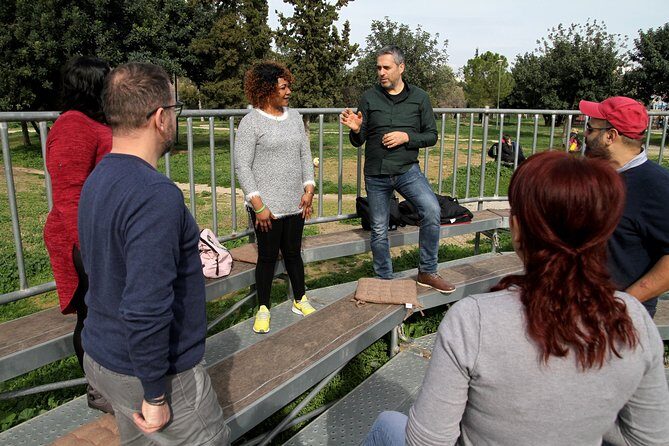
If you want more practice, there’s an option to add an extra hour focused on Plato’s philosophy. The added time includes an interactive debate on an ethical dilemma.
This is the kind of upgrade that makes sense if you enjoy discussion and want more than one philosophical lens. Aristotle gets you thinking about virtue and habit-based living; Plato tends to push in a different direction, especially around ideals and moral reasoning. Adding that extra hour is a clean way to compare how different ancient thinkers approach the same types of life questions.
If you’re visiting Athens with limited time, you can keep it to the base workshop. If you have the energy for more conversation, the add-on is where you can stretch the experience.
- All Day Cruise -3 Islands to Agistri,Moni, Aegina with lunch and drinks included
★ 5.0 · 4,958 reviews




Price and Value: What $54.01 Actually Buys

At $54.01 per person for about 1 hour 45 minutes, this is priced like a guided learning experience—not like a half-day museum outing. For me, the value comes from three places:
First, you’re paying for active facilitation by a trained expert, not just access to a site. Second, you get structured interaction: timelines, walking discussion, a virtue-choice game, and a closing reflection using Aristotle’s quotes. Third, the group size is small (max 10), which changes the experience from passive to participatory.
Two costs to plan for:
- Aristotle’s Lyceum admission is €5 per person (not included).
- You’ll want to be prepared for the fact that it’s outdoors, so weather can affect what you do that day.
There’s also a private experience upgrade for just your group. That can be a strong value if you’re traveling with friends or family who want more direct conversation time and less blending into a mixed group—just know that the cost would be higher than the standard per-person price.
Overall, the price feels fair if you want a thinking-focused Athens activity that doesn’t require prior knowledge.
Who This Workshop Fits Best (and Who Might Not)
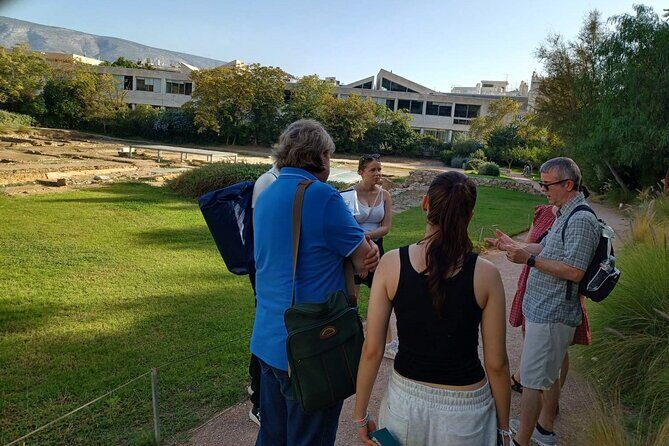
This workshop is a great fit if:
- You like learning by talking, not just listening.
- You want context for famous Greek philosophers without sitting through a lecture.
- You’re okay with the idea that ethics is discussed using real-world dilemmas.
- You’re visiting Athens and want something more personal than a big-bus tour.
It’s also built for people with no background. The session is described as suitable for those without prior knowledge, and explanations are done in simple English with examples.
Who might hesitate:
- If you dislike outdoor experiences, or you can’t handle walking as part of a lesson.
- If you want a traditional guided tour focused on site facts only. This is explicitly not a guided tour; it’s a philosophy experience.
- If you’re expecting deep language study of Ancient Greek. You’ll encounter Aristotle’s Greek quotes, but the goal is reflection and meaning, not translation training.
Smart Planning Tips for a Smooth Session
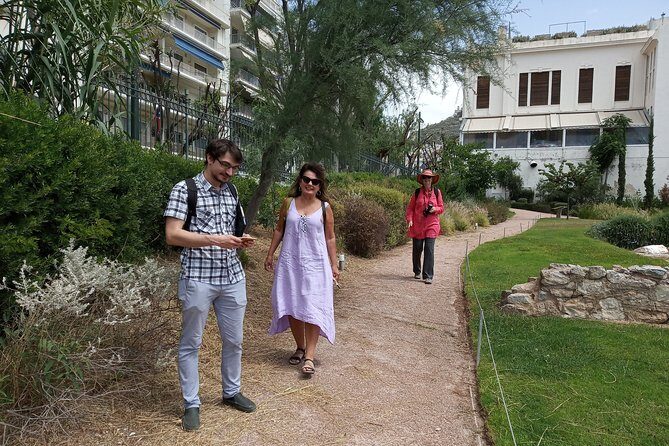
A few practical things will make your experience better right away:
- Bring a layer. Even in Greece, outdoor evenings and ruins areas can shift in temperature.
- Wear comfortable shoes. The session includes walking between stops.
- Plan for outdoors with allergies in mind. Since it’s outdoors, bring your medication if needed. First Aid trained staff are mentioned, but by law they can’t provide medication.
- Be ready to participate. The format works best when you answer questions and share thoughts.
- Respect the site. There’s specific guidance about respectful conduct at a heritage location (cleanliness, sobriety, dress-code, and keeping things respectful and quiet enough for others).
If you’re bringing teens, note that the activity is suitable for adults and teenagers over 14. Underaged participants can’t book alone, so an adult needs to book and supervise.
Should You Book This Philosophy Workshop?
I think this is an easy yes if you want a small-group Athens experience where you actively think and speak. The combination of a calm start in Rizari Park, the walk to Aristotle’s Lyceum, the interactive virtue-choice format, and the thoughtful closing at an open-air amphitheater is a strong mix. It also helps that it’s offered in English and designed so you don’t need a philosophy background to keep up.
I’d be more selective if your schedule depends on perfect weather, or if you prefer traditional site touring over discussion-based learning. But if you’re flexible and you like conversations, this is one of those Athens activities that makes the ancient thinkers feel less distant—and more useful.
FAQ
FAQ
How long is the Philsophy Experiential Workshop at Aristotle’s Lyceum?
It’s approximately 1 hour 45 minutes.
Is this workshop offered in English?
Yes, the workshop is offered in English.
Is Aristotle’s Lyceum entrance ticket included?
No. The entry ticket to Aristotle’s Lyceum is not included, and you’ll pay an admission fee of €5.00 per person.
What does the workshop cover if I have no philosophy background?
It’s designed to be suitable even if you have no prior knowledge. You’ll get simple explanations of terms and ideas in plain English, using examples.
Where do I meet for the experience?
The meeting point is Vasilissis Sofias 24, Athina 106 76, Greece. The activity ends back at the meeting point.
How many people are in the group?
The workshop has a maximum of 10 travelers.
What happens if the weather is bad?
Because it’s outdoors, it requires good weather. If it’s canceled due to poor weather, you’ll be notified at least 3 hours ahead and offered a choice of a different date, a similar workshop, or a full refund.
Can I upgrade to a private experience?
Yes, there is an option to upgrade for a private experience just for your group.
Is it okay to bring a service animal?
Service animals are allowed.