REVIEW · ATHENS
Private local tour of the Acropolis Hill and the New Acropolis Museum
Book on Viator →Operated by Niki Olympic Tours · Bookable on Viator
The best part of this private Athens tour is the way it links the Acropolis monuments with the ideas and people behind them. Your guide does more than point at the Parthenon: you’ll hear about Pericles, Socrates, Plato, Aristotle, democracy, temples, theaters, and the city spread below the hill.
I like two things in particular. First, the private format lets your guide adjust the pace and answer your questions. Second, ending inside the New Acropolis Museum gives you a close look at statues, architectural pieces, and the Parthenon frieze after seeing the real monuments above. The main consideration is cost: at $249.25 per person, plus $50 in admission fees, this is a premium choice for a two-and-a-half-hour experience.
In This Review
- Key points to know before booking
- Why this private Acropolis tour works well
- Climbing from the Dionysus Theatre to the Acropolis summit
- The Propylaea, Temple of Athena Nike, and Ancient Agora views
- The Parthenon and Erechtheion at the top
- Moving from the open hill to the New Acropolis Museum
- What the $249.25 price really covers
- Timing, meeting point, and physical demands
- Who should book this experience?
- Should you book the private Acropolis and museum tour?
- FAQ
- How long does the private Acropolis and museum tour last?
- Are admission tickets included in the tour price?
- Where does the tour begin and end?
- Is transportation included?
- Is the tour suitable for people with limited mobility?
- Can I cancel for a full refund?
Key points to know before booking
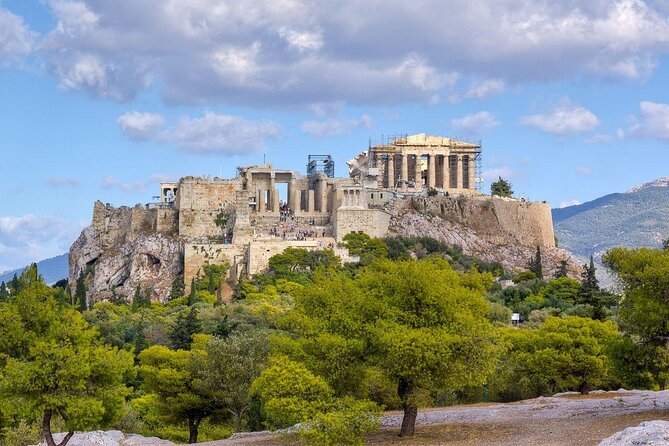
- A private guide connects the Acropolis to ancient Athens: You’ll hear about the Golden Age of Pericles, the birthplace of democracy, and the philosophical world around the Ancient Agora.
- The 90-minute hill visit includes the Parthenon and Erechtheion: The route also covers the Propylaea, Temple of Athena Nike, Dionysus Theatre, Herodium, Areopagus, and nearby hills.
- The museum visit lasts about one hour: Glass floors, Kore and Kouros statues, the Caryatids, and the top-floor Parthenon display are the main sights.
- Guides Konstandina and Vicky earned special praise: Konstandina was noted for excellent English, flexibility, energy, and attention to the group’s pace. Vicky was praised for answering questions clearly.
- Tickets are not included: Budget €30 per person for the Acropolis and €20 per person for the museum, in addition to the tour price.
- The tour requires real walking and climbing: You should have a strong level of physical fitness, and private transport is not provided.
Why this private Acropolis tour works well
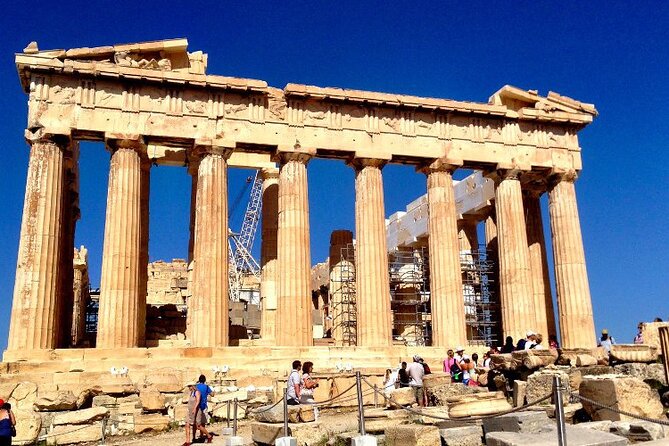
The Acropolis can feel confusing if you arrive without a plan. You see broken columns, crowded paths, and famous buildings, but the meaning of each place is not always obvious. A good guide turns the hill into a story with a clear order.
This experience begins at the Acropolis entrance and heads uphill with a certified guide. The guide points out important places as you climb, rather than saving every explanation for the summit. That matters because Athens opens up around you in stages, and several landmarks are easier to understand from the lower slopes.
You’ll hear about the Golden Age of Pericles, the period when many of the monuments on the hill were built. You’ll also look beyond the Acropolis to the Filopappos Hill, Herodium, Dionysus Theatre, Pnyx Hill, and Areopagus Hill. These are not random names on a map. Together, they help explain how religion, theater, public debate, politics, and philosophy worked in ancient Athens.
The private format is the central selling point. Only your group takes part, so you do not have to follow a large party or wait while a guide repeats the same point to several dozen people. If you want more time at the Erechtheion, fewer explanations about the theater, or extra help putting the Ancient Agora into context, you can ask.
The tour has earned a 5 out of 5 rating from 11 reviews, with 100 percent recommending it. That is a small sample, so I would not treat it as a guarantee. Still, the praise is specific. Konstandina was described as having excellent English, a warm manner, strong energy, and a good feel for each group’s interests and pace. Vicky was praised for clear explanations and a willingness to answer questions. Those are exactly the qualities that matter on a private archaeological tour.
You can also read our reviews of more private tours in Athens



Climbing from the Dionysus Theatre to the Acropolis summit
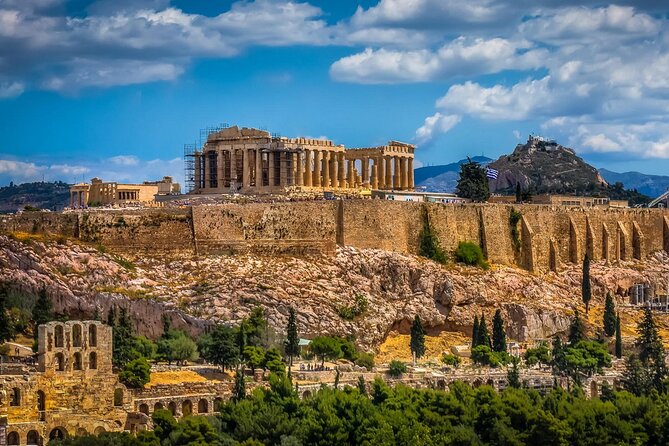
The first stop takes about 90 minutes. You meet your guide near the Acropolis entrance and begin the ascent.
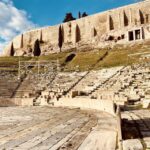
The route introduces several sites before you reach the famous temples. You’ll hear about the Dionysus Theatre, one of the key places connected with ancient Greek drama, and the Herodium odeon. You’ll also learn about Pnyx Hill, identified here as the birthplace of democracy, and Areopagus Hill.
This opening section gives the Acropolis a useful civic setting. The hill was not an isolated collection of temples. It was part of a city where public speaking, theater, political life, worship, and philosophy all overlapped. From the slopes, your guide can help you picture how these places related to one another.
You’ll also get views toward Filopappos Hill and the surrounding city. The experience is partly about the buildings and partly about the location. Athens is not hidden from the Acropolis. The modern city presses close around it, making the ancient hill feel like a living part of the capital rather than a distant archaeological park.
The climb is an important practical point. The tour description calls for a strong physical fitness level, and that warning should guide your decision. You will be ascending to the top of a hill, walking across an archaeological site, and continuing into a museum afterward. Anyone who finds uneven ground or sustained uphill walking difficult should consider this before paying for a private tour.
The Propylaea, Temple of Athena Nike, and Ancient Agora views
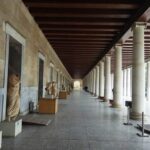
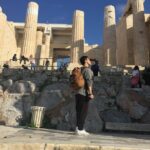
Before passing through the Propylaea, the entrance gateway to the Acropolis, you stop for a view of the Temple of Wingless Nike. The guide also points toward the Ancient Agora, where Socrates, Plato, and Aristotle are connected with the development of major philosophical schools.
This is one of the strongest moments for context. The Propylaea is not simply the doorway to the Parthenon. It marks a change from the approach to the sacred summit. The Temple of Athena Nike, positioned near the entrance, becomes easier to appreciate when your guide explains how the approach was designed and what you are seeing from it.
The view toward the Agora adds another layer. You are looking from the religious center of Athens toward a space linked with public life and philosophy. A guide can make that relationship clear in a way a quick photograph cannot.
Because the tour is private, you can ask basic questions without worrying about slowing down a group. That is useful if ancient Greek names and sites begin to blur together. The hill contains a lot of information in a short space, and the ability to pause for a plain explanation has real value.
The drawback is that the Acropolis portion is still only about an hour and a half. You will get a guided overview, not an exhaustive study of every stone, inscription, or architectural phase. If you want a slow archaeological examination, you may need more time on your own before or after the scheduled visit.
The Parthenon and Erechtheion at the top
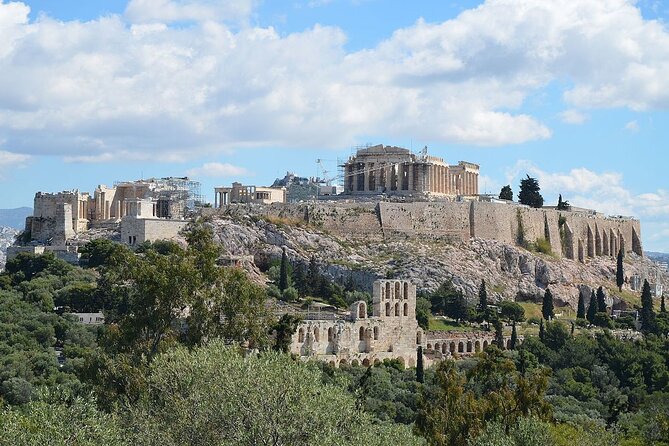
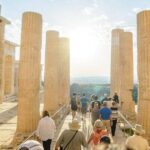
After walking through the Propylaea, you reach the summit and the two monuments most people have come to see: the Parthenon and the Erechtheion.
The Parthenon is the visual center of the visit. Its damaged columns and sculptural remains are familiar from photographs, but the hilltop setting gives the building much of its force. Your guide explains the monument in relation to the Golden Age of Pericles, helping you see it as a product of political ambition, religious devotion, artistic skill, and civic identity.
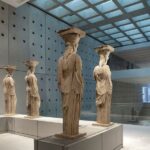
Across from it, the Erechtheion has a different character. The temple is known for its Caryatids, the female figures used in place of ordinary columns to support the roof. The surviving originals are protected in the museum, while the figures associated with the building have become one of the most recognizable sights on the Acropolis.
The guide’s role here is not just to name the monuments. You can ask about the Caryatids, the layout of the summit, and the way the temples relate to one another. The private setup is especially useful for families or mixed-interest groups. One person may care about architecture, another about mythology, and someone else may simply want the best view of Athens. A flexible guide can serve all three.
You should also set your expectations properly. The Acropolis is an active archaeological site, not a polished indoor attraction. Conditions underfoot can be demanding, and the experience requires walking and climbing. This is not the right choice if you want a low-effort sightseeing stop.
Moving from the open hill to the New Acropolis Museum
The second stop is the New Acropolis Museum, scheduled for about one hour. The tour ends there, even though the meeting point is listed at the Acropolis entrance. That makes the museum the final destination rather than a return to your starting point.
The museum offers a useful change of pace after the exposed hilltop. Inside, you’ll see archaeological remains through sections of glass flooring, including parts of the ancient city below. The Kore and Kouros statues provide another major focus. These early Greek sculptures show a different stage of artistic development from the classical monuments above.
You’ll also see the Caryatids in the museum. This is valuable because you can examine them more closely than the figures positioned on the Erechtheion. The museum setting lets you look at details that are easy to miss outdoors, while your guide explains how the sculptures relate to the monument you have just visited.
The museum is arranged over several levels. As you move upward, the displays lead toward the top floor, which uses glass walls and offers a direct view of the Parthenon. That connection is the museum’s great strength. You are not looking at disconnected objects in a case. You can compare the surviving architectural pieces with the building still visible outside.
The hour goes quickly. You will get a guided introduction to the major displays, but you may not have time to study every object at length. If the museum is your priority, ask your guide early to focus on the Caryatids, Parthenon sculpture, or ancient excavation area. Since this is private, your interests can shape the hour.
You can also read our reviews of more museum experiences in Athens



What the $249.25 price really covers
The listed price is $249.25 per person. It includes certified guide services, but it does not include admission to either attraction.
The stated entrance fees are €30 per person for the Acropolis Hill and €20 per person for the New Acropolis Museum. That adds €50 per person, so you need to account for both the tour fee and the admissions when comparing options. The price is therefore much higher than a basic self-guided visit.
The value comes from the private service. You are paying for a guide focused only on your group, a planned sequence through two major Athens sights, and the chance to ask questions throughout. If your group has several people, group discounts may improve the per-person cost. The supplied information confirms that discounts are available, though it does not state the exact threshold or amount.
I would book this for a first visit when you want help making sense of the Acropolis, especially if your group values conversation and a flexible pace. I would not choose it if your main goal is simply to enter, take photographs, and spend several unhurried hours wandering. In that case, paying a premium for a two-and-a-half-hour private service may not give you enough extra time.
The tour is offered in English. Guides such as Konstandina and Vicky received strong praise for communication and personal attention, which is important when the subject includes unfamiliar names, dates, and architectural terms.
Timing, meeting point, and physical demands
The total duration is approximately two hours and 30 minutes: about 90 minutes at the Acropolis and one hour in the museum. The group meets at the Acropolis entrance, at the listed location near the Acropolis of Athens, and the experience ends at the New Acropolis Museum.
Private transportation is not included. You need to make your own way to the starting point and arrange your onward plans from the museum. The end point is worth noting if you have a restaurant booking, hotel pickup, or another activity scheduled immediately afterward.
The tour is near public transportation, but no specific route or transfer is provided in the supplied details. Plan around the fixed start time and allow enough time to reach the Acropolis entrance without rushing.
You should also prepare for a physically active morning or afternoon. The climb to the summit, uneven surfaces, and continued walking through the museum make comfortable shoes and a realistic pace important. Service animals are allowed. The experience requires a minimum number of participants, and if that minimum is not met, you are offered another date or experience, or a full refund.
Free cancellation is available if you cancel at least 24 hours before the local start time. Cancellations or changes made inside that 24-hour window are not refunded or accepted.
Who should book this experience?
This tour suits you best if you want a private introduction to ancient Athens rather than a quick photo stop. It is a good match for couples, families, and small groups with different levels of interest, since you can ask questions and adjust the focus.
It also suits first-time visitors who want the Acropolis and museum explained as one connected experience. The guide helps link the hilltop temples with the sculptures and architectural pieces displayed indoors.
You may want another option if you are watching your budget, need a slower and less demanding route, or want several hours inside the museum. The entrance fees are extra, the tour does not provide transport, and the two-and-a-half-hour schedule leaves limited time for independent browsing.
Should you book the private Acropolis and museum tour?
Book it if you value a personal guide, clear English, and a compact route through Athens’ two essential ancient sights. The strongest reasons are the private format, the connection between the monuments and museum pieces, and the guide quality associated with Konstandina and Vicky.
Skip it if $249.25 per person feels too steep before adding €50 in admission fees, or if you prefer to explore at your own speed. For the right group, the cost buys useful context and a more responsive experience. For a budget-minded visitor, the Acropolis and museum tickets alone may be the better fit.
FAQ
How long does the private Acropolis and museum tour last?
The tour lasts approximately two hours and 30 minutes. About 90 minutes are spent at the Acropolis and about one hour at the New Acropolis Museum.
Are admission tickets included in the tour price?
No. The Acropolis Hill entrance fee is listed as €30 per person, and the New Acropolis Museum entrance fee is €20 per person. Certified guide services are included.
Where does the tour begin and end?
The meeting point is by the entrance to the Acropolis of Athens. The tour ends at the New Acropolis Museum.
Is transportation included?
No. Private transportation is not included. You are responsible for reaching the meeting point and making your own arrangements after the museum visit.
Is the tour suitable for people with limited mobility?
The supplied information says participants should have a strong physical fitness level. The tour includes an ascent to the top of the Acropolis, so you should consider the climb and walking demands carefully.
Can I cancel for a full refund?
Yes, if you cancel at least 24 hours before the experience start time. Cancellations and changes made less than 24 hours before the start time are not accepted or refunded.