REVIEW · ATHENS
Small-Group Women History in Ancient Greece Walking Tour
Book on Viator →Operated by Culture Hunters · Bookable on Viator
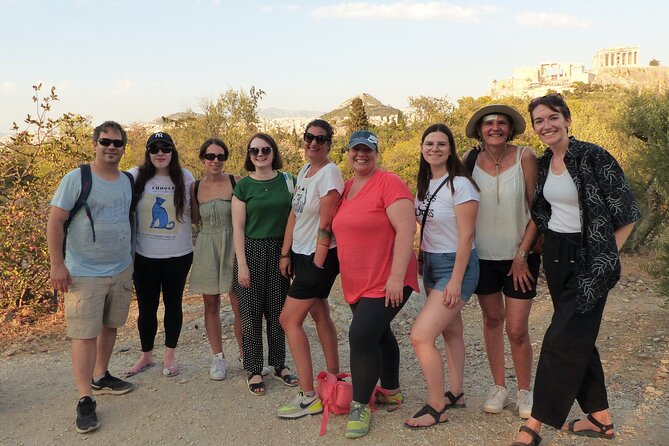
Ancient Athens is usually told through its philosophers, generals, temples, and male citizens. This walk changes the lens. Starting in Monastiraki and ending on Philopappos Hill, Maelle of Culture Hunters traces the lives of women who were wives, slaves, courtesans, poets, doctors, philosophers, and political influences. You’ll hear about Athena, Penelope, Pandora, Sappho, Aspasia, and Agnodice while passing places tied to education, marriage, law, religion, trade, and democracy.
I like two things right away: the subject is genuinely different from the standard Acropolis talk, and the route links stories to real Athenian places instead of treating mythology as a separate classroom lesson. The small group, limited to 12 people, also gives the walk a more personal feel.
The main consideration is physical. This is a two-hour walk that finishes on Philopappos Hill, and the experience is not recommended if you have mobility issues. You also see the Ancient Agora from outside rather than entering it, so this tour works best as a historical and storytelling walk, not as a substitute for Athens’ archaeological sites.
In This Review
- Key points to know before you book
- Why this women’s history walk fills a gap in Athens
- Monastiraki begins the story in the middle of modern Athens
- Hadrian’s Library and the question of women’s education
- Marriage, Eros, and the church near the old city
- Athena’s gate and the limits of married life
- Dioskouron reveals a festival for women
- The Ancient Agora from the outside
- Areopagus and a woman who risked death
- The Pnyx shows the boundary of democracy
- Philopappos Hill closes with the Acropolis in view
- What $44.71 buys you
- Who should take this Athens walking tour
- Practical details that affect your day
- Should you book the Women History in Ancient Greece walk?
- FAQ
- Where does the tour start?
- Where does the tour finish?
- How long does the walking tour last?
- How large is the group?
- Does the tour enter the Ancient Agora?
- Is the tour suitable for people with mobility issues?
- What is the cancellation policy?
Key points to know before you book

- Women take center stage: Learn about mythical figures and real women such as Sappho, Aspasia, and Agnodice.
- The route crosses central Athens: Begin at Monastiraki and pass Hadrian’s Library, the Agora, Areopagus, Pnyx, and Philopappos Hill.
- Small groups matter: The maximum group size is 12, which makes questions and conversation easier.
- The ending is scenic: Philopappos Hill provides a view toward the Acropolis and easy access to the city center on foot or by metro.
- Expect an outside look at the Agora: No archaeological-site admission is included, and the marketplace is viewed from outside.
- The price is moderate: At $44.71 per person, you’re paying mainly for interpretation and a focused route, not entrance tickets.
Why this women’s history walk fills a gap in Athens
Most introductory tours explain how Athens shaped democracy, philosophy, theater, and art. Those subjects matter, but they can leave out half the population. This walk asks a more useful question: how did those famous institutions look to women who could not vote, had restricted public roles, or were judged by rules they did not create?
That question gives familiar places a different meaning. The marketplace is no longer just a center of trade. The Pnyx is not only the birthplace of democracy. The law court on Areopagus becomes a place to consider who had legal power and who risked punishment by challenging the rules.
I especially like that the tour includes both mythological and historical women. Athena, Penelope, and Pandora belong to stories that helped shape Greek ideas about wisdom, loyalty, curiosity, and danger. Sappho, Aspasia, and Agnodice point toward real women whose work pushed against the limits placed on them.
The tone, based on the guide’s approach, is not simply celebratory. You’ll also confront the harsh limits of women’s lives in ancient Greece. Marriage, education, public space, slavery, and citizenship are treated as social systems, not as background decoration. That makes the walk useful for anyone who wants to understand the city rather than simply collect famous names.
You can also read our reviews of more walking tours in Athens



Monastiraki begins the story in the middle of modern Athens

The meeting point is Platia Monastirakiou 2, in Monastiraki Square. This is a practical starting point because it is central and close to public transportation. You meet the guide here, spend about 10 minutes getting oriented, and then set off on foot.
Monastiraki is not presented as an isolated ancient monument. Instead, it sets up the contrast between modern Athens and the city beneath it. The walk begins in a busy urban setting and then moves through layers of Roman, Byzantine, Ottoman, and modern history, with the ancient world providing the main focus.
Arrive with enough time to find the guide in the square. Confirmation is provided at booking, and the tour uses a mobile ticket. Since this is a small-group experience, being on time matters more than it would on a large bus tour.
Hadrian’s Library and the question of women’s education
At Hadrian’s Library, the discussion turns to education for girls and women in ancient Athens. You’ll spend about 10 minutes here, with the remains providing a strong visual setting for a question that is often treated too simply: who was allowed to learn, and what counted as useful knowledge?
The stop helps separate Athens from the broader Greek world. Ancient Greece was not one uniform society, and the tour also compares Athens with Sparta later in the route. That comparison matters because women’s roles could differ sharply from one city-state to another.
You should not expect to enter the library as part of this walk. The stop is about the place and the story attached to it, so your experience depends on listening, looking, and asking questions rather than exploring an interior display.
Marriage, Eros, and the church near the old city
The next stop is the Holy Church of the All-Great Taxiarchs and the Virgin Mary Gregorousa. About 15 minutes here are devoted to marriage in Athens and Sparta, along with Eros, the passionate form of love in ancient Greek thought.
This is one of the more interesting parts of the route because it moves past the polite version of ancient marriage. Marriage was tied to family, inheritance, social duty, and the future of the household. The idea of romantic love could exist alongside those pressures, but it did not necessarily control the arrangement.
The comparison with Sparta gives you a wider frame. You’ll see why it is risky to speak of the Greek woman as if women everywhere lived under exactly the same rules. The tour uses Athens and Sparta to show different expectations and different forms of social value.
Athena’s gate and the limits of married life
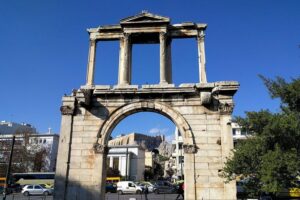
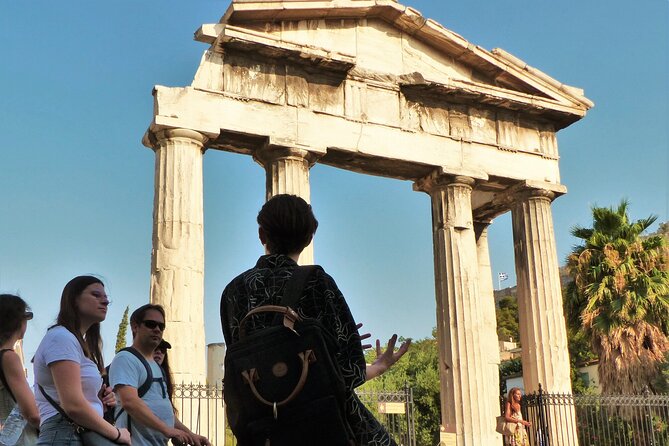
At the Gate of Athena Archegetis, the subject shifts to married life in Athens and Sparta, along with myths connected to Athena. The stop lasts about 15 minutes and combines a visible Roman-era monument with the older symbolic power of the goddess.
Athena is a useful figure for this discussion. She represents wisdom, strategy, and civic protection, yet she is a goddess rather than a model of ordinary female life. The gap between a powerful female deity and the restricted lives of many mortal women gives the conversation some bite.
Here you’ll also hear more about the practical side of marriage. The guide’s focus is not only on famous myths but on what women could expect inside the household and how their roles were shaped by male citizenship and family structures.
You can also read our reviews of more historical tours in Athens




Dioskouron reveals a festival for women
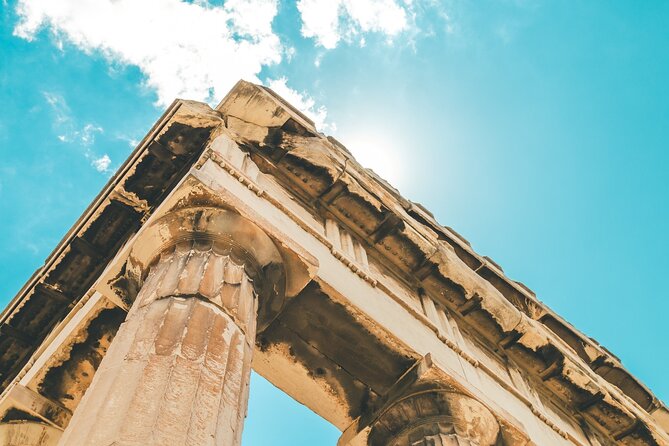
Dioskouron is a short stop, about 10 minutes, centered on a mysterious ancient festival dedicated exclusively to women. It is the kind of detail that can easily disappear in a conventional tour of Athens, where major monuments take up most of the time.
A women-only festival raises useful questions. What forms of community could women create? Which religious spaces allowed them influence or freedom? Did ritual offer a break from ordinary restrictions, or did it reinforce the roles society expected?
The stop also gives the tour a welcome change of pace. Not every subject is about exclusion from politics or public life. Religion and festivals could give women forms of participation that were different from the rights reserved for male citizens.
The Ancient Agora from the outside
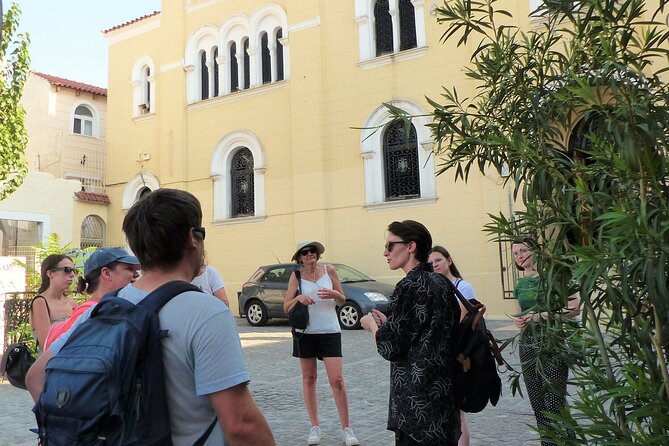
At the Ancient Agora, you’ll look toward the marketplace and center of public life from outside the archaeological site. The discussion lasts about 15 minutes and covers women in public space, as well as the lives of female slaves and courtesans.
This is an important reality check. The Agora is often described as the heart of democratic Athens, but public life was not open to everyone. The people who traded, talked, argued, and shaped civic decisions did not all have the same status.
Because there is no entrance to the archaeological site, you should set your expectations clearly. You will not walk through the Agora’s ruins during this experience. Instead, you’ll use the view and the surrounding setting to understand who could enter public life and who remained on its edges.
The discussion of slavery and courtesans also broadens the story beyond citizen households. Ancient women did not share one experience. Status, wealth, citizenship, occupation, and family position could change a woman’s options dramatically.
Areopagus and a woman who risked death
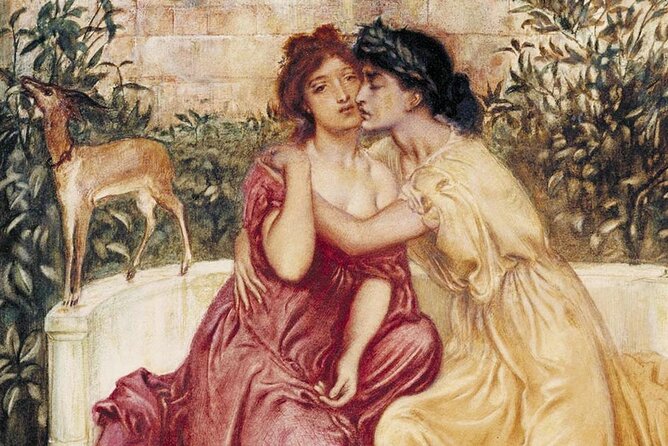
At Areopagus, the route reaches a place associated with trials for the worst sinners in ancient times. You’ll spend around 10 minutes here learning about a woman who risked a death sentence in an effort to change women’s rights.
This stop gives the walk a sharp legal and moral edge. The question is not simply what women were forbidden to do, but what happened when someone challenged the rules. A story of personal risk makes legal restrictions easier to understand than a list of ancient customs.
Areopagus can involve uneven stone surfaces and requires care underfoot. The stop is brief, but the setting has real impact. You are standing at a place linked with judgment while hearing about someone who put her own life in danger to challenge the treatment of women.
The Pnyx shows the boundary of democracy
The Pnyx is one of the strongest stops for showing the contradiction at the heart of classical Athens. This is where democracy began, yet only male citizens could vote. The tour spends about 15 minutes here exploring that boundary and introducing a woman who influenced Athenian politics during the Golden Age.
Aspasia is central to this part of the story. She was a philosopher and the companion of the statesman Pericles, and her position allowed her to influence political and intellectual life even though she did not possess the formal rights of a male citizen.
That distinction is worth holding onto. Influence is not the same as legal power. A woman might shape conversation, advise important people, or gain fame for her ideas while remaining excluded from voting and formal office.
The Pnyx also makes the tour’s larger point very clearly: democratic rights can expand public debate for one group while excluding another. Standing at the voting site while discussing women’s absence gives that lesson a physical setting.
Philopappos Hill closes with the Acropolis in view
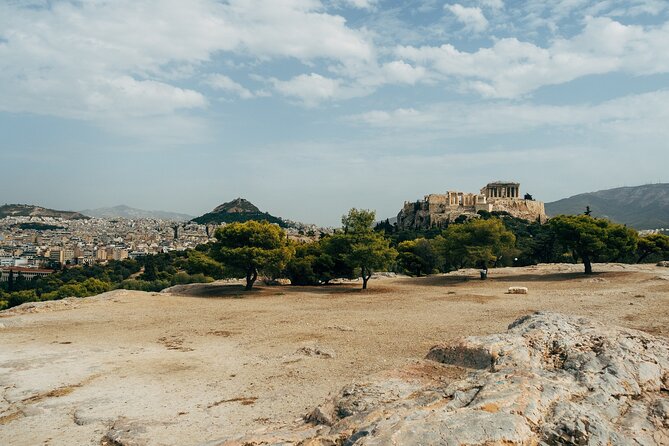
The final stop is Philopappos Hill, known here as the Hill of the Muses. You’ll spend about 10 minutes among the hill’s views and finish with a look toward the Acropolis. The end point is given as Philopappos Hill, with access back toward the city center on foot and to the metro if needed.
This is a satisfying finish because the tour moves from public squares and civic institutions to a quieter viewpoint. After two hours of stories about rules, restrictions, and overlooked lives, the Acropolis view gives you time to take in the wider city.
The hill is also the reason to think carefully about footwear and mobility. This is a walking tour, not a flat pavement stroll from one museum entrance to another. The experience specifically is not recommended for people with mobility issues, so choose it only if uneven ground and an uphill finish are manageable for you.
What $44.71 buys you
The price is $44.71 per person. Since the route does not include entry to the Ancient Agora or other paid archaeological sites, the value comes from the guide’s interpretation, the focused subject, and the route between the landmarks.
I consider that a fair price if you have already seen the headline monuments and want a more specialized look at Athens. You are paying for two hours with a guide who connects mythology, social rules, public life, and individual women into one clear subject. It also costs less than many full-day guided experiences and takes only half a day at most.
The value is weaker if you expect repeated site entries, extensive museum time, or a standard Acropolis tour. In that case, the walk may feel too talk-focused. But if you want stories you are unlikely to hear on a general history circuit, the price makes sense.
The tour is booked, on average, 37 days ahead. That suggests you should reserve early if your Athens dates are fixed, especially since the group is capped at 12 people.
Who should take this Athens walking tour
I would recommend it to first-time visitors who want a different introduction to the city, especially if you are planning several major archaeological visits and want something that adds rather than repeats them. One parent specifically found it a strong fit for a 15-year-old daughter interested in women’s history, so families with older children may find the subject engaging.
It also suits history students, readers of Greek mythology, and anyone interested in how law and citizenship shaped ordinary lives. The guide, Maelle, has been praised for a kind, inclusive, funny, and well-prepared presentation, and for answering questions clearly.
You should think twice if you need a fully accessible route, dislike walking uphill, or want to enter the monuments you pass. This is also not the right choice if you want a broad survey of all Athenian history. Its strength comes from its narrow focus.
The route works well as an early Athens activity because it gives context to places you may revisit later. It can also be a final walk, since the hilltop view offers a calm ending after the denser streets around Monastiraki.
Practical details that affect your day
The tour lasts about two hours and starts at Monastiraki Square. It ends at Philopappos Hill, not back at the starting point, so plan your next stop from the hill rather than assuming you will return to Monastiraki.
Wear shoes suited to city walking and uneven ground. Bring water, especially in warm weather, and allow a little extra time at the end if you want to enjoy the Acropolis view before heading on.
The group maximum is 12 people. Mobile tickets are accepted, group discounts are available, and service animals are allowed. Most people can participate, but the stated mobility warning should guide your decision.
Free cancellation is available up to 24 hours before the local start time for a full refund. Changes or cancellations made inside that 24-hour window are not refunded, and poor weather can lead to a new date or a full refund.
Should you book the Women History in Ancient Greece walk?
Book it if you want Athens explained through women’s lives rather than only through temples and male political figures. The combination of Athena and Pandora with Sappho, Aspasia, and Agnodice gives the walk both myth and human detail, while the Pnyx, Agora, and Areopagus show how those ideas fit into the city itself.
Skip it if you need entrance tickets, a flat route, or a traditional monument-by-monument tour. For everyone else, the $44.71 cost buys a focused two-hour experience with Maelle, a small group, and a viewpoint that adds a memorable final chapter to your time in Athens.
FAQ
Where does the tour start?
The tour starts at Pl. Monastirakiou 2 in Monastiraki Square, Athens.
Where does the tour finish?
It finishes at Philopappos Hill. The end point is close to the city center on foot and offers access to the metro if needed.
How long does the walking tour last?
The experience lasts approximately two hours.
How large is the group?
The maximum group size is 12 people.
Does the tour enter the Ancient Agora?
No. You see the Ancient Agora from outside, and there is no entrance to the archaeological site included in the walk.
Is the tour suitable for people with mobility issues?
It is not recommended for travelers with mobility issues. The route is a walking experience and finishes on Philopappos Hill.
What is the cancellation policy?
You can cancel at least 24 hours before the local start time for a full refund. Cancellations or changes made less than 24 hours before the start are not refunded. If poor weather causes the tour to be canceled, you’ll be offered another date or a full refund.