REVIEW · METEORA
Sunset Tour to Meteora with Photo Stops
Book on Viator →Operated by Meteora Tour · Bookable on Viator
Meteora is at its most striking late in the day, when the stone pillars catch the last light and the monasteries seem to cling to the cliffs above you. This four-hour outing combines sunset photo stops with stories about the first hermits, the monks who still live in the area, and local customs around Saint George.
I like the small maximum group of eight, since it should make it easier to ask questions and request a photo stop. I also like the air-conditioned VIP minibus and the chance to visit one monastery, depending on the local opening schedule. The main limitation is that monastery entrance fees are extra, and the guide does not accompany you inside.
The tour begins and ends near Kalampaka, with pickup available at the train station or another nearby point. The price is $36.12 per person, a fair deal for transport, guiding, and a sunset route, but you should book it for scenery and context rather than a long monastery visit.
In This Review
- Key points to know before you go
- Why Meteora works so well at sunset
- Starting near Kalampaka and getting settled
- Saint Antonios and the first hermits
- The monastery visit and what the schedule means
- Sunset viewpoints built for photographs
- Kastraki and Saint George of the Mandilas
- What the guides add to the ride
- Is $36.12 a good price?
- Who should book this sunset route?
- Final decision: book it for the views and stories
- FAQ
- How long does the Sunset Tour to Meteora with Photo Stops last?
- Where does the tour begin?
- Is pickup available?
- Where does the tour end?
- How many people can join the tour?
- Is transportation included?
- Are monastery entrance fees included?
- Is the guide available inside the monasteries?
- Is the tour offered in English?
- Can I cancel for a full refund?
Key points to know before you go
- Sunset timing shapes the whole outing: The tour is built around changing light, so the best moments come at several outdoor viewpoints rather than inside one site.
- Saint Antonios adds a human story: You learn how Meteora’s earliest hermits lived and dealt with the bare cliffs and caves.
- Saint Nicholas Anapafsas gives you a monastery focus: The route includes a visit to one monastery when local opening times allow.
- Kastraki brings local tradition into view: Saint George of the Mandilas connects the cliffs with a striking custom involving scarves, climbing, and dancing.
- A group of eight keeps things personal: You have a better chance of speaking with the guide and getting help with photos.
- The $36.12 price covers the basics well: Transport, a guide, and sightseeing are included, while the €3 monastery admission is not.
Why Meteora works so well at sunset
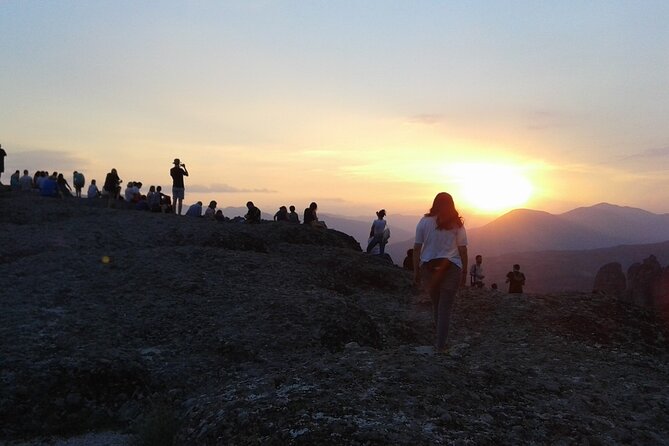
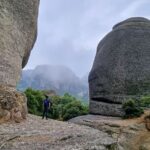
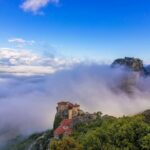
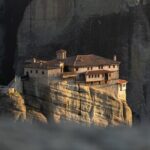
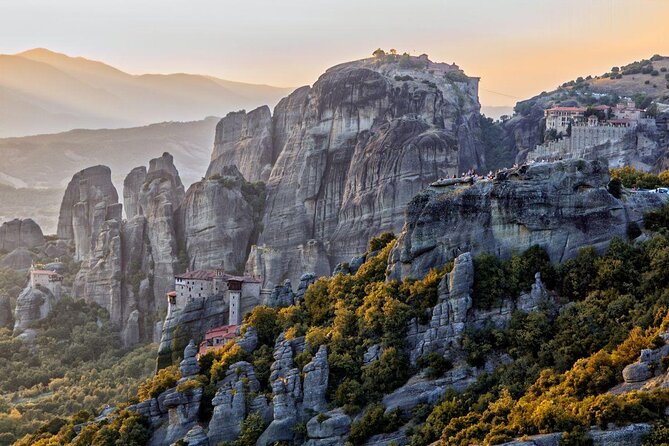
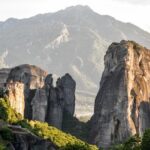
Meteora is not simply a stop for old religious buildings. The setting is the main event: tall rock columns rise from the plain, with monasteries placed on ledges and summits that once seemed almost unreachable.
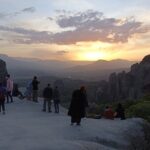
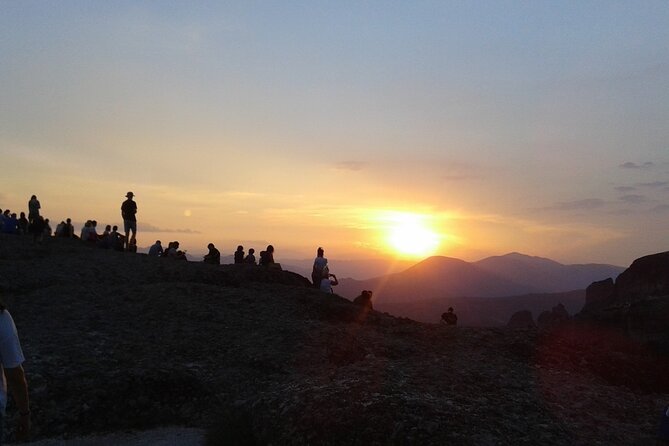
A sunset tour lets you see the rocks under several kinds of light. Early in the outing, the cliffs appear solid and severe. As the sun drops, their color changes, and the shadows make the gaps between the pillars look deeper. You are not locked into one viewing platform either. The route includes several places for photographs, so you can compare wide views with closer looks at the stone and monasteries.
This is useful if your time in Meteora is limited. Instead of arranging transport and viewpoints on your own, you spend the afternoon moving between selected stops with someone who can explain what you are seeing. The experience is less about ticking off every monastery and more about making sense of the whole setting.
The small group matters here. With no more than eight people, the minibus should feel less like a large coach excursion. You can ask about the buildings, the local customs, or the route, and you can request stops for photographs when appropriate. The guides associated with the experience include Kristine, Kostas, Artemis, and Filothei. Mr. Nikos is among the named drivers, and the guiding team has been praised for a warm, family-like manner and clear explanations.
You can also read our reviews of more evening experiences in Meteora
Starting near Kalampaka and getting settled
The stated meeting point is Pindou 55 in Kalampaka, and pickup is also available in front of Kalampaka Train Station or another nearby point if requested. The tour returns to the same meeting point, which makes it simple to fit around a train arrival or a nearby stay.
Transportation is by air-conditioned VIP minibus. That is a practical advantage in Meteora, especially during warmer months, when a series of roadside stops can become tiring. You will still need to get in and out several times, but the vehicle gives you a cool place to reset between viewpoints.
The tour lasts about four hours. That is long enough for a proper sunset route, a historical stop, and a monastery visit if the schedule permits. It is not long enough to explore several monasteries at leisure, so set your expectations accordingly.
You should also confirm the pickup arrangement when booking. The listed start point is clear, but the optional pickup depends on the requested location near Kalampaka. Confirmation is provided at booking.
Saint Antonios and the first hermits
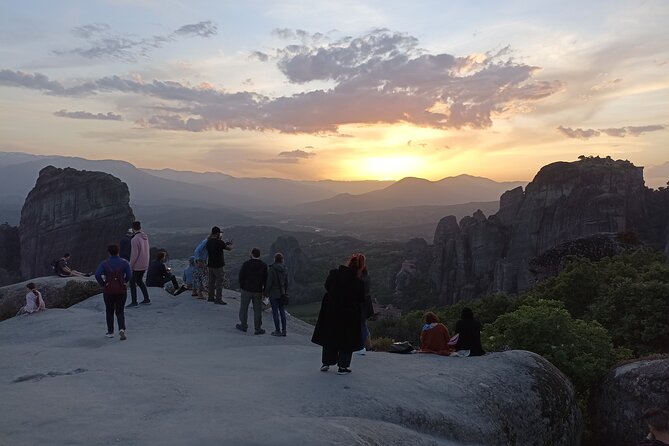
The first major stop centers on Saint Antonios, where the earliest hermits came to Meteora. The visit also includes the Holy Monastery of Saint Nicholas Anapafsas at Meteora, giving you an early look at the religious world that developed among these cliffs.
This part of the outing is valuable because it shifts the focus away from postcard views. You hear about the physical challenges faced by the first monks and how they gradually made a life in a place with difficult access and little comfort. The cliffs were not chosen for easy living. They offered isolation, protection, and a setting suited to prayer, but they also demanded hard work and nerve.
Plan for about an hour here. Admission to this stop is listed as free, but that does not mean every monastery entrance during the outing is included. A €3 fee applies to monastery entry, and the cost is paid separately.
The guide does not accompany you inside the monasteries. That distinction matters. You receive the wider explanation from the guide outdoors and during the route, then enter independently if the monastery is open and you choose to pay the fee. If you want a guide beside you for every interior detail, this is not the right format.
The monastery visit and what the schedule means
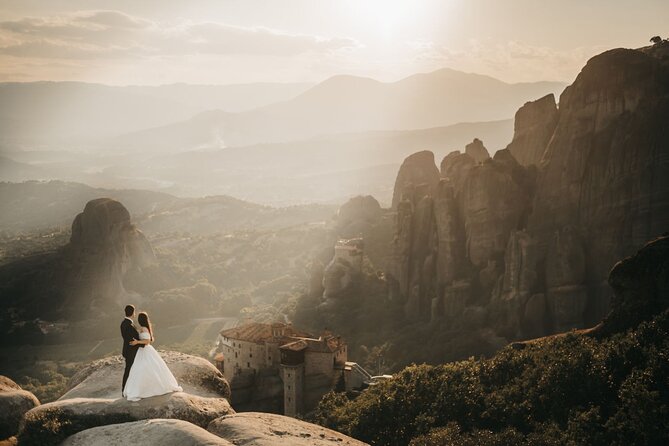
The tour includes one monastery, selected according to the local monastery timetable. This is a useful way to see an active religious site without trying to plan every opening hour yourself, but it also means the exact monastery is not fixed in advance.
Keep your expectations flexible. You may have time to look around one building and learn about monastic life, but this is not a full monastery circuit. The main value is the combination of one interior visit with outdoor views and historical explanation.
Because the guide is not for inside the monasteries, pay attention during the approach and the outdoor briefing. The guide can give you context about how monks live and why these sites were built where they were, but your independent visit inside will be quieter and less structured.
Entrance costs €3 per person and are not included in the tour price. That is a small extra, but it is worth carrying the correct amount or checking the payment arrangements before you leave. The tour price itself is $36.12, so even with the added fee, the outing remains reasonably priced for a four-hour guided route with transport.
Sunset viewpoints built for photographs
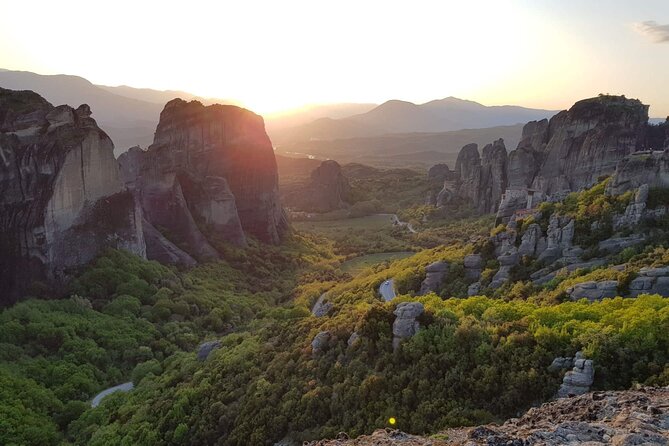
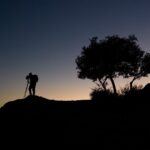
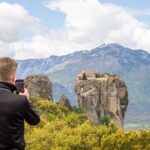
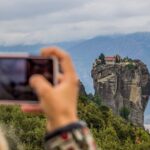
The central part of the experience is the run of photo stops around Meteora. You will visit several points for views of the rocks and monasteries, with the route timed around sunset.
This is where the trip earns its name. The guide and driver know that a good Meteora photograph depends on more than simply reaching a famous site. You need a clear angle, enough space to see the pillars, and the right moment as the light fades. The tour includes stops for sightseeing and photographs when requested, which gives you some room to speak up if you want another minute at a viewpoint.
Bring a phone or camera with enough battery. That is ordinary advice, but it matters on a short photo-focused route. You may take more pictures than expected as the light changes every few minutes.
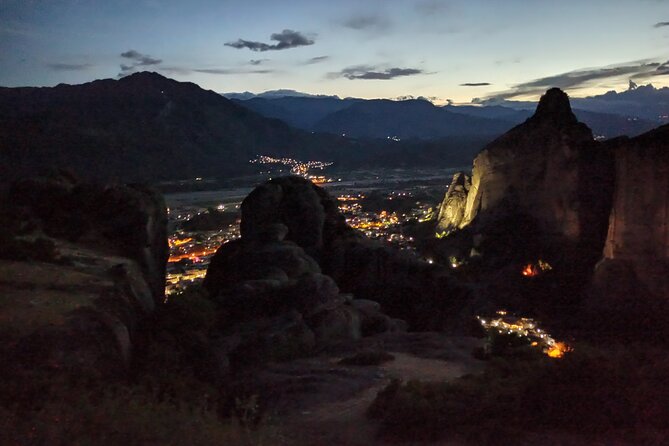
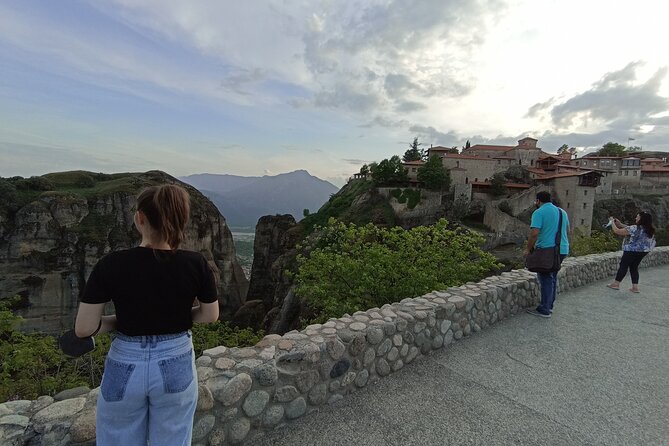
The views are also a reason to choose this tour over a monastery-only visit. The interiors provide religious art and architecture, but the broad view explains why Meteora feels so unusual. From outside, you can see the relationship between the rock columns, the villages below, and the buildings placed high above the ground.
The tradeoff is that sunset light is fixed. If a stop takes longer than planned, another may be shorter. The route needs to keep moving toward the best part of the evening, so this is not a slow, open-ended photography workshop.
Kastraki and Saint George of the Mandilas
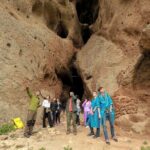
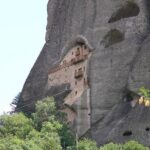
The Kastraki stop adds a local custom to the route. You visit Saint George the Mandilas, a site connected with a ruined monastery built inside a cave about 40 meters above the ground on the north side of a Meteora rock.
Saint George was a Greek who served as an officer in the Roman army under Diocletian and was later honored as a Christian martyr. The local story is only part of what makes this place memorable. The custom associated with Saint George involves colorful headscarves, climbing, and dancing at the edge of the cliffs.
That combination gives you a glimpse of living local tradition, not just formal church history. The setting also shows how religious devotion in Meteora has often been tied to physical acts of courage and community celebration.
You should treat this stop as a viewpoint and cultural explanation, not as a promise of a climbing activity. The tour describes the custom and visits the site, but it does not say that you will climb or take part in the ceremony. The cave and ruined monastery are the focus.
Allow about an hour for this section. It gives the outing a stronger sense of place because Kastraki is not presented only as a village beside the rocks. You learn how a local saint, an old monastery, and a distinctive custom connect.
What the guides add to the ride
The strongest part of a short Meteora tour is often the explanation between stops. A good guide can turn a dramatic view into a story about people, belief, and hard choices. This experience places clear emphasis on local culture and the lives of the monks.
The guiding team has included Kristine and Kostas, as well as Artemis and Filothei. Mr. Nikos is among the named drivers. The team is noted for detailed explanations, accurate historical information, a pleasant atmosphere, and a willingness to answer questions.
That is especially useful at Saint Antonios and Saint George of the Mandilas. Both places can look like quick photo stops if you do not know what happened there. The guide helps connect the rock formations to the first hermits, the monasteries, and the traditions still associated with the area.
The experience is offered in English. If you want a tour with a lot of independent quiet time, the explanations may feel more than you need. If you prefer to understand the place as you move through it, the commentary is a major part of the value.
Is $36.12 a good price?
At $36.12 per person, this is a low-cost way to arrange a four-hour Meteora outing. You receive an English-speaking guide, air-conditioned minibus transport, photo stops, local cultural background, and the possibility of entering one monastery.
The price looks strongest for people without their own car. You avoid arranging a driver, finding the viewpoints, and working out how to fit the monastery schedule into a sunset route. The small group also gives the trip more personal value than a large bus tour.
The cost does not cover the €3 monastery entrance fee. It also does not provide a guide inside the monastery. Those are modest limitations, but you should know them before booking.
I would not choose this tour if your top priority is spending half a day inside several monasteries. I would choose it if you want the best outdoor views, a manageable amount of history, and transport from Kalampaka without paying for a full private tour.
Who should book this sunset route?
This tour suits you if you have one evening in Meteora and want a broad introduction. It works particularly well for visitors staying in or arriving through Kalampaka, since the meeting point and train station pickup keep the logistics simple.
It is also a good fit for photographers who want several viewpoints rather than one fixed stop. You can ask for photo breaks, and the timing gives you changing light across the cliffs.
Families and mixed-age groups may appreciate the minibus and short stop format, since most travelers can participate and service animals are allowed. The group maximum of eight helps keep the pace more flexible, though the tour still involves getting out at several sites.
You may want another option if you need detailed interior guiding, a fixed monastery list, or a long period at one building. The local schedule controls which monastery you visit, and the guide remains outside during the interior portion.
Final decision: book it for the views and stories
I would book this tour if I wanted a practical, modestly priced introduction to Meteora with sunset scenery at the center. The combination of Saint Antonios, one possible monastery visit, Kastraki, and several photo stops gives you more than a simple scenic drive.
The best reasons to choose it are the small group, the air-conditioned minibus, the attention to photography, and the clear focus on the monks and local customs. The main compromises are the extra monastery fee, no guide inside, and the flexible monastery choice.
Free cancellation is available if you cancel at least 24 hours before the local start time. That gives you some planning room, but changes or cancellations inside that window are not accepted. For $36.12, this is a sensible choice when you want Meteora’s cliffs at their most dramatic without turning the evening into a complicated do-it-yourself project.
FAQ
How long does the Sunset Tour to Meteora with Photo Stops last?
The tour lasts approximately four hours.
Where does the tour begin?
The stated meeting point is Pindou 55, Kalampaka 422 00, Greece.
Is pickup available?
Yes. Pickup is available in front of Kalampaka Train Station or another nearby point near Kalampaka if requested.
Where does the tour end?
The activity ends back at the meeting point.
How many people can join the tour?
The maximum group size is eight travelers.
Is transportation included?
Yes. Transportation is provided by an air-conditioned VIP minibus.
Are monastery entrance fees included?
No. Monastery entrance fees are excluded and cost €3 per person.
Is the guide available inside the monasteries?
No. The tour guide is not provided for the inside of the monasteries.
Is the tour offered in English?
Yes. The tour is offered in English.
Can I cancel for a full refund?
Yes, if you cancel at least 24 hours before the experience start time. Cancellations made less than 24 hours before the start time are not refunded.