REVIEW · ATHENS
Acropolis & Agora: The Rise & Fall of Democracy
Book on GetYourGuide →Operated by Alternative Athens · Bookable on GetYourGuide
The most interesting part of this Athens tour is its question: who counted as the people in people-power? You visit the Acropolis and Ancient Agora, but the real subject is the bold, limited, and often uneasy experiment called democracy.
I like the way the tour connects grand monuments with political ideas, rather than treating the Parthenon as a photo stop. I also like the focus on comparison, helping you consider what ancient democracy shares with modern systems. Guides including Maria, Nathalia, Anastasia, and Helena have been praised for clear explanations, anecdotes, and patience with questions.
The main drawback is pace. Three hours covers several major sites, and the Acropolis involves uneven ground and plenty of walking. You should also check whether your booking includes entry tickets, since that option is not automatic.
In This Review
- Key points to know before you book
- Why this tour is different from a standard Acropolis visit
- Starting at Dionysiou Areopagitou Street
- The Acropolis: power above the city
- Odeon of Herodes Atticus: a short introduction to public life
- Propylaea and the entrance to the sacred hill
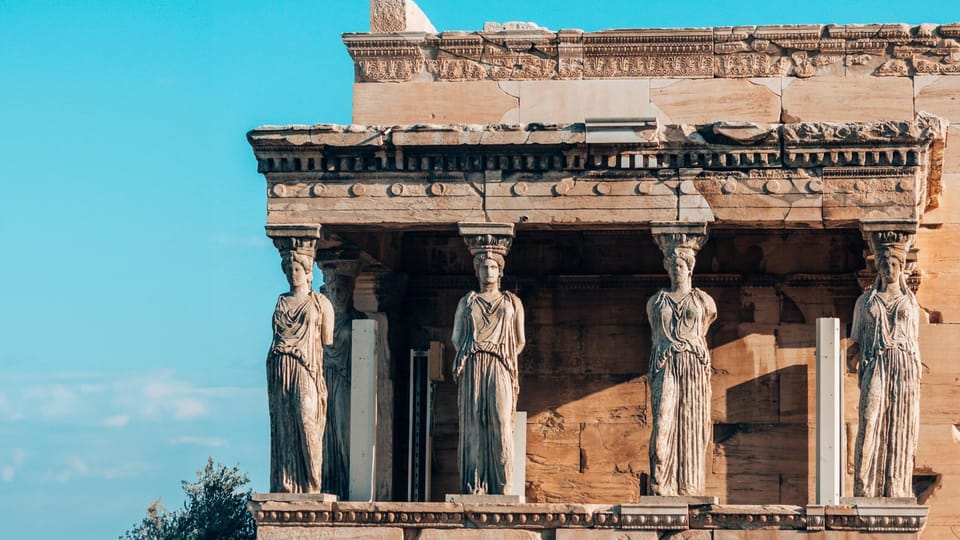
- Erechtheion and the Temple of Athena Nike
- The Parthenon: one hour for the main argument
- Walking down to the Ancient Agora
- The Temple of Hephaestus and the final 30 minutes
- Ancient and contemporary democracy side by side
- Guides, language, and group style
- Is $69 a fair price?
- Who should book this Athens democracy tour?
- Should you book it?
- FAQ
- How long does the tour last?
- Which sites are included in the route?
- Is the Acropolis entry ticket included?
- What languages are available?
- Where does the tour finish?
- What should I bring?
- Is the tour suitable for children and wheelchair users?
Key points to know before you book
- The Acropolis is only half the story: The tour uses the Parthenon and surrounding monuments to explain Athenian political power and public image.
- The Ancient Agora gives democracy a physical setting: This was the political, commercial, and administrative heart of ancient Athens.
- The tour asks difficult questions: You will examine who held power, what democracy was meant to achieve, and why the system failed.
- Guides leave room for real teaching: Maria, Nathalia, Anastasia, and Helena are praised for anecdotes, thoughtful answers, and a friendly style.
- You get more than monument facts: The discussion links ancient political structures with contemporary democracy.
- Plan for a light day bag: Backpacks, large bags, and strollers are not allowed at the Acropolis, while comfortable shoes and clothing are essential.
Why this tour is different from a standard Acropolis visit

Many Acropolis tours focus on architecture, mythology, and the city views. This one uses the monuments to tell a political story. That changes how you look at the hill.
The Acropolis was not just a sacred site. The tour presents it as a form of political messaging by ancient Athens, a place where power, identity, religion, and civic pride were made visible in stone. You will still hear about the famous buildings, but the guide keeps returning to the larger question: what did Athens want its citizens and rivals to believe about the city?
That approach suits me because the Acropolis can otherwise become a quick parade of names. Propylaea, Erechtheion, Temple of Athena Nike, and Parthenon are easy to photograph and hard to remember. A clear theme gives each stop a job in the story.
The tour also avoids presenting democracy as a finished ideal. You will look at it as an experiment that began more than 2,600 years ago, served particular purposes, and eventually failed. The comparison with present-day democracy gives the visit a useful edge. You are not asked to admire ancient Athens without question.
You can also read our reviews of more tours and experiences in Athens.



Starting at Dionysiou Areopagitou Street
The listed starting point is at Dionysiou Areopagitou 45, though the exact meeting point can vary by booking option. Check your confirmation carefully before setting out.
This street is a sensible place to begin an Acropolis visit because it leads you into the archaeological zone on foot. Still, allow time to find your guide. The meeting details are not identical for every option, and the tour does not include hotel transport.
You should arrive ready for a walking tour, not a bus outing. Bring identification, wear shoes you trust on hard and uneven surfaces, and avoid carrying a backpack or large bag. Strollers are not permitted, and assistance dogs are allowed even though pets are not.
The Acropolis: power above the city
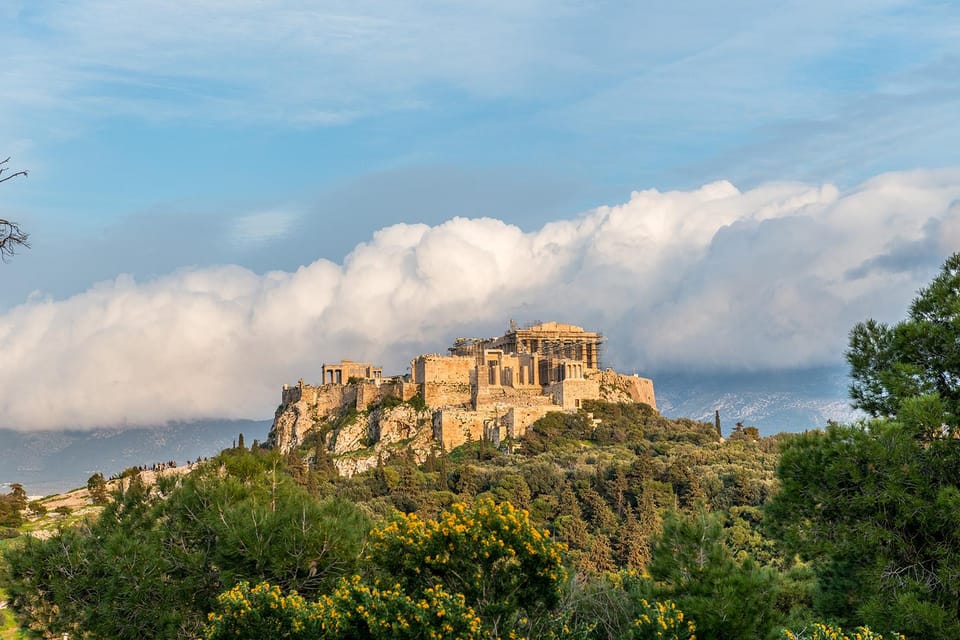
The Acropolis section is the visual centerpiece. It includes a guided visit to the hill and its main monuments, with the Parthenon receiving the longest scheduled explanation.
The hill gives you the chance to see how architecture can express a city’s ambitions. The tour’s theme makes this more than a lesson in columns and construction. You will consider the Acropolis as a public statement by Athens, tied to the city’s sense of itself and its political order.
Expect a fair amount of walking and standing. The site is exposed, so sun and heat can affect your comfort, particularly during the warmer months. One useful detail from the guide style described by Claire is the inclusion of shaded pauses and time sitting when needed. That kind of care matters on a three-hour visit.
The tour is not designed for wheelchair users or people with visual impairments. Children under eight are also not considered a good fit, which makes sense given the walking, site conditions, and political subject matter.
Odeon of Herodes Atticus: a short introduction to public life
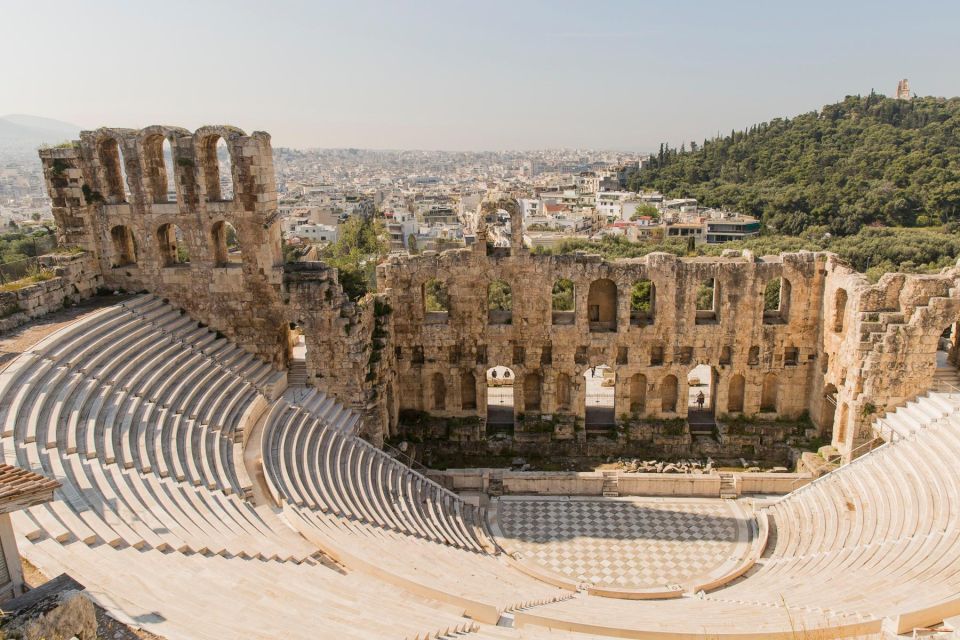
The Odeon of Herodes Atticus receives about 15 minutes of guided attention. Even with a short stop, it helps set the tone for Athens as a city where public spaces carried social and civic meaning.
You should not expect a full performance or an extended architectural study here. Instead, the stop works as part of the wider Acropolis story. The guide keeps the group moving while adding context before the tour reaches the main monuments.
That is one benefit of booking a themed tour. A short stop does not need to answer every question. It can point you toward the main idea and save time for the Parthenon and Ancient Agora.
Propylaea and the entrance to the sacred hill
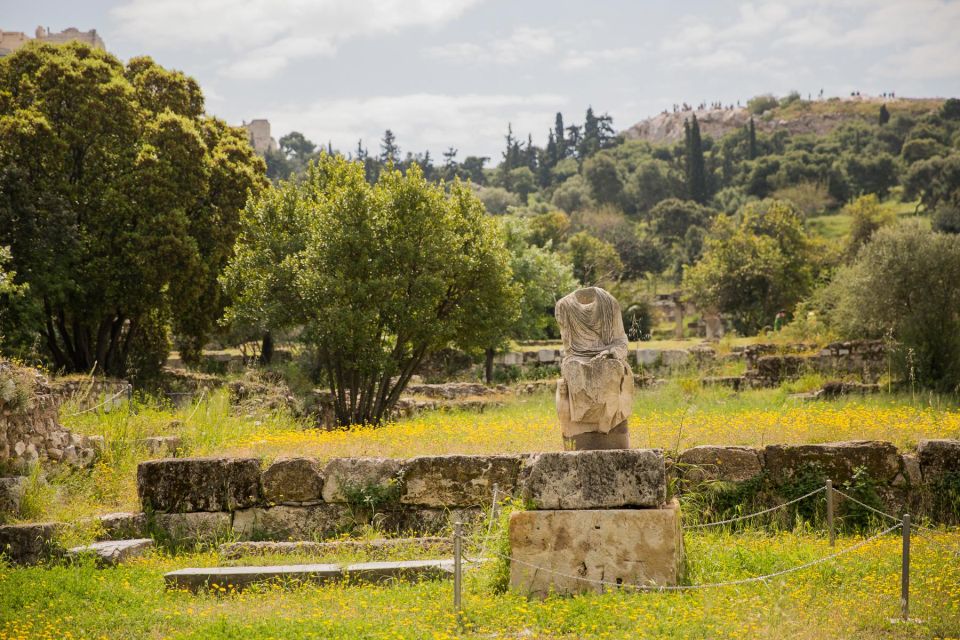
The Propylaea, the monumental entrance to the Acropolis, is scheduled for about 15 minutes. This is where the ascent becomes more than a walk uphill. You pass through a carefully designed gateway into a place loaded with civic and religious meaning.
The guide can help you understand how movement through the site was shaped. The entry sequence prepares you for what lies above, and it gives the tour another chance to discuss how Athens presented itself.
The practical issue is crowding and movement. You may not always have a quiet place to stand or a clear view in every direction. Stay close to your guide and listen for the meeting instructions, especially when the entrance is busy.
- All Day Cruise -3 Islands to Agistri,Moni, Aegina with lunch and drinks included
★ 5.0 · 4,958 reviews





Erechtheion and the Temple of Athena Nike
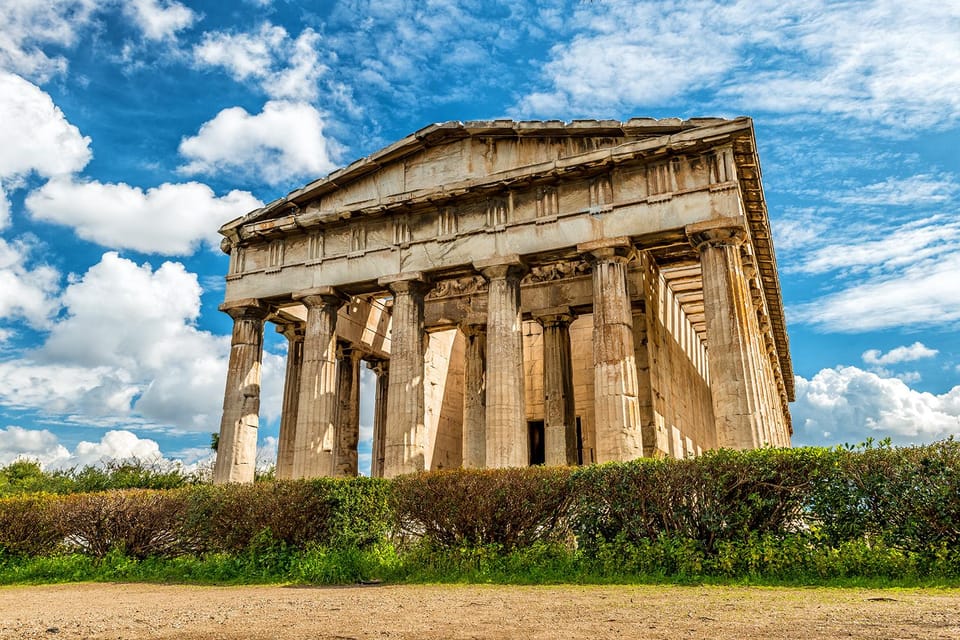
The Erechtheion and Temple of Athena Nike each receive roughly 15 minutes. These stops broaden the visit beyond the Parthenon and remind you that the Acropolis is a group of monuments, not one building.
The Erechtheion is especially useful in a guided visit because its unusual form and multiple sacred associations can be hard to make sense of alone. The Temple of Athena Nike adds another layer to the Acropolis story, giving the guide room to explain how religious and civic ideas overlapped.
You will not get an hour at each monument, so listen for the main points and save detailed questions for your guide. The tour’s strongest feature is discussion, and the guides have been praised for answering questions instead of rushing past them.
French-speaking visitors can book a French tour, while English is also available. Nathalia has been praised for her gentle style, anecdotes, and willingness to leave time for photos. Anastasia was specifically appreciated for clear teaching, useful answers, shaded pauses, and advice for the rest of an Athens stay.
The Parthenon: one hour for the main argument

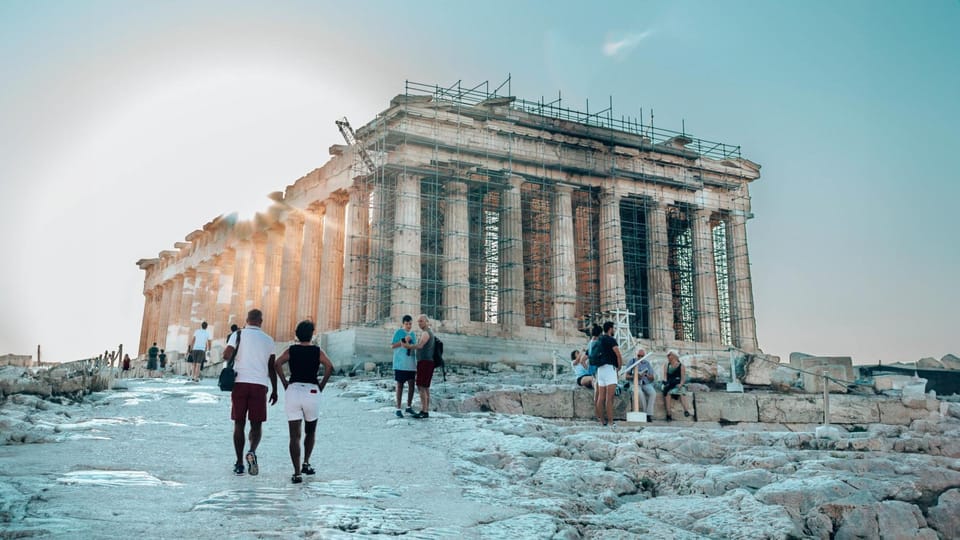
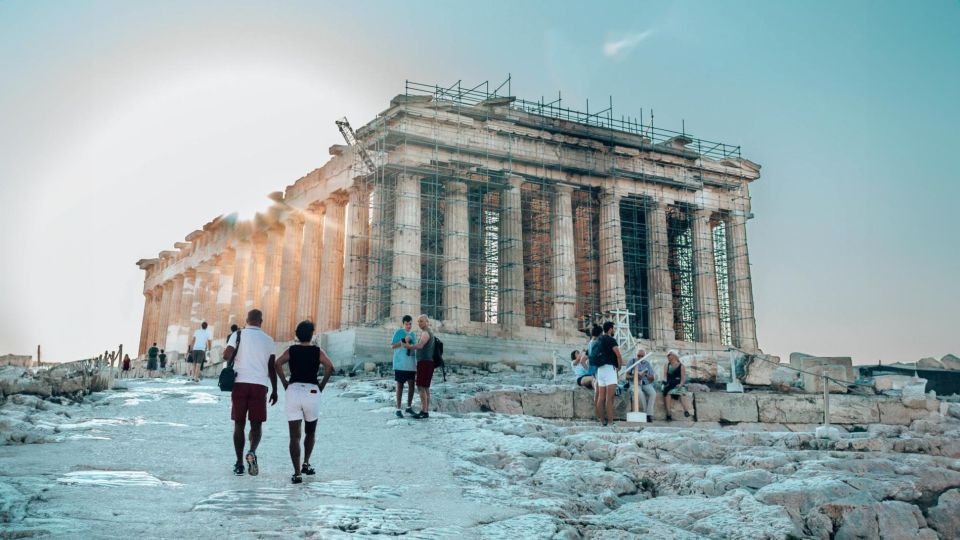
The Parthenon receives about an hour, making it the longest stop on the Acropolis. That is appropriate. You need time to take in the building itself, understand its role in ancient Athens, and connect it to the tour’s ideas about power and public identity.
I like that the tour does not reduce the Parthenon to a checklist item. The building is one of the wonders of the Ancient World, but its importance here is also political. The guide helps you consider why a city would invest so heavily in a monument and how that monument could support a public image of strength, order, and achievement.
You will have time for photos, but this is not a photo-only excursion. Charles specifically valued a tour that offered more than a few selfies in front of the Parthenon. That is a useful way to judge the experience: book it if you want a framework for what you are seeing, not just the best angle for a picture.
The hour can still feel short if you want detailed architecture, mythology, and political history all at once. If the Acropolis is your main interest and you prefer a slow, specialist visit, a longer dedicated tour may suit you better. For a first visit that links the hill to the Agora, the timing is sensible.
Walking down to the Ancient Agora
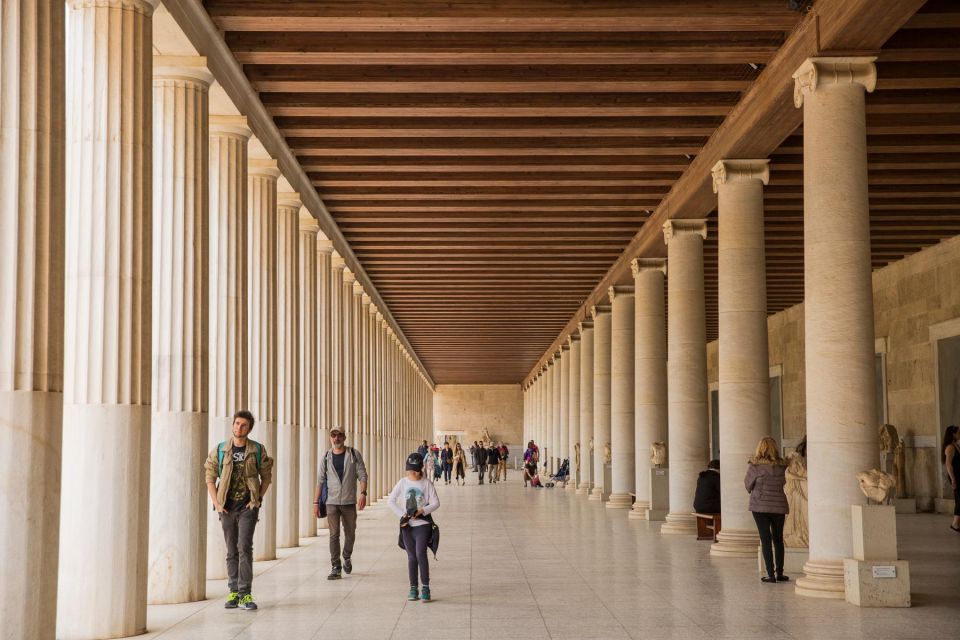
The tour continues to the Ancient Agora, the heart of ancient Athens. Here the democracy theme becomes more direct because this was the city’s political, commercial, and administrative center.
The change in setting matters. On the Acropolis, Athens speaks through monumental architecture. In the Agora, the focus shifts toward the daily machinery of public life. The guide explains the people and events connected with the birth of democracy, along with its principles, values, and practical purpose.
This is where the tour earns its title. You are not simply told that democracy began in Athens. You examine what people-power meant in practice and ask who was included in that word. The experience presents ancient democracy as radical for its time, but also limited and vulnerable.
The group finishes at the Agora, which is helpful if you want to continue exploring the area independently. It also means the tour does not loop back to the Acropolis starting point. Plan your next stop from the Agora rather than assuming you will be escorted back.
The Temple of Hephaestus and the final 30 minutes
The Temple of Hephaestus receives about 30 minutes. It provides a quieter closing point than the Parthenon and gives you time to absorb the wider story.
The final section continues the link between political ideas and the physical city. By now, you have seen the Acropolis as public messaging and the Agora as the working center of Athens. The Temple of Hephaestus adds another important monument before the tour ends.
The Agora also includes a museum area where the guide may point out selected objects and details. Charles especially valued Maria’s focal points in the Ancient Agora museum. That is worth noting because museums can easily become a blur of cases and labels. A guide who chooses a few useful objects can make the collection easier to understand.
Ancient and contemporary democracy side by side
The strongest intellectual feature is the comparison between ancient and contemporary democracy. You will consider which structural parts of the old system still serve society and which parts tend to fail.
The tour does not promise a simple lesson that ancient Athens had all the answers. Instead, it presents democracy as an experiment that keeps changing. That makes the subject relevant without pretending that the ancient system and modern states work in the same way.
I like this approach for an adult visitor who wants context. The monuments become a starting point for questions about political participation, authority, public purpose, and failure. You leave with more to think about than the date of a building or the name of a sculptural feature.
The discussion may be less appealing if you want a purely archaeological tour. You will hear history, but the main thread is political thought. Families can enjoy it, and Cécilia noted that her daughters liked the stories, but the operator does not recommend it for children under eight.
Guides, language, and group style
The experience uses a certified live guide and is offered in English or French. Private groups are available, so check the option carefully if you want a more personal format.
The guide quality is central here. Maria is praised for being friendly and for making the Agora museum easier to follow. Nathalia is described as patient, warm, and good at mixing anecdotes with time for photographs. Anastasia is noted for clear teaching, strong answers, shaded pauses, and practical advice. Helena is remembered for linking mythology and democracy in a memorable way.
Those details point to a tour style that is conversational rather than purely scripted. You should still expect a set route and limited time, but there is room for questions and adjustment. Morvan specifically appreciated a guide who adapted the visit to the group.
The high rating of 4.9 from nine reviews is encouraging, though the sample is small. I would treat it as a positive sign about the guides, not a guarantee that every future visit will feel identical.
Is $69 a fair price?
At $69 per person, this is priced as a guided cultural visit rather than a basic site entry. The value depends on the option you select.
If your booking includes Acropolis and Ancient Agora tickets, the price also covers the convenience of arranging admission and having a certified guide connect the two sites. If tickets are not included, you can ask the provider to pre-purchase them, but the entry cost is then an additional consideration. Entry fees are non-refundable and non-exchangeable, so check the final booking details before paying.
I think the price makes the most sense if you want an explanation of the political story. A self-guided visit can show you the same stones, but it may not make the connection between the Acropolis, Agora, ancient democracy, and present-day political systems as clear.
You are not paying for food, drinks, or transport. This is a focused walking tour, so value it for the guide’s interpretation and the time saved making sense of two major sites.
Who should book this Athens democracy tour?
I would recommend it to first-time Athens visitors who want the Acropolis but also want to understand the city behind the monuments. It suits history fans, students of politics, curious adults, and anyone who prefers a strong theme over a list of disconnected facts.
It is also a good choice if you like asking questions. The guides are praised for responding carefully and adapting the visit. French speakers have a clear language option, and English speakers can expect the same subject in English.
I would think twice if you want a slow photographic session, a specialist architecture lecture, or a fully accessible route. Three hours is enough for a useful overview, but not enough for every detail at both sites.
Bring identification because it may be needed for admission rules. European Union citizens under 25 can enter free with valid identification, as can EU and non-EU citizens under 18 with valid identification. Even if you qualify, confirm how your chosen ticket option handles admission.
Should you book it?
Book this tour if you want the Parthenon to lead into a bigger question about power, citizenship, and public life. The Acropolis provides the drama, while the Ancient Agora gives the democracy story its proper setting.
The best reason to choose it is the guide-led connection between places that many people visit separately. Maria, Nathalia, Anastasia, and Helena are all associated with the qualities you need here: clear teaching, anecdotes, patience, photo time, and thoughtful breaks.
Skip it if your priority is a slow, unstructured visit or if uneven walking is a serious concern. For most curious adults who want Athens to make more sense, the $69 cost is reasonable, especially when entry tickets are included and you value a guide who can turn famous ruins into a coherent story.
FAQ
How long does the tour last?
The tour lasts three hours.
Which sites are included in the route?
The route includes the Acropolis, Odeon of Herodes Atticus, Propylaea, Erechtheion, Temple of Athena Nike, Parthenon, Ancient Agora, and Temple of Hephaestus.
Is the Acropolis entry ticket included?
Acropolis and Ancient Agora entry tickets are included if you select the ticket option. The provider can also pre-purchase tickets if requested.
What languages are available?
The live tour is available in English and French.
Where does the tour finish?
The tour finishes at the Ancient Agora of Athens.
What should I bring?
Bring a passport or ID card, comfortable shoes, and comfortable clothing. Backpacks, large bags, and strollers should not be taken to the Acropolis.
Is the tour suitable for children and wheelchair users?
The tour is not suitable for children under eight or wheelchair users. It is also not suitable for people with visual impairments.