REVIEW · ATHENS
Acropolis and Agora Tour: The Rise & Fall of Democracy
Book on Viator →Operated by Alternative Athens · Bookable on Viator
Ancient Athens makes more sense when you connect its grand temples to the people who argued, voted, traded, judged, and sometimes lost their grip on power. This tour does that by linking the Acropolis with the Ancient Agora, using the monuments as clues in the rise and fall of democracy.
I like the small group, limited to 15 people, and the focus on ideas rather than stone alone. I also like the way the tour brings in mythology, theatre, archaeology, and politics, so the Parthenon is not treated as just a fine photograph. The main drawback is time: three hours is tight for two major sites, and much of the tour involves standing on uneven ground.
In This Review
- Key points to know before booking
- Why the Acropolis works better through a political lens
- Starting at the Acropolis and Theatre of Dionysus
- Temple of Athena Nike and the Erechtheion
- The Parthenon in 30 focused minutes
- Walking into the Ancient Agora
- Hephaestus, Athena Ergani, and the final stop
- What the guides add to the experience
- The real cost: $67.43 plus admission
- Timing, group size, and practical details
- Who should book this Acropolis and Agora walk?
- Should you book it?
- FAQ
- How long does the Acropolis and Agora Tour last?
- What time does the tour start?
- Where does the tour begin?
- Where does the tour end?
- Are attraction tickets included?
- What language is the tour offered in?
- How large is the group?
- Can I bring a stroller or large bag?
Key points to know before booking
- Democracy is the main theme: The Acropolis and Agora are explained as parts of one political and social world.
- The group is capped at 15 people: That makes questions and conversation easier than on a large coach tour.
- English-speaking guides lead the walk: Demi, Christina, Kimon, and Vassia are among the named guides associated with this experience.
- Entry costs extra: Allow another €50 per person if you ask the operator to pre-purchase the attraction tickets.
- The route ends at the Agora: You begin at Dionysiou Areopagitou 45 near the Acropolis and finish at the Ancient Agora.
- Bring light luggage only: Strollers, backpacks, and large bags are not allowed at the Acropolis.
Why the Acropolis works better through a political lens
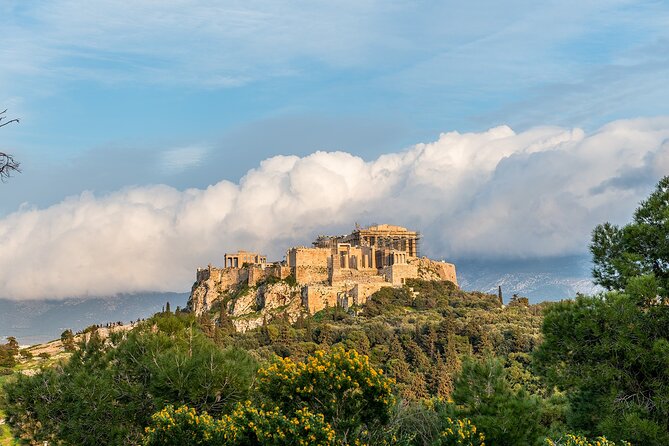
The Acropolis is often presented as an architectural checklist: Parthenon, Erechtheion, Temple of Athena Nike, Propylaea, then a view across Athens. Those monuments deserve attention, but the more useful question is why Athens put so much energy into this hill during the fifth century BCE.
The tour’s central idea is that the Acropolis was not separate from civic life below. It represented Athena, military success, religious duty, and the confidence of a city that was experimenting with public participation. You get the grand view, but you also consider who held power, who was excluded, and how the city’s ideals differed from modern democracy.
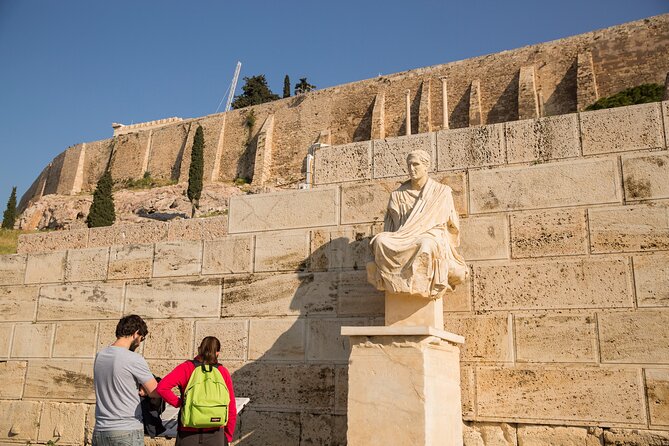
That approach gives the Parthenon more weight. It was built in the mid-fifth century BCE for Athena Parthenos and is widely treated as the high point of the Doric order. Your guide can point out how its simple-looking form was carefully controlled, while also explaining how the temple served a city at the height of its influence.
You should expect a fair amount of listening at each monument. One guide has been praised for adapting explanations to different ages and interests, while another was noted for clear, precise teaching. A remote headset was also used on one version of the tour, though you should not assume every departure includes one.
You can also read our reviews of more tours and experiences in Athens.



Starting at the Acropolis and Theatre of Dionysus
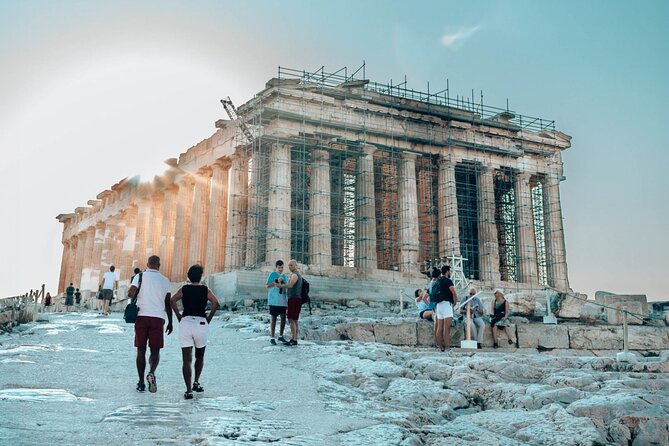
The meeting point is Dionysiou Areopagitou 45, Athens 117 42, with a scheduled start at 9:00 a.m. This places you near the Acropolis approach, where the morning start helps you get to the major monuments before the day becomes more demanding.
The first Acropolis visit is allocated about one hour. That is enough for a strong overview, but not enough for a slow examination of every building, sculpture, and viewpoint. If you want extended time at the site, plan a separate visit.
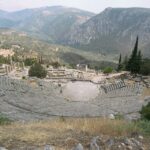
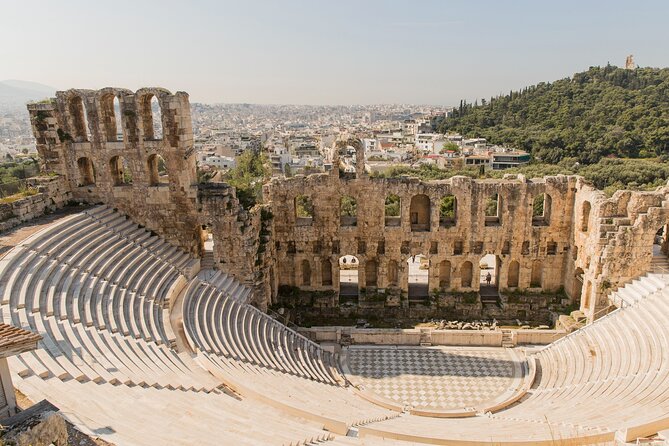
The Theatre of Dionysus follows as a 15-minute stop. This matters because Athenian democracy was shaped not only in political spaces but also in public performance. The theatre is linked with the first performances of works by Aeschylus, Sophocles, Euripides, and Aristophanes.
The theatre also gives your guide a chance to connect civic life with drama. Greek tragedy and comedy were public events, and the old seating area helps you picture an audience gathered for more than entertainment. The stop is brief, so expect a focused explanation rather than a full theatre lecture.
Temple of Athena Nike and the Erechtheion

The Temple of Athena Nike receives about 15 minutes. It was dedicated to Athena in her aspect as a victory goddess, and the small temple carries an especially memorable detail: the cult statue was said to have no wings, so victory would not fly away from Athens.
That story is a good example of what this tour does well. Instead of treating mythology as a separate subject, the guide can use it to explain how Athenians understood military success, divine protection, and the identity of their city.
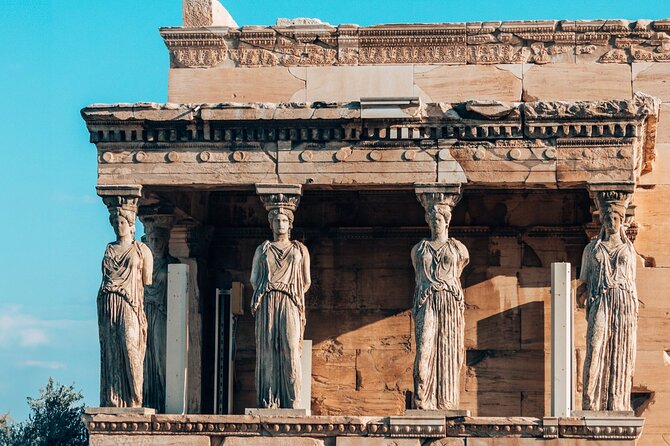
The Erechtheion gets another 15 minutes. This temple was built to house the ancient wooden cult statue of Athena and to honor the city at the height of its power. Its unusual design makes it one of the Acropolis buildings that rewards explanation, especially when you hear how different religious traditions and civic pride came together there.
The time limits are worth noting. Fifteen minutes can feel short if you want photographs, questions, and a detailed account of the building. I would listen first, then take quick photographs during transitions rather than expecting long free time at every stop.
The Parthenon in 30 focused minutes
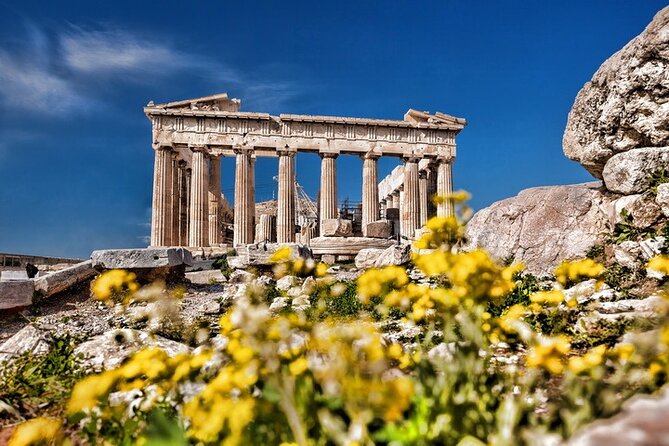
The Parthenon is the visual center of the Acropolis, but the tour does not treat it as the entire story. About 30 minutes are assigned here, giving your guide room to discuss its date, dedication to Athena, architectural order, and role in the city’s public image.
This is likely the most satisfying part for anyone who wants context with the famous view. You can look at the temple while hearing why its design mattered and how the building fit into Athens’ religious and political program.
The tradeoff is crowd control and limited time. The Acropolis is a major attraction, and the tour cannot guarantee quiet conditions or an empty foreground for photographs. You should also expect uneven surfaces and periods of standing, so supportive shoes and water are sensible.
The guide-led format has a practical advantage here. A strong guide can keep the group together, face the monument, and answer questions without letting the visit become a random walk from one photo stop to another. The small-group limit of 15 helps, although it does not remove the natural noise and movement of a busy archaeological site.
Walking into the Ancient Agora
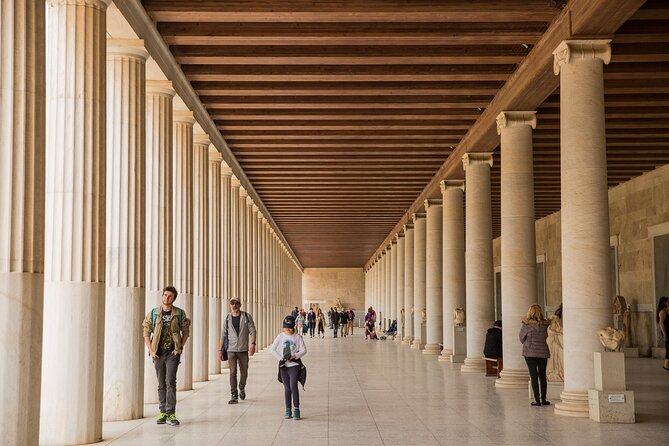
The Ancient Agora is where the democratic theme becomes clearest. This was the center of political, commercial, administrative, social, religious, and legal life in ancient Athens. After seeing the monuments that projected civic power from above, you move into the place where ordinary public business took place.
The Agora visit is allocated about 30 minutes. That is a compact introduction, not a full archaeological study. Still, the change in setting gives the tour its strongest structure: the Acropolis shows the city’s ideals and public image, while the Agora shows the practical machinery of civic life.
Here I would pay close attention to the guide’s explanation of how public decisions, trade, administration, religion, and justice overlapped. The word democracy can sound abstract in a classroom. In the Agora, it becomes tied to a real place where people gathered and disputes were handled.
The tour’s title promises both the rise and fall of democracy. The rise is easier to cover in a short visit because the buildings and civic functions are right in front of you. The fall may receive less attention, particularly if the group asks many questions or the Acropolis portion runs long. One guide-led version was described as excellent but slightly too short for a fuller discussion of democracy’s decline and more of the Acropolis.
That is an important expectation to set. This is a thematic overview with strong interpretation, not a specialist seminar on Athenian political history.
- All Day Cruise -3 Islands to Agistri,Moni, Aegina with lunch and drinks included
★ 5.0 · 4,958 reviews





Hephaestus, Athena Ergani, and the final stop
The last stop is described in the schedule as the Temple of Aries, but the accompanying description identifies the monument as the Temple of Hephaestus. It is one of the best-preserved ancient temples and was connected with Hephaestus, protector of metalworkers, and Athena Ergani, protector of potters and small industries.
The temple makes a fitting end to the route because it connects public life with work and trade. After politics, theatre, religion, and monumental architecture, you finish with the craftspeople and merchants whose daily activity helped sustain Athens.
The tour ends at the Ancient Agora of Athens, in the 105 55 area. There is no return transfer, so you can continue exploring the Agora or make your own way onward from there. The one-way route is convenient if you want to keep exploring central Athens, but less convenient if you need to return to your hotel immediately.
What the guides add to the experience
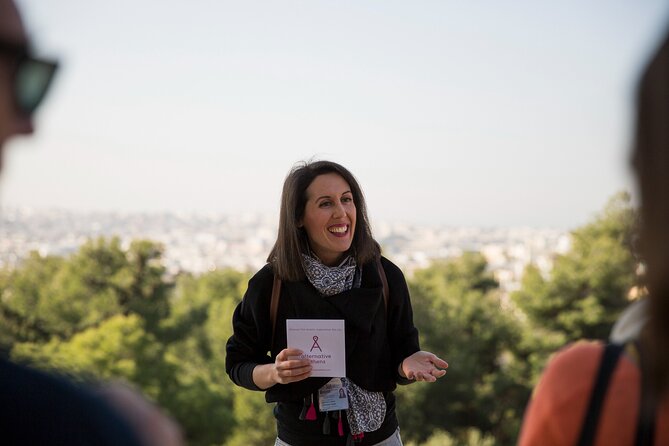
The guide is the key reason to book this rather than simply buying a ticket and walking through the sites alone. Named guides include Demi, Christina, Kimon, and Vassia. The supplied guide reports describe them as warm, professional, engaging, and good at explaining difficult material through stories and anecdotes.
That variety matters because the subject can become dry if it is reduced to dates and building names. The strongest version of this experience links Greek mythology to the construction of the monuments, then connects those stories to archaeology and public life.
You should also expect an adaptable teaching style. One guide was noted for handling different kinds of people in the same small group, while another was praised for answering questions patiently and going beyond the basic schedule. That is useful for families and mixed-age groups, where one person may want architecture and another may care more about mythology or politics.
There is one comfort concern. One account described too much standing and not enough walking or sitting, with foot and back discomfort as a result. Another noted that earphones were not always provided, making it harder to hear in noisy conditions. Ask at booking about the audio setup, and bring water, a hat, and shoes with a firm sole.
The real cost: $67.43 plus admission
The tour price is $67.43 per person. Attraction admission is not included, and the operator lists an additional €50 per person for pre-purchased entry tickets. That makes the total noticeably higher than the advertised tour price, so compare the full cost before paying.
The fee is easiest to justify if you want interpretation, a small group, and a clear connection between the Acropolis and Agora. You are paying for a certified guide, a planned route, and a subject that is difficult to piece together from labels alone.
The value is weaker if you mainly want time for photography or a relaxed visit. The schedule is tightly packed, and admission fees remain non-refundable and non-exchangeable. You may prefer independent entry if you already know the sites well or want to set your own pace.
A fun ancient Athens map is included. It is a small item, but it suits the theme and can help you keep the city’s ancient districts in mind after the tour.
Timing, group size, and practical details
The advertised duration is approximately three hours, though some versions described by the named guides have lasted closer to four hours and included additional locations. Treat three hours as the planning figure, and leave extra time afterward if you have a fixed lunch booking or another scheduled visit.
The group maximum is 15 people. That is small enough for direct questions and easier movement, but it is not a private tour. If you want a completely personal pace, ask the operator about private options rather than assuming the small group will feel private.
The tour is offered in English and includes a mobile ticket. It is near public transportation, and most people can take part, though the Acropolis terrain and standing time may be tiring.
Do not bring a stroller, backpack, or large bag to the Acropolis. The site does not allow them, and this is one of the easiest problems to avoid. People under 25 should carry an identity card or passport in case a discount applies.
Free cancellation is available up to 24 hours before the 9:00 a.m. start. Changes made inside that window are not accepted, and late cancellations are not refunded. Poor weather or failure to meet the minimum group size can lead to a different date or a full refund.
Who should book this Acropolis and Agora walk?
I would choose this tour if you want the famous monuments explained as part of a larger civic story. It suits first-time visitors who want a strong introduction to Athens, especially if mythology alone is not enough and you want to understand how public life worked.
It also suits curious families, couples, and solo visitors who enjoy asking questions. The small group and guide-led discussion should feel more personal than a large group moving from one monument to the next.
I would think twice if you have limited stamina, need frequent sitting breaks, or want a long, unhurried visit inside the Acropolis. The route includes uneven ground, sun exposure, and several periods of standing. I would also reconsider if the extra €50 admission charge pushes the total beyond your budget.
Should you book it?
Book it if the idea of connecting the Parthenon to civic power, theatre, trade, justice, and democracy appeals to you. The best parts are the small group, the clear thematic route, and guides such as Demi, Christina, Kimon, and Vassia, who bring the material to life through stories and careful explanations.
Skip it if you want maximum free time or a full academic treatment of the fall of democracy. Three hours is enough for a thoughtful introduction, but not enough to cover every monument in depth. Go prepared for extra admission costs, limited sitting, and a one-way finish at the Agora, and you should get a focused and worthwhile introduction to ancient Athens.
FAQ
How long does the Acropolis and Agora Tour last?
The tour lasts approximately three hours. Some guide-led versions have lasted closer to four hours, so allow extra time if you have plans immediately afterward.
What time does the tour start?
The scheduled start time is 9:00 a.m.
Where does the tour begin?
The meeting point is Dionysiou Areopagitou 45, Athens 117 42, Greece.
Where does the tour end?
The tour ends at the Ancient Agora of Athens, in the Athens 105 55 area.
Are attraction tickets included?
No. Entry fees are separate. The operator can pre-purchase tickets for €50 per person if you request this service.
What language is the tour offered in?
The tour is offered in English.
How large is the group?
The maximum group size is 15 people.
Can I bring a stroller or large bag?
No. Strollers, backpacks, and large bags are not allowed at the Acropolis and should not be brought on the tour.