REVIEW · ATHENS
Acropolis and Parthenon Tour with Spanish-Speaking Guide
Book on GetYourGuide →Operated by Key Tours · Bookable on GetYourGuide
Beat the crowds on Athens’ sacred rock. This 2-hour early-access Acropolis and Parthenon tour gives you a calmer start, then layers on myth, architecture, and the key monuments with a licensed Spanish-speaking guide. If you want to understand what you’re actually looking at, it’s a smart way to spend your limited time in central Athens.
I really like two things here. First, the guide’s explanations have the right length and depth, and you can ask questions without feeling rushed. Second, the headsets make a big difference when you’re walking around stone ruins and standing in open air.
One consideration: the climb and walking are described as moderate, so wear comfortable shoes and plan for some effort—especially if it’s hot when you go.
In This Review
- Key things I’d bank on
- Why early Acropolis access feels like a different city
- What you actually get from a Spanish guide (and how headsets help)
- From the Theater of Dionysus to Odeon of Herodes Atticus
- Propylaea and Temple of Athena Nike: where details start to click
- The Parthenon and Erechtheion: what the guide helps you see
- Summit views and free time on the Acropolis Hill
- Price and value: $45 for a structured, headset-guided experience
- When this tour is the best fit
- Should you book this Acropolis and Parthenon tour?
- FAQ
- How long is the Acropolis and Parthenon tour?
- What language is the guide?
- What time options are available?
- Where does the tour start?
- Are headsets included?
- Does the tour include entry tickets?
- What if I choose the option without an entrance ticket?
- Does this tour help you avoid ticket lines?
- Is the tour wheelchair accessible?
- Are there any free entry rules for some visitors?
Key things I’d bank on
- First-access early entry for cooler temps and fewer people
- Licensed Spanish-speaking guide who keeps stories clear and structured
- Headsets included so you can actually hear above the chaos
- Parthenon, Erechtheion, and major highlights packed into a tight route
- Photo-friendly stops and summit views over modern Athens
- Timed-entry options (with or without tickets) that match your departure time
Why early Acropolis access feels like a different city
The Acropolis is famous for a reason. But it can also feel like a theme park line with ancient buildings attached. That’s why the early-access timing matters.
You’re aiming to arrive before the heat and before the biggest crowd waves. Even if you’re a fast walker, Athens in the sun can wear you down quickly. Early entry helps you see more with less stress, and it usually means better photo conditions too—clearer sight lines and less crowding in the foreground.
This is also a good time strategy for your brain. When you’re not packed in with dozens of other groups, the guide can slow down on key points like the Parthenon’s role, the meaning behind the temples, and how the layout makes sense. You’re not just staring at stone—you’re learning how the pieces connect.
It’s still a real walk. You’re on a hill with uneven ground, so build in a little patience and keep your footing. If you’re the type who likes to stop for photos often, the tour’s structured pace should feel comfortable rather than frantic.
You can also read our reviews of more guided tours in Athens


What you actually get from a Spanish guide (and how headsets help)
This tour is run in Spanish, with a professional, licensed guide. If Spanish is your working language (or you’re using it as practice), you’ll get a lot more out of the visit than you would with simple signage.
The big upgrade here is the headsets. On the Acropolis, wind and distance can make audio hard. With headsets, you can stay in the moment and still catch the details. It’s one of those quiet “why didn’t I do this earlier?” travel improvements.
From the feedback you can infer a pattern: the guide’s explanations tend to land at a useful depth. One clear theme is that the explanations are considered the right length and easy to follow. If you prefer guidance that stays focused—without turning every stop into a lecture—you’ll probably enjoy this format.
Also, the tour is designed for asking questions. You’ll be able to get answers while you’re standing in the exact location being discussed, not half a day later back in your hotel.
From the Theater of Dionysus to Odeon of Herodes Atticus
The route doesn’t start at the Parthenon. It begins lower on the Acropolis slopes, and that’s a smart way to understand the whole sacred complex.
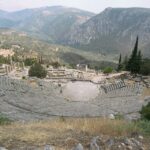
First you visit the Theatre of Dionysus. This stop is short, but the payoff is big because it grounds you in a key idea: theater wasn’t just entertainment in ancient Greece—it was part of civic and religious life. Even in a quick visit, you can start connecting the dots between myth, public gatherings, and the monuments above.
Then you move to the Odeon of Herodes Atticus, a smaller but impressive reminder that Athens didn’t only build temples. It built performance spaces too. The guide’s context helps you read the stone as architecture with a purpose, not just scattered blocks.
What I like about these early stops is that they prepare you for the “wow” moments higher up. You’ll be looking at the Parthenon with more context than you’d have if you started straight at the top.
The only drawback: because these stops are brief, you won’t get a long sit-down explanation at each point. If you love slow museum pacing, you may wish there were more time at ground-level ruins. Still, for a 2-hour tour, the pacing makes sense.
Propylaea and Temple of Athena Nike: where details start to click
Next comes a classic photo-and-context area: the Propylaea. This is your gateway moment. Standing near the entry structures helps you understand the Acropolis as something you approach intentionally, not something you stumble into from street level.
From there, you visit the Temple of Athena Nike. Even with limited time, this stop usually helps people see how the temples weren’t random. They were placed with meaning, and they expressed power, identity, and belief.
The value of these two stops is that they train your eyes. You start noticing how the architecture guides movement and how each structure contributes to the overall plan.
Also, you get photo moments. There’s time to take pictures while the group transitions, which is important because trying to grab a photo while a guide is moving you through a bottleneck can be stressful. Here, the route gives you space to capture the view without feeling like you’re always lagging.
The Parthenon and Erechtheion: what the guide helps you see
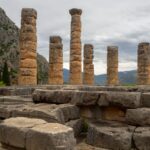
Now we reach the headliners: the Parthenon and the Erechtheion. These are the monuments people come for, and you’ll spend real guided time here—enough to feel oriented.
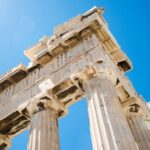
At the Parthenon, the guide focuses on what you’re looking at and why it matters. Even if you’ve seen photos before, being there in person changes the perspective. With the guide’s explanation, you’re more likely to understand the Parthenon as a masterwork tied to Athena and civic identity, not just a single famous building.
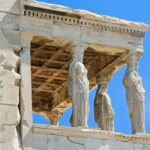
Then comes the Erechtheion, a different mood from the Parthenon. It’s often remembered for its unique details and for the way it carries multiple associations. Here, the guide’s job is to connect the temple’s features to the stories and beliefs that made this location sacred.
What makes this part worth your time is that it’s not just “look at that.” It’s “here’s what it means,” followed by “here’s how it fits the whole Acropolis.” If you’ve ever visited a famous site and felt like the buildings were impressive but hard to interpret, this is the section where that frustration usually disappears.
You’ll also appreciate the photo-friendly pace. The guided time is long enough to absorb the key points, and the group isn’t constantly rushing you off before you get your bearings.
- All Day Cruise -3 Islands to Agistri,Moni, Aegina with lunch and drinks included
★ 5.0 · 4,958 reviews




Summit views and free time on the Acropolis Hill
After the core monuments, you get free time (about 30 minutes) on the Acropolis itself. This matters because it gives your eyes a chance to do what no lecture can do: wander.
From the top, you get panoramic views over modern Athens. The guide also shares context about archaeological work and the enduring legacy of the ancient citadel, which helps you see the ruins as a living story rather than a fixed backdrop.
For photos, this is where you’ll get your best payoff. You can step back, frame the Parthenon-area views, and take in how the site looks against the city below. The difference between seeing Athens from street level and seeing it from the Acropolis is huge. You feel the geography—how the hill dominates the landscape and why the ancients chose it.
If you’re the type who likes to sketch quickly or just take time staring at details, this free window is your chance. Use it. Don’t spend the whole time scrolling on your phone.
Price and value: $45 for a structured, headset-guided experience
At $45 per person for a roughly 2-hour guided visit, you’re paying for three things: expert interpretation, early-access entry, and the logistics that keep you from getting stuck in ticket lines.
You do need to pay attention to the ticket option:
- If you choose an option with tickets, you’ll have the entrance ticket included (and you’ll benefit from the skip-the-ticket-line setup).
- If you choose an option without tickets, you must buy your Acropolis ticket in advance for the exact time slot tied to your tour departure. Timed entry is strict, and without a valid ticket for your time you may not be able to enter with your group.
That timed-entry requirement is the biggest “gotcha” in the pricing value equation. The tour price is only a deal if you match it with the correct entry slot.
There’s also a nice added value: headsets. Many group tours quietly skip that, and then everyone strains to hear the guide. Here, you get clearer audio, better comprehension, and less frustration.
When this tour is the best fit
This tour works especially well if you:
- Want your time in Athens to feel meaningful, not just scenic
- Prefer a Spanish-led explanation rather than reading everything on your own
- Like structured stops that still give you time for photos
- Are okay with moderate walking up a hill
It also fits families or friends traveling together who want one clear plan instead of puzzle-solving entry times at the last minute.
If you’re traveling with limited mobility or you need wheelchair access, this tour is listed as not suitable for wheelchair users, and the hill climb is described as moderate—so you’d want a different option.
Should you book this Acropolis and Parthenon tour?
Yes—if your goal is to understand what you’re seeing while you benefit from early, less-crowded access. The combination of a licensed Spanish guide, headset audio, and enough time at the big monuments makes it a strong value at $45.
I’d especially lean toward booking if you want more than sightseeing photos. This tour is built to help you connect the myths, architecture, and site layout into something you’ll remember.
If you’re worried about walking effort, plan for comfortable shoes, water, and sun protection. And if you choose the option without tickets, buy your timed entry well ahead of time so the schedule matches your group.
FAQ
How long is the Acropolis and Parthenon tour?
The tour lasts about 2 hours.
What language is the guide?
The tour is conducted in Spanish.
What time options are available?
You can pick first access, morning, or afternoon timing.
Where does the tour start?
The starting location is KeyTours Greece S.A.
Are headsets included?
Yes, headsets are included so you can hear the guide better.
Does the tour include entry tickets?
That depends on the option you select. An Acropolis entrance ticket is included only if you choose the option with tickets.
What if I choose the option without an entrance ticket?
You’ll need to purchase your Acropolis ticket in advance for the exact time of your tour departure. Entry is allowed only at the scheduled time, and without a valid ticket you may not be able to enter with your group.
Does this tour help you avoid ticket lines?
Yes. The tour includes skip-the-ticket-line access as part of the experience.
Is the tour wheelchair accessible?
No. It is not suitable for wheelchair users, and it requires a moderate level of physical fitness due to the climb.
Are there any free entry rules for some visitors?
Yes. EU citizens under 25 and non-EU citizens under 18 are entitled to free admission, but they must obtain their free ticket online in advance. Timed entry slots mean free ticket availability may not be guaranteed on the day—booking early is advised.