REVIEW · ATHENS
Acropolis of Athens, Parthenon and Acropolis Museum private tour with dinner
Book on Viator →Operated by Athens Walks Tour Company · Bookable on Viator
Private Athens feels personal and fast.
This private Acropolis + Parthenon + New Acropolis Museum experience pairs a professional archaeologist guide with skip-the-line tickets and a Greek dinner that often lands you with Parthenon views.
I particularly love how the tour turns big landmarks into a story you can follow. You get time at the Acropolis walking route and then the museum finishes the picture with the actual finds from the site. I also like that the pace is built for understanding, not just checking boxes, and the late-afternoon timing can mean fewer crowds.
One thing to consider: you will do real walking on marble steps and uneven ancient paths. If stairs and heat are an issue for you, plan your footwear and bring a slower pace mindset.
In This Review
- Key things I’d plan around before you go
- Private Acropolis + Museum + Dinner: what you’re really buying
- How long it takes and when to schedule it
- The climb up: South slope walk, Theatre of Dionysus, and the Parthenon perimeter
- Acropolis citadel: the big picture
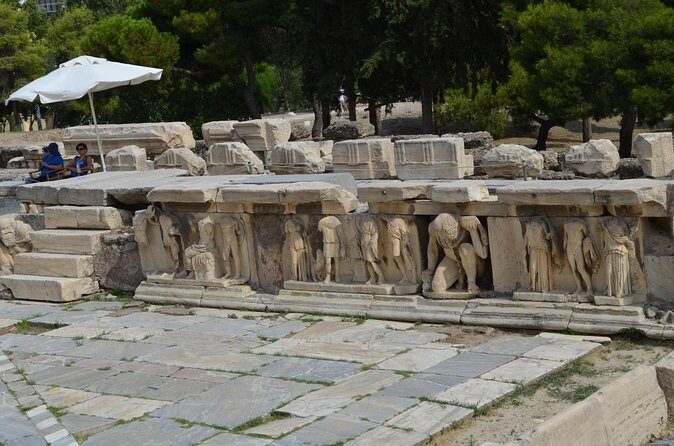
- Theatre of Dionysus: where drama really got its start
- Temple of Athena Nike, Propylaea, and gateways to power
- Parthenon: the star, plus the “what it became” tour
- The shift to the New Acropolis Museum: seeing the originals, not just the outlines
- What to look for inside: statues, friezes, and the glass-floor view
- Odeon of Herodes Atticus and Erectheion: details that add depth
- Dinner with wine and Parthenon views: what the ending feels like
- Price and logistics: when $265.49 per person makes sense
- Who should book this tour (and who might not)
- Should you book this Acropolis private tour with dinner?
- FAQ
- Is this tour private?
- How long does the tour last?
- What language is the guide?
- Does the tour include tickets for the Acropolis and museum?
- Is dinner included?
- Where do we meet?
- Is hotel pickup included?
- What fitness level do I need?
- Can I use a paper or electronic voucher?
- What if my plans change and I need a refund?
Key things I’d plan around before you go

- Licensed archaeologist guide: You’ll get interpretation from someone who studies these sites for a living.
- Skip-the-line entry: You avoid the longest ticket lines and spend more time inside the experience.
- Acropolis-to-museum link: You see sculptures and architecture in the museum, then connect them back to what’s still on the rock.
- Classic “big stops” plus the in-between: Parthenon is the star, but you also visit Theatre of Dionysus, Odeon of Herodes Atticus, and more.
- Dinner with wine included: The meal is a built-in ending, with classic Greek dishes and a nice setting near the action.
Private Acropolis + Museum + Dinner: what you’re really buying
At $265.49 per person, you’re paying for three things that add up fast if you try to DIY: an expert guide, time savings on entry, and a guided flow that keeps the story straight.
A big part of the value is that this is a private tour. That means you can ask follow-up questions, slow down when you want photos, and spend a little extra time at the pieces that hook you. Several guides highlighted in past tours (like Stelios, Giota, Hermes, Grigoriou, and Daphne) are described as archaeologists or archaeologist-style specialists who explain the sites as living culture, not just stone.
The second value point is the order of operations. You start on the Acropolis ruins, then move to the New Acropolis Museum where the artifacts are displayed in modern galleries with the right scale and context. Some guides even adjust the sequence so you get museum context first, which can make the Acropolis feel much more legible when you’re up on the rock.
Finally, you’re not ending with a “go find food” scramble. Dinner is included (listed as optional in the package details), and the restaurant choice is part of the plan, not an afterthought.
You can also read our reviews of more private tours in Athens



How long it takes and when to schedule it
The tour is listed as about 3 to 5 hours. In practice, it can stretch closer to the longer end if you linger at the major viewpoints or your guide spends time answering questions. That is not a bad thing on the Acropolis, where a quick walkthrough leaves you with lots of impressions but not many connections.
Timing matters here. Guides often suggest late afternoon or early evening starts because the crowds can be lighter and the light can feel better for photos. One theme that shows up in experiences with this kind of route: a later start can make the museum feel calmer and dinner can turn into a relaxed wrap-up while the Parthenon is visible in the restaurant setting.
This is not a “wake up at 7 a.m.” type of outing. It’s built for a more human pace: walk up, stop often, absorb, then cool down in a museum, then eat.
The climb up: South slope walk, Theatre of Dionysus, and the Parthenon perimeter
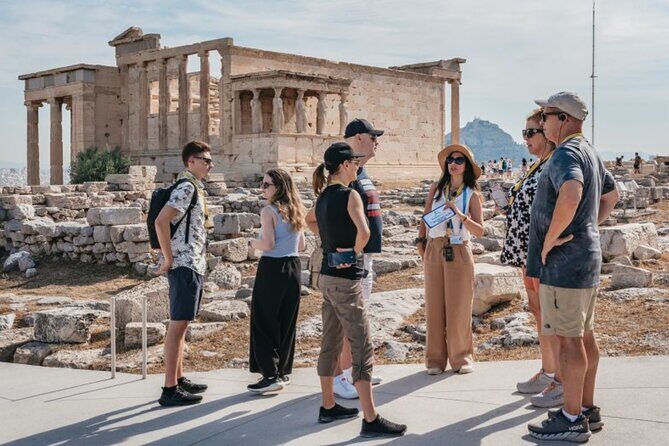
You’ll begin at the Acropolis area and work your way through the classic landmarks, guided by a professional archaeologist. The focus is not only what you see, but why it mattered.
Acropolis citadel: the big picture
The Acropolis is the ancient hilltop citadel above Athens. Your guide sets the stage with what the citadel represented and how the buildings on it fit together. If you’re new to Athens, this is where you should get your bearings fast: the Parthenon is famous, but it’s only one part of a larger sacred and civic story.
A practical note: this section is uphill and sun-exposed at times. Wear shoes with traction and plan for slower steps.
Theatre of Dionysus: where drama really got its start
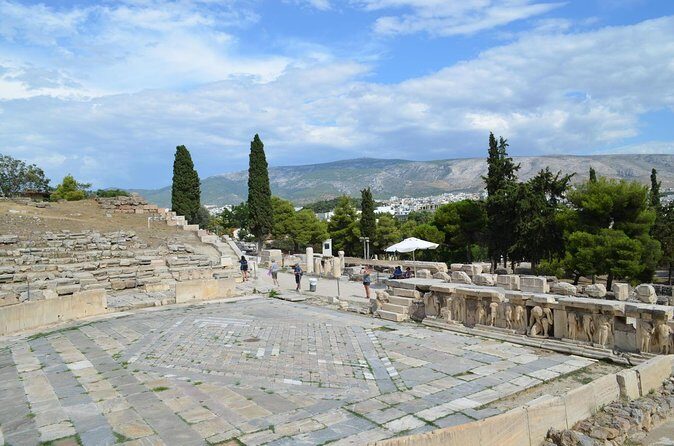
Next comes the Theatre of Dionysus. It’s celebrated as a cornerstone of Greek performing arts. Sit for a moment on the stone seating (even briefly) and let your guide connect the space to playwrights like Euripides, Sophocles, and Aeschylus. That detail helps you picture the place as something active and social, not just ruins.
If you love culture that has roots in ancient Greece, this stop can feel surprisingly emotional because it explains what people were doing here, not only what happened centuries later.
You can also read our reviews of more museum experiences in Athens



Temple of Athena Nike, Propylaea, and gateways to power
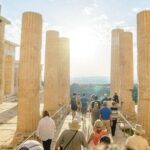
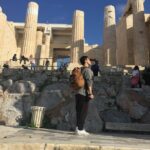
You’ll also pass key architecture points such as the Temple of Athena Nike (dedicated to Athena Nike) and the monumental entrance structure known as the Propylaea, the gateway into the Acropolis.
These stops are shorter in the walk plan, but they matter because they explain how the Greeks used design to communicate ideas: victory, protection, and order. Even if you only spend a few minutes at each location, your guide’s narration is what makes the quick stops worth it.
Parthenon: the star, plus the “what it became” tour
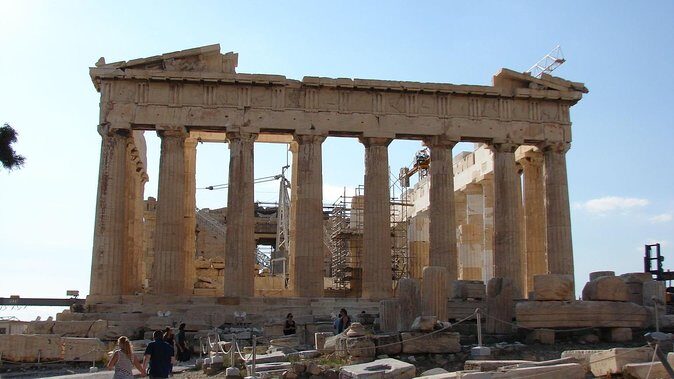
Then you reach the Parthenon, built to honor Athena. This is where a good guide pays off. You don’t just look at a famous building. You walk the perimeter and learn about how its role changed over centuries—temple, church, and even a mosque.
Two things to pay attention to while you’re there:
- Symmetry and proportion: Your guide can point out how the design looks balanced and why that balance was intentional.
- Excavation and surviving elements: Ask questions about what you’re seeing versus what is missing, and you’ll get a clearer sense of how we know what we know.
The shift to the New Acropolis Museum: seeing the originals, not just the outlines
After the ruins, the tour moves to the New Acropolis Museum, built to house finds connected to the Acropolis site—from earlier eras through later periods. This is one of the best parts of Athens if you’re the type who wants to understand what’s behind the postcard.
Your guide explains what you’re looking at in the galleries, and this is where a museum-first approach can be extra helpful. Some archaeologist guides (like Grigoriou) start with museum context so you recognize ideas from the objects before you go back to the rock and see where those stories connect.
Even if your route is Acropolis-first, the museum still does the key job: it helps you translate ruins into artifacts. Instead of guessing, you get objects with provenance and context.
What to look for inside: statues, friezes, and the glass-floor view
The museum part typically lasts about 1 hour 30 minutes, enough time to see the main collections without turning it into a marathon. The displays focus on statues, friezes, and other antiquities tied to the Acropolis, presented in bright, airy galleries.
A standout feature is the glass floors, which let you look down at showcased archaeological excavations where some items were discovered. This is one of those “wait, that’s under my feet” moments. If you do one thing in the museum, do this: pause near the glass and let your guide connect the excavations to the story of the site.
Other sites also get their spotlight in the museum’s explanations. Even if you do not spend long at each ruin on the hill, the museum helps you see how all those parts fit into a larger religious and civic complex.
Odeon of Herodes Atticus and Erectheion: details that add depth
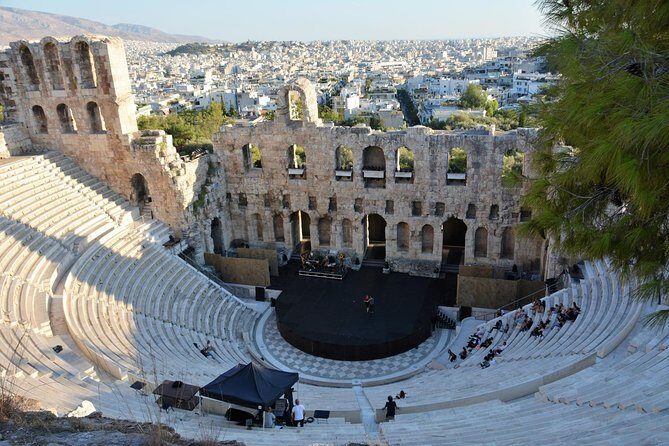
Between the main Acropolis hits, you may stop at structures like:
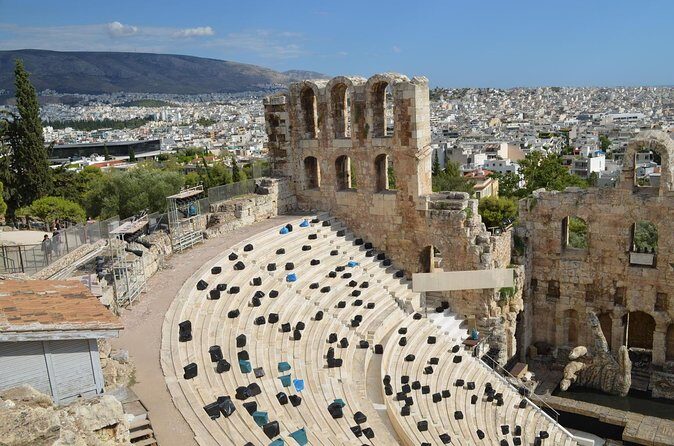
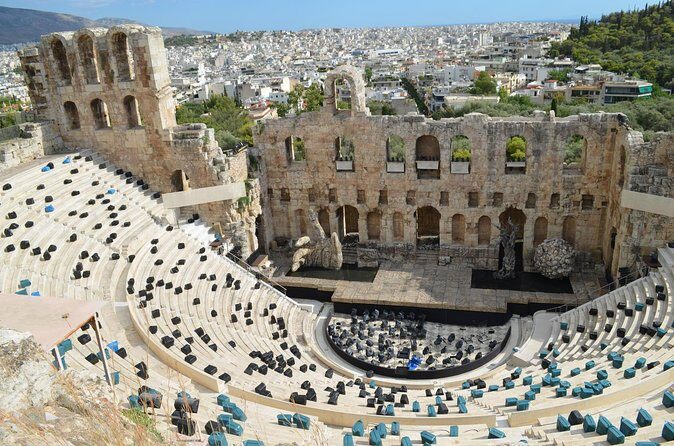
- Odeon of Herodes Atticus, a stone theatre structure still used for the Athens Festival.
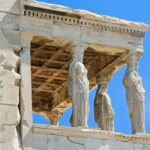
- Erechtheion, dedicated to both Athena and Poseidon.
These are not the same “one viewpoint wonder” as the Parthenon. Instead, they add layers: different functions, different artistic styles, and different relationships to myth and worship.
If your goal is to leave Athens feeling like you understand the culture rather than just the architecture, don’t rush past these.
Dinner with wine and Parthenon views: what the ending feels like
After the museum, you head to a nearby, well-regarded restaurant. The dinner is designed as a relaxed conclusion to the afternoon, with classic Greek dishes and wine included.
From how this experience has played out with different guides (like Maria, Rosa, Anna, and Edie), dinner is often served as a set meal, sometimes described as multi-course. Most accounts treat it as a pleasant send-off rather than a high-pressure food event, which is exactly what you want after the heat and walking.
One practical tip: ask how the wine will be served. One experience noted the tour included wine, but the restaurant tried to offer just a glass rather than the bottle, so it’s worth checking so expectations match the setup.
Also, eat with the view in mind. Several guides end their tour with the Parthenon visible from the restaurant area, and that timing can feel special if the light is shifting toward evening.
Price and logistics: when $265.49 per person makes sense
Let’s talk value in plain terms.
This price includes:
- a private tour
- a professional licensed archaeologist guide
- skip-the-line entrance tickets
- dinner (listed as optional in the package details, but described as part of the experience)
If you were to pay for:
- a top-tier guide ticketed by entry rules,
- museum admission,
- and a structured route that avoids waiting,
you’d likely spend similarly once you factor in time and convenience. The biggest “hidden cost” of DIY is not just money—it’s wasted daylight. On the Acropolis, time spent standing in lines or trying to connect scattered ruins is time you can’t get back.
So this is worth it most if:
- you want interpretation you can trust,
- you care about meaning and not only photos,
- and you want a smoother flow from ruins to museum to dinner.
It might feel less worth it if you’re the type who only wants a quick hit, since a self-guided Acropolis visit can be cheaper. But even then, the museum portion often makes the case for a guided day.
Who should book this tour (and who might not)
This tour is a great fit if you:
- are visiting Athens for the first time and want the essentials with context,
- like archaeology explanations tied to mythology and real artifacts,
- want a calm, guided pace instead of being swept along by a larger group,
- and you can do moderate walking on uneven stone and stairs.
It may be less ideal if you have very limited mobility or stamina. The route includes significant uphill walking and multiple stops with short transitions.
If you’re in your sixties or anyone who needs to move carefully, guides in past experiences (including ones who were very attentive to slower ascent and rest breaks) suggest that you can request a pace that works for your body. Just be ready to plan footwear and hydration.
Should you book this Acropolis private tour with dinner?
If your priority is understanding what you’re seeing, I think this is an easy yes. The mix of Acropolis ruins, New Acropolis Museum, and a guided dinner ending is built for people who want Athens to make sense.
Book it if:
- you want a private archaeologist-led explanation,
- you hate line-ups and want your time on the rock to count,
- and you want the evening to feel finished instead of searching for dinner after you’re tired.
I’d hesitate only if you want a very short, low-walking itinerary, or if you’re planning to keep expectations for dinner extremely high. The museum and monuments are the main event. The meal is a satisfying close.
FAQ
Is this tour private?
Yes. It is a private tour/activity, so only your group participates.
How long does the tour last?
It’s listed as about 3 to 5 hours (approximately).
What language is the guide?
The tour is offered in English.
Does the tour include tickets for the Acropolis and museum?
The experience includes skip-the-line entrance tickets. The information also lists official online ticket pages for the Acropolis and the Acropolis Museum.
Is dinner included?
Dinner is included in the experience details as optional. The tour description also mentions wine with the meal.
Where do we meet?
The meeting point is Porinou 5, Athina 117 42, Greece.
Is hotel pickup included?
No. Hotel pickup and drop-off are not included.
What fitness level do I need?
You should have a moderate physical fitness level, since the route involves walking and steps.
Can I use a paper or electronic voucher?
Yes. You can present either a paper or electronic voucher.
What if my plans change and I need a refund?
You can cancel up to 24 hours in advance for a full refund.